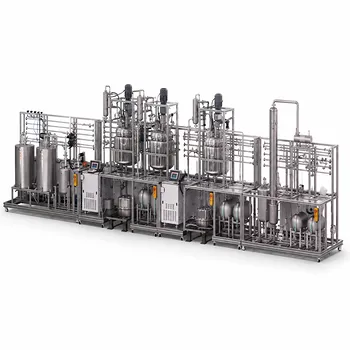
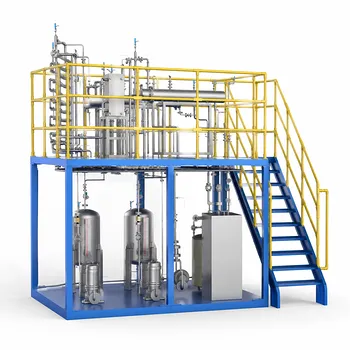
The moment you divide a process at its pinch point, you unlock a clear path to maximum heat recovery and minimum utility use. In chemical engineering unit operations pilot plants, pinch analysis principles are demonstrated by physically configuring hot and cold streams, measuring their temperatures and flow rates to determine heat capacity flow rates (CP), and applying the pinch division rule: above the pinch, only hot utilities are used and cold streams must not be cooled by utility; below the pinch, only cold utilities are used and hot streams are not heated. Students then enforce the stream matching constraints (CPh ≤ CPc above, CPh ≥ CPc below) to keep temperature profiles from violating the minimum approach temperature (ΔT_min). The pilot plant turns theoretical composite curves into tangible, controllable experiments that reveal how violating these rules instantly inflates utility demand.
The core lesson is not just about finding the pinch—it’s about using the pilot plant to experience how one cross-pinch heat transfer or a bad stream match forces both hot and cold utility consumption to rise by the same amount. This hands-on demonstration bridges the gap between spreadsheet calculations and real thermodynamic behavior, instilling an instinct for energy-targeting design that no simulation alone can provide.
The Physics Behind the Demonstration
A pilot plant presents multiple configurable hot and cold liquid streams, heat exchangers, heaters, and coolers. The goal is to show that a process stream’s thermal duty can be satisfied by another process stream, slashing external utility loads.
The Pinch as a Thermodynamic Barrier
The pinch point is the location where the composite hot and cold curves come closest, separated by the chosen ΔT_min. It separates the system into a heat sink (above pinch) and a heat source (below pinch).
Above the pinch, the net thermal demand means the process only takes in heat—no heat may be rejected to cold utility. Below the pinch, the net surplus heat must be dumped, so no hot utility is introduced. This partition is the fundamental law the pilot plant enforces.
How the Pilot Plant Makes the Pinch Visible
Students physically set target and supply temperatures for each stream. By measuring inlet and outlet temperatures along with flow rates, they calculate the heat capacity flow rate (CP)—the product of mass flow rate and specific heat capacity—for every stream.
Plotting these values allows construction of temperature-enthalpy (T-H) composite curves. The tightest approach between the hot composite and cold composite reveals the pinch temperature. The pilot plant’s real-time data eliminates guesswork and highlights that the pinch is not a fixed number but a system-level constraint shaped by stream data and ΔT_min selection.
Experimental Setup: Measuring and Locating the Pinch
The pilot plant becomes a laboratory for energy targeting. Students manipulate valves, split streams, and select different heat exchanger types (shell-and-tube, plate) to test designs.
Collecting the Critical Stream Data
The essential measurements are straightforward: supply temperature, target temperature, and flow rate for every hot stream that needs cooling and every cold stream that needs heating. These three numbers determine the CP and the duty.
In a well-instrumented pilot plant, thermocouples and flow meters feed readings directly to a data acquisition system. Students can then calculate minimum hot and cold utility targets before touching a single heat exchanger, using the problem table algorithm or composite curves derived from their data.
Pinch Point Identification
With all stream data entered into a spreadsheet, the composite curves are generated. The pinch is the point of closest approach. The pilot plant confirms that any design transferring heat from above the pinch to below it directly increases both utilities by the exact same energy quantum—an unmistakable visual and numerical lesson.
Students can experiment by changing ΔT_min and watching the pinch temperature shift and utility targets rise, directly linking capital cost (exchanger area) and operating cost (energy).
Applying the Pinch Design Rules
Once the pinch is located, the pilot plant moves from analysis to physical network design. The heart of the demonstration is verifying that the CP difference rule maintains ΔT_min at the pinch and everywhere else.
The Stream Matching Imperative at the Pinch
At the pinch, the temperature driving force is already at its minimum. Any mismatch in CP can cause the temperature profiles to converge, breaking the ΔT_min constraint. The pilot plant enforces two non-negotiable rules:
- Above the pinch: The heat capacity flow rate of the hot stream must be less than or equal to that of the cold stream (CPh ≤ CPc). This keeps the hot stream’s temperature from dropping too fast relative to the cold stream, preserving the minimum approach.
- Below the pinch: The heat capacity flow rate of the hot stream must be greater than or equal to that of the cold stream (CPh ≥ CPc). Here, the cold stream’s temperature must not rise too quickly, so the hot stream needs the higher CP.
Students physically connect streams in these matches and measure outlet temperatures. When the rule is followed, the exchanger operates with the predicted ΔT_min. They then deliberately violate the rule—say, matching a high-CP hot stream with a low-CP cold stream above the pinch—and observe a temperature cross or a violation, proving the rule's thermodynamic necessity.
Utility Placement as a Design Discipline
The pilot plant shows that no cold utility may appear above the pinch. Even a small cooler mistakenly placed there would extract heat that the process still needs, forcing an equal amount of hot utility to be added later—a pure waste. Similarly, no heater appears below the pinch.
Because operators can open and close utility valves and watch the overall steam and cooling water meters, the penalty of a cross-pinch utility is immediately visible in the consumption data. This tangible feedback cements the “don’t mix utilities across the pinch” axiom far more effectively than a textbook diagram.
Avoiding Cross-Pinch Heat Transfer: A Pilot Plant Lesson
The most damaging error in heat exchanger network design—transferring process heat across the pinch—is vividly demonstrated in the pilot plant.
The Double Penalty of Cross-Pinch Heat
When a hot stream above the pinch gives heat to a cold stream below it, the system’s thermal balance is broken twice. First, that heat is no longer available to satisfy a cold demand above the pinch, so an equivalent amount of hot utility must be supplied. Second, the heat dumped below the pinch must still be removed, so cold utility must increase by the same amount. For every unit of cross-pinch heat transfer, both hot and cold utility demands rise by one unit.
On a pilot plant, students can force this condition by connecting an exchanger that bridges the pinch and compare the resulting utility flows to the theoretical targets. The meters confirm the compounding penalty, creating a powerful intuitive understanding of why heat exchanger networks are designed in two separate sections.
Using Stream Splitting to Respect the Pinch
When a single hot stream needs to exchange heat with multiple cold streams or a CP mismatch threatens the ΔT_min, the pilot plant allows stream splitting. By dividing a stream into parallel branches with different flow rates, students can adjust effective CPs to satisfy the matching rules without adding extra utility.
This physical control over network topology—splitting, mixing, bypassing—reinforces the principle that the pinch is the design anchor, and all matches must be evaluated starting from it and moving outward.
Understanding the Trade-offs and Common Pitfalls
A pilot plant is not a perfect replica of an industrial process. Recognizing its limitations is crucial to extracting the right engineering lessons.
The Challenge of Steady-State and Dynamics
Pinch analysis assumes steady-state operation. In a small pilot plant, thermal inertia and heat losses may be significant, and reaching true steady state takes patience. Students must account for ambient losses and sensor lag, which can skew the calculated pinch and utility predictions.
Moreover, rapid changes in flow or start-up transients can temporarily violate the pinch rules. Observing this teaches that real networks need control strategies and bypass lines to protect the ΔT_min during non-steady conditions—a lesson in operational robustness often missing from static pinch exercises.
Overlooking Capital Cost and Practicality
The pilot plant’s focus on utility minimization can inadvertently promote designs with an excessive number of small exchangers or complex splits. A network that hits the theoretical minimum utility may require such a high capital investment that the economic optimum lies elsewhere.
Students must learn to use the supertargeting concept—balancing energy savings against exchanger area—even if the pilot plant itself cannot directly optimize capital cost. Discussing this trade-off prevents the misconception that the absolute utility minimum is always the best design.
Sensor Accuracy and Human Error
Manual valve adjustments and basic temperature sensors introduce measurement uncertainty. A poorly placed thermocouple or a drifting flow meter can produce a “phantom” pinch or mask a real one. The pilot plant teaches the value of data validation and energy balance closure before trusting the pinch analysis output.
Making the Demonstration a Transformative Learning Experience
Leverage the plant to move beyond verification and into genuine design thinking.
- If your primary focus is teaching the fundamental pinch concept: Start with a simple two-stream system, let students find the pinch from composite curves, and then have them place a single exchanger to feel the energy-targeting logic without overwhelming complexity.
- If your primary focus is network design and stream matching: Use a multi-stream configuration and challenge students to physically build a network that respects the CP rules and avoids cross-pinch transfer, measuring utility consumption to compare against targets and discussing why deviations occur.
- If your primary focus is bridging theory to industrial reality: Introduce realistic constraints like restricted exchanger placement, pressure drop limits, or start-up scenarios, and task students with designing a flexible network that stays feasible even when a stream’s flow rate changes—showing that energy efficiency must coexist with operability.
Pilot plant experiments create engineers who have not just calculated a pinch but have touched, adjusted, and defended a real thermal network that obeys its laws—an expertise that no simulation can replicate.
Summary Table:
| Key Principle | Rule / Constraint | Pilot Plant Application |
|---|---|---|
| Pinch Division | Above: Use hot utility only Below: Use cold utility only |
Adjust utility valves to physically verify that crossing the pinch wastes energy. |
| Stream Matching | Above: CPh ≤ CPc Below: CPh ≥ CPc |
Configure physical matches and monitor temperatures to observe minimum approach violations. |
| Cross-Pinch Transfer | Heat transfer across pinch increases hot & cold utility by 1:1 | Bridge the pinch with an exchanger and measure the resulting utility flow inflation. |
Bring Thermodynamic Principles to Life in Your Lab
Teaching complex concepts like pinch analysis and heat exchanger network design requires more than screen-based simulations. LABPARK provides state-of-the-art Educational and Vocational Unit Operations Pilot Plants in chemical engineering, bioprocess & biotech, and environmental & water treatment.
Designed specifically for universities, research institutes, and enterprises, our pilot plants offer hands-on, real-world experience that helps students and professionals master energy-targeting design, process optimization, and fluid dynamics.
Ready to upgrade your engineering laboratory? Contact LABPARK today to discuss your custom pilot plant configuration.
Related Products
- Carbon Dioxide Hydrogen Methanol Synthesis Educational Unit Operations Pilot Plant
- Multi Pump Fluid Transport Process Piping Unit Operations Training Pilot Plant
- Natural Product Extraction Unit Operations Training Pilot Plant
- Multi-Modal Distillation Unit Operations Training Pilot Plant
- Multi-Reactor Educational Pilot Plant for Reaction Engineering Unit Operations
People Also Ask
- How do temp & pressure affect methanol synthesis pilot plants? Optimize equilibrium and catalyst performance.
- Why is a purge system necessary when operating a gas recirculation loop in a methanol synthesis pilot plant? (Guide)
- Why do modern methanol pilot plants operate at lower pressures? Catalyst & Feed Requirements Explained
- What are the operational requirements for catalyst activation? Safe Methanol Pilot Plant Operation
- Why is the chemical plant startup schedule crucial? De-risk scale-up with pilot plants.