Knowledge Chemical Engineering Education How can operators of solid-liquid separation pilot plants troubleshoot and resolve filter medium blinding? (Guide)
Author avatar

Tech Team · LABPARK

Updated 1 month ago

How can operators of solid-liquid separation pilot plants troubleshoot and resolve filter medium blinding? (Guide)


Filter medium blinding is a silent killer of pilot plant productivity. When solid particles permanently clog the pores of your filter cloth or sintered metal screen, the initial medium resistance skyrockets and consistent filtrate flow becomes impossible. The correct, non-destructive solution in a solid-liquid separation pilot plant is to identify a compatible chemical solvent that dissolves the trapped solids, restoring the medium's permeability without mechanical force.

Pilot plants require a delicate balance. While pressure or agitation may seem like quick fixes, they damage expensive media. The definitive troubleshooting method is to chemically dissolve the blinding solids in place, protecting both your data integrity and your equipment investment.

Why Mechanical Methods Are a Dangerous First Instinct

Operators facing a clogged filter see a physical blockage and naturally reach for a physical solution. This approach is almost always wrong in a pilot setting.

The Physics of Pore-Level Damage

Filter media achieves precise separation through a carefully engineered pore structure. Mechanical agitation applies uncontrolled shear forces that can tear cloth fibers or crack sintered metal bonds. The resulting micro-damage creates uneven flow channels, permanently altering the medium's resistance and rendering batch-to-batch comparisons meaningless.

The Risk of Gas Blowback

Passing compressed gas backwards through the medium can similarly distort or rupture the pore matrix. While this method is common in some industrial contexts, pilot-plant media are often thinner and more sensitive. A single blowback event can compromise a campaign’s worth of data and destroy a high-cost custom membrane.

The Chemical Dissolution Procedure: A Step-by-Step Mindset

Using a solvent is not about simply "washing" the medium. It’s a targeted chemical operation that must be executed with deliberate care.

The Core Principle: Match Solvent to Solid

You are not cleaning; you are dissolving. Your first task is to understand the chemical composition of the solid that is causing the blinding. You then select a solvent that has a high saturation limit for that specific material. For an organic crystalline product, a warm organic solvent often works. For an inorganic scale, a dilute acid or chelating agent might be required.

The Soaking and Diffusion Process

Place the blinded filter medium in a bath of the selected solvent. The process relies on passive diffusion. The solvent must penetrate the pores and dissolve the solid from the inside out. Gentle recirculation of the solvent across the face of the medium, without high pressure, can speed up mass transfer. Agitation of the media itself should still be avoided; you want the liquid to move, not the cloth.

Verifying Restoration of Permeability

After soaking, rinse the medium with a clean, compatible fluid and perform a clean-water or clean-solvent flux test. Compare the resulting base medium resistance (Rm) to the medium’s original, pre-blinding benchmark. A return to within a few percent of the original value confirms successful restoration. If resistance remains elevated, the solvent choice or soak time was insufficient.

Understanding the Trade-offs and Hidden Risks

Chemical cleaning is the gold standard, but it is not without its own set of critical considerations that a pilot plant operator must manage.

Media-Solvent Compatibility

The solvent that dissolves your product might also degrade your filter medium. A solvent that works perfectly for a polypropylene cloth could instantly dissolve a polyamide one. Always check chemical compatibility charts for the specific medium material before any solvent touches it. A small-scale coupon test is mandatory when in doubt.

Process Safety and Waste Handling

The resulting solvent-solid mixture is a hazardous waste stream. You must have a pre-planned protocol for safe handling, containment, and disposal. The flammability and toxicity of strong solvents introduce risks that mechanical cleaning avoids, requiring full PPE and proper ventilation in the pilot bay.

Time as a Consumable

Diffusion-controlled dissolution is slow. It can take hours, not minutes. In a tightly scheduled pilot campaign, this downtime is a significant operational cost. You must weigh the time investment against the cost of a single-use medium. Sometimes, for very cheap, disposable media and a high-volume campaign, a controlled replacement schedule is more economical than cleaning.

Making the Right Choice for Your Pilot Campaign

The goal isn't simply to unblind the filter; it's to generate high-integrity data or achieve consistent small-scale production yields. Your strategy must align with the campaign's ultimate objective.

  • If your primary focus is data reproducibility for scale-up: Never use mechanical force. The unknown change in medium resistance makes scale-up correlations invalid. Invest the time in a full chemical dissolution to return the medium to its baseline Rm.
  • If your primary focus is maximizing runtime with a fast-clogging slurry: Evaluate whether an in-situ, low-pressure chemical wash cycle can be built into the batch sequence. This prevents catastrophic blinding from forming and avoids the downtime of a full soak.
  • If your primary focus is training and process safety: Use this as a teaching moment. Document the trial of a wrong solvent on a scrap piece of medium to visually demonstrate compatibility failure before writing the cleaning SOP.

A blinded filter is a symptom, not a catastrophe. By treating the root cause with chemistry rather than force, you protect your pilot plant's two most valuable assets: your data's truth and your equipment's life.

Summary Table:

Method Key Mechanism Main Advantages Major Risks & Disadvantages
Mechanical Force Physical agitation / gas blowback Fast initial setup Permanent pore damage, distorted data
Chemical Dissolution Solvent-based passive diffusion Restores permeability, protects media Downtime, chemical compatibility risks

Optimize Your Separation Processes with LABPARK

Are you looking to scale up your solid-liquid separation processes without risking equipment damage or losing data integrity? LABPARK provides state-of-the-art Educational and Vocational Unit Operations Pilot Plants in chemical engineering, bioprocess & biotech, and environmental & water treatment. We help universities, research institutes, and enterprises train their operators, optimize processes, and select the right systems for long-term reliability.

Let us help you design the perfect pilot plant setup. Contact us today to discuss your specific training and research needs!

Related Products

People Also Ask

Related Products

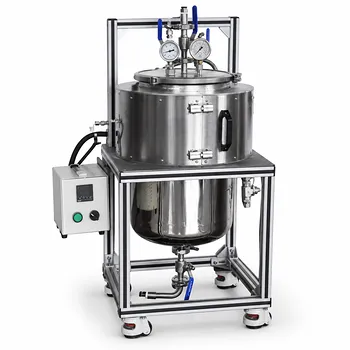
Hot Filtration Educational Unit Operations Pilot Plant Laboratory System

Hot Filtration Educational Unit Operations Pilot Plant Laboratory System

This integrated laboratory bench-scale hot filtration pilot plant enables students to study solid-liquid separation under thermal conditions, featuring a stainless steel vessel, removable heating jacket, and multi-layer filter plates for unit operations education, ideal for chemical engineering laboratory curriculum.

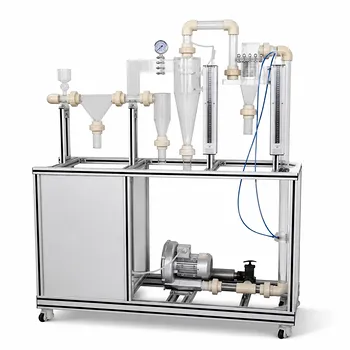
Gas-Solid Heterogeneous Separation Demonstration Educational Unit Operations Pilot Plant

Gas-Solid Heterogeneous Separation Demonstration Educational Unit Operations Pilot Plant

Comprehensive visual transparent gas-solid separation pilot plant for chemical engineering labs. Demonstrates gravity settling inertial settling cyclone and bag filter technologies. Enables real-time analysis of fluid-particle mechanics pressure drop and collection efficiency. Ideal for undergraduate unit operations courses.

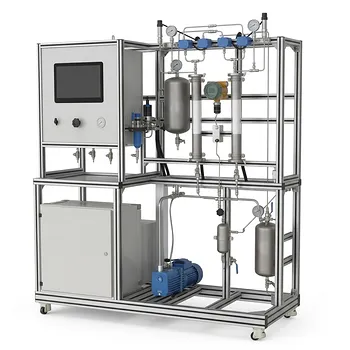
Pressure Swing Adsorption Educational Unit Operations Pilot Plant

Pressure Swing Adsorption Educational Unit Operations Pilot Plant

Integrated bench-scale pressure swing adsorption pilot plant for hands-on teaching of gas-solid separation, mass transfer, and process optimization using nitrogen-oxygen model, featuring dual-column design, industrial touchscreen control, digital assessment suite, and customizable hardware and software configurations for educational laboratories.

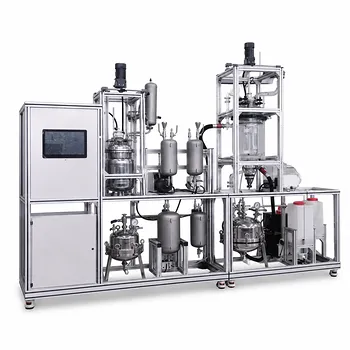
Gallium and Indium Selective Extraction Educational Pilot Plant

Gallium and Indium Selective Extraction Educational Pilot Plant

Integrated pilot-scale laboratory system for engineering education bridging theoretical concepts with industrial practice enabling hands-on study of liquid liquid extraction reaction kinetics and mass transfer for selective gallium and indium separation featuring real-time IoT connectivity with integrated safety

Comprehensive Liquid-Liquid Extraction Pilot Plant for Engineering Education

Comprehensive Liquid-Liquid Extraction Pilot Plant for Engineering Education

Comprehensive liquid-liquid extraction pilot plant for engineering education, integrating rotary and vibratory columns for hands-on observation of phase behavior, flooding limits, and mass transfer efficiency, enabling precise HTU and mass transfer coefficient calculations.

Bench Scale Dual Column Gas Separation and Capture Educational Pilot Plant

Bench Scale Dual Column Gas Separation and Capture Educational Pilot Plant

This dual-column educational pilot plant provides hands-on teaching of gas adsorption, separation, and capture processes. It features stainless steel columns, regeneration up to 400°C, and a 15.6-inch touchscreen PLC for TSA and PSA studies in chemical engineering curricula, process simulation.

Multifunctional Membrane Separation Educational Pilot Plant with Ultrafiltration, Nanofiltration, Reverse Osmosis

Multifunctional Membrane Separation Educational Pilot Plant with Ultrafiltration, Nanofiltration, Reverse Osmosis

An integrated laboratory bench-scale membrane separation system for higher education engineering labs combining Ultrafiltration, Nanofiltration, and Reverse Osmosis processes. Features industrial PLC control with touch-screen HMI, transparent piping, and academic assessment software. Ideal for chemical and environmental engineering curricula.

Multi-Functional Membrane Separation Educational Pilot Plant for Unit Operations Lab

Multi-Functional Membrane Separation Educational Pilot Plant for Unit Operations Lab

The Multi-functional Membrane Separation Educational Unit Operations Pilot Plant is an integrated bench-scale laboratory system designed for teaching undergraduate engineering education. It features Ultrafiltration, Nanofiltration, and Reverse Osmosis modules in a compact, mobile unit for practical hands-on learning.

Multi-Component Gas Pressure Swing Adsorption Pilot Plant for Unit Operations Education

Multi-Component Gas Pressure Swing Adsorption Pilot Plant for Unit Operations Education

Multi-component gas pressure swing adsorption pilot plant designed for unit operations education. Features four-tower configuration, IoT touchscreen control, dual regeneration, and real-time breakthrough curve analysis for engineering training with safety interlocks and mobile frame simulates industrial PSA processes.

Fixed-Bed Chemical Reaction and Gas Dust Tar Removal Unit Operations Pilot Plant

Fixed-Bed Chemical Reaction and Gas Dust Tar Removal Unit Operations Pilot Plant

Integrated educational pilot plant for studying catalytic gas-solid reactions and downstream gas purification. Features dual fixed-bed reactor, three-stage heating, and touchscreen control for hands-on engineering training. Ideal for chemical and environmental engineering curricula.

Bio-fermentation Ethanol Production Practical Training Unit Operations Pilot Plant

Bio-fermentation Ethanol Production Practical Training Unit Operations Pilot Plant

Bio-fermentation ethanol production pilot plant for hands-on training in unit operations: fermentation, solid-liquid filtration, membrane separation, and distillation. Bridges theory with industrial practice using industrial-grade components, customizable for university labs. Hybrid automated and manual control for comprehensive learning.

Solid Waste Pyrolysis and Refining Educational Pilot Plant for Unit Operations

Solid Waste Pyrolysis and Refining Educational Pilot Plant for Unit Operations

This pilot plant for solid waste pyrolysis and refining integrates pyrolysis, separation, distillation, and catalytic hydrogenation into one educational unit. It provides visual process observation, smart data logging, and industrial safety for hands-on learning of engineering unit operations.

Ultrafiltration Membrane Separation Educational Pilot Plant

Ultrafiltration Membrane Separation Educational Pilot Plant

This ultrafiltration membrane separation educational pilot plant enables undergraduate students to process PVA solutions, study hollow fiber membrane dynamics, and perform quantitative analysis with spectrophotometry for hands-on learning of unit operations and industrial maintenance and membrane cleaning protocols.

Liquid-Liquid Mass Transfer Coefficient Determination Educational Pilot Plant

Liquid-Liquid Mass Transfer Coefficient Determination Educational Pilot Plant

This bench-scale educational pilot plant for liquid-liquid mass transfer coefficient determination offers precise control of phase boundary, temperature, and agitation, enabling hands-on study of transport phenomena and unit operations in chemical engineering labs for teaching.

Potassium Salt Thermal Dissolution and Crystallization Separation Educational Unit Operations Pilot Plant

Potassium Salt Thermal Dissolution and Crystallization Separation Educational Unit Operations Pilot Plant

This educational pilot plant allows chemical engineering students to perform potassium salt thermal dissolution and cooling crystallization experiments, integrating solubility studies, supersaturation control, and solid-liquid separation in a safe, compact, and customizable laboratory system for hands-on unit operations learning.

Multi-Functional Special Distillation Educational Pilot Plant

Multi-Functional Special Distillation Educational Pilot Plant

Versatile multi-functional special distillation pilot plant for chemical engineering education. Supports continuous, vacuum, azeotropic, reactive, extractive distillation. Transparent glass columns enable real-time visual observation of hydrodynamics and separation processes.

Carbon Material Thermal Pretreatment Multiphase Separation Educational Pilot Plant

Carbon Material Thermal Pretreatment Multiphase Separation Educational Pilot Plant

Educational pilot plant for carbon material thermal pretreatment and multiphase separation. Features jacketed agitated reactor, separation column, and modern controls for hands-on unit operations training in heat transfer, fluid flow, and process safety with industrial-grade materials and wireless data acquisition.

Educational Pressure Swing Adsorption Ethylene Capture Unit Operations Pilot Plant

Educational Pressure Swing Adsorption Ethylene Capture Unit Operations Pilot Plant

Advanced educational pilot plant for pressure swing adsorption ethylene capture provides comprehensive hands-on training in industrial gas separation processes, featuring an eight-column PSA system, real-time data acquisition, and fully customizable design for chemical engineering unit operations laboratories and research.

Dual-Mode Rectification Pilot Plant for Practical Training Unit Operations

Dual-Mode Rectification Pilot Plant for Practical Training Unit Operations

Industrial-scale dual-mode rectification pilot plant for chemical engineering practical training. Features real-material and simulated-material operation modes, sieve-plate column with sight glasses for visual observation of hydrodynamics, and customizable SCADA control for safe, hands-on learning of unit operations and mass transfer.

Natural Product Extraction Unit Operations Training Pilot Plant

Natural Product Extraction Unit Operations Training Pilot Plant

Integrated natural product extraction pilot plant for chemical engineering training bridges theory and industrial practice with modular extraction and evaporation/concentration units, hybrid touchscreen and manual control, realistic process simulation, and self-contained softened water and vacuum utilities.


Leave Your Message