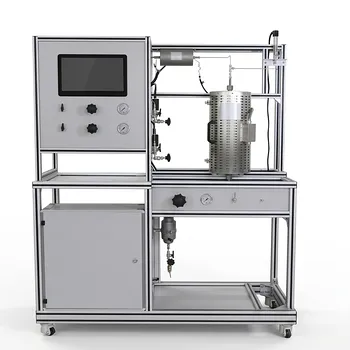
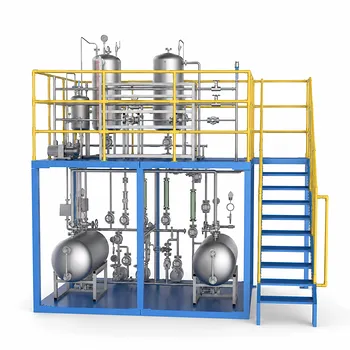
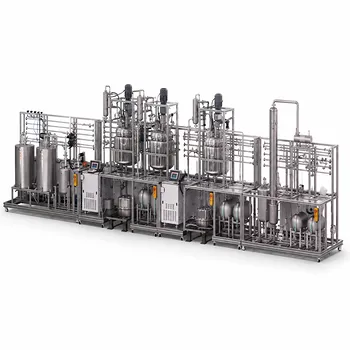
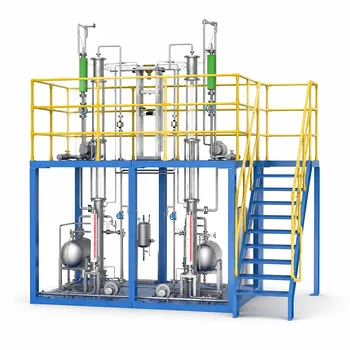
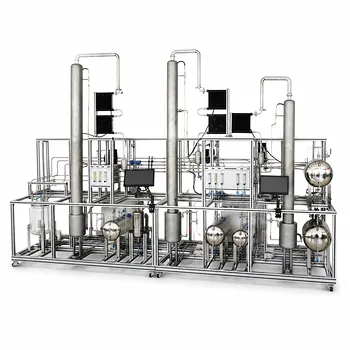
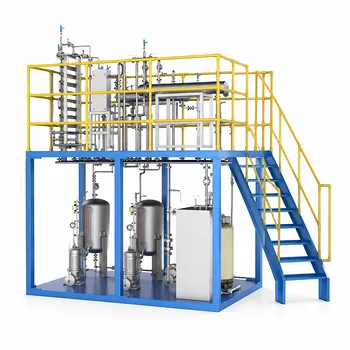
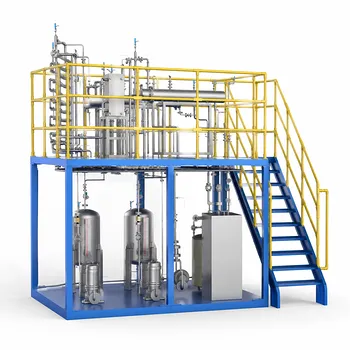
Layer of Protection Analysis (LOPA) is a semi‑quantitative, scenario‑based method that quickly determines whether the safeguards in a chemical engineering pilot plant are sufficient to protect students and researchers. It starts with a single cause‑consequence pair—such as a failed valve leading to a toxic release from an absorption column—and then systematically evaluates the independent protection layers (IPLs) already in place. By multiplying the initiating event frequency by the probability of failure on demand of each IPL, you obtain a mitigated event likelihood that can be compared directly against the laboratory’s risk tolerance criteria.
LOPA turns a qualitative hazard assessment (like a HAZOP) into a defensible, risk‑based decision. In a pilot‑plant setting, it bridges the gap between a simple checklist and a full Quantitative Risk Analysis (QRA) by giving you a credible, documented answer to the core question: “Are our existing layers of protection enough, or do we need to add another independent control?”
The Role of LOPA in a Multi‑Layered Pilot‑Plant Safety Strategy
Chemical engineering pilot plants must already operate with a stack of protective layers—from inherently safer design at the base to community emergency plans at the outer ring. LOPA does not replace those layers; it validates them.
How the Multi‑Layered Safety Concept Feeds into LOPA
The standard layers (Basic Process Control System, critical alarms, automatic shutdown interlocks, pressure relief devices, and containment) are the very “protection layers” that LOPA quantifies.
When you run a LOPA for a specific scenario, you are effectively asking: “If one initiating event occurs, which of these layers will stop the chain of events before the harm reaches the operator?”
A layer qualifies as an Independent Protection Layer only if it is effective, independent of the initiating cause, and auditable. A properly configured pressure relief valve is an IPL; a standard operating procedure that relies on a busy PhD student is usually not.
Why LOPA Fits the Pilot‑Plant Environment Perfectly
Educational and research pilot plants are complex enough to have accident potential, but rarely justify the expense and data demands of a full QRA.
LOPA uses conservative, order‑of‑magnitude estimates that are readily available from industry databases and equipment reliability handbooks.
This makes it practical for a teaching laboratory where you need a rigorous yet teachable method—one that mirrors industrial practice without overwhelming the team.
Step‑by‑Step: Applying LOPA to a Unit Operations Pilot Plant
Step 1: Define a Single, Well‑Bounded Consequence
Choose a credible worst‑case outcome for the specific unit you are analyzing.
For a distillation column, it might be “loss of containment leading to flammable vapor cloud inside the laboratory.”
For a pressurized reactor, it could be “overpressure causing vessel rupture and projectile hazard.”
Step 2: Pair It with a Specific Initiating Cause
Every LOPA scenario must have one cause‑consequence pair.
Typical initiating events in pilot plants include:
- Component failure: a control valve sticking open, a temperature sensor drifting, a pump seal leak.
- Human error: an operator forgetting to open a cooling water valve before starting a reaction.
- External event: a power outage that disables agitators in a batch reactor.
Step 3: Determine the Initiating Event Frequency
Use published failure rate data. For example, a generic solenoid valve might fail to close once every 50 years of operation in the field; in a lightly loaded educational setting, you may adjust conservatively.
Always document your assumptions. If no industrial data fits, a qualitative “very low / low / medium” categorization can be assigned a numerical range with suitable justification.
Step 4: Identify All Independent Protection Layers
Walk through the existing layers that would independently stop the scenario from escalating.
Consider:
- Basic Process Control System (BPCS): a flow controller that would close a valve on high flow—if it is independent of the initiating cause.
- Critical alarm with human response: a hard‑wired high‑pressure alarm that, when acknowledged, leads to a manual shutdown within the time available.
- Safety Instrumented Function (SIF): an automatic trip that shuts off the heat source if a high temperature is reached, built to a specific Safety Integrity Level (SIL) if required.
- Pressure relief valve / rupture disk: the last mechanical defense before vessel failure.
- Physical containment: a bund or fume hood that would catch a minor leak.
For each IPL, assign a Probability of Failure on Demand (PFD) —a number like 0.1 for a simple alarm‑human response loop, 0.01 for a relief valve, or 0.001 for a SIL‑2 interlock.
Step 5: Calculate the Mitigated Event Frequency
Multiply the initiating event frequency by all the IPL PFDs you have credited.
If the result is, for example, 5 × 10⁻⁵ per year, and your laboratory’s tolerable frequency for a major injury is 1 × 10⁻⁴ per year, the risk is acceptable.
If the number falls above the criterion, you must add another physical or administrative layer until the residual risk is driven below the threshold.
Building a Robust Risk Picture: LOPA Rarely Stands Alone
Use HAZOP to Feed LOPA
A Hazard and Operability Study (HAZOP) systematically generates the deviations—such as “no flow,” “more pressure,” “reverse flow”—that become the cause‑consequence pairs for LOPA.
In a teaching pilot plant, students can run a mini‑HAZOP on a reactor or absorber using guide words, then immediately perform a LOPA on the highest‑risk deviations they have identified.
This closes the loop between hazard identification and risk reduction, giving them a vivid, hands‑on lesson in process safety.
Embed LOPA Within the Five‑Step Safety Assessment
The standard safety assessment cycle (Identify → Analyze → Evaluate → Control → Report) provides the wrapper.
LOPA is precisely the “Analysis” and “Evaluation” step for scenarios that deserve more than a qualitative ranking.
After LOPA confirms which risks need additional controls, you move to the Control step—adding an interlock, re‑routing a vent, or changing the laboratory layout—and then document everything in the emergency response plan and operating manual.
Understanding the Trade‑offs of Using LOPA
While LOPA is the workhorse of pilot‑plant risk assessment, it is not a one‑size‑fits‑all solution.
- It is only as good as the input data. If you use generic failure rates that don’t reflect your specific equipment age, maintenance regime, or operating environment, the answer could be misleading. Always validate assumptions with plant‑specific inspection records.
- It treats scenarios in isolation. LOPA analyzes one cause‑consequence pair at a time. Complex, multiple‑failure scenarios or common‑mode failures that defeat several layers at once require more sophisticated techniques (like fault tree analysis within QRA).
- The human factor is easily underestimated. An alarm that demands operator action within 60 seconds will be credited a low PFD only if you can prove the operator is trained, not overloaded, and has clear, written procedures. In a student‑run pilot plant, the real human reliability may be much lower than a textbook number.
- It can create a false sense of security. A LOPA that just barely meets the criterion may still be unacceptable if the consequences are catastrophic. For high‑hazard research pilots (e.g., involving acutely toxic gases or high energy materials), you should supplement LOPA with consequence modeling or even a formal QRA.
- It requires periodic revalidation. A LOPA performed during design must be updated whenever the process chemistry, equipment, or staffing model changes. A “passed” LOPA from last year may not cover the new protocol a graduate student introduces this semester.
Making the Right Choice for Your Pilot Plant
The method you choose depends entirely on your risk profile, resources, and educational goals.
- If your primary focus is routine educational unit operations (distillation, absorption, heat exchange) with moderate hazards: Start with a HAZOP to identify scenarios, then apply LOPA to any scenario with a safety‑critical consequence. The semi‑quantitative output will give you a defensible, teachable level of safety without over‑engineering.
- If you are designing a new pilot plant or adding a new hazardous reaction: Embed LOPA into the design review gate. Use the results to specify the Safety Integrity Level (SIL) of any safety instrumented system and to size relief valves correctly.
- If you operate a high‑hazard research pilot (e.g., trimerization reactions, high‑pressure hydrogenation, or toxic gas scrubbing) with potentially severe off‑site effects: Use LOPA as a screening tool. For scenarios that approach the tolerable risk boundary, invest in a partial QRA that models the consequence footprint and accounts for more complex failure combinations.
- If your core goal is to teach industrial safety methodology: Use LOPA as the capstone of a student safety exercise. Let students perform the initiating event frequency look‑ups, identify IPLs on the piping and instrumentation diagram (P&ID), and calculate the mitigated frequency. It transforms abstract safety layers into a concrete, quantitative decision.
In every case, a well‑documented LOPA gives you a clear, auditable record that shows why you believe your pilot plant is safe to operate—and exactly where you would strengthen it if the risk picture changes.
Summary Table:
| LOPA Step | Core Objective | Pilot Plant Application Example |
|---|---|---|
| 1. Consequence | Define the worst-case scenario | Flammable vapor cloud release from a distillation column |
| 2. Initiating Cause | Identify the failure trigger | Control valve sticking open, power outage, or operator error |
| 3. Identify IPLs | Credit independent protection layers | Pressure relief valves (PRV), critical alarms, or automated interlocks |
| 4. Calculate Risk | Multiply frequency by IPL PFD | Determine if mitigated risk frequency meets laboratory safety thresholds |
Build a Safer, Industry-Ready Chemical Engineering Lab
Implementing LOPA is crucial for process safety, but risk reduction starts with robustly engineered equipment. LABPARK provides state-of-the-art Educational and Vocational Unit Operations Pilot Plants in chemical engineering, bioprocess & biotech, and environmental & water treatment.
Designed specifically for universities, research institutes, and enterprises, our pilot plants are built with high-quality, traceable safety layers—including physical containment, reliable alarms, and automated interlocks—ensuring a safe environment for students and researchers alike.
Ready to upgrade your laboratory with safe, industry-standard training systems? Contact LABPARK today to discuss your project requirements with our engineering team!
Related Products
- Carbon Dioxide Hydrogen Methanol Synthesis Educational Unit Operations Pilot Plant
- Multi Pump Fluid Transport Process Piping Unit Operations Training Pilot Plant
- Natural Product Extraction Unit Operations Training Pilot Plant
- Multi-Modal Distillation Unit Operations Training Pilot Plant
- Multi-Reactor Educational Pilot Plant for Reaction Engineering Unit Operations
People Also Ask
- How do temp & pressure affect methanol synthesis pilot plants? Optimize equilibrium and catalyst performance.
- Why is a purge system necessary when operating a gas recirculation loop in a methanol synthesis pilot plant? (Guide)
- Why do modern methanol pilot plants operate at lower pressures? Catalyst & Feed Requirements Explained
- What are the operational requirements for catalyst activation? Safe Methanol Pilot Plant Operation
- Why is the chemical plant startup schedule crucial? De-risk scale-up with pilot plants.