For integrating Flow-Injection Analysis (FIA) into a bioprocess pilot plant, you connect an automated sampling loop directly to the bioreactor. This system automatically withdraws a cell-free sample stream, injects it into a carrier buffer, and processes it through a series of reagent mixing steps or a selective capture cartridge before routing the analyte to an inline detector like a fluorimeter. The entire sequence—sampling, reaction, detection, and system cleaning—is controlled by an automated software platform that replaces manual grab sampling with continuous, real-time data acquisition.
The integration of FIA into a bioprocess pilot plant is fundamentally about transforming a time-consuming, labor-intensive offline assay into an automated Process Analytical Technology (PAT) loop. The core challenge isn't just the chemical analysis; it's designing a robust, self-validating fluidic infrastructure that can maintain accuracy over a weeks-long cell culture without manual intervention.
The Core Components of an Integrated FIA System
The physical integration of an FIA system is modular. It's not a single device but a coordinated set of subsystems that must work in unison to deliver reliable data. Understanding these building blocks is critical to a successful implementation.
The Automated Sampling Interface
The journey begins at the bioreactor. A filtration probe or a membrane-based sampling device sits directly in the culture broth, filtering out cells to create a clean, particle-free sample stream.
This continuous stream is vital. It prevents the sample from stagnating and ensures that what reaches the analytical loop is representative of the current bioreactor state. Any blockage here, from cell clumping or biofouling, stops the entire process.
The Fluidic Heart of the System
At the system's core is a multi-port injection valve and a precise pump. The pump draws the clean sample from the interface and loads a fixed-volume loop in the injection valve with high reproducibility.
With a precise switch, the valve injects this defined sample plug into a continuously flowing carrier buffer. This carrier stream transports the plug through the rest of the analytical manifold, whether that means mixing with reagents for a colorimetric reaction or passing through a selective capture column.
Performing the Analysis: From Immunoassay to Biosensors
How the integrated system detects a target protein, such as an antibody, defines its configuration. This is where the analytical principle is physically embedded into the fluidic path.
Automated Flow Injection Immunoanalysis (FIIA)
For direct detection of target proteins like monoclonal antibodies, a heterogeneous Flow Injection Immunoanalysis (FIIA) setup is the method of choice.
The automated cycle is highly choreographed:
- Binding: The injected sample is passed through a cartridge containing an immobilized affinity ligand, like Protein G, which selectively captures the target antibody.
- Washing: A series of automated valves switches the flow to a clean buffer, rinsing away non-bound media components and impurities.
- Elution: The valves switch again to introduce a low-pH buffer. This abrupt shift disrupts the binding interaction, releasing a concentrated plug of the purified target antibody.
- Detection: This eluted plug flows through an inline fluorimeter, where the intrinsic protein fluorescence is measured, providing a signal directly proportional to the concentration.
- Regeneration: Finally, a neutral buffer re-equilibrates the cartridge for the next injection cycle.
This entire sequence, managed by a single automation script, directly replaces a multi-step, hours-long ELISA procedure with a cycle time measured in minutes.
The Expanding Toolkit of FIA Biosensors
The same FIA architecture can run parallel analytical chemistries. A multichannel system can split the sample stream to measure not just a target protein but critical metabolic parameters simultaneously.
By integrating specific enzymatic reactions before a detector, you can monitor substrates that are impossible to detect with a simple probe. Examples include:
- Glucose monitoring: The sample mixes with an immobilized glucose oxidase enzyme. An oxygen electrode detects the oxygen consumed, which is proportional to glucose concentration.
- Complex sugar analysis: A dual-channel approach measures free glucose first. A parallel channel treats the sample with amyloglucosidase to convert maltose and polysaccharides into glucose, then measures the total glucose. The difference indicates the complex sugar level.
- Protease activity: A stopped-flow technique uses an enzyme-specific substrate that releases a colored product, such as p-nitrophenol, measured by a photometer.
Ensuring Data Integrity Over a 14-Day Fed-Batch
Connecting a complex fluidic system to a pilot plant is one thing; keeping it accurate for days is another. The key differentiator of a truly integrated FIA system is its capacity for self-validation and fault management.
Automated Calibration and Validation Cycles
An integrated system does not rely on a single calibration performed at the start of a run. The control software is programmed to execute automated calibration sequences periodically.
Before the first measurement and at set intervals, a multiposition valve switches from the bioreactor sample to standard solutions of known protein concentration. The system builds or updates a calibration curve, correcting for any detector drift or slow enzyme degradation. For online validation, the system can be set to perform replicate injections automatically and calculate the standard deviation to flag unstable measurements.
Systematic Fault Diagnosis in Fluidic Networks
When the system is an educational or research tool, operator training hinges on fault diagnosis. When a signal goes awry, a logical, systematic approach is required to isolate the root cause across the five potential failure domains.
Think of these five subsystems as the diagnostic checklist:
- Sampling System: Is the filter plugged? Is the sample line contaminated?
- Flow System: Is there a leaking fitting? An air bubble trapped in the detector? A jammed injection valve?
- Reaction System: Has the enzyme cartridges or Protein G column lost activity? Is the carrier buffer composition wrong?
- Detector System: Is the fluorimeter's lamp aging? Is the ammonia electrode’s membrane degraded?
- Automation System: Is a control wire disconnected? Is the A/D range on the data acquisition board incorrect?
A powerful diagnostic strategy leverages the multichannel nature of the system. A true pump failure will cause a simultaneous flow reduction and signal drift on all channels. A single jammed carrier tube will only affect one channel's signal while the others remain stable. This multi-signal heuristic is critical for rapid fault isolation.
Understanding the Trade-offs
The shift to FIA integration is a trade-off between analytical speed and chromatographic resolution. It's not a one-to-one replacement for all offline methods.
- FIA vs. On-line HPLC: Traditional HPLC in a pilot plant provides a full chromatogram, separating multiple components in one run. But it suffers from long analysis times and complex sample preparation. An amperometric FIA biosensor for a substrate like glycerol, using a mixing chamber for automated dilution, offers a much simpler and faster alternative. It trades high-resolution separation for high-speed, selective quantification directly from the bioreactor without pre-separation.
- FIIA vs. ELISA: Automated FIIA achieves a significantly higher level of automation and faster data turnaround than labor-intensive ELISA. While ELISA is a universal gold standard, its manual errors can lead to a relative error around 7%. A well-integrated FIIA system with regression modeling can reduce that average relative error to the 2.9-6.2% range.
Making the Right Choice for Your Goal
The architecture you choose should directly map to the purpose of your bioprocess pilot plant, whether it's for rigorous research, advanced PAT demonstration, or vocational training.
- If your primary focus is achieving true PAT for a high-value protein: Implement a fully automated heterogeneous FIIA configuration with a Protein G capture cartridge and an inline fluorimeter, complete with automated periodic calibration and validation cycles.
- If your primary focus is obtaining a holistic metabolic overview alongside protein titer: Deploy a multichannel FIA system that splits the sample to dedicated biosensor lines, allowing simultaneous monitoring of the target protein, glucose, ammonium, and enzyme activity.
- If your primary focus is operator training and education in fault diagnosis: Integrate the system with a clear Supervisory Control and Data Acquisition (SCADA) interface that visualizes all channel signals, actively using the multichannel comparison heuristic to teach the distinction between systemic pump failures and localized fluidic faults.
The decision to integrate FIA is a commitment to transforming your bioprocess data from a series of historical time points into a continuous, actionable stream that empowers both your process control and your people.
Summary Table:
| Method / Configuration | Target Analytes | Key Benefits | Primary Use Case |
|---|---|---|---|
| Flow Injection Immunoanalysis (FIIA) | Monoclonal antibodies, target proteins | High automation, low error (2.9-6.2%), replaces manual ELISA | Real-time PAT for high-value proteins |
| Enzymatic FIA Biosensors | Glucose, maltose, complex sugars, lactate | Fast, selective detection without chromatography pre-separation | Metabolic substrate monitoring |
| Multichannel FIA Systems | Target proteins & multiple metabolites simultaneously | Multi-signal diagnostics, comprehensive process overview | Operator training & research labs |
Bring Advanced Automation to Your Bioprocess Training & Research
Are you looking to equip your lab or training facility with cutting-edge Process Analytical Technology (PAT)?
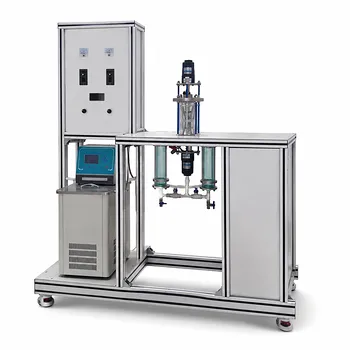
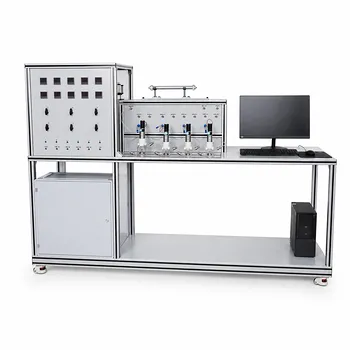
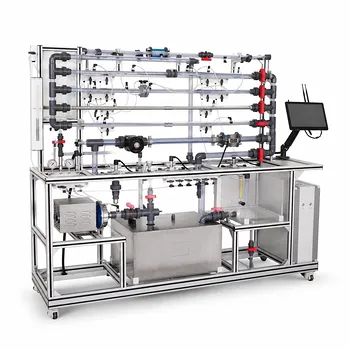
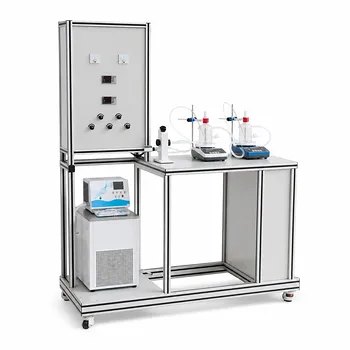
LABPARK provides state-of-the-art Educational and Vocational Unit Operations Pilot Plants in chemical engineering, bioprocess & biotech, and environmental & water treatment. Specifically designed for universities, research institutes, and enterprises, our modular systems help students and researchers master real-time automated monitoring, flow-injection analysis (FIA), and system troubleshooting.
Ready to elevate your engineering and biotech programs? Contact our expert team today to find the ideal pilot plant solution for your organization!
Related Products
- Quantitative Dosing and Liquid Flow Control Educational Unit Operations Pilot Plant
- Bio-fermentation Ethanol Production Practical Training Unit Operations Pilot Plant
- Continuous Batch Extractive Distillation Educational Pilot Plant
- Fluid Transport and Piping Dynamics Practical Training Unit Operations Pilot Plant
- Two Phase Flow Pattern Velocity Resistance Measurement Educational Pilot Plant
People Also Ask
- How do educational unit operations pilot plants bridge theory and design? Bridge the Engineering Gap
- How do educational unit operations pilot plants address safety and waste management when scaling up?
- Why is the attenuation path length (lA) critical when positioning pressure sensors in a fluid flow unit operations pilot plant?
- How do conservation equations guide fluid flow pilot plants? Key Scale-Up Principles
- What are the key differences in process analytics requirements from R&D to production?