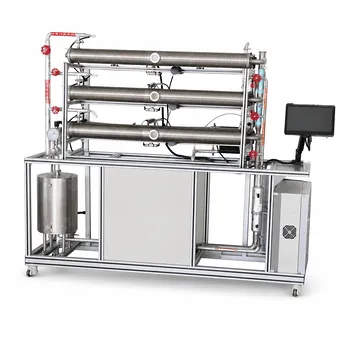
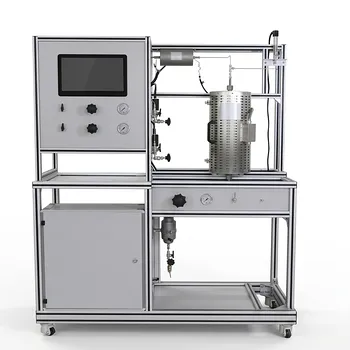
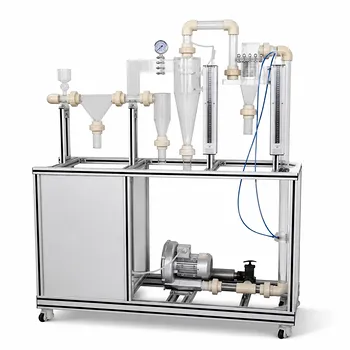
Hands-on learning without a pilot plant is like learning to swim from a textbook. Environmental unit operations pilot plants transform advanced wastewater treatment education by allowing students to physically operate ion exchange columns, adsorption beds, and membrane separation modules. In these living laboratories, users don't just read about mass transfer—they run breakthrough curves, regenerate exhausted resins, and watch membrane fouling happen in real time under variable pressure. This tactile experience is what converts a conceptual understanding of ion exchange and membrane separation into the diagnostic, optimization, and scale-up skills an engineer actually needs to meet stringent discharge limits.
The true value of a pilot plant lies in its ability to compress months of industrial experience into a single semester. By deliberately provoking equipment fouling, exhaustion, and breakthrough, students learn to anticipate failure modes, evaluate regeneration economics, and select the right technology for a specific pollutant—knowledge that simply cannot be acquired from theory alone.
From the Page to the Plant Floor: Why Pilot Plants Are Essential
Advanced treatment methods like ion exchange and membrane separation are deceptively simple in principle. The challenge is never the theory; it’s the messiness of reality. A pilot plant provides a controlled environment where that messiness can be observed, measured, and managed.
Making Mass Transfer Tangible
In a classroom, mass transfer exists as an equation. In a pilot plant, it becomes a physically observable gradient. Students see the color of a metal-laden solution fade as it travels through an ion exchange column. They watch the permeate flow rate drop as a membrane fouls. This bridges the gap between abstract diffusion coefficients and the physical reality of a packed bed or a polymer barrier.
The Scalability Imperative
The pilot scale is the critical link between a laboratory beaker and a municipal treatment plant. Here, students encounter non-linear scale-up effects—channeling in a column, uneven flow distribution across a membrane module—that are invisible in a lab experiment but catastrophic at full scale. Learning to identify and mitigate these effects is the foundation of sound environmental engineering.
Mastering Ion Exchange Through Dynamic Experimentation
Ion exchange resins are highly selective workhorses for removing heavy metals and hardness. A pilot plant teaches that resin performance is not a static property but a dynamic process that reveals itself through the lifetime of a column cycle.
Running Real-Time Breakthrough Curves
A textbook shows you a finished breakthrough curve; a pilot plant forces you to build it yourself. Students sample effluent at timed intervals, measure pollutant concentration, and plot the S-shaped curve that defines operational life. This exercise ingrains a visceral understanding of the mass transfer zone, the point of exhaust, and the lead-lag effect of multi-column systems.
Evaluating Regeneration Cycles as a Business Decision
Regeneration is where the economics of ion exchange are won or lost. In the pilot plant, students inject acid, brine, or caustic to strip the captured metals. They measure the volume and concentration of the regenerant waste, then compare the chemical cost and waste disposal burden against the bed’s recovered capacity. This transforms regeneration from a laboratory step into a process optimization challenge centered on resource recovery, including the potential to reclaim valuable metals like copper or chromium.
Deconstructing Membrane Separation: Fouling, Flux, and Pressure
Membrane systems offer a crystal-clear permeate, but their real educational value lies in the opaque, sticky layer that inevitably forms on their surface. A pilot plant makes the silent killer of all membranes—fouling—a study subject.
Simulating Membrane Fouling Under Pressure
By running synthetic or real wastewater through nanofiltration or reverse osmosis modules at controlled pressures, students can accelerate fouling. They observe how transmembrane pressure rises to maintain constant flux, measure the resulting drop in permeability, and then execute cleaning protocols. This teaches the direct link between feed pre-treatment quality, energy consumption, and membrane longevity.
Testing Selectivity and Energy Footprints
Not all membranes are equal. A pilot plant bench with interchangeable modules allows direct side-by-side comparisons. Students can route a saline stream through a nanofiltration and a reverse osmosis membrane, comparing ion rejection rates, recovery percentages, and pumping energy requirements. This data-driven comparison builds the skill of technology selection based on a specific pollutant profile and economic constraint, which is the exact decision-making process required for industrial water reuse projects.
Connecting Unit Operations to the Broader Treatment Train
While ion exchange and membranes are powerful, they rarely operate in isolation. Their educational value multiplies when they are contextualized within a complete tertiary treatment sequence.
Designing Integrated Multi-Stage Processes
The most profound learning happens when students are tasked with designing a treatment train. They might position an adsorption column before a membrane to reduce organic fouling, or use an ion exchange column to polish the concentrate from a membrane system. Running these interconnected pilot units teaches systems thinking—how the effluent quality of one stage becomes the influent challenge for the next, and how to balance energy, chemical, and capital costs across the entire facility.
Bridging Theory and Real-World Regulation
A pilot plant is a safe space to fail at meeting a discharge permit. Students can deliberately undersize a resin bed or over-compact a membrane, witness the resulting contaminant slip in the real-time sensor data, and then adapt the process accordingly. This iterative loop of design-test-fail-redesign ingrains the practical constraints of environmental law and the operational discipline needed to achieve continuous compliance.
Understanding the Trade-offs and Pedagogical Pitfalls
For all their instructional power, pilot plants introduce challenges that must be managed. An objective learning environment acknowledges these limitations openly.
The Cost and Maintenance Reality
Pilot-scale systems are expensive to procure, require a steady stream of consumables (resins, membranes, cleaning chemicals), and demand diligent maintenance. A membrane module left to dry out or a column support screen damaged by debris can turn a teaching asset into a costly paperweight. Without a dedicated technical staff, uptime can suffer.
The Risk of Single-Operation Myopia
A student who spends an entire semester optimizing an ion exchange column may develop a deep but narrow skill set. The curriculum must actively force connections to other unit operations, the central control philosophy, and the larger environmental goal of water circularity. Otherwise, the pilot plant becomes a collection of isolated experiments rather than a true plant simulator.
Simplification Versus Industrial Reality
Pilot plants often use synthetic wastewater for safety and reproducibility. Real industrial streams contain surfactants, oils, and temperature fluctuations that drastically alter fouling behavior and resin kinetics. The instructor must explicitly bridge this gap, using the clean pilot data to build a theoretical model and then teaching students how to apply fouling factors or safety margins for real-world design.
How to Structure a High-Impact Learning Program
The equipment is only as effective as the learning design wrapped around it. Tailor the pilot plant curriculum to the desired learning outcome using these guidelines.
- If your primary focus is mastering process dynamics: Structure exercises around transient behavior. Force students to start up columns, induce upset conditions, measure lag times, and manually tune control loops. The goal is intuitive, real-time diagnostic ability.
- If your primary focus is system design and scale-up: Give students a raw water analysis and an effluent permit, then assign them to select, size, and run the pilot units to prove their design works. The deliverable is a data-backed scale-up report, not just a lab notebook.
- If your primary focus is cost and regulatory compliance: Make economics central. Require students to log chemical consumption, energy use, and waste generation for each run. The final grade depends on achieving treatment targets within a budget, mirroring the pressures of an actual utility or industrial EHS department.
- If your primary focus is research and development: Use the pilot plant as a testbed. Task students with evaluating a novel adsorbent, a new cleaning-in-place protocol, or an unusual mixed-matrix membrane. Emphasize experimental design, statistical analysis, and the humility that comes from a hypothesis that did not survive contact with the pilot rig.
The ultimate lesson an environmental unit operations pilot plant teaches is that advanced treatment is not a fixed recipe but an engineering discipline. It empowers students to see membranes and ion exchange resins not as magic, but as manageable, predictable, and optimizable tools for protecting human health and the environment.
Summary Table:
| Technology / Method | Key Concept Taught | Hands-On Learning Activity |
|---|---|---|
| Ion Exchange | Mass transfer, breakthrough dynamics, resin capacity | Running real-time breakthrough S-curves, evaluating chemical regeneration economics |
| Membrane Separation | Fouling, flux drop, transmembrane pressure, selectivity | Simulating fouling under pressure, comparing NF vs. RO rejection and energy footprints |
| Integrated Systems | Multi-stage process design, systems thinking | Linking adsorption, membrane, and ion exchange units into a complete tertiary treatment train |
Bring Industrial-Scale Wastewater Education to Your Lab
Equip your students and researchers with the practical, diagnostic, and scale-up skills needed to solve real-world environmental challenges.
LABPARK provides premium Educational and Vocational Unit Operations Pilot Plants in chemical engineering, bioprocess & biotech, and environmental & water treatment. Designed specifically for universities, research institutes, and enterprises, our pilot plants bridge the gap between textbook theory and physical engineering reality.
Ready to upgrade your lab's capabilities and prepare the next generation of engineers? Contact LABPARK today to explore our customizable pilot plant solutions.
Related Products
- Solid Waste Pyrolysis and Refining Educational Pilot Plant for Unit Operations
- Fixed-Bed Chemical Reaction and Gas Dust Tar Removal Unit Operations Pilot Plant
- Rising and Falling Film Evaporation Educational Unit Operations Pilot Plant
- Three-Tube Heat Transfer Educational Pilot Plant for Unit Operations Training
- Carbon Dioxide Hydrogen Methanol Synthesis Educational Unit Operations Pilot Plant
People Also Ask
- How do educational unit operations pilot plants bridge theory and design? Bridge the Engineering Gap
- How do educational unit operations pilot plants address safety and waste management when scaling up?
- When to transition from PID to adaptive control in pilot plants? Key process indicators.
- Why is the chemical plant startup schedule crucial? De-risk scale-up with pilot plants.
- Why Compare Predicted and Experimental Excess Enthalpy? Key to Accurate Pilot Plant Scale-up