The answer to removing heavy metals often isn’t simpler chemistry—it’s smarter coordination.
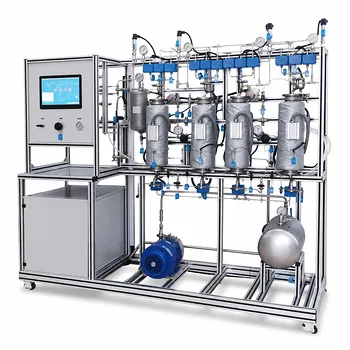
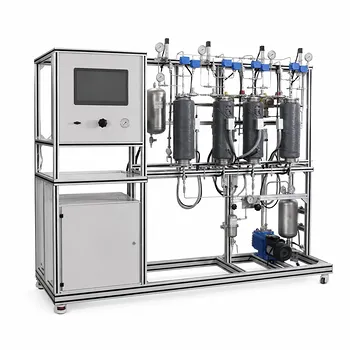
Environmental unit operations pilot plants take the principles of coordination chemistry out of the textbook and into a controlled, scalable treatment environment. By forming complexes like [Cu(NH₃)₄]²⁺ or [Zn(NH₃)₄]²⁺, researchers can directly manipulate metal solubility and separation efficiency. The pilot plant’s integrated mixers, ion exchange columns, and membrane units then demonstrate how shifted coordination equilibria translate into real-world selective removal, giving students and engineers a dynamic platform for studying and optimizing heavy metal remediation.
A pilot plant transforms coordination compound formation into a practical separation lever. By forming stable, soluble metal–ligand complexes, you can selectively dissolve a target metal from a mixed solid—like using ammonia to pull zinc away from magnesium hydroxide. The same coordination principles, when paired with chelating resins or membrane systems, enable targeted capture. The pilot infrastructure delivers the controlled pH, ligand dosing, and residence time needed to make these reactions work reliably at scale.
From Beaker to Pilot Scale: Why Coordination Chemistry Needs Process Equipment
The Chemistry Behind the Cleanup
Coordination compounds form when a central metal ion binds to ligands (e.g., NH₃, EDTA, or Cl⁻) via coordinate covalent bonds. This binding can dramatically alter the metal’s solubility, charge, and molecular size. A pilot plant lets you observe these shifts in real time: adding ammonia to a Cu²⁺ solution generates the soluble [Cu(NH₃)₄]²⁺ complex, preventing precipitation, while introducing sulfide ions under controlled pH can subsequently break the complex to form highly insoluble CuS ((K_{sp} = 6.3 \times 10^{-36})).
A Laboratory That Thinks It’s a Factory
A benchtop beaker can’t simulate continuous flow, mixing inefficiencies, or long-term resin fouling. Unit operations pilot plants fill that gap. They replicate industrial conditions with peristaltic pumps, stirred reaction tanks, clarifiers, and filtration columns. This makes coordination chemistry a controllable process variable—researchers can switch ligands, vary temperature, and measure breakthrough curves just as they would in a full-scale treatment facility.
Showcasing Selective Dissolution with Soluble Coordination Complexes
The Zinc-Ammonia System in Action
One of the cleanest pilot-plant demonstrations uses ammonia to selectively dissolve zinc from a mixed hydroxide sludge. When a precipitate containing Zn(OH)₂ and Mg(OH)₂ is exposed to an ammonia solution, the Zn²⁺ ions form the highly soluble [Zn(NH₃)₄]²⁺ complex, while the Mg(OH)₂ remains completely insoluble. A pilot-scale stirred tank followed by filtration or settling then separates the clear zinc-ammine solution from the solid magnesium residue.
Manipulating pH and Ligand Concentration
The driving force for this separation is the stability constant of the metal complex. By adjusting pH (which controls the availability of the deprotonated ligand NH₃) and the total ammonia concentration, operators visually shift the dissolution equilibrium. The pilot plant’s inline pH probes and dosing pumps make it easy to map the exact operating window where zinc recovery is maximized and magnesium contamination is zero—a powerful teaching tool for fractional precipitation concepts.
Harnessing Coordination for Capture: Ion Exchange and Membrane Systems
From Solubilization to Selective Binding
Coordination chemistry doesn’t just dissolve metals; it also captures them. Chelating ion exchange resins are packed with functional groups (e.g., iminodiacetate) that form stable coordinate bonds with heavy metals like Ni²⁺ or Cu²⁺. In a pilot column, a metal-laden feed passes through the resin bed, and the metal ions are selectively pulled out of solution while innocuous ions like Na⁺ pass through. Adjusting the influent pH and contact time directly influences the coordination equilibrium on the resin surface, allowing researchers to determine the maximum loading capacity.
Membrane Filtration with Size-Enhanced Complexes
Another pilot-scale strategy uses large organic ligands to form high-molecular-weight metal complexes that can be retained by nanofiltration or ultrafiltration membranes. The pilot plant’s pumps, pressure sensors, and membrane cartridges enable continuous monitoring of rejection rates versus ligand-to-metal ratio. This approach demonstrates how coordination can physically enlarge a pollutant, making it separable without traditional phase change.
Understanding the Trade-offs and Practical Pitfalls
The Double-Edged Sword of Solubility
While complexation can dissolve a target metal for high-purity recovery, it can also unintentionally increase metal mobility. If ligand dosing is not carefully controlled, a treated effluent might carry complexed heavy metals past downstream precipitation steps, violating discharge limits. The pilot plant is the ideal venue for identifying these thresholds before they reach full-scale operation.
Ligand Cost and Secondary Pollution
Ammonia and synthetic chelators add operating expenses and can themselves become pollutants. A pilot study must evaluate the full life cycle: how much ligand is lost, whether it can be recycled (e.g., via electrodialysis regeneration of ion exchange resins), and what treatment is needed to break residual complexes. Resin fouling from competing ions and the need for periodic chemical regeneration are key realities that only pilot longevity tests can reveal.
Making the Right Choice for Your Demonstration or Research Goal
The pilot plant toolbox offers many ways to integrate coordination chemistry into heavy-metal removal. The approach you choose should align with your primary objective.
- If your primary focus is teaching fundamental coordination principles: Select the ammonia-zinc selective dissolution experiment, as it visually demonstrates equilibrium shifts and selective separation with simple, safe reagents.
- If your primary focus is optimizing an industrial recovery process: Pair a chelating ion exchange column with electrodialysis regeneration and test different electrolyte types (e.g., HNO₃ vs. H₂SO₄) to maximize nickel or copper recovery from low-concentration streams.
- If your primary focus is achieving ultra-low discharge limits: Combine chemical complexation with membrane filtration to trap large coordination compounds, and use the pilot’s real-time data to perfect the ligand-to-metal ratio and pH setpoint.
- If your primary focus is scaling up a sulfide precipitation process: Use the pilot’s mixing controls to explore how pre-complexation with ammonia can stabilize metals before the final precipitation step, avoiding premature CUS formation and ensuring uniform particle growth.
Coordination chemistry becomes an engineering tool—not just a molecular curiosity—when you can walk up to a pilot plant, turn a valve, and watch a metal ion move exactly where you want it to go.
Summary Table:
| Method | Chemical Principle | Pilot Plant Application |
|---|---|---|
| Selective Dissolution | Ammonia-metal complexation (e.g., [Zn(NH₃)₄]²⁺) | Separating zinc from magnesium in stirred tanks and filtration units. |
| Chelating Ion Exchange | Coordinate bonding on functional resin groups | Packing columns to measure resin capacity and breakthrough curves. |
| Membrane Filtration | Size-enhanced complexation using large ligands | Using ultrafiltration to retain large coordination compounds. |
Ready to bring advanced environmental engineering concepts to life? LABPARK provides state-of-the-art Educational and Vocational Unit Operations Pilot Plants in chemical engineering, bioprocess & biotech, and environmental & water treatment. Specifically designed for universities, research institutes, and enterprises, our scalable systems empower researchers and students to master complex separation and remediation processes. Contact LABPARK today to discover how we can elevate your laboratory and training capabilities!
Related Products
- Fixed-Bed Chemical Reaction and Gas Dust Tar Removal Unit Operations Pilot Plant
- Solid Waste Pyrolysis and Refining Educational Pilot Plant for Unit Operations
- Multimodal Absorption and Desorption Pilot Plant for Unit Operations Training
- Multi-Functional Drying Educational Unit Operations Pilot Plant
- Hot Filtration Educational Unit Operations Pilot Plant Laboratory System
People Also Ask
- When to transition from PID to adaptive control in pilot plants? Key process indicators.
- How do deviations in estimating latent heat impact pilot plant thermal systems? Avoid hardware mis-sizing.
- Why Compare Predicted and Experimental Excess Enthalpy? Key to Accurate Pilot Plant Scale-up
- Why Use PTFE & Hastelloy in Chemical Pilot Plants? Prevent Corrosion & Ensure Safety
- Why are particle density, bulk density & voidage critical in pilot plants? Master Bed Fluid Dynamics