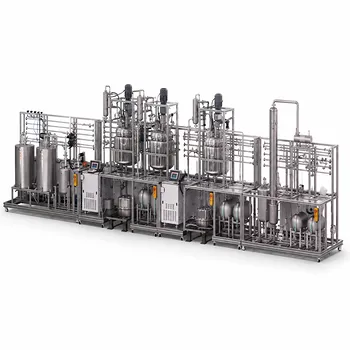
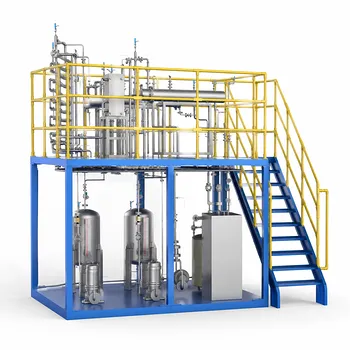
Fire and explosion prevention starts with understanding flammability limits—not just memorizing the numbers. Educational chemical engineering unit operations pilot plants provide a safe, scaled-down industrial environment where students can directly measure, control, and manipulate the conditions that lead to fires and explosions. By working with real-time gas concentration sensors, inert gas purging systems, and automated shutdowns, they learn to define and maintain safe operating envelopes that keep processes outside the flammable range during startup, steady state, and shutdown.
The core takeaway: Pilot plants transform abstract Lower and Upper Flammability Limit (LFL/UFL) data into tangible safety engineering skills. They teach students to prevent fires by systematically eliminating one side of the fire triangle—fuel, oxidizer, or ignition source—using hands-on process control rather than passive theory.
Understanding Flammability Limits in Practice
Textbook definitions of LFL and UFL are only the start. A pilot plant forces students to confront the reality that these limits shift with temperature, pressure, and process dynamics, turning safety into an operational skill.
Moving Beyond Textbook Definitions
In a pilot plant, a gas detection system provides a live reading of flammable vapor concentration. Students immediately see how a small leak or a temperature rise can push a vapor-air mixture toward the LFL.
They learn that safety is not just knowing the static number—it’s about calculating the Limiting Oxygen Concentration (LOC) and maintaining a margin of safety. For example, inerting might require keeping oxygen below the LOC, not just below the UFL, because concentration gradients exist inside vessels.
The Fire Triangle as an Engineering Tool
Every fire requires fuel, an oxidizer, and an ignition source. The pilot plant teaches students to think like safety designers: if you can eliminate any one of these, you prevent the event.
Students learn to strip away the oxidizer through nitrogen inerting, to control the fuel by maintaining closed-loop solvent handling, and to eliminate ignition sources via grounding, bonding, and explosion-proof equipment. The plant becomes a physical demonstration that fire prevention is a deliberate systems-engineering choice.
The Pilot Plant as a Controlled Laboratory for Hazard Management
Pilot plants don’t just demonstrate hazards—they allow students to manage them in real time. This builds the muscle memory of safe operation.
Inert Gas Purging and Oxygen Control
Students directly operate nitrogen blanketing on feed and product tanks, using flow controllers and oxygen analyzers to hold the atmosphere below the flammable threshold. They learn that inerting is not a one-time event—it must be maintained dynamically during filling, draining, and temperature swings.
This hands-on work embeds the principles of NFPA 69 (Explosion Prevention Systems) into daily practice. They see how venting arrangements and pressure regulators work together to keep the vessel safe without overpressure.
Gas Detection and Automated Safety Systems
A pilot plant outfitted with flammable gas sensors and interlocking shutdowns teaches the importance of active safeguards. Students configure alarms to trigger at a fraction of the LFL (typically 25%), automatically isolating power or closing valves.
They also learn that sensors can drift and that calibration routines are not optional. The lesson becomes: an alarm is only as reliable as the maintenance behind it.
Simulating Process Deviations to Build Vigilance
Instructors can deliberately introduce upsets—a cooling water failure, an agitator stop, a mischarged solvent quantity—to show how quickly a stable process can enter the flammable range. Students witness the compound effect of multiple deviations, reinforcing the mindset needed for HAZOP studies.
These live simulations create an emotional connection to safety. A chart showing a concentration curve crossing the LFL during a simulated runaway etches a far deeper lesson than any slide deck.
Bridging Theory and Industrial Fire Prevention
The definitive goal is to produce engineers who can design and operate real plants without fires. The pilot plant is the proving ground for that transition.
Hazard Identification and Regulatory Compliance
Students use the pilot plant as a physical case study for a Dow Fire and Explosion Index (F&EI) analysis. They partition the equipment, assign Material Factors for solvents like acetone or toluene, and calculate the General and Special Process Hazard Factors based on real operating data.
This exercise connects the dots between chemical properties, process design, and the resulting hazard classification. It also introduces the legal and insurance frameworks that make NFPA 68 deflagration venting and flame arresters a mandatory requirement, not an academic option.
Scaling Up Safety: From Bench to Plant
Bench-scale chemistry rarely reflects the fire risk of large volumes. A pilot plant fills the gap by showing how heat and mass transfer limitations change the safe operating window.
For example, an exothermic reaction that is self-regulating in a small flask may run away in a larger vessel due to reduced surface-area-to-volume ratio. Students see that maintaining the same LFL safety margin demands more robust cooling, slower dosing, and active inerting—a lesson that directly prevents industrial fires.
Case Study: Operating at the Edge of Flammability
The ethylene oxidation pilot plant is a prime teaching platform. With the feed oxygen concentration held at 7–8% and ethylene at 20–30%, the mixture hovers just outside the explosive envelope.
Students manage this process by:
- Precisely adjusting feed ratios with mass flow controllers.
- Using automatic interlocking shutdowns that activate if oxygen exceeds a safe limit.
- Introducing gas-phase inhibitors (organic chlorides at 1–3 µL/L) to control reaction rate and prevent thermal runaway.
This case teaches that operating near flammability limits is possible but only with layered, instrumented safeguards—a reality directly transferable to industrial petrochemical safety.
Understanding the Trade-offs and Pitfalls
No engineering solution is free of compromises. Teaching students to recognize these trade-offs is crucial for trustworthy decision-making in the field.
The Cost of Inerting vs. Process Efficiency
Continuous nitrogen blanketing provides a robust safety barrier but adds operating cost and can strip light components from the product. Students learn to balance safety with economics, considering whether intermittent inerting or vacuum purging might suffice without compromising the LOC buffer.
Over-Reliance on Instrumentation
A pilot plant can foster a false sense of security if students trust sensor readings blindly. A key lesson is inherent safety: designing the process so that it cannot reach the flammable range by physical limits, rather than relying solely on active controls. Redundancy, manual checks, and a questioning attitude are reinforced as essential habits.
The Limitations of Pilot-Scale Training
A pilot plant cannot replicate the full destruction radius of an industrial vapor cloud explosion. It teaches procedural and engineering safety, not emergency response at scale. Training must be supplemented with desktop exercises and large-scale emergency drills, but the pilot plant gives the foundational knowledge to make those drills meaningful.
Making the Right Choice for Your Educational Goals
Your specific learning objectives will determine how you integrate pilot plant flammability training into the curriculum.
- If your primary focus is producing safety-conscious design engineers: Emphasize experiments where students must define safe operating limits, size inerting systems, and document the LOC margins for different solvent inventories.
- If your primary focus is enhancing operational discipline: Use the pilot plant for startup, shutdown, and deviation exercises, making strict adherence to LFL limits a non-negotiable habit.
- If your primary focus is research-oriented safety training: Incorporate formal hazard analysis methods—HAZOP, F&EI, and Layer of Protection Analysis—on the pilot plant to bridge academic theory with industrial practice.
By turning the abstract concept of flammability limits into a tangible, hands-on challenge, pilot plants forge engineers who instinctively design fire prevention into every process.
Summary Table:
| Safety Concept | Pilot Plant Application | Student Learning Outcome |
|---|---|---|
| Flammability Limits (LFL/UFL) | Live gas detection & concentration monitoring | Transition from static textbook limits to dynamic safe operating envelopes. |
| Fire Triangle Control | Nitrogen inerting & solvent handling | Eliminate oxygen/fuel hazards using active engineering controls (NFPA 69). |
| Hazard Management | Simulated process deviations & automated shutdowns | Build hands-on vigilance for HAZOP analysis and instrument reliability. |
Equip Your Lab for Real-World Process Safety
Bridge the gap between textbook safety theory and hands-on industrial practice. LABPARK provides high-quality Educational and Vocational Unit Operations Pilot Plants in chemical engineering, bioprocess & biotech, and environmental & water treatment for universities, research institutes, and enterprises.
By integrating real-time gas detection, inerting controls, and automated safety interlocks, our pilot plants empower your students and researchers to master hazard management in a safe, controlled environment.
Contact LABPARK today to custom-design a pilot plant solution that elevates your engineering curriculum and research capabilities!
Related Products
- Carbon Dioxide Hydrogen Methanol Synthesis Educational Unit Operations Pilot Plant
- Multi Pump Fluid Transport Process Piping Unit Operations Training Pilot Plant
- Natural Product Extraction Unit Operations Training Pilot Plant
- Multi-Modal Distillation Unit Operations Training Pilot Plant
- Multi-Reactor Educational Pilot Plant for Reaction Engineering Unit Operations
People Also Ask
- How do temp & pressure affect methanol synthesis pilot plants? Optimize equilibrium and catalyst performance.
- Why is a purge system necessary when operating a gas recirculation loop in a methanol synthesis pilot plant? (Guide)
- Why do modern methanol pilot plants operate at lower pressures? Catalyst & Feed Requirements Explained
- What are the operational requirements for catalyst activation? Safe Methanol Pilot Plant Operation
- Why is the chemical plant startup schedule crucial? De-risk scale-up with pilot plants.