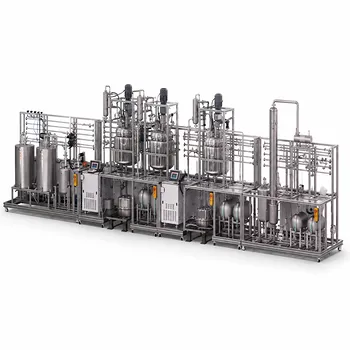
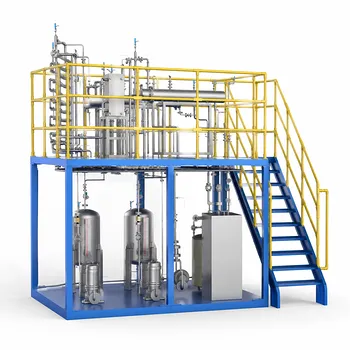
Dynamic process simulation is not just a teaching aid—it’s the missing link that turns a physical pilot plant into a fully transparent learning laboratory. By running a time-dependent digital model in parallel with the real unit, students can directly compare predicted and actual transient behavior. They see why temperatures lag, how liquid holdups dampen disturbances, and what happens during a controlled shutdown—all without risking the equipment. This integration embeds theoretical process dynamics into hands-on operation, making startup and shutdown sequences tangible and intuitive.
The most critical insight is that dynamic simulation gives students an x-ray view of the pilot plant. Instead of only observing external sensor readings, they can peer inside the model to understand the underlying mass, energy, and momentum accumulations that cause every real-world lag, surge, or instability. This dual-view approach cements the connection between transient theory and operational reality.
What Dynamic Process Simulation Brings to the Pilot Plant
A steady-state simulation shows a distillation column’s final temperature profile. It tells you nothing about the 45 minutes it takes to reach that profile, or how the column reacts if cooling water suddenly drops.
The Move from Steady-State to Time-Dependent Thinking
Dynamic simulation models process accumulations—mass, component, and energy—over time.
This means students can watch how the column’s top temperature evolves from a cold start, how the reboiler level builds, and when the first distillate appears.
It replaces a snapshot with a movie, directly addressing the startup and shutdown sequences that dominate plant operations but are absent from steady-state theory.
A Safe Sandbox for Hazardous Scenarios
Pilot plants are small but still contain real chemicals, heat, and pressure.
With a dynamic model, students first simulate emergency procedures—like a loss of steam or a pump failure—in a zero-risk environment.
They can then execute the same procedure on the physical rig, having already understood the expected transient timeline. This builds muscle memory for control actions while removing fear of failure.
How the Integration Works in Practice
The real power comes from streaming live sensor data into the simulation environment and displaying both results side by side.
Real-Time Data vs. Model Prediction
Modern pilot plants are heavily instrumented with temperature, pressure, and flow transmitters.
By feeding these measurements into the dynamic simulator, students can overlay the predicted transient curve on the actual plant data.
Deviations immediately flag unmodeled phenomena—like heat loss, fouling, or sensor dynamics—that pure theory overlooks.
Analyzing Lag Times and Liquid Holdups
A flow rate change at the inlet does not instantly appear at the product stream.
The dynamic simulation lets students quantify residence time distributions and volume hold-ups.
Comparing the simulated lag with the real plant’s response reveals how piping, tray design, and vessel geometry control the system’s inertia.
Visualizing What Can’t Be Measured
Many internal states—like tray compositions, internal reflux rates, or catalyst surface temperatures—are impossible to measure directly.
A validated dynamic model fills these gaps, showing students the hidden dynamics driving the process.
They can see, for example, how a composition wave travels down a column after a feed disturbance—an insight no single external sensor can provide.
Learning Startup and Shutdown Through Guided Sequences
Startup and shutdown are the most transients-rich and operationally critical phases of any chemical plant.
Step-by-Step Digital Walkthroughs
Before the physical run, students execute the startup sequence on the dynamic simulator.
They open valves, ramp up heating, and establish reflux while the model computes the evolving material and energy balances.
This turns a written procedure into an interactive, cause-and-effect experience, allowing them to predict the timing of key milestones like reaching product specification.
Physical Execution with Simulation as a Reference
During the real startup, the student can keep a split-screen view: the plant’s HMI on one screen, the dynamic model’s predicted trajectory on the other.
If the actual column pressure rises faster than predicted, the student knows to check for a closed vent or a faster-than-assumed heat input.
This comparative diagnosis transforms a simple follow-the-script lab into a deeper troubleshooting exercise.
Shutdown and De-inventorying
Shutdowns are messy: draining vessels, purging inerts, cooling down while trying to recover product.
The dynamic model teaches students how vapor-liquid disengagement, residual heat, and inventory management dictate a safe shutdown sequence.
They learn, for instance, why you must stop the reboiler before closing the top reflux—a mistake that can be safely made in simulation but never on hardware.
Developing Control and Emergency Response Skills
Transient behavior is inseparable from process control.
Hands-On Control Loop Tuning
Students can tune temperature and level controllers directly on the dynamic model, observing how a more aggressive integral action eliminates offset but creates oscillations.
When they transfer those settings to the pilot plant, they immediately see if the real process matches the model’s dynamics—highlighting actuator saturation or measurement noise.
This iterative loop cements the practical side of process control that textbooks often gloss over.
Emergency Scenario Training
A simulated pump trip or steam failure gives students a clear picture of the cascading effects—how a loss of reflux rapidly heats the distillate, or how a blocked cooling line causes a pressure spike.
They learn the correct compensating actions (closing feeds, venting safely, activating interlock logic) in a forgiving digital environment.
When later faced with a real equipment trip, their response is measured, not panicked.
Understanding Transient Behavior Across Unit Operations
The integration is not limited to a single column or reactor.
Batch Reactors and Temperature Dynamics
For exothermic reactions, the dynamic simulation shows the time-dependent heat generation and jacket cooling demand.
Students can see how a delayed coolant response could lead to a thermal runaway, linking reaction kinetics with heat transfer in a visceral way.
Continuous Reactors and Composition Swings
A CSTR simulation reveals how residence time distribution causes feed composition changes to slowly wash out over minutes, not seconds.
Running the pilot plant at the same time makes the sluggishness of real mixing concrete, connecting theory to fluid dynamics.
Multicomponent Separation Startups
Columns with complex feeds or side draws exhibit intricate transient profiles.
The dynamic simulation helps students see how a product impurity spike during startup results from an off-spec tray profile, and how manipulating boil-up or draw rates can correct it.
This teaches the process signature approach—tracking multiple variables simultaneously rather than a single endpoint quality.
Understanding the Trade-offs and Limitations
No tool is perfect. A clear-eyed look at the downsides is essential for building trust.
Model Fidelity vs. Computational Burden
A high-fidelity dynamic model with rigorous thermodynamics can run slower than real time.
Students may need to use simplified models for training, which may not capture fine details like tray hydraulics or valve stiction.
This creates a fidelity gap that must be managed, not ignored.
Over-Reliance on the Digital Twin
A perfectly tuned simulation can create a false sense of security. Real plants have drifting sensors, fouled heat exchangers, and non-ideal fluid behavior.
Students must learn to challenge the model, using discrepancies as learning opportunities rather than assuming the plant is wrong.
Maintenance of the Integrated Environment
Keeping the simulation synchronized with the pilot plant requires disciplined sensor calibration and up-to-date model parameters.
Without this upkeep, the digital twin drifts, and its educational value degrades.
Making the Right Choice for Your Educational Goal
The integration strategy should match the learning objective.
- If your primary focus is teaching fundamental process dynamics: Start with simple, transparent dynamic models of a single unit (e.g., a stirred tank) and compare step-test responses with the physical rig. This isolates accumulation effects without overwhelming complexity.
- If your primary focus is operational excellence in startups and shutdowns: Use a fully configured dynamic simulation of the entire pilot plant train. Let students walk through the full sequence digitally before touching any physical equipment.
- If your primary focus is control system design and tuning: Connect the dynamic model to the plant’s actual DCS or PLC logic. This blurs the line between simulation and reality and prepares students to handle real industrial automation environments.
- If your primary focus is troubleshooting and emergency response: Use high-fidelity models that include equipment constraints (e.g., pump curves, relief valve setpoints). Inject faults in the simulation and train students to diagnose the root cause using only trend data and alarms.
The key is to always tie the virtual experience back to the physical hardware, making every simulation run a hypothesis that the pilot plant either confirms or challenges. That iterative comparison is where the deepest learning happens.
Summary Table:
| Educational Goal | Integration Strategy | Key Benefit |
|---|---|---|
| Teach Process Dynamics | Simple dynamic models of single units (e.g., CSTR) | Isolates accumulation effects |
| Master Startup & Shutdown | Full dynamic simulation of the entire plant train | Safe practice of operational sequences |
| Control System Tuning | Connect dynamic model to actual DCS or PLC logic | Realistic automation environment training |
| Troubleshooting & Emergencies | Inject faults in high-fidelity models with constraints | Develops calm, structured diagnostic skills |
Elevate Your Engineering Lab with LABPARK
Ready to bridge the gap between theory and hands-on practice? LABPARK provides premium Educational and Vocational Unit Operations Pilot Plants in chemical engineering, bioprocess & biotech, and environmental & water treatment.
We help universities, research institutes, and enterprises seamlessly integrate hardware with dynamic simulation to train students on process startup, shutdown, and control safety.
Contact our experts today to design your custom pilot plant solution!
Related Products
- Carbon Dioxide Hydrogen Methanol Synthesis Educational Unit Operations Pilot Plant
- Multi Pump Fluid Transport Process Piping Unit Operations Training Pilot Plant
- Natural Product Extraction Unit Operations Training Pilot Plant
- Multi-Modal Distillation Unit Operations Training Pilot Plant
- Multi-Reactor Educational Pilot Plant for Reaction Engineering Unit Operations
People Also Ask
- How do temp & pressure affect methanol synthesis pilot plants? Optimize equilibrium and catalyst performance.
- Why is a purge system necessary when operating a gas recirculation loop in a methanol synthesis pilot plant? (Guide)
- Why do modern methanol pilot plants operate at lower pressures? Catalyst & Feed Requirements Explained
- What are the operational requirements for catalyst activation? Safe Methanol Pilot Plant Operation
- Why is the chemical plant startup schedule crucial? De-risk scale-up with pilot plants.