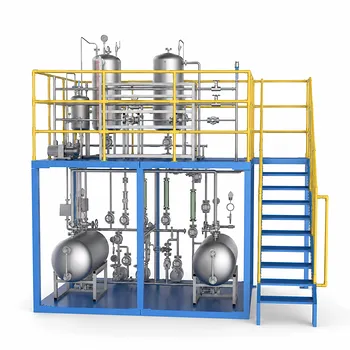
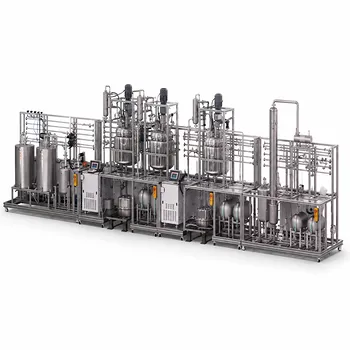
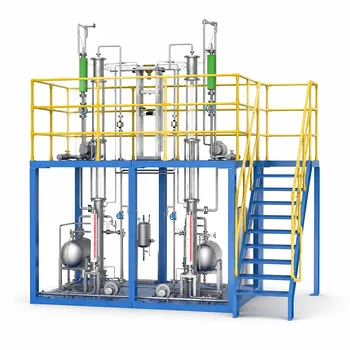
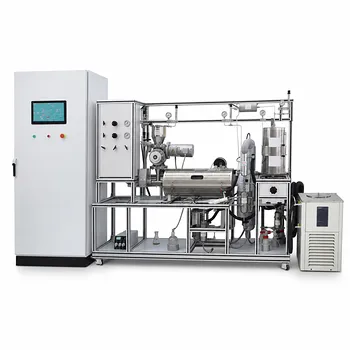
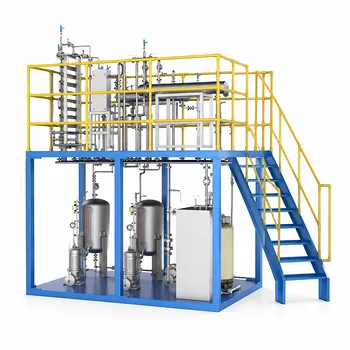
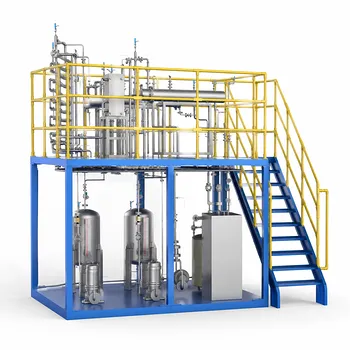
Pilot plants transform thermodynamic modeling from an act of faith into a science of verified predictability. By operating physical unit operations—such as distillation or absorption columns—under steady-state conditions, you can collect precise temperature, pressure, and phase composition data that directly calibrate the binary interaction parameters inside models like NRTL or UNIQUAC. This systematic, data-driven regression eliminates reliance on estimated parameters and closes the dangerous gap between simulation predictions and actual plant behavior.
Relying solely on software-estimated binary interaction parameters introduces enormous scale-up risk. Pilot plant experiments provide the definitive experimental phase equilibrium data needed to regress those parameters, turning a theoretical model into a trustworthy digital twin of your process.
Why Trusting Simulation Alone Is Risky
When experimental data is missing, process simulation software defaults to estimation methods for binary interaction parameters. These estimates become increasingly unreliable as the number of components in the mixture grows, leading to inaccurate vapor-liquid equilibrium (VLE) or liquid-liquid equilibrium (LLE) predictions.
The Hidden Assumptions in Every Thermodynamic Model
Popular activity-coefficient models like NRTL and UNIQUAC are semi-empirical. Their predictive power hinges entirely on the quality of the binary interaction parameters that describe how molecules interact.
These parameters are not universal constants. They are regressed values that can change with temperature, composition range, and system complexity. Using out-of-the-box parameters for a multi-component mixture is a gamble you cannot afford at scale.
The Gibbs Free Energy Reality Check
At its core, thermodynamic equilibrium requires the Gibbs free energy of a closed system to be minimal, which translates to the fugacity of each component being equal in all phases. Simulation software calculates this equilibrium using the chosen model’s equations.
However, only a physical experiment can tell you if the model’s mathematical construct actually reflects nature. A distillation column does not lie; if the predicted temperature profile or overhead composition does not match the pilot plant data, the model’s parameters are wrong, regardless of how elegant the underlying equations appear.
How a Pilot Plant Validates Thermodynamic Consistency
A unit operations pilot plant is a controlled, physical equation solver. It simultaneously satisfies mass and energy balances, heat transfer, fluid dynamics, and, crucially, the phase equilibrium dictated by the fundamental Gibbs criterion (dG = 0 at constant T and P).
Turning Abstract Equations into Tangible Measurements
When you run a distillation column, absorption tower, or extraction vessel at steady state, you create a living phase equilibrium cell. You can sample the vapor and liquid streams at multiple stages.
By measuring the temperature, pressure, and composition of these coexisting phases, you are directly probing the fugacity equality (f_i^L = f_i^V) that defines equilibrium. You then back-calculate activity coefficients and compare them to the model’s predictions, validating whether the equations hold under real conditions.
The Definitive Model Selection Tool
If your simulation yields significantly different results depending on whether you select NRTL or UNIQUAC, the pilot plant is the only impartial referee. Running the physical trial generates a single set of actual composition and temperature data.
You then use this experimental truth to determine which thermodynamic package most closely matches reality, ensuring the scaled-up industrial design is built on a validated foundation.
The Step-by-Step Calibration Process
The true power of a pilot plant in model development lies in parameter regression, not just validation. You move from simply checking a model’s output to actively improving it.
Steady-State Data Acquisition
First, operate your chosen unit operation under tightly controlled conditions.
Controlled Operation: Run a distillation column at a fixed reflux ratio and feed rate until the temperature profile and pressure drop stabilize. This ensures you are collecting true equilibrium data, not transient artifacts. Precise Sampling: Draw liquid and vapor samples from multiple, well-defined locations. Measure all variables—component mole fractions, phase temperatures, and system pressure—with high accuracy. This raw data forms the backbone of your calibration effort.
Regression Inside the Process Simulator
Modern simulators contain dedicated regression subroutines. You input your pilot plant dataset as the target, select the model you wish to calibrate (e.g., NRTL), and designate the binary interaction parameters as the variables to fit.
The software iteratively adjusts the parameters until the model’s calculated phase compositions and temperatures minimize the deviation from your experimental data. This directly bridges the gap between theoretical code and physical behavior, replacing generic estimates with plant-tuned coefficients.
Validating the Calibrated Model
Do not stop at the regression run. Use the newly optimized parameters to simulate a different operating condition on the same pilot plant—a different feed composition or reflux ratio.
If the simulation predicts the new result accurately, you have achieved a robust, predictive thermodynamic foundation. If not, you have uncovered a critical limitation in the model’s ability to cover your process’s operational envelope, which is invaluable knowledge in itself.
Understanding the Trade-offs
While pilot plants are indispensable, deploying them for thermodynamic calibration comes with real costs and specific challenges that demand honest evaluation.
The Currency of Time and Resources
Running a physical pilot plant is resource-intensive. It requires chemical feedstocks, utility consumption, dedicated operator time, and significant safety oversight.
A single calibration campaign can take weeks, far longer than running a sensitivity analysis in a simulator. You must weigh this cost against the financial risk of a design failure at the commercial scale, which is almost always orders of magnitude larger.
The Scale Hurdle: Not Everything Scales Perfectly
Pilot-scale equipment introduces physical phenomena that simulation often ignores. Heat loss to the ambient environment, wall effects in small-diameter columns, and minor fouling can introduce a systematic offset in your data.
If you blindly regress binary interaction parameters with uncorrected pilot plant data, you may embed these microscopic inefficiencies into your thermodynamic description. The resulting model will perfectly match a faulty pilot plant but still fail to predict a perfectly insulated, large-scale commercial unit. Always separate thermodynamic truth from equipment-specific artifacts.
The Danger of Overfitting
Fitting a multi-parameter model to a limited set of experimental points can create mathematically perfect yet physically nonsensical parameters. The model may interpolate your specific pilot plant runs brilliantly but extrapolate wildly outside your experimental envelope.
You must constrain the regression with physical reasonableness and validate across a range of compositions, not just a single operating point. The goal is a robust model, not a curve fit with zero error.
How to Derive Maximum Value from Pilot Plant Data
Integrating pilot plant work into your thermodynamic modeling workflow is a deliberate strategy, not a checkbox exercise. The approach should be tailored to your specific objective.
- If your primary focus is selecting the correct physical property package: Use the pilot plant to run a single, informative steady-state point with multi-component sampling. Compare the measured compositions against predictions from NRTL, UNIQUAC, and UNIFAC, and select the model that predicts the phase split without adjustment. This gives you a scientifically defensible choice for detailed engineering design.
- If your primary focus is calibrating a model for a novel or poorly characterized mixture: Plan a statistically designed set of pilot plant experiments that bracket your entire expected operating range. Use all the collected VLE data to regress the binary interaction parameters in your process simulator’s regression tool, then lock those parameters as your plant-standard thermodynamic basis for future simulation.
- If your primary focus is de-risking an existing simulation for scale-up: Operate the pilot plant at the exact final commercial design target conditions. Do not touch the model’s parameters. Instead, treat this as a pure validation test: if the simulation predicts the pilot plant’s output within your acceptable engineering tolerance, the model is verified for scale-up; if not, you have identified a baseline discrepancy that requires a calibration loop before committing to the full-scale plant.
Pilot plants are your physical bridge between molecular theory and industrial reality, transforming thermodynamic uncertainty into curated, confident knowledge.
Summary Table:
| Objective | Pilot Plant Strategy | Key Benefit |
|---|---|---|
| Model Selection | Run a steady-state point with multi-component sampling | Impartially compare packages (NRTL, UNIQUAC) |
| Model Calibration | Run designed experiments across the operating range | Regress accurate binary interaction parameters |
| Scale-up Validation | Operate at exact commercial target conditions | Verify simulation accuracy before commercial build |
Bridge the Gap Between Simulation and Reality with LABPARK
Ensure your process scale-up is backed by verified thermodynamic data. LABPARK provides high-quality Educational and Vocational Unit Operations Pilot Plants in chemical engineering, bioprocess & biotech, and environmental & water treatment.
Whether you are a university, research institute, or enterprise, our pilot plants deliver the precise physical measurements needed to calibrate models, select the right property packages, and eliminate scale-up risks.
Contact LABPARK Today to discover the ideal pilot plant solution for your lab or facility!
Related Products
- Carbon Dioxide Hydrogen Methanol Synthesis Educational Unit Operations Pilot Plant
- Multi Pump Fluid Transport Process Piping Unit Operations Training Pilot Plant
- Natural Product Extraction Unit Operations Training Pilot Plant
- Multi-Modal Distillation Unit Operations Training Pilot Plant
- Multi-Reactor Educational Pilot Plant for Reaction Engineering Unit Operations
People Also Ask
- How do temp & pressure affect methanol synthesis pilot plants? Optimize equilibrium and catalyst performance.
- Why is a purge system necessary when operating a gas recirculation loop in a methanol synthesis pilot plant? (Guide)
- Why do modern methanol pilot plants operate at lower pressures? Catalyst & Feed Requirements Explained
- What are the operational requirements for catalyst activation? Safe Methanol Pilot Plant Operation
- Why is the chemical plant startup schedule crucial? De-risk scale-up with pilot plants.