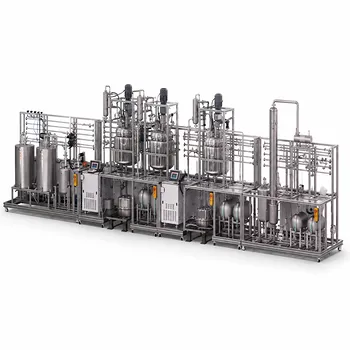
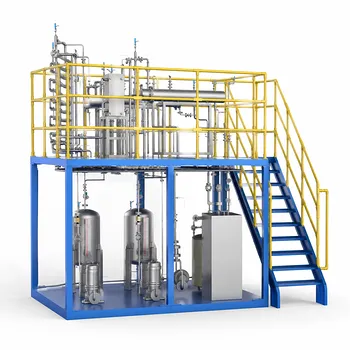
The answer lies in safe, scaled-down environments that replicate the heat and mass transfer conditions of industrial reactors without the catastrophic potential. Chemical engineering pilot plants—such as batch, tubular flow, or microreactor systems—allow researchers to precisely control and measure temperature, pressure, and concentration in real time during highly exothermic reactions. This empirical data is then used to derive reaction rate equations, determine activation energies, and validate kinetic models under conditions that would be too dangerous or difficult to study at full scale.
Studying the kinetics and safety of highly exothermic reactions means solving two problems at once: you need accurate rate data to design a safe industrial reactor, but collecting that data itself poses a runaway risk. Pilot plants solve this paradox by shrinking the process to a manageable scale while retaining the critical transport phenomena, enabling systematic measurement of kinetics and proactive safety-system design without industrial-scale hazards.
The Core Challenge of Exothermic Reactions
Highly exothermic reactions release a large amount of heat rapidly. If that heat is not removed efficiently, thermal runaway can occur, leading to violent boiling, gas evolution, and even reactor rupture. Classic examples include nitration, sulfonation, polymerization, and direct synthesis of hydrogen peroxide. Traditional lab-scale glassware often cannot capture the nonlinear temperature profiles or mixing effects that dominate industrial reactors, while full-plant trials are prohibitively risky. Pilot plants fill this gap.
Why Conventional Lab Setups Fall Short
A small flask provides a high surface-area-to-volume ratio that artificially suppresses hotspots and runaway behavior. This masks the true kinetic dependence on temperature gradients and mixing. Consequently, rate parameters derived from such setups may dangerously under-predict the heat generation rate at industrial scale.
The Missing Link: Transport Phenomena
Kinetics cannot be divorced from heat and mass transfer. Pilot plants preserve engineering-relevant transport limitations—like limited heat removal through cooling jackets or slow reactant dosing—so the measured reaction rate reflects a realistic coupling of chemistry and physics.
How Pilot Plants Enable Accurate Kinetic Data Collection
The primary value of a unit operations pilot plant is its ability to create controlled, repeatable, and measurable conditions that systematically probe the reaction mechanism.
Decoupling Variables to Isolate Rate Dependence
Using integrated dosing pumps, heat exchangers, and often online analyzers, operators can vary temperature, reactant concentration, and residence time independently. A typical tubular flow reactor with precise temperature control can step through a range of temperatures while measuring conversion at the outlet. From the change in reaction rate (v = Δc/Δt), you calculate the reaction order for each species and the activation energy (via an Arrhenius plot). This is the experimental foundation for a reliable rate law.
Real-Time Monitoring and Model Validation
Modern pilot plants incorporate pressure sensors, thermocouples, and in-line spectroscopy (FTIR, Raman). For a highly exothermic esterification or hydrogenation, these sensors capture the instantaneous heat release profile. Students and researchers can then fit the empirical data to candidate kinetic models—checking if the mechanism assumes power-law or Langmuir-Hinshelwood expressions—and validate which one matches the batch or plug flow data under non-isothermal conditions.
Handling Transport-Limited and Rapid Kinetics
For reactions so fast that mixing controls the apparent rate, advanced pilot units (especially microreactors) allow you to study the intrinsic kinetics by ensuring mass transfer is not limiting. The high surface-to-volume ratio and small diffusion lengths eliminate concentration gradients. This decouples true chemical kinetics from physical transfer steps, yielding intrinsic rate parameters.
Integrating Safety Studies into the Same Platform
Kinetics and safety are two sides of the same coin. A pilot plant can be deliberately pushed to safe failure boundaries to gather the data needed for relief system design and HAZOP studies.
Simulating Process Deviations and Runaway Scenarios
By intentionally simulating cooling water failure, agitation loss, or mischarging of reactants at a pilot scale, researchers observe how the reaction mass behaves as it approaches the maximum temperature of the synthetic reaction (MTSR). This hands-on approach teaches how to calculate the time-to-maximum rate under adiabatic conditions, a critical safety metric. The data collected allows direct design of emergency quenching systems, vent sizing, and secondary containment.
Demonstrating Hazard Mitigation Strategies
Pilot plants illustrate how dosing rate control, cooling jacket capacity, and reaction mass dilution act as layers of protection. For a gas-evolving exothermic process, the unit can be intentionally run with a restricted vent line to show overpressure dynamics, teaching operators to match vent capacity to the gas generation rate derived from the kinetic model. It also demonstrates the importance of engineering controls like nitrogen inerting, grounding, and flammability monitoring.
Microreactor Pilot Plants: A Game-Changer for Hazardous Chemistries
For extreme cases—reactions that operate in explosive regimes, such as direct H₂/O₂ synthesis or ozonolysis—conventional pilot reactors are still too large and possess dangerous hold-up volumes. Microreactor-based pilot plants exploit channels with characteristic dimensions below 1 mm. The enormous surface-to-volume ratio permits heat transfer coefficients orders of magnitude higher than jacket-cooled vessels. This extinguishes hotspot propagation and suppresses homogeneous free-radical runaway, allowing safe, steady operation even within a traditionally explosive envelope. The small fluid hold-up further ensures that any failure releases minimal energy, making it inherently safer.
Understanding the Trade-offs
Pilot plants are indispensable, but they are not perfect mirrors of full-scale reality. Recognizing their limitations is crucial for correct interpretation of data.
- Scale-up uncertainty: Flow regimes, mixing times, and heat removal capacities do not scale linearly. A kinetic model validated at pilot scale must be paired with a proper scale-up methodology; otherwise, industrial reactors may still experience unanticipated hotspots.
- Cost and complexity: A fully instrumented, automated pilot plant with online analytics is expensive to build and maintain. Microreactor setups, while unparalleled for safety, require pumps that can handle fouling or solids, and they may not represent macro-scale mass transfer limitations relevant to stirred-tank reactors.
- Representative failure modes: Some large-scale failure mechanisms (e.g., runaway decomposition due to accumulation of unstable intermediates in a stagnant zone) may not appear in a small, well-mixed pilot unit unless specifically designed to include dead-legs or poorly swept volumes.
- Thermodynamic consistency: The pilot plant data must be collected under conditions where the heat of reaction is measured or calculated accurately; errors in calorimetry (e.g., heat loss to environment) can corrupt the kinetic fit and lead to an unsafe design.
Making the Right Choice for Your Goal
Align your pilot plant configuration and experimental plan with the specific deep need behind your surface question.
- If your primary focus is deriving intrinsic kinetic parameters for a new exothermic reaction: Prioritize a system that can eliminate mass and heat transfer disguises. A microreactor or a highly back-mixed CSTR with rapid dilution can generate clean rate data across a wide temperature range, enabling a robust Arrhenius fit.
- If your primary focus is validating a safety-relief design and emergency procedures: Use a jacketed batch or semi-batch pilot reactor of sufficient volume to experience realistic dynamic heat-up. Run controlled runaway experiments (e.g., loss-of-cooling simulations) with redundant calorimetric instrumentation to capture the pressure rise rate needed to size a rupture disk.
- If your primary focus is process development and scale-up of a hazardous reaction: Combine a reaction calorimeter pilot plant with a microreactor. Use the microreactor to safely explore the design space, then use the larger calorimeter to confirm the kinetic model in a geometry that better approximates industrial mixing and heat transfer.
Mastering the interplay between kinetics and safety at the pilot scale transforms a highly exothermic reaction from a liability into a well-controlled, predictable industrial operation.
Summary Table:
| Reactor Type | Kinetic Study Application | Safety Study Application |
|---|---|---|
| Batch / Semi-Batch | Captures temperature & rate profiles | Simulates cooling failure & runaway (MTSR) |
| Tubular Flow (PFR) | Measures conversion vs. temperature | Evaluates steady-state thermal behavior |
| Microreactors | Determines intrinsic kinetics directly | Safely operates within explosive regimes |
Bring Safe, Hands-on Process Safety and Kinetics to Your Facility
Ready to empower your students and researchers to master hazardous, highly exothermic reactions without the risk?
LABPARK provides premium Educational and Vocational Unit Operations Pilot Plants in chemical engineering, bioprocess & biotech, and environmental & water treatment. Specially designed for universities, research institutes, and enterprises, our pilot plants deliver the realistic heat transfer, mixing, and control dynamics needed to teach reaction kinetics and safety protocols safely.
Contact LABPARK today to find the ideal pilot plant solution to elevate your educational and research capabilities!
Related Products
- Carbon Dioxide Hydrogen Methanol Synthesis Educational Unit Operations Pilot Plant
- Multi Pump Fluid Transport Process Piping Unit Operations Training Pilot Plant
- Natural Product Extraction Unit Operations Training Pilot Plant
- Multi-Modal Distillation Unit Operations Training Pilot Plant
- Multi-Reactor Educational Pilot Plant for Reaction Engineering Unit Operations
People Also Ask
- How do temp & pressure affect methanol synthesis pilot plants? Optimize equilibrium and catalyst performance.
- Why is a purge system necessary when operating a gas recirculation loop in a methanol synthesis pilot plant? (Guide)
- Why do modern methanol pilot plants operate at lower pressures? Catalyst & Feed Requirements Explained
- What are the operational requirements for catalyst activation? Safe Methanol Pilot Plant Operation
- Why is the chemical plant startup schedule crucial? De-risk scale-up with pilot plants.