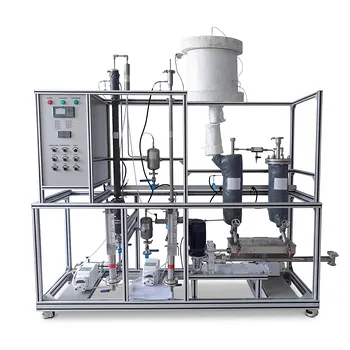
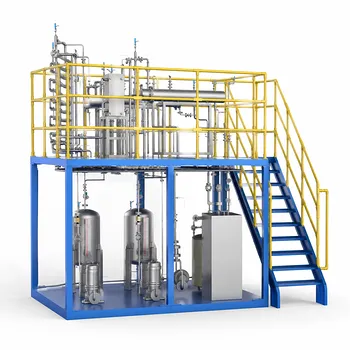
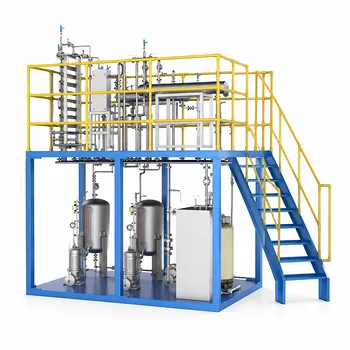
Hands-on pilot plants turn the messy reality of hot syngas cleanup into a controlled, teachable science.
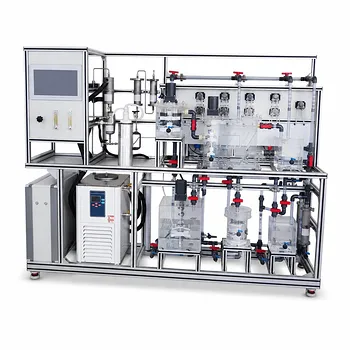
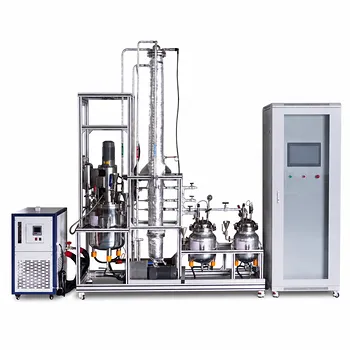
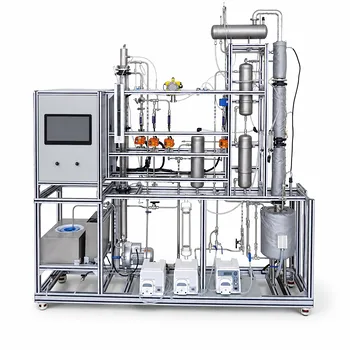
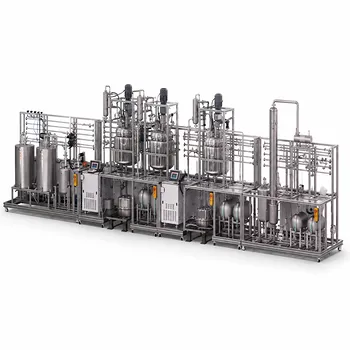
You can directly study particulate and contaminant removal from high‑temperature synthesis gas by operating a multi‑stage gas cleaning train in an educational pilot plant. These scaled‑down systems faithfully replicate the industrial sequence of quenching, spray washing, mechanical water agitation, and demisting, letting you observe how molten ash solidifies into removable particles and how scrubbing cools the gas from 500 °F to 95 °F.
Educational syngas‑cleanup pilots let you physically run the very operations that make dirty gasifier effluent acceptable for downstream catalysts. The core insight: you are not just watching—you manipulate heat transfer rates, water‑to‑gas ratios, and droplet mechanics to see firsthand how engineering design controls particulate and contaminant removal.
Why High‑Temperature Syngas Presents a Tough Cleaning Challenge
The Contaminants in Raw Syngas
Syngas from gasification carries molten ash droplets, fine char, tars, and alkali vapors. Before the gas can enter a water‑gas shift reactor or a synthesis loop, these solids and corrosive precursors must be thoroughly removed to avoid plugging, erosion, and catalyst poisoning.
Why Temperature Matters
When the gas leaves the gasifier at 500 °F or more, many contaminants are still sticky or liquid. Rapid cooling is essential to solidify molten ash into brittle particles that can later be knocked out mechanically. This thermal step is the gateway to effective separation.
How Educational Pilot Plants Replicate Industrial Cleanup
Quenching: Turning Molten Ash into Removable Solids
In the pilot plant, hot syngas immediately contacts a direct‑contact water spray or a dedicated quench vessel. You watch the temperature plunge, transforming liquid ash into hard, removable grains—exactly the phenomenon that prevents slag buildup in commercial units.
Spray Washing and Cooling: Simultaneous Heat and Mass Transfer
The quenched gas still carries fine particulates and must be cooled further. A spray‑wash column drops the temperature dramatically—often from 500 °F to 95 °F—while water droplets capture particulates by impaction and dissolve soluble species. By varying water flow rates and measuring inlet‑outlet temperatures, students calculate overall heat transfer coefficients and see how water consumption directly controls both cooling and contaminant scrubbing.
Mechanical Agitation (Disintegrator Action): Intensifying Particle Capture
A high‑shear mechanical contactor, similar to an industrial disintegrator, forces gas and water into violent, small‑bubble contact. This intense agitation breaks larger bubbles, multiplies the interfacial area, and sweeps out the finest dust particles that survived washing. Operating the pilot lets you relate power input to mass‑transfer performance.
Demisting: Removing Entrained Liquid Droplets
After scrubbing, the gas is saturated with tiny water droplets that could corrode downstream equipment. A demister (knitted mesh or vane‑type) separates these droplets. Bench‑top demisting units make visible the trade‑off between droplet size, gas velocity, and carry‑over, reinforcing the principle of multi‑stage separation.
Safety Integration in the Pilot Plant Setup
Educational pilots for hot syngas are designed with overpressure relief valves, thermal insulation, gas leak detectors, and automated emergency shut‑off interlocks. A typical arrangement includes safety traps to prevent liquid backflow—much like the sequential purification train used for nitrogen preparation. These features allow you to study not only unit operations but also the process safety discipline essential for any engineer working with flammable or toxic gases.
Bridging Theory and Practice Through Unit Operation Mastery
Quantifying Heat Transfer and Mass Transfer Rates
With data from the spray‑wash column, you compute overall heat transfer coefficients and compare them with empirical correlations. You see how real‑world phenomena—maldistribution, fouling, or liquid carry‑over—deviate from textbook assumptions, building realistic diagnostic skills.
Understanding Multi‑Stage Separation Synergies
No single device handles the entire particle‑size spectrum. By sampling at each stage, students map grade‑efficiency curves—quench captures large molten ash, the disintegrator targets sub‑micron fines, and the demister polishes the gas. This systems‑thinking translates directly to industrial process design.
Operating Parameters and Their Impact
Turning a valve changes everything: too little quench water leaves ash molten halfway through the wash, while excessive agitation can re‑entrain liquid. The pilot plant transforms abstract concepts like water‑to‑gas ratio and residence time into tangible cause‑and‑effect lessons.
Understanding the Trade‑offs in Pilot‑Scale Syngas Cleaning
Balancing Realism with Laboratory Safety
Industrial syngas operates at high pressure and with truly hazardous gases. Educational pilots typically run at near‑atmospheric pressure and may use heated nitrogen or CO₂‑rich simulants instead of raw syngas. You sacrifice direct thermal‑shock severity but gain a safe, controllable environment where the underlying physics remain intact for study.
Cost and Complexity
A full chain from gasifier to PSA is expensive. Many teaching labs isolate the cleanup train, feeding a hot, particle‑laden gas stream produced by a simpler generator. This modular approach reduces capital cost while allowing deep dives into quenching and scrubbing dynamics.
Scaling Down vs. Transferability
Hydrodynamics like droplet breakup in a disintegrator do not scale linearly. Students must learn to apply dimensional analysis and recognize that pilot‑scale data inform—but do not duplicate—industrial designs. This critical perspective is itself a key educational outcome.
Integration Challenges with Downstream Units
If the pilot incorporates a downstream water‑gas shift reactor or amine scrubber, particulate carry‑over must be kept extremely low to avoid catalyst fouling. Operating the cleaning train under such tight specifications teaches the importance of performance‑driven design and inter‑stage monitoring.
How to Choose the Right Pilot Plant Setup for Your Learning Goals
- If your primary focus is hands‑on particulate removal physics: Choose a dedicated cleaning train with quench, spray wash, disintegrator‑like agitation, and demisting. Vary water rates and temperature drops to build intuition for heat transfer and multi‑stage separation.
- If your primary focus is integrated syngas‑to‑product education: Select a pilot that couples the cleaning train with a water‑gas shift reactor and a PSA or membrane unit. This shows how clean gas enables downstream catalysis and product purification.
- If your primary focus is process safety and plant design: Opt for a unit with full instrumentation, fail‑safe interlocks, and leak detection. Run simulated emergency scenarios to understand relief sizing and containment strategies.
- If your primary focus is scale‑up methodology: Use the pilot to gather mass‑transfer and pressure‑drop data, then apply scaling correlations. Compare with published industrial values to assess the limitations of lab‑scale models.
By stepping into the operator’s role on these educational pilot plants, you turn textbook principles into the engineering judgment needed to solve real‑world syngas cleanup challenges.
Summary Table:
| Cleanup Stage | Primary Mechanism | Key Educational & Engineering Insight |
|---|---|---|
| Quenching | Direct-contact water spray | Solidifies liquid/sticky ash into manageable, dry particles. |
| Spray Washing | Impaction & dissolution | Demonstrates simultaneous heat and mass transfer under varying gas-to-water ratios. |
| Mechanical Agitation | High-shear bubble breakup | Introduces energy-mass transfer concepts for removing sub-micron particulate fines. |
| Demisting | Knitted mesh/vane impingement | Teaches gas velocity optimization, pressure drop trade-offs, and carry-over prevention. |
Bring Industrial-Scale Syngas Cleanup to Your Classroom
LABPARK designs and manufactures high-quality Educational and Vocational Unit Operations Pilot Plants across chemical engineering, bioprocess & biotech, and environmental & water treatment. We help universities, research institutes, and enterprises bridge the gap between theoretical transport phenomena and practical process operations in a safe, controlled environment.
Equip your laboratory with hands-on systems that prepare the next generation of process engineers. Contact LABPARK today to explore our customizable pilot plants!
Related Products
- Carbon Dioxide Hydrogen Methanol Synthesis Educational Unit Operations Pilot Plant
- Methanol Synthesis and Catalyst Performance Evaluation Educational Unit Operations Pilot Plant
- Thermal Desorption Exhaust Gas and Tail Water Treatment Educational Pilot Plant
- Fixed-Bed Chemical Reaction and Gas Dust Tar Removal Unit Operations Pilot Plant
- Methane Cracking Educational Unit Operations Pilot Plant
People Also Ask
- How do temp & pressure affect methanol synthesis pilot plants? Optimize equilibrium and catalyst performance.
- Why is a purge system necessary when operating a gas recirculation loop in a methanol synthesis pilot plant? (Guide)
- Why do modern methanol pilot plants operate at lower pressures? Catalyst & Feed Requirements Explained
- What are the operational requirements for catalyst activation? Safe Methanol Pilot Plant Operation
- Why is the chemical plant startup schedule crucial? De-risk scale-up with pilot plants.