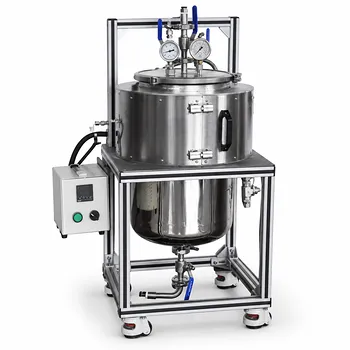
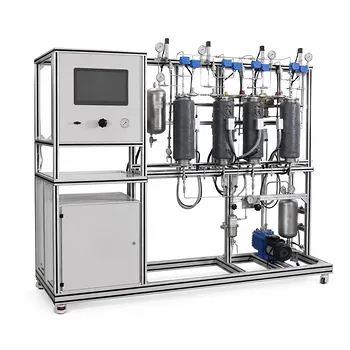
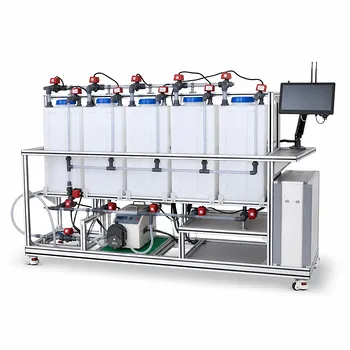
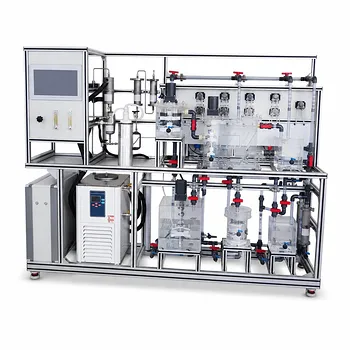
A pilot plant configured with three parallel treatment trains—each dedicated to biofiltration, biotrickling filtration, and bioscrubbing—can vividly demonstrate their process differences. By supplying all three with the same contaminated gas stream and equipping each with tailored instrumentation, students and researchers can directly compare moisture management, nutrient supply strategies, and the spatial arrangement of mass transfer and biodegradation. This side‑by‑side layout transforms abstract textbook concepts into observable, measurable unit operations.
A truly instructive pilot plant compares biofiltration, biotrickling filtration, and bioscrubbing under identical inlet conditions, making the passive, active, and two‑stage mechanisms impossible to miss. The key is to surface how each technology handles water, nutrients, and biomass differently—rather than just chasing removal efficiency.
Configuring the Three Pilot‑Scale Gas Treatment Trains
Building the Common Gas Feed System
A single contaminant‑generation loop delivers a uniform challenge to all units.
A blower pushes ambient air through a humidification column, then into an injection port where a volatile pollutant—such as toluene or hydrogen sulfide—is dosed using a syringe pump or mass flow controller.
After a mixing chamber, the stream splits into three parallel lines, each with an independent flow meter and sampling port to verify inlet consistency.
The Biofilter Module: Passive, Organic‑Bed Operation
The biofilter vessel is packed with moist organic media like compost, peat, or wood chips.
Inlet gas passes through a perforated plate at the bottom and rises through the bed; microorganisms immobilised on the media consume the pollutant.
The unit is designed with minimal active controls: a moisture sensor in the bed and a manual spray system to maintain water content, but no continuous liquid recirculation.
Sampling ports at three bed heights allow students to trace how the pollutant profile degrades along the column height—demonstrating a pure plug‑flow bio‑reaction without a separate liquid phase.
The Biotrickling Filter Module: Active Liquid‑Phase Control
This module uses an inert packing material (plastic or ceramic) over which a nutrient‑laden liquid trickles continuously.
A recirculation pump sends liquid from a sump at the bottom to a distributor at the top; the liquid drains counter‑currently to the rising gas.
The sump is instrumented with a pH probe and dosing pumps for acid/base and concentrated nutrient solutions (e.g., NH₄NO₃ and K₂HPO₄).
This setup makes the contrast with the biofilter immediate: students observe how active pH control and liquid renewal let them manage acid‑forming contaminants like H₂S without exhausting the packing’s buffering capacity.
The Bioscrubber Module: Decoupled Absorption and Biodegradation
The bioscrubber splits the process into two distinct vessels that the other units combine.
First, the contaminated gas enters a packed absorption tower where a scrubbing liquid (water or a recycled nutrient solution) captures the pollutant by physical mass transfer.
The now‑cleaned gas exits the top, while the pollutant‑laden liquid flows into an activated‑sludge bioreactor—an aerated tank with suspended microorganisms that mineralize the dissolved compounds.
A recirculation line returns regenerated liquid to the absorption tower, and a blowdown line removes excess sludge. Placing a gas‑phase sampling point after the absorber and a liquid‑phase sampling point at the bioreactor outlet lets students quantify mass transfer efficiency and biodegradation kinetics separately.
Uncovering the Mechanistic Differences
Contrasting Moisture and Nutrient Delivery
The biofilter relies on passive moisture held in the organic matrix and the slow release of nutrients from that same material.
The biotrickling filter’s continuously recirculating liquid makes nutrient supply a separate, controllable variable; students can adjust the nutrient feed rate and see a direct impact on performance.
The bioscrubber uses the scrubbing liquid only as a transfer medium—nutrients are dosed directly into the aerated bioreactor, decoupling gas‑liquid contact from biological health.
Observing pH and Metabolite Dynamics
With H₂S as the pollutant, the biofilter’s organic packing will gradually acidify, and removal will drop unless large quantities of buffer are built into the media.
In the biotrickling filter, the in‑line pH controller automatically adds caustic, so the system holds a neutral pH indefinitely while acidic leachate is purged.
The bioscrubber contains acidification entirely within the bioreactor, where pH is monitored and controlled; the absorber never sees low pH, protecting the mass‑transfer driving force.
Demonstrating Separation of Mass Transfer and Reaction
The bioscrubber’s two‑tank architecture is its signature advantage.
Students can isolate gas‑to‑liquid transfer by measuring pollutant concentration in the gas before and after the absorber.
They can then isolate the biological step by sampling the liquid entering and leaving the bioreactor. The biofilter and biotrickling filter combine these steps in a single vessel, making it impossible to assess one without the other.
Essential Instrumentation for Instructional Clarity
Common Sensors Across All Three Lines
Each train needs at least:
- An inlet and outlet gas sampling port for pollutant concentration (GC or detector tube).
- A differential pressure manometer to track bed clogging or flooding.
- A gas flow meter to confirm constant loading rate.
Module‑Specific Sensors That Tell the Story
- Biofilter: Relative humidity and temperature probes at multiple bed depths; weekly moisture‑content checks on core samples.
- Biotrickling filter: Liquid flow meter on the recirculation loop, pH and dissolved‑oxygen probes in the sump, and a level switch to control fresh‑water makeup.
- Bioscrubber: Liquid flow meter from absorber to bioreactor, dissolved‑oxygen and pH probes in the bioreactor, and a second gas‑sample port at the absorber outlet to quantify the transfer efficiency.
Adding the Wastewater “Downstream” Context
The supplementary references highlight that gas cleanup generates complex, contaminated wastewater.
In a pilot plant, the biotrickling filter’s purge and the bioscrubber’s sludge blowdown can be collected in a common tank.
A small downstream module—gravity separator for light‑organics, a cartridge filter for sub‑micron particulates, and an air‑stripping column for dissolved gases—can then be used to show how the liquid effluents are treated before disposal, closing the intellectual loop on integrated environmental management.
Understanding the Trade‑offs
Biofilter Simplicity Comes at a Cost
A biofilter is easy to build, but it imposes poor control over nutrients and pH.
Students will quickly see that high‑concentration or acidic pollutants cause performance to unravel unless the packing is very deep or frequently replaced.
Biotrickling Filters Demand Active Management
Continuous liquid recirculation prevents drying and gives fine control, but it introduces a risk of biomass overgrowth and flooding.
The pilot plant must include a pressure‑drop alarm; if pressure rises sharply, students learn that they need to increase liquid purge or backwash the bed.
Bioscrubbers Shine for Soluble Compounds, but Suffer on Mass Transfer
Bioscrubbers work best for highly water‑soluble pollutants; with poorly soluble compounds, the absorption tower becomes unrealistically tall.
This limitation becomes obvious when students compare removal of ethanol (well‑scrubbed) with toluene (barely transferred), making the Henry’s Law constant an experimental variable rather than a textbook number.
Footprint and Complexity
Bioscrubbers occupy the most floor space and piping.
For a crowded teaching lab, a biofilter or biotrickling filter may be more practical—but then the demonstration of separate absorption kinetics is lost.
The educational goal must dictate the complexity you accept.
Making the Right Choice for Your Pilot Plant Goal
Your specific objectives determine how you weight the three modules and which additional downstream units you integrate.
- If your primary focus is pure educational demonstration: Equip all three trains with rich instrumentation and a single, easily monitored pollutant like ethanol. Let students run the units side‑by‑side and write lab reports comparing pressure drop, pH stability, and removal kinetics.
- If your primary focus is industrial process development: Add a pollutant‑mixing system to simulate real‑world mixtures (e.g., H₂S plus volatile organic compounds) and use the pilot plant to generate data on packing life, nutrient consumption rates, and purge water volumes for economic analysis.
- If your primary focus is complete wastewater integration: Connect the liquid purges to the downstream gravity‑separation, filtration, and stripping module. Use this chain to teach how gas‑phase treatment choices impact the liquid effluent and the total cost of compliance.
- If your primary focus is research on novel packing or consortia: Design the biofilter and biotrickling filter columns as interchangeable cartridges so you can swap materials without rebuilding the rest of the plant.
A thoughtfully configured pilot plant transforms the opaque differences between biofiltration, biotrickling filtration, and bioscrubbing into a clear, hands‑on narrative of mass transfer, microbial ecology, and process engineering.
Summary Table:
| Feature | Biofilter Module | Biotrickling Filter Module | Bioscrubber Module |
|---|---|---|---|
| Media Type | Organic (compost, peat, wood chips) | Inert (plastic or ceramic packing) | Inert packing in absorption tower |
| Liquid Phase | Stationary (passive moisture) | Continuously recirculating nutrient liquid | Decoupled (absorber + active-sludge tank) |
| pH & Nutrient Control | Passive/Manual (prone to acidification) | Active (inline pH probes & dosing pumps) | Automated control within the bioreactor |
| Process Separation | Combined mass transfer & reaction | Combined mass transfer & reaction | Decoupled gas absorption & biodegradation |
Equip Your Laboratory with LABPARK Pilot Plants
LABPARK provides premium Educational and Vocational Unit Operations Pilot Plants in chemical engineering, bioprocess & biotech, and environmental & water treatment. Tailored specifically for universities, research institutes, and enterprises, our systems turn complex theories into observable, measurable unit operations.
How LABPARK brings value to your institution:
- True Process Comparison: Configure parallel biological treatment trains with biofilter, biotrickling, and bioscrubber modules to demonstrate mass-transfer limits side-by-side.
- Industrial-Grade Instrumentation: Train students with real-world sensors, including pH controllers, gas/liquid flow meters, and differential pressure manometers.
- Comprehensive Process Integration: Seamlessly connect downstream wastewater modules (gravity separators, air strippers, filters) to teach holistic environmental engineering.
Ready to elevate your research and teaching capabilities? Contact us today to get a customized pilot plant configuration proposal!
Related Products
- Solid Waste Pyrolysis and Refining Educational Pilot Plant for Unit Operations
- Dual-Mode Rectification Pilot Plant for Practical Training Unit Operations
- Multi-Functional Membrane Separation Educational Pilot Plant for Unit Operations Lab
- Natural Product Extraction Unit Operations Training Pilot Plant
- Bio-fermentation Ethanol Production Practical Training Unit Operations Pilot Plant
People Also Ask
- How do educational unit operations pilot plants bridge theory and design? Bridge the Engineering Gap
- How do educational unit operations pilot plants address safety and waste management when scaling up?
- When to transition from PID to adaptive control in pilot plants? Key process indicators.
- Why is the chemical plant startup schedule crucial? De-risk scale-up with pilot plants.
- Why Use PTFE & Hastelloy in Chemical Pilot Plants? Prevent Corrosion & Ensure Safety