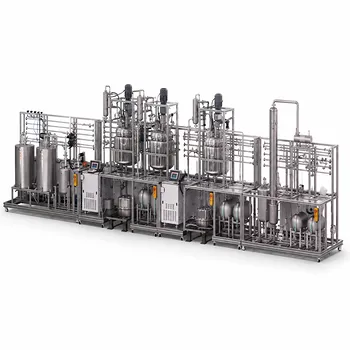
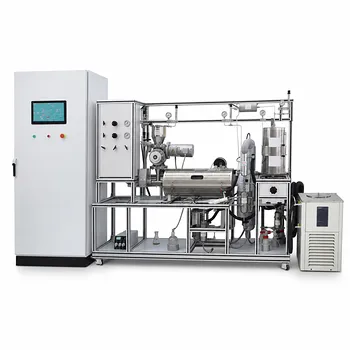
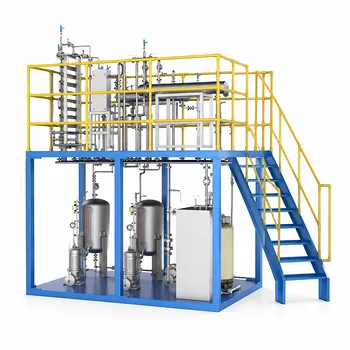
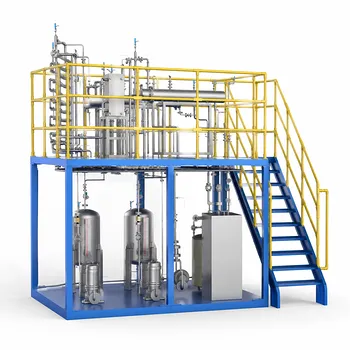
The chemical engineering pilot plant isn’t just a miniature factory—it’s the perfect stage for a live safety audit. By transforming a pilot‑scale unit operation into a real‑world case study, instructors can teach the Dow Fire and Explosion Index (F&EI) not as a dry formula, but as a tangible risk‑assessment exercise. Students learn to partition the equipment into logical process units, determine the Material Factor (MF) for chemicals like acetone or toluene, and calculate General and Special Process Hazard Factors (F1, F2) using actual temperature, pressure and flow data. The final F&EI value reveals a concrete hazard category—from light to severe—and starts a discussion about the safety compensation and mitigation systems they can see right in the lab, from nitrogen inerting to relief valves.
Rather than treating the Dow F&EI as a design‑stage theoretical tool, instructors can anchor it to a live pilot plant. This forces students to confront the direct link between process conditions, material properties and the resulting fire/explosion risk, turning hazard assessment into a skill they’ll carry into their careers.
From Abstract Index to Hands‑On Hazard Survey
The Pilot Plant as a Living P&ID
Before students ever step into the lab, give them the P&ID and equipment layout of the pilot plant.
These documents are the same starting point an industrial engineer would use for a “design‑phase” F&EI evaluation. Students first practice partitioning the system into distinct process units—feed drum, preheater, reactor, condenser—exactly as the methodology demands.
During the lab visit, they physically walk down the lines, verifying their partitions and noting where real‑world connections or by‑passes differ from the drawing. This single step makes the abstract idea of a “process unit” instantly concrete.
Selecting Real Chemicals and Determining Material Factor (MF)
Choose a pilot‑plant solvent whose hazards are well documented—acetone, toluene, or methanol are classic examples.
Students look up the heat of combustion and derive the MF from standard Dow tables, seeing how a chemical’s inherent energy content directly raises the baseline risk.
If the pilot plant is equipped with gas concentration sensors, you can demonstrate the flammability limits (LFL/UFL) in real time. Observing how process vapours approach the flammable range reinforces why MF alone isn’t the full picture—operating conditions are the multiplier.
Calculating Hazard Factors from Operational Inputs
With the plant running, students read the live operating pressure, temperature, and inventory levels.
They translate these into General Process Hazard Factors (exothermic reaction, endothermic operation, enclosed or indoor unit, material handling) and Special Process Hazard Factors (toxic materials present, operation near flammable limits, pressure below atmospheric, quantity of flammable material).
Even a modest pilot‑plant distillation running at elevated temperature with a volatile inventory can score substantial penalty points. Seeing the data stream out of the control system makes each penalty instantly credible.
Determining the F&EI and Hazard Category
The final index is calculated as F&EI = MF × F1 × F2. The product places the unit into one of four hazard ranges: light, moderate, intermediate, or heavy.
When the pilot plant is fitted with inert‑gas purging (nitrogen blanketing), students can observe how the process is kept outside the flammable envelope. This leads to a natural follow‑up: run the F&EI calculation again after applying safety compensation factors, and watch the hazard category drop—proof that engineering controls matter.
Using Instrumentation to Illustrate Risk Control
Real‑Time LFL/UFL Monitoring
If the pilot plant has online combustibility sensors, students see the vapour concentration relative to the lower and upper flammability limits.
They can relate a rising concentration reading directly to the “near‑flammable‑range” penalty they already applied in the Special Process Hazard sub‑factors. This instant feedback loop cements the link between a process measurement and a safety index.
Visualizing Safety Compensation Factors
After computing the raw F&EI, students catalogue the existing mitigation layers: relief valves, containment bunds, emergency ventilation, flame arrestors, and gas detection.
The Dow method provides credit factors for each protection. Students can re‑calculate a “compensated” index and see how a unit that looked borderline at the design stage becomes manageable with the right safeguards. Watching a live nitrogen purge engage while an alarm sounds makes the concept of “compensation” more than a checkbox.
Bridging Theory and Industrial Practice
From Kilo Lab to Plant: Understanding Scale
The pilot plant sits between bench‑top glassware and full‑scale manufacturing—often described as the “kilo lab”–to–pilot plant bridge.
Students can easily grasp how an exothermic reaction that feels trivial in a beaker becomes a serious hazard when scaled to a 50‑L reactor. The F&EI methodology quantifies this escalation, showing why early‑stage hazard identification is non‑negotiable for scale‑up.
Simulating the Process Design Review
Instead of a static calculation, structure the exercise like an early‑stage design review: before the lab, students receive the pilot‑plant design package (P&ID, chemical inventory, operating envelope).
They perform a preliminary F&EI and recommend either a different process route or additional safety measures. Then, during the lab, they audit the actual installation to see whether the “as‑built” plant matches their recommendations—turning safety review into a detective exercise.
Understanding the Trade‑offs and Limitations
The Challenge of Simplification
Pilot plants often run at modest pressures and smaller volumes than their industrial counterparts. Hazard factors may never reach the “heavy” range, even for the same chemistry.
Instructors must explicitly discuss scale factors: a moderate hazard index at pilot scale translates to a much more severe risk when vessel size and pressure are multiplied by ten. Without this conversation, students risk underestimating the methodology’s true power.
Time Constraints and the Depth of the Method
Calculating every sub‑factor for multiple units can overwhelm a single lab session.
A practical approach is to pre‑populate some parameters (e.g., the MF from a shared database) and focus the effort on two or three high‑impact hazard factors that the pilot plant can vividly demonstrate, such as exothermic reaction, near‑flammable operation, or toxic exposure. Depth over breadth keeps the learning intense and manageable.
Real Hazards in an Educational Environment
Using flammable solvents like acetone at pilot scale introduces real fire risks that demand strict safety protocols.
This constraint actually reinforces the educational goal: students must first understand inerting, ventilation, and emergency shutdown before they can even approach the equipment. The exercise itself forces them to live the very safety culture they are learning to quantify.
Making the Right Choice for Your Course
- If your primary focus is foundational hazard identification: Have students work from a physical P&ID and equipment layout before the lab, then use the pilot‑plant visit to verify their process‑unit partition and adjust hazard factors with live operational data.
- If your primary focus is integrating process control and safety systems: Task students with locating inerting points, pressure relief paths and gas detection, then quantify how those features change the safety compensation factors and reduce the final F&EI.
- If your primary focus is scale‑up decision‑making: Use the pilot plant as a scaled‑down model; ask students to predict how the F&EI rises when reactor volume and pressure are increased tenfold, linking the math to the heat‑transfer limits they can observe at the small scale.
- If your primary focus is emergency preparedness: After calculating the hazard category, have students determine the required equipment spacing, drainage, and fire‑protection measures based on the index, then walk the physical layout to critique whether those provisions exist.
When the F&EI equation leaves the whiteboard and enters a humming pilot plant, risk assessment becomes an instinct—and that’s exactly what the next generation of process safety engineers needs.
Summary Table:
| Step | Pilot Plant Activity | Learning Outcome |
|---|---|---|
| 1. Unit Partitioning | Map physical equipment layouts against P&IDs | Translate theoretical process units into real-world setups |
| 2. Material Factor (MF) | Evaluate chemical hazards of acetone or toluene | Understand thermodynamic energy baselines and flammability |
| 3. Hazard Calculation | Record live process data (temp, pressure, flow) | Compute real-time General (F1) and Special (F2) hazard factors |
| 4. Safety Compensation | Inspect physical mitigation layers (inerting, relief valves) | Quantify how engineering controls reduce the overall F&EI score |
Bring Industrial Safety Standards into Your Curriculum
Equip your students with the practical skills required for modern process safety and hazard assessment. LABPARK delivers high-quality, industry-grade Educational and Vocational Unit Operations Pilot Plants in chemical engineering, bioprocess & biotech, and environmental & water treatment. Designed to meet the rigorous training needs of universities, research institutes, and enterprises, our systems provide the perfect hands-on environment for teaching methodologies like Dow F&EI and HAZOP.
Ready to elevate your engineering lab? Contact LABPARK today to discuss how our pilot plants can enhance your hands-on training program.
Related Products
- Carbon Dioxide Hydrogen Methanol Synthesis Educational Unit Operations Pilot Plant
- Multi Pump Fluid Transport Process Piping Unit Operations Training Pilot Plant
- Natural Product Extraction Unit Operations Training Pilot Plant
- Multi-Modal Distillation Unit Operations Training Pilot Plant
- Multi-Reactor Educational Pilot Plant for Reaction Engineering Unit Operations
People Also Ask
- How do temp & pressure affect methanol synthesis pilot plants? Optimize equilibrium and catalyst performance.
- Why is a purge system necessary when operating a gas recirculation loop in a methanol synthesis pilot plant? (Guide)
- Why do modern methanol pilot plants operate at lower pressures? Catalyst & Feed Requirements Explained
- What are the operational requirements for catalyst activation? Safe Methanol Pilot Plant Operation
- Why is the chemical plant startup schedule crucial? De-risk scale-up with pilot plants.