Refractory fluoride deposits are decomposed by an alkaline carbonate fusion in the presence of powdered silica, which releases the tightly bound fluoride as soluble silicofluoride complexes. After leaching the melt in hot water, silicate is removed with zinc oxide, and fluoride is finally precipitated as lead chlorofluoride, dissolved in acid, and quantified by potentiometric titration with silver nitrate.
Refractory fluorides like cryolite or acid-grade fluorspar resist ordinary acid dissolution. The key to unlocking them is a high-temperature fusion with sodium/potassium carbonates plus silica – the silica chemically converts insoluble metal-fluoride matrices into water-soluble alkali fluosilicates, making complete recovery possible before any wet chemical finishing.
The Challenge of Refractory Fluorides in Pilot Plant Samples
Industrial deposits in chemical and water treatment environments often contain fluoride in exceptionally stable forms – metal fluorides like CaF₂ (fluorspar), Na₃AlF₆ (cryolite), or mixed oxyfluoride scales. These minerals do not dissolve in simple acid digestion because the fluoride is locked in strong ionic lattices.
Why Conventional Acid Digestion Fails
The strong metal–fluorine bond and the refractory crystal structure make these solids nearly inert to hot mineral acids. Even prolonged boiling with sulfuric or nitric acid leaves a large fraction of fluoride unextracted. Therefore, pilot plant labs must resort to a pyrohydrolytic or fusion decomposition to break down the mineral completely before any quantitative determination.
The Analytical Goal
The ultimate aim is to convert all fluoride into a single, measurable form without interferences. The fusion route with silica does exactly that – it simultaneously destroys the refractory matrix and captures fluoride as a stable, soluble fluosilicate anion (SiF₆²⁻) that can be leached into water.
The Alkaline Fusion Step and the Crucial Role of Silica
A mixture of anhydrous sodium carbonate (Na₂CO₃) and potassium carbonate (K₂CO₃) serves as the flux. The lower melting point of the mixed carbonates (eutectic mixture) helps achieve a fluid melt at practical furnace temperatures.
Chemical Function of Added Powdered Silica
Silica is not an inert diluent – it acts as the chemical converter. When the sample fuses with silica in the carbonate melt, two parallel transformations occur:
- The carbonate flux attacks the crystal lattice, releasing fluoride as alkali metal fluorides.
- Silica immediately reacts with the liberated fluoride under the strongly alkaline, high-temperature conditions to form potassium or sodium fluosilicate (K₂SiF₆ / Na₂SiF₆).
This conversion to fluosilicate prevents refractory side reactions (e.g., re-formation of an insoluble fluoride with calcium or aluminum) and yields a compound that is fully soluble in hot water. Without silica, much of the fluoride would remain as poorly soluble alkaline-earth fluorides even after a simple carbonate fusion.
Practical Fusion Protocol
A finely ground sample is intimately mixed with a six-to-twelve-fold excess of the carbonate flux plus an equal portion of powdered silica. The platinum or nickel crucible is heated slowly to 800–900 °C until a clear melt is obtained. The entire operation ensures every milligram of refractory fluoride is chemically restructured into a water-leachable form.
Post-Fusion Treatment: Leaching and Silicate Removal
Once the melt has cooled, it is leached with boiling deionized water. All alkali fluosilicate and any excess carbonate dissolve, leaving behind only traces of undamped matrix. The resulting solution, however, contains a large amount of dissolved silicate (from the silica flux) that would interfere with later precipitation steps.
Selective Precipitation of Silicate with Zinc Oxide
To remove silicate without losing fluoride, freshly precipitated zinc oxide (or a suspension of zinc carbonate) is added to the alkaline leach liquor. Zinc oxide forms a bulky zinc silicate precipitate that carries down virtually all silica. After filtration, the clear filtrate contains practically all fluoride as free fluoride ions and some remaining carbonate.
The Critical pH Window
The solution is then carefully neutralized – usually with dilute nitric acid – to a near-neutral range. This step destroys excess carbonate and adjusts the alkalinity so that the subsequent fluoride precipitation is quantitative. Any deviation in pH can lead to incomplete precipitation or co-precipitation of unwanted salts.
Final Determination: Lead Chlorofluoride Precipitation and Titration
The clean fluoride solution is treated with a slight excess of lead nitrate and chloride ions in the presence of a neutral buffer. The fluoride precipitates as a highly stoichiometric, white compound: lead chlorofluoride (PbClF).
From Precipitate to Potentiometric Endpoint
The PbClF precipitate is filtered, washed free of impurities, and then dissolved in dilute nitric acid. This releases lead and fluoride back into solution. The resulting acidic mixture is titrated potentiometrically with standard silver nitrate using a silver-indicator electrode. Each mole of PbClF requires exactly two moles of Ag⁺ to precipitate the chloride as AgCl, giving a sharp change in electrode potential that directly measures the original fluoride quantity.
Why This Complex Route Endures
While modern methods like ion-selective electrodes or ion chromatography can measure fluoride directly, the PbClF titration after fusion remains a reference method for stubborn samples. Its gravimetric and volumetric nature eliminates matrix effects that often plague sensor-based measurements in high-salt industrial leachates.
Understanding the Trade-offs and Common Pitfalls
Like any classical wet chemical procedure, this analysis has distinct limitations.
Time, Skill, and Safety Demands
The fusion step demands a skilled analyst, proper furnace equipment, and extreme care when handling hot alkaline melts. The multi-hour sequence makes it unsuitable for rapid at-line monitoring. The use of silica increases crucible wear (especially with platinum) if traces of alkaline earth oxides form during fusion.
Potential for Negative Bias
Incomplete leaching, insufficient silica dosage, or a too-short fusion time will leave fluoride locked in the residual solid, causing underestimation. Over-addition of zinc oxide can occlude fluoride on the bulky silicate precipitate, another source of negative bias.
Silver Nitrate Specificity
The final titration is specific only to the chloride ions in PbClF, so any extraneous halide contamination (e.g., chloride carried over from sample) will be co-measured and inflate the apparent fluoride concentration. Rigorous blank corrections and careful reagent purification are mandatory.
Making the Right Choice for Your Pilot Plant Samples
Your decision to use or adapt this method depends on what you prioritize in your laboratory workflow.
- If your primary focus is absolute accuracy and certification: Adopt the carbonate‑silica fusion with the PbClF titration. It remains the time‑tested reference for total fluoride in refractory sludges and mineral scales.
- If your primary focus is throughput and routine monitoring: Use the fusion‑based method only for initial validation. Once you’ve confirmed sample homogeneity, switch to a validated ion‑selective electrode method after an established fusion‑leach protocol.
- If your primary focus is avoiding heavy‑metal waste: Replace lead chlorofluoride precipitation with a direct fluoride‑selective electrode measurement on the neutralized, zinc‑treated leachate – but always verify with a standard addition spike to uncover any residual silicate or aluminum interference.
By understanding that silica acts as the chemical bridge from an inert mineral to a soluble fluosilicate, you control the most critical variable in the whole procedure. When the glassy melt cools and dissolves cleanly in hot water, you know the fluoride has been faithfully released.
Summary Table:
| Analytical Step | Reagents / Conditions | Chemical Function & Purpose |
|---|---|---|
| 1. Alkaline Fusion | Carbonate flux ($Na_2CO_3$/$K_2CO_3$) + Silica powder at 800–900 °C | Attacks refractory crystal lattices; silica converts insoluble fluorides into soluble fluosilicates ($SiF_6^{2-}$). |
| 2. Leaching | Boiling deionized water | Dissolves alkali fluosilicate and excess carbonates from the cooled melt. |
| 3. Silicate Removal | Zinc oxide ($ZnO$) addition | Selectively precipitates dissolved silicates as zinc silicate to prevent downstream interference. |
| 4. Quantitation | Lead nitrate, chloride ions, $AgNO_3$ titration | Precipitates fluoride as $PbClF$, which is dissolved and titrated potentiometrically with silver nitrate. |
Optimize Your Pilot Plant Operations with LABPARK
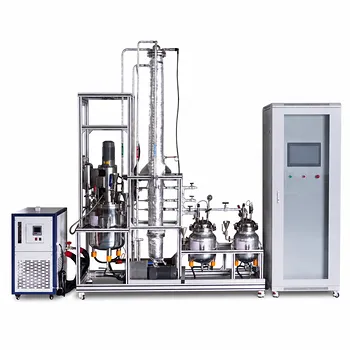
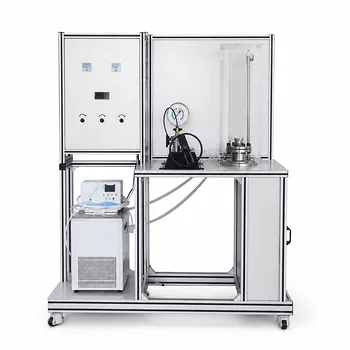
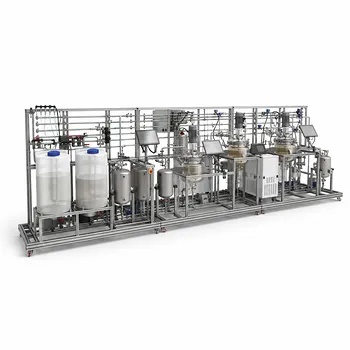
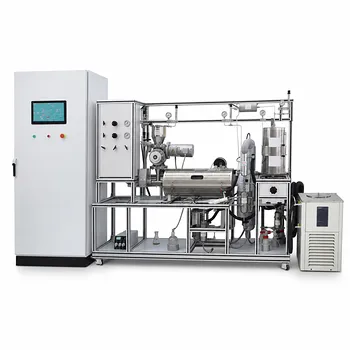
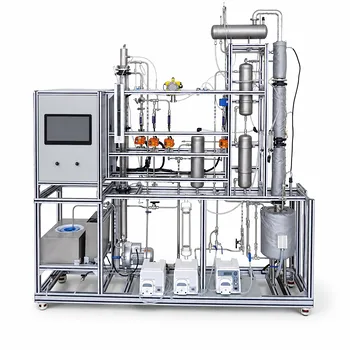
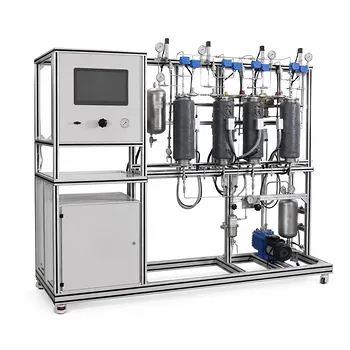
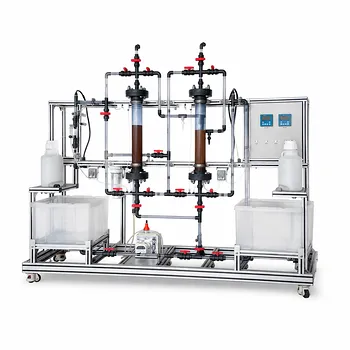
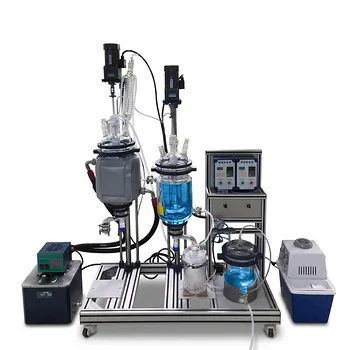
Accurate analytical methods require reliable, real-world process environments to yield meaningful data. LABPARK provides premium Educational and Vocational Unit Operations Pilot Plants in chemical engineering, bioprocess & biotech, and environmental & water treatment.
Engineered specifically for universities, research institutes, and enterprises, our modular pilot systems help you:
- Bridge Theory and Practice: Deliver hands-on training for complex chemical processes and industrial waste treatments.
- Validate Analytical Methods: Test protocols like refractory deposit analysis on realistic, scaled process streams.
- Ensure Research Reliability: Access robust, safe, and highly instrumentation-ready pilot setups customized to your research goals.
Ready to upgrade your laboratory or teaching facility? Contact LABPARK today to find the perfect pilot plant solution for your institution!
Related Products
- Carbon Material Thermal Pretreatment Multiphase Separation Educational Pilot Plant
- Carbon Dioxide Hydrogenation Methanol Synthesis Educational Unit Operations Pilot Plant
- Carbon Dioxide Hydrogen Methanol Synthesis Educational Unit Operations Pilot Plant
- Constant Pressure Filtration Educational Unit Operations Pilot Plant
- Fixed-Bed Chemical Reaction and Gas Dust Tar Removal Unit Operations Pilot Plant
People Also Ask
- What challenges do gravity transitions present for pressure control in multiphase separation pilot plants?
- How does steady-state multiplicity affect the operation and safety of exothermic reactions within a CSTR pilot plant? - Guide
- Why is temperature regulation via a cooling jacket a critical feature in CSTR pilot plants used for laboratory training?
- What parameters to monitor transitioning from Batch to CSTR? Master Pilot Plant Setup
- How to select the right unit operations pilot plant for liquid separation? A complete guide.