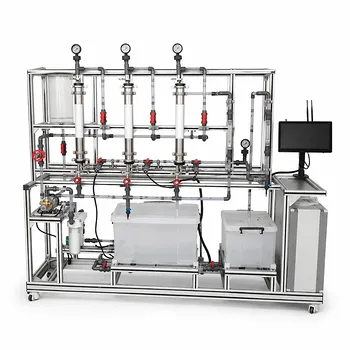
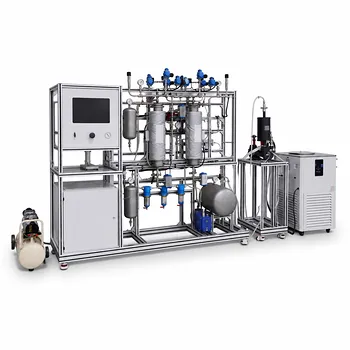
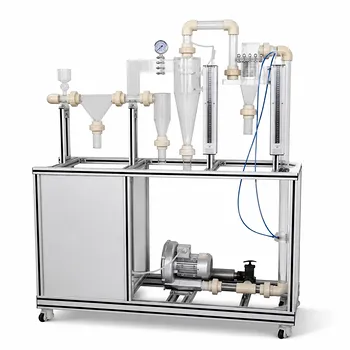
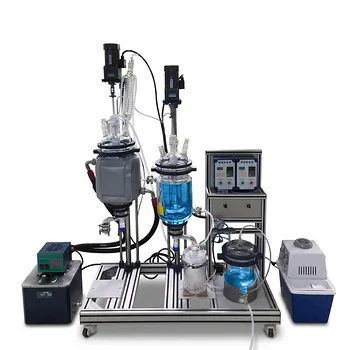
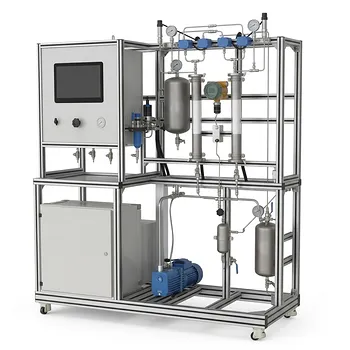
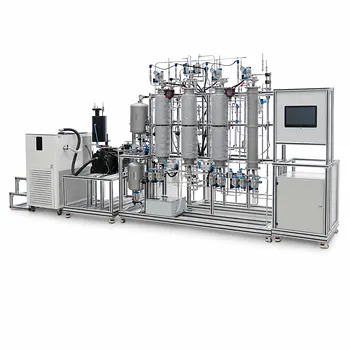
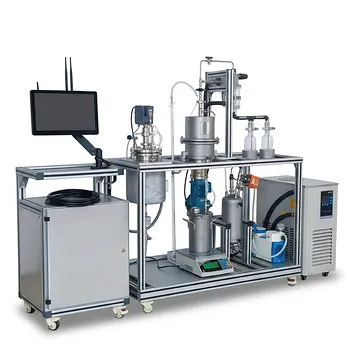
The selection of a pilot plant for liquid mixture separation begins not with equipment catalogs, but with the mixture itself. Institutions must first identify the fundamental physical property that differentiates the components—relative volatility, solubility, molecular size, or affinity—and then choose the unit operation that exploits that difference. The right pilot plant faithfully reproduces the core mass-transfer principles while offering the control, safety, and flexibility required for hands-on teaching and credible research.
A principle-first approach prevents the common mistake of acquiring impressive machinery that fails to serve educational outcomes. The ultimate goal is to turn abstract separation science into measurable, observable learning. Match the mixture’s dominant property difference to the unit operation, then select the pilot-scale equipment that makes that interaction transparent, safe, and scalable for your institutional mission.
Start with the Science: Identify the Key Property Difference
Every liquid mixture separation hinges on a specific physical or chemical contrast. The primary reference clearly states that unit operations are chosen based on process characteristics, material properties, and economic factors. In educational pilot plants, these property differences become tools for learning, not just for production.
Distillation: When Volatility is the Lever
If the components have sufficiently different boiling points, distillation is the classic choice. Pilot-scale distillation columns let students observe how relative volatility drives separation across trays or packing. The system demonstrates the interplay of reflux ratio, energy input, and stage efficiency.
Liquid-Liquid Extraction: When Solubility Differences Dominate
When compounds are heat-sensitive or have similar volatilities, extraction capitalizes on differential solubility in an immiscible solvent. The pilot plant must then make the liquid-liquid contact, mass transfer, and phase disengagement visible. This is where equipment selection becomes highly specific.
Crystallization: When Temperature-Sensitive Solubility is the Differentiator
For mixtures where one component can be precipitated out by cooling or evaporation, crystallization uses solubility-temperature relationships. A pilot crystallizer demonstrates supersaturation control, nucleation, and crystal growth kinetics—critical concepts often lost in a beaker experiment.
Membrane Separation: When Size, Charge, or Affinity Matters
For dissolved molecules or ions, membrane processes (reverse osmosis, nanofiltration, ultrafiltration) use permeability and size-exclusion differences. A membrane pilot system teaches flux decline, fouling, and the role of transmembrane pressure in a tangible, continuous process.
Translating Theory into Equipment: The Pilot Plant Configuration
Once the principle is identified, the equipment configuration must be scaled to teach and research effectively. The supplementary references offer precise decision paths, especially for extraction systems, which are often the most nuanced for liquid mixtures.
For Extraction: Contact Time, Stages, and Emulsion Control
The choice of extraction pilot equipment rests on three practical questions: how many theoretical stages are needed, what is the contact time requirement, and how readily do the phases separate? The decision table below synthesizes the critical rules.
- 3 or fewer theoretical stages: Simple gravity-driven columns (packed or spray towers) are sufficient. They provide clear visual tracking of phases.
- 4 to 10 stages: Move to sieve plate towers or pulsed columns. These increase mass-transfer area without excessive height.
- 10 to 20 stages: Choose mechanically agitated columns (rotating disc, reciprocating plate) or mixer-settlers. These supply the energy needed for high separation duty.
- Unstable emulsions or extremely short contact time: Centrifugal extractors are mandatory. They use centrifugal force to rapidly coalesce phases.
- High viscosity, low interfacial tension, or small density difference: Energy-input devices (centrifugal extractors, mixer-settlers) overcome poor natural phase separation.
Vertical columns are preferred when floor area is limited; mechanically agitated columns handle larger throughputs, while pulsed columns suit smaller throughputs. This staged decision logic—stages, stability, footprint—transforms a confusing array into a clear selection path.
For Distillation: Batch vs. Continuous and Column Internals
A pilot distillation unit for education should allow students to adjust reflux and feed conditions. Batch columns are more versatile for varied experiments; continuous columns teach steady-state operation. The choice of tray versus packing illustrates mass-transfer efficiency and pressure drop in a hands-on way.
For Crystallization: Making Supersaturation Visible
A pilot crystallizer should enable controlled cooling, evaporation, or anti-solvent addition. The design must include slurry handling and the ability to sample crystals over time, directly linking the solubility curve to particle size distribution. This introduces students to the downstream challenge of separating solids from the mother liquor.
For Membrane Systems: Module Configuration and Fouling Control
Pilot membrane units must offer easy monitoring of permeate flux, conductivity, and pressure. Spiral-wound modules replicate industrial practice, while flat-sheet test cells allow researchers to screen many membrane types rapidly. The system should be transparent about concentration polarization and cleaning cycles.
Beyond a Single Unit: Integrated Pilot Plants for Real-World Insight
Educational value soars when the pilot plant does not operate in isolation, but as part of a logical process flow. Supplementary guidance stresses that a well-designed pilot layout covers the core stages: raw material preparation, reaction, separation, recovery, and waste treatment. For liquid mixtures, this often means linking several separation steps.
Multiphase Mixtures: Sequencing Separation Principles
Consider a complex liquid like gas liquor, which contains water, tar, and oil. A dedicated multiphase pilot plant lets students study gas-liquid flashing to release dissolved gases, followed by gravity settling and decantation to separate immiscible organic phases based on density. This teaches fluid dynamics, residence time distribution, and emulsion breaking—concepts that cannot be grasped from a single-column experiment. Such sequences mirror industrial decanter design and show that liquid mixture separation is rarely a one-step affair.
Environmental and Water Treatment Focus
When the liquid mixture is an effluent, the separation objective shifts to contamination removal. The pilot plant should integrate units according to the phase of the target substance. For dissolved ions or organics, include membrane separation, ion exchange, or adsorption modules. For suspended solids, add sedimentation, hydrocyclones, or filtration. This side-by-side arrangement allows direct comparison of energy efficiency, selectivity, and throughput across fundamentally different phase-separation technologies.
Safety, Scalability, and Educational Flexibility
A pilot plant that ignores safety or scalability quickly becomes a liability. The references consistently flag these as non-negotiable, especially for advanced techniques.
Safety as a Design Parameter
For supercritical fluid extraction or high-pressure membrane systems, the pressure ratings of all components must be verified and protected by relief devices. When handling highly toxic compounds, contained systems like agitated filter dryers—or their extraction equivalents, such as sealed centrifugal extractors—replace open gravity settling. The primary reference’s call for techno-economic evaluation implicitly includes the cost of safety failures; pilot plants must therefore hard-code safe operating windows.
Scalability: Bridging the Lab–Industry Gap
A pilot plant’s value lies in its ability to preview industrial behaviour. Equipment should allow users to manipulate the critical parameters seen in full-scale operation: temperature profiles in distillation, solvent-to-feed ratios in extraction, and superheat in crystallization. Automated data logging of composition, flow, and pressure enables the plotting of realistic operating curves, giving students a direct feel for scale-up economics.
Flexibility and Control
Integrated pilot plants that support continuous automated control let instructors simulate steady-state and upset conditions. This flexibility allows a single platform to serve both a basic unit operations lab and an advanced process control course, maximizing equipment utilization across the curriculum.
Understanding the Trade-offs
No single pilot plant excels at everything. Being transparent about limitations builds institutional trust and prevents disappointing procurement.
- Simplicity versus sophistication: A highly automated, turn-key extraction system collects perfect data but can obscure the fundamental phase behaviour that students must observe manually. Balance screen time with hands-on sampling.
- Multipurpose versus dedicated: A versatile liquid-liquid extraction column that can be repacked or switched between pulsing and agitation serves many teaching goals, but it may never achieve the optimized separation efficiency of a unit built for one specific mixture.
- Footprint and throughput: A single vertical column with many stages is compact, but low throughput may limit the volume of sample available for subsequent analysis. Conversely, a high-throughput mixer-settler train consumes significant floor space and solvent.
- Capital cost versus learning depth: Advanced technologies like molecular distillation or supercritical fluid pilot plants deliver cutting-edge research data but demand higher infrastructure and maintenance skill. For undergraduate teaching, the pedagogical return on a complex system may be lower than for a well-designed glass distillation column with multiple sample points.
Making the Right Choice for Your Institution
The decision must ultimately map back to your primary educational or research mission. Here are the most common goals and the corresponding pilot plant strategy.
- If your primary focus is teaching core separation fundamentals: Choose transparent, gravity-driven columns or simple batch distillation kits with manual sampling. These make mass transfer stages, flooding, and phase interfaces viscerally clear.
- If your primary focus is advanced research in novel solvents or energy efficiency: Select modular extraction or membrane systems that offer precise, automated control of temperature, pressure, and flow, possibly including supercritical fluid capabilities.
- If your primary focus is replicating industrial processes for workforce training: Opt for integrated pilot plants that combine reaction, separation, and solvent recovery in a continuous, automated loop, mimicking the control rooms of real chemical facilities.
- If your primary focus is environmental and water treatment education: Assemble a suite of membrane, ion exchange, adsorption, and sedimentation units to compare phase-separation technologies for both dissolved ions and suspended solids in the same simulated effluent.
By letting the mixture’s dominant property difference dictate the unit operation, and then tailoring the equipment’s scale, safety envelope, and visibility to your institutional purpose, your pilot plant becomes far more than hardware—it becomes the defining bridge between separation science and lasting professional understanding.
Summary Table:
| Separation Method | Key Property Differentiator | Recommended Pilot Plant Type | Typical Applications |
|---|---|---|---|
| Distillation | Relative volatility (boiling points) | Batch or continuous columns (tray/packed) | Solvent recovery, ethanol purification |
| Liquid-Liquid Extraction | Differential solubility in solvents | Gravity columns, mixer-settlers, centrifugal | Heat-sensitive organics, active ingredients |
| Crystallization | Temperature-dependent solubility | Cooling/evaporative crystallizers | Particle size control, pharmaceutical labs |
| Membrane Separation | Molecular size, charge, or affinity | RO, nanofiltration, ultrafiltration units | Water purification, biomolecule concentration |
Empower Your Lab with LABPARK's Custom Pilot Plants
Selecting the right separation equipment is critical for educational and research success. LABPARK provides premium Educational and Vocational Unit Operations Pilot Plants in chemical engineering, bioprocess & biotech, and environmental & water treatment. Designed specifically for universities, research institutes, and enterprises, our systems bridge the gap between theory and industrial practice with unmatched safety, scalability, and flexibility.
Ready to upgrade your laboratory? Contact LABPARK today to find the perfect pilot plant configuration for your institution!
Related Products
- Multifunctional Membrane Separation Educational Pilot Plant with Ultrafiltration, Nanofiltration, Reverse Osmosis
- Multi-Functional Membrane Separation Educational Pilot Plant for Unit Operations Lab
- Bench Scale Dual Column Gas Separation and Capture Educational Pilot Plant
- Gas-Solid Heterogeneous Separation Demonstration Educational Unit Operations Pilot Plant
- Potassium Salt Thermal Dissolution and Crystallization Separation Educational Unit Operations Pilot Plant
People Also Ask
- How do PEI, PVDF, and PSU membranes compare in pilot plants? Find the best fit.
- Pervaporation vs. Vapor Permeation: Handling Suspended Solids in Membrane Pilot Plants
- What are the trade-offs of polymer vs inorganic membranes in teaching pilot plants? Key laboratory comparison.
- What are the advantages of membrane separation in pilot plants? Efficient Organic Vapor Recovery
- How can operators optimize operating conditions and cleaning protocols in membrane separation pilot plants to mitigate fouling?