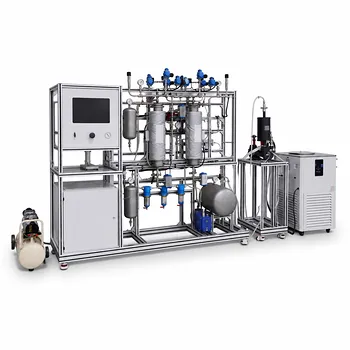
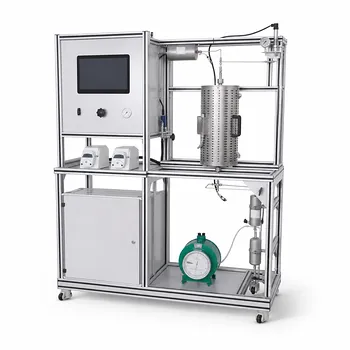
Pilot plants solve the separation puzzle of homogeneous catalysis by engineering the catalyst's physical state to enable straightforward recovery and recycling. Instead of distillation—which would thermally destroy the delicate catalyst—they rely on two core strategies: biphasic liquid-liquid systems that keep the catalyst in a separable immiscible phase, and immobilized catalyst systems that anchor the active species to a solid support for easy filtration or fixed-bed retention. These are complemented by ancillary techniques like high-efficiency demisters and membrane-based retention.
Homogeneous catalysts offer unmatched activity and selectivity, but their very solubility makes recovery a major hurdle. The pilot-plant answer is to circumscribe the catalyst's location—either inside a separate liquid phase or tethered to a solid—so that it can be physically retained and reused without thermal stress.
The Core Challenge: Why Distillation Fails Homogeneous Catalysts
Thermal Fragility Renders Distillation Impractical
Homogeneous catalysts, particularly organometallic complexes, are thermally labile. Many decompose at modest temperatures (often well below 420 K), which are routinely exceeded in distillation reboilers. Trying to boil off the product to recover the dissolved catalyst would irreversibly destroy it. This forces pilot plants to adopt non-thermal separation pathways that operate at mild conditions.
Entrainment Amplifies Catalyst Loss
In gas-liquid reactors, fine catalyst-containing droplets are entrained in the off-gas. Without specialised capture equipment, these aerosols escape with the gaseous effluent, causing continuous catalyst depletion. This secondary loss mechanism demands dedicated retention hardware.
Strategy 1: Biphasic Catalyst Systems – Liquid-Liquid Separation by Design
Engineering Catalyst Solubility for Phase Splitting
The catalyst is deliberately dissolved in a solvent (often water, using polar ligands like sulfonated triphenylphosphine) that is immiscible with the organic product phase. After the reaction, the two liquid phases separate spontaneously by gravity. The aqueous catalyst phase settles to the bottom and is simply decanted back to the reactor. No distillation required.
Pilot-Plant Realisation: CSTR + Decanter
A typical pilot-plant configuration runs a continuous stirred-tank reactor (CSTR) followed directly by a liquid-liquid phase separator. Students or operators observe the clear boundary between the coloured catalyst phase and the organic product. This setup eliminates energy-intensive columns and demonstrates how phase-behaviour engineering transforms a homogeneous reaction into a heterogeneous-like separation.
Thermal and Catalytic Stability Gain
Because the catalyst never enters a hot distillation column, thermal degradation of both catalyst and product is avoided. The mild phase-splitting step keeps the catalyst’s activity intact over multiple cycles, and the low energy demand makes the process inherently more sustainable.
Strategy 2: Immobilized Catalyst Systems – Turn a Soluble Catalyst into a Solid
Anchoring Active Sites to a Support
The homogeneous catalyst is chemically tethered to an organic, inorganic, or hybrid solid support (e.g., polymer beads, silica, metal oxides). The resulting solid catalyst can be used in a slurry reactor and recovered by simple filtration, or packed into a fixed-bed reactor where the liquid product flows through without carrying the catalyst away.
Pilot-Plant Integration: Filtration and Fixed-Bed Loops
In a slurry arrangement, the pilot plant includes an in-line filtration unit that continuously returns the solid catalyst to the reactor. For fixed-bed operation, the reactor itself acts as the separator—no downstream separation step is needed. This approach allows students to compare the pressure-drop and mass-transfer characteristics of immobilised catalysts with those of homogeneous systems.
Tackling Leaching – The Immobilisation Achilles’ Heel
A key pilot-plant evaluation parameter is catalyst leaching. Operators test wash cycles (e.g., rinsing the catalyst with the reaction solvent) to remove adsorbed products without stripping the active metal. Confirmation by ¹H NMR shows that properly designed immobilisation resists leaching, and membranes like PVDF-Ti can be successfully recycled across multiple oxidation runs.
Beyond Basics: Critical Hardware for Gas-Liquid Homogeneous Systems
High-Efficiency Demisters Capture Entrained Aerosols
When gas leaves a CSTR, it carries fine droplets of the catalyst solution. A high-efficiency demister (coalescer) installed in the off-gas line coalesces these aerosols, allowing the liquid catalyst to drain back to the reactor. This simple mechanical device is indispensable for preventing gradual metal loss.
Catalyst Bleed and Purge Loop for Long-Term Stability
Even with perfect physical retention, catalyst complexes slowly deactivate. A catalyst purification/bleed cycle continuously withdraws a small slipstream, regenerates inactive species (e.g., by ligand exchange or filtration of oligomeric by-products), and returns the rejuvenated catalyst. This loop is explicitly built into pilot-plant flow schemes to maintain steady-state activity over weeks of operation.
Understanding the Trade-offs
Biphasic vs. Immobilisation: Separating by Phase or by Phase-Transfer
Biphasic systems avoid any support-induced mass-transfer resistance and preserve the full solution-phase activity. However, they require the reaction to be sufficiently fast at the interface, and phase miscibility can still cause trace catalyst loss. Immobilised systems offer the ultimate simplicity—like a solid catalyst—but suffer from diffusion limitations and a lower fraction of accessible active sites (only surface-bound metal counts). Activity per metal atom often drops, and leaching remains a constant monitoring burden.
The Thermal-Fragility Blind Spot
Even with gentle separation, homogeneous catalysts can deactivate if local hot spots occur in the reactor. Pilot plants must be designed with precise temperature control to avoid crossing the decomposition threshold—a nuance often overlooked until a long-term run fails.
Membrane Reactors: Promising but Protocol-Intensive
Membrane-based retention (e.g., nanofiltration) can separate small product molecules from the larger catalyst complex. The challenge is membrane fouling and catalyst bleeding through the pores. Successful pilot runs rely on documented wash protocols and regular integrity checks, turning the membrane into a tedious but teachable unit operation.
Making the Right Choice for Your Pilot-Plant Goal
The optimal strategy depends on what you aim to demonstrate or optimise.
- If your primary focus is illustrating industrial-scale phase-splitting operations: Implement a biphasic liquid-liquid system with a decanter, using a water-soluble rhodium catalyst and an organic product. It directly mirrors commercial processes like Ruhrchemie/Rhône-Poulenc hydroformylation.
- If your primary focus is eliminating any liquid-liquid handling and maximising operational simplicity: Choose an immobilized catalyst in a fixed-bed reactor. This allows a clean, continuous product stream with zero downstream catalyst recovery unit.
- If your primary focus is capturing catalyst from gas-lift or ebullated-bed reactors: Install a high-efficiency demister and a bleed/purge loop. This combination targets both physical loss and chemical deactivation.
- If your primary focus is evaluating catalyst retention and membrane life: Configure a membrane reactor with periodic solvent wash cycles and use analytical techniques (NMR, ICP) to quantify leaching. The data builds a lifecycle cost model for the catalyst-membrane pair.
- If your primary focus is educating students on the fundamental separation principles: Run side-by-side comparisons of a homogeneous CSTR + distillation train versus a biphasic CSTR + decanter. The visual, hands-on contrast cements why phase-behaviour design trumps brute-force distillation.
By tailoring the separation train to the catalyst’s physical state, a pilot plant transforms the inherent recycling difficulty into a controlled, teachable unit operation that preserves both catalyst activity and process economics.
Summary Table:
| Strategy | Separation Mechanism | Key Advantage | Main Limitation |
|---|---|---|---|
| Biphasic Systems | Liquid-liquid phase splitting & decantation | Preserves catalyst activity; avoids thermal degradation | Requires liquid-liquid interface; potential trace solvent loss |
| Immobilized Catalysts | Solid-support anchoring (filtration or fixed-bed) | Simplified recovery; no downstream separation units needed | Diffusion limitations; risk of active metal leaching |
| Demisters & Purge Loops | Aerosol coalescence & slipstream purification | Prevents physical aerosol loss & chemical deactivation | Increases mechanical complexity of the pilot plant |
Bring Industrial-Scale Process Engineering to Your Lab
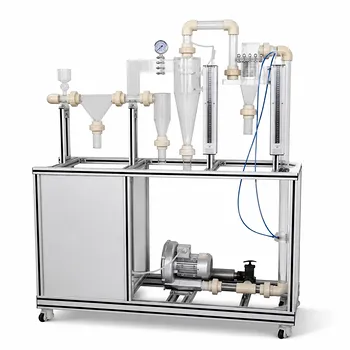
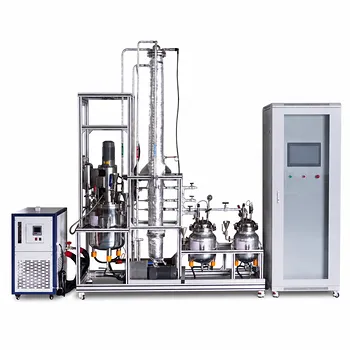
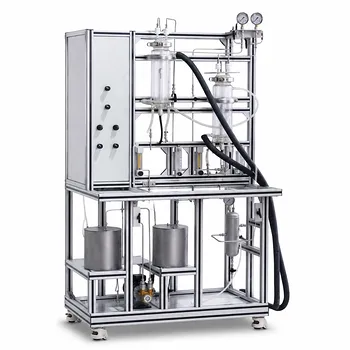
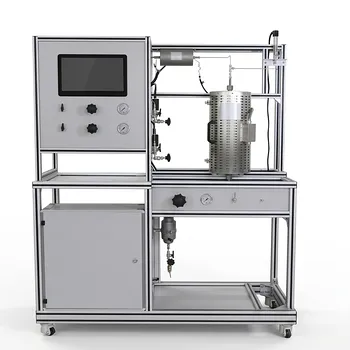
Mastering complex unit operations like catalyst recovery requires robust, hands-on equipment. LABPARK designs and manufactures premium Educational and Vocational Unit Operations Pilot Plants tailored for universities, research institutes, and enterprises.
We provide advanced training and research systems across key domains:
- Chemical Engineering: Hands-on study of biphasic decantation, reactor dynamics, and thermal-free separation loops.
- Bioprocess & Biotech: Practical training on membrane filtration, bioreactors, and delicate product recovery.
- Environmental & Water Treatment: Advanced systems for filtration, purification, and resource recycling.
Equip your students and researchers with the tools to bridge the gap between theory and industrial reality. Contact LABPARK today to explore our pilot plant solutions and receive a customized proposal!
Related Products
- Methanol Synthesis and Catalyst Performance Evaluation Educational Unit Operations Pilot Plant
- Fixed Bed Gas Solid Catalytic Reaction Educational Pilot Plant
- Gas-Solid Heterogeneous Separation Demonstration Educational Unit Operations Pilot Plant
- Fixed-Bed Chemical Reaction and Gas Dust Tar Removal Unit Operations Pilot Plant
- Carbon Material Thermal Pretreatment Multiphase Separation Educational Pilot Plant
People Also Ask
- Why is a purge system necessary when operating a gas recirculation loop in a methanol synthesis pilot plant? (Guide)
- How do temp & pressure affect methanol synthesis pilot plants? Optimize equilibrium and catalyst performance.
- Why do modern methanol pilot plants operate at lower pressures? Catalyst & Feed Requirements Explained
- What are the operational requirements for catalyst activation? Safe Methanol Pilot Plant Operation
- Why Compare Predicted and Experimental Excess Enthalpy? Key to Accurate Pilot Plant Scale-up