Loss on ignition (LOI) is often omitted because high-temperature furnace heating can actively sabotage the accuracy of subsequent elemental analysis and turn your sample into an unworkable, insoluble residue.
The goal of characterizing heat exchanger fouling is to identify the specific inorganic and organic species causing the problem. LOI directly compromises this goal by driving off volatile components of interest and chemically altering the remaining sample into a form that resists standard wet-chemical digestion.
While widely used for simple bulk measurements, the loss-on-ignition method fundamentally alters the chemistry of a foulant deposit. It volatilizes key elements, converts salts into near-insoluble oxides, and attacks the crucible—transforming a representative sample into a skewed, unanalyzable solid that obscures rather than reveals its true composition.
The Hidden Analytical Costs of a Furnace
A furnace might seem like a quick way to burn off organics and determine total inorganic content. But for the systematic, element-level analysis required in fouling studies, the process introduces three major liabilities.
Volatilization of Key Elements
Many elements critical to understanding corrosion and scaling behavior—like sulfur, halogens, or certain heavy metals—evaporate or are lost as gases at typical ashing temperatures.
You won't just lose carbon or water; you'll lose the very species you need to quantify. Once they're gone, the resulting mass loss data becomes meaningless for calculating precise elemental balances from the original deposit.
The Creation of Deeply Insoluble Oxides
High-temperature ignition converts metal salts and sulfates into refractory oxides. These newly formed oxides often prove extremely resistant to dissolution by even strong acids.
This means you face a secondary problem: a labor-intensive, multi-step fusion or digestion process just to get the ignited residue back into solution for techniques like ICP-OES or AAS. The extra chemical treatment not only adds time but introduces more opportunities for contamination or error.
Crucible Attack and Sample Contamination
The ignition process itself is not chemically inert. Alkaline species in the foulant, like carbonates or hydroxides, can react with common crucible materials—attacking platinum, silica, or porcelain.
This corrosion contaminates the sample with crucible material, invalidating your trace metal analysis. Simultaneously, it permanently damages expensive labware, making the method both inaccurate and costly.
A Smarter Analytical Pathway: Avoiding the Problem Entirely
Modern pilot-plant training and professional labs bypass LOI by directly targeting the specific fractions that LOI only estimates in bulk. They prioritize analytical specificity over a single, destructive gravimetric test.
Modern Combustion and Evolution Methods
Instead of burning everything and weighing the ash, dedicated commercial instruments are used. Combustion analyzers quantify total carbon, organic carbon, and carbonate carbon by measuring evolved CO2. Specialized evolution setups can differentiate sulfide, sulfate, and elemental sulfur.
These techniques are performed on the raw, un-ashed sample or on the solvent-extracted residue. The critical advantage is that the inorganic portion left behind after analysis remains chemically unchanged and fully soluble for subsequent elemental profiling.
Why Pilot Plant Training Pivots Away from Ignition
In vocational and university unit-operations labs, the lesson isn't just about fouling; it's about analytical validity. Students learn that choosing the wrong preparation method can corrupt an entire dataset.
By deliberately omitting LOI, the workflow teaches a core principle: protect the chemical integrity of your sample. It reinforces that extracting sequential, phase-specific information—free oil, water-soluble salts, acid-soluble scales, organic binders—requires a non-destructive mindset from the very first step.
Understanding the Trade-offs and the Deeper Need
While LOI is problematic for elemental forensics, it's not universally useless. The key is to recognize the deep analytical need driving your characterization.
If the only question is "What is the approximate total organic fraction?" and you are working with a large, homogeneous sample where minor element loss is acceptable, a simple LOI can provide a rapid, low-cost benchmark. However, for a pilot-plant foulant where the composition is unknown and the goal is to identify the root cause of the fouling (scaling salts, corrosion products, biological matter), this shortcut is a trap.
The insoluble oxide problem alone is a deal-breaker. Trying to reclaim a fused ash through laborious fusion with lithium metaborate risks introducing new contaminants and dilutions that destroy your detection limits for trace components. The "loss" in LOI quickly translates into a loss of analytical data, time, and crucible integrity.
Making the Right Choice for Your Analytical Goal
Your sample preparation should be dictated entirely by what you need to measure. Here is how to decide when to deliberately omit LOI.
- If your primary focus is complete elemental profiling and species identification: Omit furnace LOI. Preserve volatile elements and maintain the solubility of the residue by using solvent extraction sequences followed by targeted carbon/sulfur analysis on the raw solid.
- If your primary focus is quantifying the total carbon budget and its forms (organic, carbonate): Omit furnace LOI. Use direct combustion and acid-evolution instruments on the untreated deposit for a rapid, precise, and fraction-specific measurement without changing the leftover inorganics.
- If your primary focus is a quick, low-cost bulk estimation of total combustibles and you have no need for further elemental detail: A controlled LOI can be acceptable, but you must acknowledge that the result is a bulk estimate—and the leftover ash is likely compromised for anything beyond a qualitative X-ray.
Protecting the chemical information locked within your heat exchanger deposit begins with rejecting a preparation step that destroys it. By omitting the loss-on-ignition furnace step, you preserve the truth of the sample and gain the power to conduct a thorough, accurate root-cause analysis.
Summary Table:
| Feature | Loss on Ignition (LOI) in Furnace | Modern Combustion & Evolution |
|---|---|---|
| Sample Integrity | Destroys volatile species (e.g., sulfur, halogens) | Preserves chemical state of inorganic components |
| Solubility | Converts salts into highly insoluble metal oxides | Leaves residue fully soluble for ICP-OES/AAS analysis |
| Contamination Risk | Chemical attack damages crucibles and alters sample | Minimal risk; avoids high-temperature crucible reactions |
| Data Precision | Yields a rough, bulk gravimetric estimate | Provides fraction-specific, quantitative analysis |
Advance Your Pilot Plant Training & Research with LABPARK
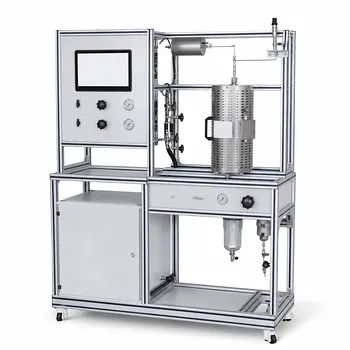
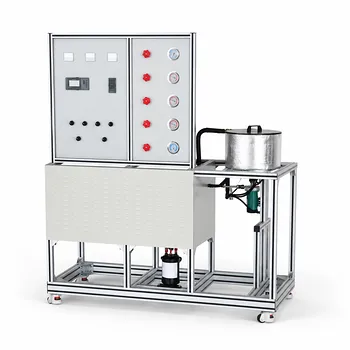
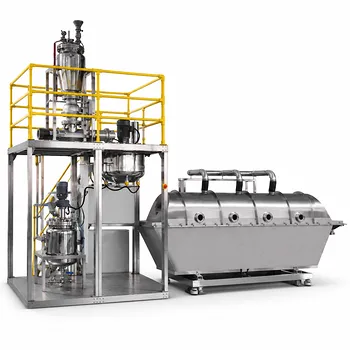
In chemical engineering, bioprocess, and environmental analysis, maintaining sample integrity is key to accurate troubleshooting. LABPARK provides state-of-the-art Educational and Vocational Unit Operations Pilot Plants in chemical engineering, bioprocess & biotech, and environmental & water treatment.
Designed for universities, research institutes, and enterprises, our pilot plants enable hands-on mastery of complex unit operations and analytical workflows.
Ready to elevate your training and research capabilities? Contact LABPARK today to explore our tailored pilot plant solutions!
Related Products
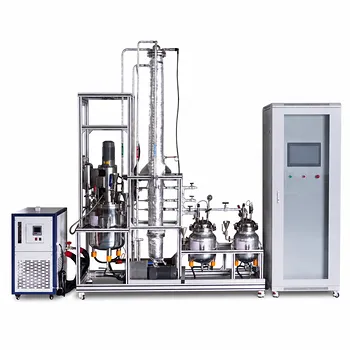
- Carbon Material Thermal Pretreatment Multiphase Separation Educational Pilot Plant
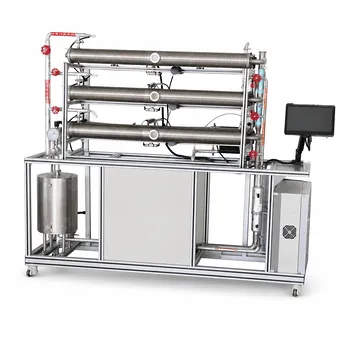
- Rising and Falling Film Evaporation Educational Unit Operations Pilot Plant
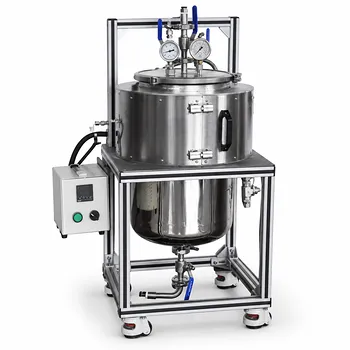
- Hot Filtration Educational Unit Operations Pilot Plant Laboratory System
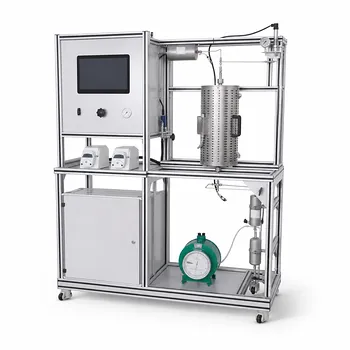
- Fixed-Bed Chemical Reaction and Gas Dust Tar Removal Unit Operations Pilot Plant
- Electrolyte Distillation Purification and Formulation Educational Pilot Plant
People Also Ask
- What challenges do gravity transitions present for pressure control in multiphase separation pilot plants?
- How does steady-state multiplicity affect the operation and safety of exothermic reactions within a CSTR pilot plant? - Guide
- Why is temperature regulation via a cooling jacket a critical feature in CSTR pilot plants used for laboratory training?
- What parameters to monitor transitioning from Batch to CSTR? Master Pilot Plant Setup
- How to select the right unit operations pilot plant for liquid separation? A complete guide.