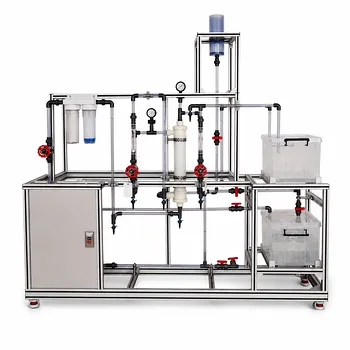
The choice of supercritical carbon dioxide (scCO2) in pilot-scale units is no accident—it’s a convergence of ideal physics, safety, and practicality. Supercritical CO2 is the dominant working fluid because its moderate critical point (31°C, 7.38 MPa) allows extraction and reaction processes to run at near-ambient temperatures, protecting heat-sensitive bioproducts. It combines liquid-like density for high solvency with gas-like low viscosity and high diffusivity for rapid mass transfer. Its non-toxic, non-flammable nature and ability to completely separate from the product by simple depressurization make it an exceptionally safe, clean, and educationally valuable solvent for pilot-scale research and training.
Supercritical CO2 dominates pilot-scale extraction and reaction units because it uniquely bridges high solvation power with excellent mass transfer at near-ambient temperatures, all while eliminating toxic solvent residues and fire hazards. Its tunable properties allow versatile process control, making it the ideal platform for green scale‑up studies and hands‑on unit operations training.
The Scientific Rationale Behind scCO2 in Pilot Units
Accessible Critical Point Enables Gentle Processing
The low critical temperature of 31°C means scCO2 can efficiently dissolve target compounds without exposing them to destructive heat.
This is vital for pilot plants handling thermosensitive bioactives—essential oils, vitamins, antibiotics, and natural medicines—that would degrade under traditional high-temperature distillation.
Moderate critical pressure (≈7.38 MPa) is high enough to achieve supercritical density, yet manageable for pilot-scale high-pressure equipment.
This balance allows researchers to run processes at temperatures low enough to preserve molecular integrity, a decisive advantage when moving from benchtop to scale‑up.
Dual Nature: Liquid‑Like Density, Gas‑Like Transport
Above its critical point, scCO2 exhibits a liquid‑like density that provides the high solvent power needed to dissolve non‑polar and moderately polar solutes.
Simultaneously, it retains gas‑like low viscosity and high diffusivity, enabling the fluid to penetrate porous matrices and carry solutes out rapidly.
The result is shorter extraction times and higher efficiency compared to organic solvents.
In pilot units, this directly translates to demonstrations of superior mass transfer—key learning for chemical engineering students and process developers alike.
Tuneable Solvent Power via Pressure, Temperature, and Co‑Solvents
The density of scCO2 is highly sensitive to small changes in pressure and temperature near the critical point.
By making subtle adjustments, operators can finely control solvent strength and selectivity, extracting a single compound class in one step and a different one in the next.
Adding small amounts of co‑solvents like ethanol expands polarity to capture more hydrophilic bioactives.
This tunability makes scCO2 a versatile, gradient‑like extraction tool in pilot research, without the complexity of multiple liquid solvent systems.
Safety, Sustainability, and Educational Value
Inherently Safer than Volatile Organic Solvents
Traditional solvents such as dichloromethane are toxic, carcinogenic, and demand rigorous recovery and disposal infrastructure.
scCO2 is non‑toxic, non‑flammable, and chemically inert, posing no acute inhalation risk and eliminating fire hazards lab‑ and plant‑wide.
When the system is depressurized, CO2 returns to a gas and escapes entirely, leaving zero chemical solvent residue in the extract.
This is a game‑changer for pharmaceutical, food, and nutraceutical pilot‑scale work where product purity is paramount.
A Green Chemistry Demonstration at Scale
The process inherently avoids volatile organic compound (VOC) emissions, with lifecycle studies showing 60–80% reductions in solvent‑related pollution.
A closed‑loop configuration re‑compresses and recycles gaseous CO2, minimizing raw material consumption and waste.
For pilot plants, this becomes a living example of sustainable unit operations.
Students and researchers see firsthand how process design can eliminate hazardous solvents rather than merely containing them.
A Superior Platform for Unit Operations Training
Operating an scCO2 pilot plant teaches every essential unit operation: pressurization, heating, extraction, separation, condensation, and recycling.
Students can safely manipulate temperature and pressure to observe the fluid’s density–solubility relationship without the risks of organic solvent handling.
The clear, colourless, residue‑free fluid makes it easy to visually demonstrate the supercritical phase change.
Educators rate scCO2 as one of the safest, most instructive working fluids for advanced chemical engineering laboratories.
Understanding the Trade‑offs and Engineering Realities
High‑Pressure Equipment Raises Capital Costs
Maintaining supercritical conditions demands thick‑walled extractors, high‑pressure pumps, and specialized seals.
Pilot‑scale vessels and ancillary components represent a major initial investment compared to atmospheric glassware setups.
Energy‑Intensive Compression Remains the Chief Economic Hurdle
Compressing gaseous CO2 to above 7.38 MPa requires significant electrical energy.
Coupled with the need to pre‑heat and later chill the fluid for condensation, energy costs can be high, and energy recovery systems become an essential part of scale‑up feasibility studies.
Limited Polarity Restricts Direct Solvation of Hydrophilic Compounds
Pure scCO2 is an excellent solvent for non‑polar lipids, waxes, and essential oils but struggles with polar, water‑soluble molecules.
Adding co‑solvents like ethanol expands applicability, but the need for a co‑solvent adds complexity, dissolves co‑solvent residues in the product, and may compromise some green benefits.
Density Sensitivity Can Lead to Process Instability
Near the critical point, a small temperature fluctuation may cause a sharp density drop and premature solute precipitation.
Pilot‑scale research focuses precisely on mapping these sensitive regions to engineer robust, controllable conditions for industrial deployment.
Making the Right Choice for Your Pilot‑Scale Goals
The decision to use scCO2 in a pilot unit should be driven by the specific objectives of your programme. Tailor your approach accordingly.
- If your primary focus is extracting heat‑sensitive, high‑value natural products: scCO2 is the unmatched solvent because it operates near ambient temperature, preserving bioactivity while delivering solvent‑free extracts.
- If your primary focus is green process development and regulatory compliance: scCO2 eliminates toxic residues and VOC emissions, aligning with strict pharmaceutical and food safety standards and reducing environmental licensing hurdles.
- If your primary focus is education and hands‑on training: scCO2 provides a uniquely safe, visually instructive, and complete unit operations experience that would be hazardous or impossible with traditional organic solvents.
- If your primary focus is process scale‑up and economic feasibility: Use the pilot unit to parametrically study energy consumption, optimal pressure‑temperature windows, and co‑solvent integration, generating the data needed to justify the high‑pressure capital against long‑term sustainability and product purity gains.
By matching the fluid’s unique properties to your core pilot‑plant goals, scCO2 becomes far more than a solvent—it becomes your most reliable and instructive scale‑up partner.
Summary Table:
| Feature of scCO2 | Main Benefit in Pilot Units | Engineering Challenge |
|---|---|---|
| Low Critical Point (31°C, 7.38 MPa) | Protects heat-sensitive bioactives | Requires high-pressure rated equipment |
| Liquid-Gas Dual Nature | High solvent power with rapid mass transfer | Density sensitivity requires precise control |
| Tunable Density | Selective extraction via pressure/temp changes | Co-solvents needed for highly polar compounds |
| Non-toxic & Non-flammable | Zero solvent residue; safe for classrooms | High energy consumption for compression |
Scale Up Your Research with LABPARK Pilot Plants
Are you looking to integrate advanced supercritical fluid technology into your curriculum or research? LABPARK designs and manufactures high-performance Educational and Vocational Unit Operations Pilot Plants in chemical engineering, bioprocess & biotech, and environmental & water treatment.
We help universities, research institutes, and enterprises bridge the gap between laboratory discovery and industrial production. Our robust pilot units provide students and researchers with a safe, hands-on environment to study green chemistry, mass transfer, and thermodynamic phase behavior.
Ready to elevate your training and research capabilities? Contact LABPARK today to find the perfect pilot-scale solution for your goals!
Related Products
- Supercritical High-Gravity Flash Evaporation Educational Unit Operations Pilot Plant
- Comprehensive Liquid-Liquid Extraction Pilot Plant for Engineering Education
- Multi-Functional Special Distillation Educational Pilot Plant
- Hot Filtration Educational Unit Operations Pilot Plant Laboratory System
- Continuous Batch Extractive Distillation Educational Pilot Plant
People Also Ask
- How is the heat transfer area calculated for an evaporation unit operations pilot plant during experimental design? Guide
- How to select educational evaporator pilot plants for thermal & scaling solutions? Complete Guide
- How are Dühring plots applied in evaporation pilot plants? Practical guide to boiling point prediction
- What is the practical significance of Kb in pilot plant evaporation? Master process design.
- How to Connect Benchtop Evaporation to Pilot Plants in Chemical Engineering Education