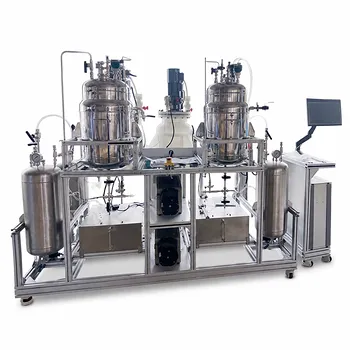
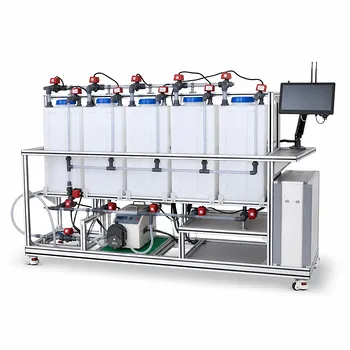
The integrity of the membrane in a chlor‑alkali electrolysis pilot plant is non‑negotiable—and it hangs on the purity of the brine.
Secondary brine purification using ion‑exchange columns is necessary because divalent cations like calcium and magnesium, which survive primary treatment, act as membrane poisons. Without this polishing step, these trace impurities migrate into the membrane, precipitate under the alkaline cathode conditions, and physically destroy the polymer structure. The ion‑exchange columns reduce these contaminants to parts‑per‑billion levels, the only way to safeguard membrane life, maintain stable cell voltage, and achieve meaningful experimental data.
The selective cation‑exchange membrane is the heart of the pilot‑scale unit operation, but it is fatally vulnerable to multivalent ions. Secondary ion‑exchange purification eliminates Ca²⁺ and Mg²⁺ before they can precipitate inside the membrane matrix—an irreversible failure that drives up electrical resistance and current inefficiency. Without this final barrier, even a single run can ruin the membrane.
Why the Membrane Demands Near-Zero Hardness
The Unique Sensitivity of the Cation‑Exchange Membrane
The perfluorinated membrane relies on sulfonic and carboxylic acid groups to selectively pass Na⁺ while blocking anions.
Multivalent cations like Ca²⁺, Mg²⁺, and even Fe³⁺ have a far stronger affinity for these active sites than sodium does.
Once they occupy the ionic clusters, they permanently displace sodium transport and cannot be easily washed out.
How Impurities Cause Catastrophic Internal Damage
The membrane operates under a steep pH gradient—acidic on the anode side, strongly alkaline on the cathode side.
When Ca²⁺ and Mg²⁺ move toward the cathode, they encounter the high‑pH environment and immediately form insoluble hydroxide precipitates inside the membrane’s nanopores.
These solid deposits create physical stress points, block ion channels, and raise electrical resistance, causing localized heating and ultimately mechanical failure of the membrane.
Why Primary Treatment Alone Is Insufficient
Primary brine purification (precipitation with soda ash and caustic, followed by filtration) reduces hardness from hundreds to low parts‑per‑million levels.
That is still orders of magnitude too high for a membrane cell. Even 1 mg/L of combined Ca²⁺ and Mg²⁺ will accumulate rapidly and shorten membrane life to hours instead of years.
Secondary purification is not a luxury—it is the only step that can take hardness to the required < 0.02–0.05 mg/L threshold.
How Ion‑Exchange Columns Solve the Problem
Chelating Resins as Selective Scavengers
The columns are packed with chelating ion‑exchange resins, usually functionalized with iminodiacetate or aminophosphonic groups.
These resins selectively bind multivalent cations while letting Na⁺ pass through, effectively removing hardness to the parts‑per‑billion range.
The resin is loaded in the sodium form, so it exchanges harmless Na⁺ for each Ca²⁺ or Mg²⁺ ion—preserving the brine’s sodium concentration and pH.
Integration Into the Pilot Plant Brine Loop
In a complete unit‑operations setup, the secondary columns sit after the primary clarifier and filter.
Polished brine then enters the anolyte compartment of the membrane cell, while depleted brine is dechlorinated and recirculated.
This closed‑loop configuration not only protects the membrane but also teaches the complete pretreatment chain that mirrors industrial practice.
Understanding the Trade‑offs and Common Pitfalls
Operational Complexity and Resin Management
Ion‑exchange columns introduce extra unit operations: regeneration, rinsing, and breakthrough monitoring.
If the resin is not properly regenerated and converted back to the sodium form, acidic residuals can leak into the cell, attacking the membrane from the inside.
Failing to detect hardness breakthrough can cause rapid, silent membrane degradation before any visible signs appear.
Balancing Purity, Throughput, and Resin Life
Higher brine throughput reduces contact time, risking incomplete removal of multivalent ions.
Conversely, overly large columns add capital cost and higher pressure drop without proportional benefit.
Optimization requires pilot‑scale testing to match resin bed volumes and regeneration cycles to the exact hardness load of the raw brine.
The Cost of Ignoring Secondary Purification
While the resin columns, chemicals for regeneration, and monitoring add upfront expense, they are negligible compared to the cost of a destroyed membrane.
A single batch of improperly polished brine can turn a $5,000 membrane into a non‑conductive, delaminated sheet—and corrupt all subsequent experimental data.
The economics leave no room for debate: secondary purification is the insurance policy that makes the pilot plant a viable research tool.
How to Apply This to Your Pilot Plant Design
- If your primary focus is membrane longevity and data integrity: Set a strict hardness target of < 0.02 mg/L and verify with on‑line or grab‑sample analysis before every campaign.
- If your primary focus is replicating industrial best practices in an educational setting: Make the ion‑exchange column a dedicated, monitored station in the brine circuit so students can correlate resin breakthrough with voltage rise.
- If your primary focus is operational simplicity without sacrificing protection: Use pre‑loaded, disposable chelating cartridges sized for the expected run length, eliminating on‑site regeneration factors.
The secondary ion‑exchange column transforms an otherwise lethal brine stream into a membrane‑safe feed, converting the pilot plant from a fragile curiosity into a robust platform for studying real‑world electrochemistry.
Summary Table:
| Feature / Parameter | Primary Brine Purification | Secondary Brine Purification (Ion Exchange) |
|---|---|---|
| Technology Used | Precipitation (soda ash/caustic) & filtration | Chelating ion-exchange resins (iminodiacetate/aminophosphonic) |
| Hardness Level (Ca²⁺/Mg²⁺) | Low parts-per-million (ppm) | < 0.02 - 0.05 mg/L (parts-per-billion / ppb) |
| Membrane Impact | Insufficient; causes rapid precipitation & failure | Safeguards membrane integrity, voltage, and lifespan |
| Role in Process | Bulk impurity removal | Polishing step & final safety barrier |
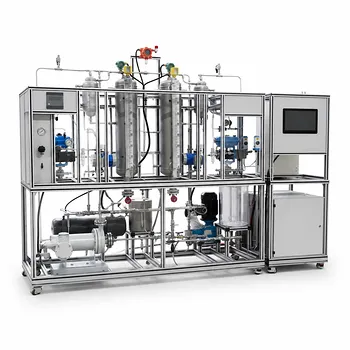
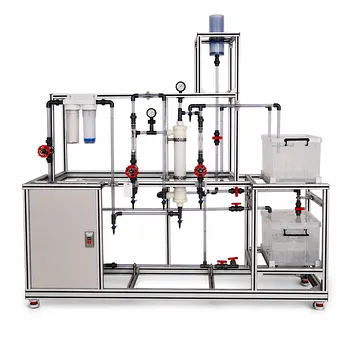
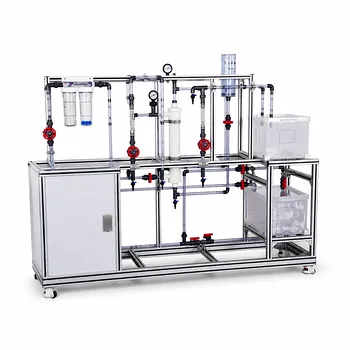
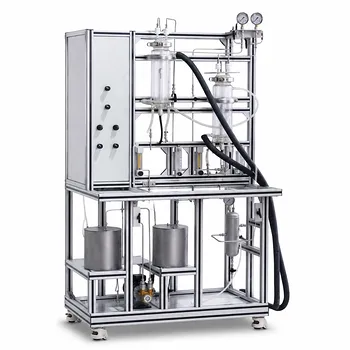
Looking to build a reliable and robust electrolysis setup? LABPARK provides state-of-the-art Educational and Vocational Unit Operations Pilot Plants in chemical engineering, bioprocess & biotech, and environmental & water treatment tailored for universities, research institutes, and enterprises. Protect your membranes, ensure accurate research data, and replicate industrial best practices with our professionally engineered systems.
Contact our technical experts today to learn more and request a consultation!
Related Products
- Alkaline Membrane Water Electrolysis Educational Pilot Plant Unit Operations Training System
- Ultrafiltration Membrane Separation Educational Pilot Plant
- Multi Functional Membrane Crystallization Educational Unit Operations Pilot Plant
- Multifunctional Membrane Separation Educational Pilot Plant with Ultrafiltration, Nanofiltration, Reverse Osmosis
- Multi-Functional Membrane Separation Educational Pilot Plant for Unit Operations Lab
People Also Ask
- How do chemical engineering pilot plants demonstrate electrolysis? Bridge Theory & Industrial Scale
- How do alkaline and PEM electrolysis technologies differ in pilot plant operations?
- Why is the selection of electrode materials critical when configuring or operating educational electrolysis pilot plants?
- Bipolar vs Monopolar Electrolysis: Key Configuration Details to Analyze in Pilot Plants
- Which Electrolysis Pilot Plant Parameters Ensure Safety & Efficiency? Key Controls Explained