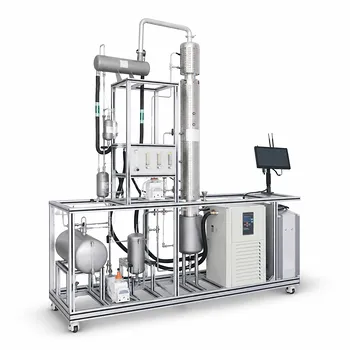
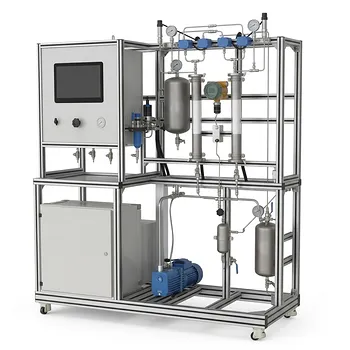
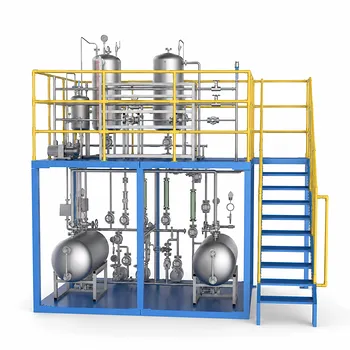
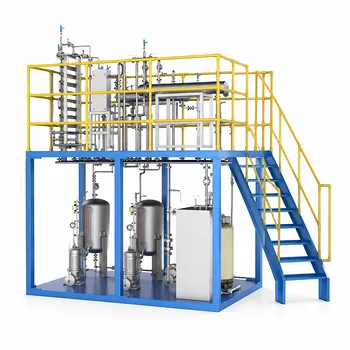
Practical instruction transforms a chemistry recipe into a reliable medicine. Students who only learn formulation theory in a classroom cannot anticipate the real-world behavior of powders—where each particle's size, shape, and density creates unpredictable flow, segregation, and mixing challenges. Working directly with solid-state unit operations pilot plants closes this gap, building the hands-on judgment and troubleshooting ability necessary to consistently deliver a uniform, safe dose to every patient.
Mastering solid dosage formulation demands more than knowing which excipient to add—it requires feeling how a blend moves, seeing why a granulation fails, and learning to correct it at an engineering scale. Pilot plants provide this immersive bridge between small-bench chemistry and commercial production, instilling the practical intuition that separates a competent formulator from one who can truly manage a drug product’s journey from API to tablet.
Understanding the Unruly Nature of Solid Dosage Forms
Solid formulations like tablets and capsules are precision delivery systems built from chaotic components. Practical pilot plant instruction teaches students to confront this chaos head-on.
Why Powders Don't Behave Like Simple Fluids
Unlike liquids or gases, solid particulate materials refuse to cooperate with idealized models. A powder blend does not flow predictably; it can arch in a hopper, pack into a solid block, or segregate by particle size with the slightest vibration. Without hands-on exposure, students treat a powder as a uniform substance, rather than a collection of individual particles with distinct frictional and cohesive personalities.
The Segregation Trap and Blend Uniformity
Mixing a low-dose active pharmaceutical ingredient (API) with bulking agents like lactose or microcrystalline cellulose is common in drugs such as quetiapine or montelukast. In theory, a simple geometric dilution ensures uniformity. In practice, over-blending can induce electrostatic separation, while discharging from a blender can completely undo the mix. Pilot plant exercises force students to sample, measure, and statistically confirm blend uniformity under dynamic conditions—turning an abstract quality goal into a quantifiable, achievable target.
Bridging the Abyss Between Bench and Production Floor
The most dangerous assumption in pharmaceutical development is that a 50-gram laboratory mix will scale predictably to a 100-kilogram engineering batch. Pilot plants shatter that illusion in a controlled, educational environment.
Revealing Scale-Dependent Forces
Process scale-up is not a linear multiplication. Impeller speeds that gently stir a beaker may crush or over-lubricate granules in an industrial blender. Drying times that work in a tray oven become critical paths of over-drying or core-hardening in a fluid bed. Pilot plants simulate these scale-dependent phenomena—allowing students to apply dimensional analysis and Design of Experiments (DOE) to adjust parameters like dwell time, feed rate, and impeller configuration before they become million-dollar failures.
Derisking Powder Flow and Compaction
No lecture can replicate the sound of a tablet press choking or the sight of capping tablets exiting the compression zone. By operating pilot-scale roller compactors, mills, and tablet presses, students learn to diagnose root causes: is the powder too cohesive, the compression force too high, or the lubricant poorly distributed? This diagnostic skill is the core of formulation management—turning a failed batch from a mystery into a problem with a logical, mechanical solution.
Building Process Intuition Through Structured Practice
Pilot plant instruction is not an unguided trial-and-error exercise. It is a controlled pedagogical environment that combines engineering principles with sensory learning.
Characterizing the Unseen: Powder Properties
Before a powder can be mixed or compressed, it must be understood. Pilot plants integrate sieve analysis (following ASTM or Tyler mesh standards), bulk density measurements, and flowability tests using angle of repose or shear cells. Students learn that “flowable” is a measurable, multi‑parametric property—not an opinion—and that a hammer mill does not just reduce size but also changes particle morphology and downstream compression behavior.
Operation Manuals as the Backbone of Safety and Reproducibility
Step-by-step operation manuals are not optional paperwork; they are the critical infrastructure that allows inexperienced trainees to safely handle complex, high-energy equipment. From startup sequences to emergency shutdown protocols, these manuals build a discipline of procedural rigor. When a student follows a validated procedure to start a vacuum dryer or clean a high-shear granulator, they internalize the same cGMP mindset that prevents cross-contamination and ensures operator safety in commercial manufacturing.
Acknowledging the Limits of Pilot-Scale Training
No educational tool is a perfect mirror of reality. Recognizing these trade-offs ensures students develop the right expectations for their careers.
The Remaining Gap to Full Commercial Scale
A pilot plant operates at 1/10th the batch size of a commercial line or smaller. While it teaches scale‑up principles, it cannot fully replicate the heat transfer dynamics of a 500‑kg fluid bed granulator or the wall friction effects in a 2‑ton bin. The key insight is that pilot training teaches how to identify scale-sensitive parameters, not how to avoid all future scale‑up problems entirely. Students learn to design systematic risk-mitigation strategies—like scale-up factors and spike sampling plans—rather than expecting a perfect predictive model.
The Illusion of Full Process Understanding
Hands-on experience can breed overconfidence. A student who successfully ran a 5‑kg blend may underestimate the complexity of hygroscopic APIs or the impact of ambient humidity changes on a granulation endpoint. Pilot plant instruction must therefore emphasize the scientific method and Quality by Design over gut feel, ensuring that practical muscle memory is always paired with mechanistic understanding.
Making Practical Instruction Work for Your Learning Goals
A single pilot plant experience can serve different objectives. Honest self-assessment guides the most effective use of the training.
- If your primary focus is becoming a process development scientist: Immerse yourself in the DOE studies and scale‑up calculations. Treat every run as a data‑generating experiment that teaches how torque, amperage, and outlet temperature correlate with granule quality.
- If your primary focus is quality assurance or manufacturing supervision: Zero in on sampling protocols, blend uniformity criteria, and the operation manual’s procedural controls. Learn to distinguish acceptable variability from a process trending out of control.
- If your primary focus is equipment design and process engineering: Concentrate on the hardware—impeller geometry, bin design, and material of construction. Use the pilot plant to understand how mechanical details dictate powder flow and segregation behavior.
The gap between a promising molecule and a reliable tablet is filled by hands-on judgment cultivated at pilot scale.
Summary Table:
| Challenge in Solid Dosage | Theory/Classroom Limit | Pilot Plant Value |
|---|---|---|
| Powder Behavior | Assumes uniform, fluid-like flow | Teaches particle cohesion, friction, and hopper flow dynamics |
| Blend Uniformity | Predicts perfect dilution mathematically | Demonstrates electrostatic segregation and mixing limits under dynamic conditions |
| Process Scale-Up | Assumes linear multiplication | Simulates scale-dependent forces like impeller speed and drying times |
| Troubleshooting | Relies on diagnostic theory only | Offers hands-on diagnosis of tablet capping, press choking, and milling issues |
Elevate Your Practical Training with LABPARK
Equip your students and researchers with the hands-on expertise needed to master industrial scale-up. LABPARK provides high-quality Educational and Vocational Unit Operations Pilot Plants in chemical engineering, bioprocess & biotech, and environmental & water treatment. We help universities, research institutes, and enterprises bridge the gap between lab-scale theory and commercial production.
Ready to enhance your lab's capabilities? Contact us today to find the perfect pilot plant solution for your institution!
Related Products
- Solid Waste Pyrolysis and Refining Educational Pilot Plant for Unit Operations
- Gas-Solid Heterogeneous Separation Demonstration Educational Unit Operations Pilot Plant
- Two-Dimensional Fluidization Hydrodynamics Educational Pilot Plant for Unit Operations Training
- Fixed-Bed Chemical Reaction and Gas Dust Tar Removal Unit Operations Pilot Plant
- Educational Unit Operations Pilot Plant for Intraparticle Diffusion Effective Factor Measurement
People Also Ask
- How do educational unit operations pilot plants bridge theory and design? Bridge the Engineering Gap
- How do educational unit operations pilot plants address safety and waste management when scaling up?
- When to transition from PID to adaptive control in pilot plants? Key process indicators.
- Why is the chemical plant startup schedule crucial? De-risk scale-up with pilot plants.
- Why Use PTFE & Hastelloy in Chemical Pilot Plants? Prevent Corrosion & Ensure Safety