Knowledge Environmental and Water Treatment Education Why monitor aluminum in boiler feedwater? Prevent analcite and gehlenite scale.
Author avatar

Tech Team · LABPARK

Updated 3 weeks ago

Why monitor aluminum in boiler feedwater? Prevent analcite and gehlenite scale.


Aluminum carryover from upstream clarification into a boiler is a hidden, heat-resistant scaling disaster waiting to happen. For chemical engineering unit operations laboratories operating boiler feedwater treatment systems, monitoring aluminum concentration is absolutely critical because any residual aluminum entering the boiler will precipitate as extremely hard, adherent, and thermally insulating scales—specifically analcite (Na₂O·Al₂O₃·4SiO₂·2H₂O) and gehlenite (3CaO·Al₂O₃·2SiO₂). These scales rapidly degrade heat transfer efficiency, risk equipment damage, and compromise the educational and research integrity of the pilot plant.

The core problem: Aluminum-based coagulants used in water clarification can slip downstream into boiler feedwater. If not caught by routine monitoring, this dissolved aluminum forms destructive analcite and gehlenite scales under boiler conditions. The key to safe operation is catching the invisible threat at the clarifier effluent before it ever reaches the steam-generation unit.

Understanding the Risk: From Clarification Coagulant to Boiler Scale

In a unit operations laboratory, student experiments often mirror industrial water treatment, using lime-soda softening or coagulation to prepare feedwater. The natural next step is boiling—and that’s where hidden aluminum becomes a liability.

The Everyday Role of Aluminum in Clarification

Aluminum salts (alum, polyaluminum chloride) are the workhorse coagulants for removing turbidity, organics, and colloidal silica.
During lab sessions, students adjust pH and dosage to optimize flocculation, and the effluent is sent downstream.

The Silent Carryover Problem

Even a slight overdose or poor flocculation control leaves soluble residual aluminum in the clarified water.
That dissolved aluminum is invisible to the naked eye and will flow directly into the boiler feed tank.
Once inside the boiler, high temperatures and elevated pH force the aluminum to react with silica, calcium, and sodium, nucleating scales that are far more tenacious than ordinary calcium carbonate.

The Chemistry of Trouble: Analcite and Gehlenite

Analcite (sodium aluminum silicate hydrate) and gehlenite (calcium aluminum silicate) are not simple salt deposits.
They are complex aluminosilicate minerals that bake onto heat exchanger surfaces, forming a glass-hard, chemically resistant layer.
Even aggressive mechanical cleaning or acid descaling struggles to remove them. The result: a sharp drop in heat transfer coefficient, higher tube-metal temperatures, and potential boiler tube failure.

Why This Matters in a Teaching or Research Lab

Beyond the physical damage, uncontrolled scaling distorts experimental data on energy balances, steam quality, and corrosion rates.
For students, it masks the true cause-and-effect of water treatment decisions, undermining the educational value.
Frequent monitoring turns aluminum management into a teachable moment—showing that real-world boiler reliability hinges on invisible dissolved ions, not just obvious solids.

Detecting the Invisible: A Proven Colorimetric Method

The laboratory setting demands a practical, sensitive test that students can perform reliably.

The Aluminon (Ammonium Aurintricarboxylate) Reaction

A standard method uses ammonium aurintricarboxylate to form a red-colored complex with aluminum in the range of 0.005 to 0.020 mg.
By comparing the color intensity against standards, operators can quantify residual aluminum at the clarifier outlet in minutes.
This immediate feedback enables real-time decisions: adjust coagulant dosage, change mixing intensity, or activate a polishing filter before water enters the boiler tank.

Understanding the Trade-offs

Monitoring for aluminum is essential, but the laboratory must balance competing priorities.

Coagulation Efficacy vs. Residual Aluminum Control

Overdosing coagulant ensures excellent turbidity removal but increases the risk of aluminum carryover.
Underdosing reduces aluminum risk but leaves fine solids in the water, which can cause other forms of fouling and skew experimental results.
The optimum point requires iterative testing—the very process that a well-designed lab curriculum should teach.

Cost, Time, and Analytical Limitations

Colorimetric tests, while quick, are sensitive to interferences from fluoride or high hardness and require careful calibration.
In a packed curriculum, frequent monitoring can feel like a burden. However, the cost of replacing a scaled boiler tube or repairing a pilot-scale steam system far outweighs the minutes spent on the test. The real trade-off is short-term lab convenience against long-term equipment integrity and educational quality.

How to Apply This to Your Laboratory

Your specific goals will determine the best monitoring strategy.

  • If your primary focus is protecting expensive pilot-scale boiler equipment: Implement mandatory aluminum checks after every clarification step and establish a hard limit—treat any detectable level above the 0.005 mg threshold as a signal to stop flow to the boiler.
  • If your primary focus is delivering a powerful educational experience: Integrate aluminum monitoring into the student procedure as a required quality-control gate, directly linking coagulant chemistry to the dramatic, tangible consequence of analcite/gehlenite scale formation.
  • If your primary focus is optimizing chemical usage and minimizing long-term fouling: Use the colorimetric data to fine-tune coagulant dose‑pH curves and evaluate low‑residual‑aluminum alternatives like polyaluminum chloride, while still testing to confirm zero carryover.

A single, routine aluminum measurement at the clarifier outlet is the gatekeeper that prevents tomorrow’s hard-scale headache. By making that check a non‑negotiable part of your laboratory operation, you safeguard both your equipment and the lasting value of the hands‑on chemical engineering education.

Summary Table:

Scale Type Chemical Formula Key Characteristics Impact on Boiler
Analcite Na₂O·Al₂O₃·4SiO₂·2H₂O Glass-hard, sodium aluminum silicate hydrate Degrades heat transfer, risks tube failure
Gehlenite 3CaO·Al₂O₃·2SiO₂ Highly adherent, calcium aluminum silicate Resists acid descaling, damages equipment

Equip Your Laboratory with Reliable Unit Operations Pilot Plants

Prevent scaling disasters and ensure precise experimental data in your lab. LABPARK provides state-of-the-art Educational and Vocational Unit Operations Pilot Plants in chemical engineering, bioprocess & biotech, and environmental & water treatment for universities, research institutes, and enterprises.

Help your students master critical real-world water treatment and boiler safety monitoring with our robust systems. Contact LABPARK today to discuss your lab requirements!

Related Products

People Also Ask

Related Products

Alkaline Membrane Water Electrolysis Educational Pilot Plant Unit Operations Training System

Alkaline Membrane Water Electrolysis Educational Pilot Plant Unit Operations Training System

Hands-on educational pilot plant for alkaline membrane water electrolysis hydrogen production, integrating unit operations training with industrial PLC control, real-time data logging, customizable design, durable 316L stainless steel construction, explosion-proof safety, and modern 5G connectivity for university laboratories.

Electrolyte Distillation Purification and Formulation Educational Pilot Plant

Electrolyte Distillation Purification and Formulation Educational Pilot Plant

Integrated bench-to-pilot scale educational pilot plant for electrolyte distillation, purification, and formulation with borosilicate glass construction, PLC automation, touchscreen HMI, and advanced industrial safety features for hands-on chemical process training, ideal for chemical engineering and materials science curricula.

Ion Exchange Water Purification Educational Pilot Plant for Engineering Unit Operations

Ion Exchange Water Purification Educational Pilot Plant for Engineering Unit Operations

This bench-scale ion exchange pilot plant trains engineering students in water purification. Dual transparent columns simulate industrial softening and demineralization. Students observe fluid dynamics, perform resin regeneration, and analyze breakthrough curves. The corrosion-resistant frame ensures durability in unit operations experiments.

Multifunctional Membrane Separation Educational Pilot Plant with Ultrafiltration, Nanofiltration, Reverse Osmosis

Multifunctional Membrane Separation Educational Pilot Plant with Ultrafiltration, Nanofiltration, Reverse Osmosis

An integrated laboratory bench-scale membrane separation system for higher education engineering labs combining Ultrafiltration, Nanofiltration, and Reverse Osmosis processes. Features industrial PLC control with touch-screen HMI, transparent piping, and academic assessment software. Ideal for chemical and environmental engineering curricula.

Orifice and Venturi Flowmeter Calibration Educational Pilot Plant for Fluid Mechanics Laboratory

Orifice and Venturi Flowmeter Calibration Educational Pilot Plant for Fluid Mechanics Laboratory

Enhance fluid dynamics education with the Orifice and Venturi Flowmeter Calibration Educational Unit Operations Pilot Plant, featuring transparent orifice and Venturi meters, industrial sensors, touchscreen interface for real-time data analysis and automatic coefficient calculations in engineering student laboratories.

Centrifugal Pump Performance and Orifice Flowmeter Calibration Educational Pilot Plant

Centrifugal Pump Performance and Orifice Flowmeter Calibration Educational Pilot Plant

This versatile educational pilot plant enables engineering students to conduct centrifugal pump performance tests, orifice flowmeter calibration, and fluid mechanics experiments using a transparent flow loop, industrial HMI, and 3D virtual simulation for a comprehensive hands-on learning experience.

Multi-Functional Membrane Separation Educational Pilot Plant for Unit Operations Lab

Multi-Functional Membrane Separation Educational Pilot Plant for Unit Operations Lab

The Multi-functional Membrane Separation Educational Unit Operations Pilot Plant is an integrated bench-scale laboratory system designed for teaching undergraduate engineering education. It features Ultrafiltration, Nanofiltration, and Reverse Osmosis modules in a compact, mobile unit for practical hands-on learning.

Hot Filtration Educational Unit Operations Pilot Plant Laboratory System

Hot Filtration Educational Unit Operations Pilot Plant Laboratory System

This integrated laboratory bench-scale hot filtration pilot plant enables students to study solid-liquid separation under thermal conditions, featuring a stainless steel vessel, removable heating jacket, and multi-layer filter plates for unit operations education, ideal for chemical engineering laboratory curriculum.

Rising and Falling Film Evaporation Educational Unit Operations Pilot Plant

Rising and Falling Film Evaporation Educational Unit Operations Pilot Plant

Hands-on educational pilot plant for studying rising and falling film evaporation, flow regimes, and heat transfer. Customizable for university labs with industrial instrumentation and data acquisition. Enables comparative evaluation of evaporation modes and energy efficiency.

Electrochemical Water Treatment Educational Unit Operations Pilot Plant

Electrochemical Water Treatment Educational Unit Operations Pilot Plant

Enhance engineering education with this pilot-scale electrochemical water treatment plant. Designed for hands-on learning of efficient salt removal, electrolytic reactions, and real-time data acquisition. Features multi-mode control, corrosion-resistant PVC, low-voltage safety, and wireless connectivity for modern teaching labs.

Three-Tube Heat Transfer Educational Pilot Plant for Unit Operations Training

Three-Tube Heat Transfer Educational Pilot Plant for Unit Operations Training

Three-tube heat transfer pilot plant for studying convective heat transfer enhancement and condensation. Allows comparison of smooth, corrugated, turbulent tubes, verifying empirical correlations. Ideal for chemical engineering education with safety and closed-loop steam recovery.

Comprehensive Heat Transfer Coefficient Determination Educational Unit Operations Pilot Plant

Comprehensive Heat Transfer Coefficient Determination Educational Unit Operations Pilot Plant

Advanced industrial-grade educational pilot plant for comprehensive heat transfer coefficient determination. Enables quantitative convective heat transfer analysis, evaluates double-pipe and shell-and-tube exchanger configurations, and includes digital data acquisition. Customizable for engineering curriculum. Ideal for engineering unit operations labs.

Educational Compression Refrigeration Performance Determination Unit Operations Pilot Plant

Educational Compression Refrigeration Performance Determination Unit Operations Pilot Plant

This educational pilot plant for compression refrigeration performance determination offers dual COP evaluation, regenerative cycle comparison, and calorimeter calibration. Customizable for curriculum integration, it features environmentally conscious design. Supports thermodynamic mapping on pressure-enthalpy diagrams and synchronous monitoring with centralized instrumentation.

Quantitative Dosing and Liquid Flow Control Educational Unit Operations Pilot Plant

Quantitative Dosing and Liquid Flow Control Educational Unit Operations Pilot Plant

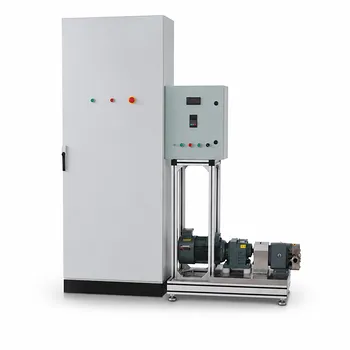
Explore industrial fluid transport and automated process control with this quantitative dosing and liquid flow control educational pilot plant, featuring local and remote control cabinets, variable speed metering pump, high-precision flow sensors, and PLC-based SCADA integration for engineering students.

Dual Mode Heat Transfer Pilot Plant for Unit Operations Training

Dual Mode Heat Transfer Pilot Plant for Unit Operations Training

Engineering-scale dual-mode heat transfer pilot plant for hands-on unit operations training in chemical engineering. Features real and simulated modes, multiple heat exchanger types, comprehensive coefficient determination, and advanced process control with data acquisition for engineering students and researchers.

Multi-Reactor Educational Pilot Plant for Reaction Engineering Unit Operations

Multi-Reactor Educational Pilot Plant for Reaction Engineering Unit Operations

Integrated bench-scale educational pilot plant for chemical engineering teaching featuring fixed bed fluidized bed and stirred tank reactors with web-based digital twin controls and safety interlocks for hands-on unit operations and reaction engineering comparative studies in one compact system.

Natural Product Extraction Unit Operations Training Pilot Plant

Natural Product Extraction Unit Operations Training Pilot Plant

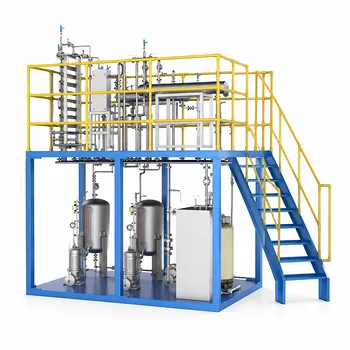
Integrated natural product extraction pilot plant for chemical engineering training bridges theory and industrial practice with modular extraction and evaporation/concentration units, hybrid touchscreen and manual control, realistic process simulation, and self-contained softened water and vacuum utilities.

Supercritical High-Gravity Flash Evaporation Educational Unit Operations Pilot Plant

Supercritical High-Gravity Flash Evaporation Educational Unit Operations Pilot Plant

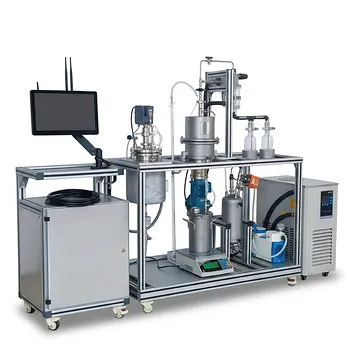
Bench-scale integrated teaching system for advanced separation and mass transfer, combining supercritical high-gravity flash evaporation with heating, chemical reaction, and material collection, featuring modular design, Stainless Steel 316L construction, transparent visualization, touchscreen control, and safety systems for chemical engineering education.

Liquid-Liquid Mass Transfer Coefficient Determination Educational Pilot Plant

Liquid-Liquid Mass Transfer Coefficient Determination Educational Pilot Plant

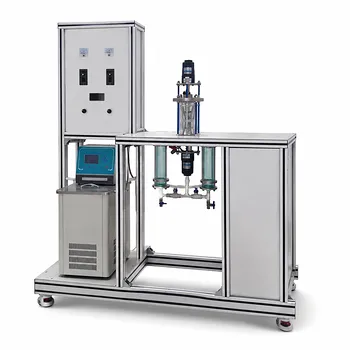
This bench-scale educational pilot plant for liquid-liquid mass transfer coefficient determination offers precise control of phase boundary, temperature, and agitation, enabling hands-on study of transport phenomena and unit operations in chemical engineering labs for teaching.

Centrifugal Pump Performance Determination Educational Unit Operations Pilot Plant

Centrifugal Pump Performance Determination Educational Unit Operations Pilot Plant

This lab system determines centrifugal pump performance curves for unit operations. Students configure dual pumps in series or parallel for hands-on learning. Includes industrial controls, clear piping, and data logging. Customizable for chemical, mechanical, and environmental engineering programs.


Leave Your Message