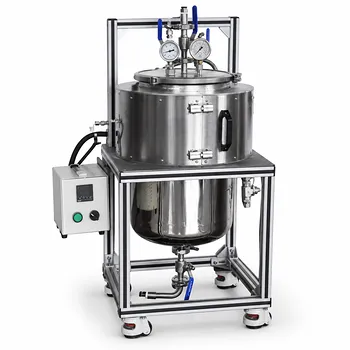
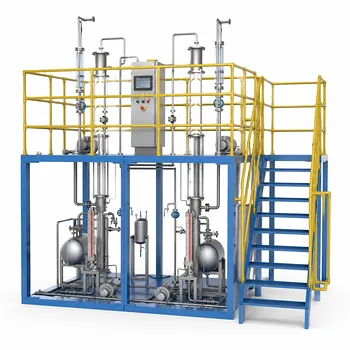
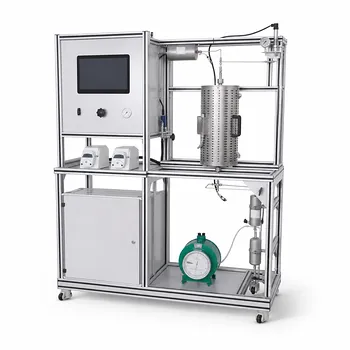
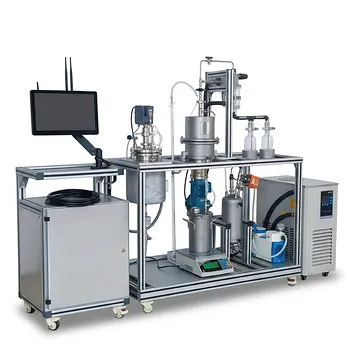
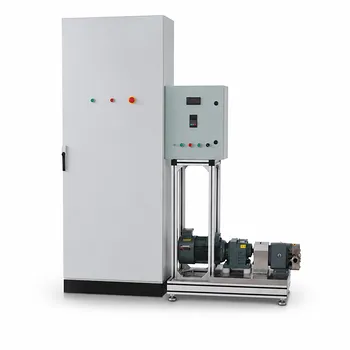
To truly master distillation design, you must move beyond equations on a page—you need to see how those formulas perform when confronted with the messy reality of heat loss, non‑ideal mixtures, and physical equipment. Comparing experimental data with both shortcut and rigorous distillation methods transforms abstract theory into tangible engineering judgment. It reveals exactly where simplified assumptions like constant molal overflow break down, and it demonstrates why detailed tray‑by‑tray calculations are indispensable for real‑world columns.
The core value lies in building the critical instinct to know when a shortcut is “good enough” and when only a rigorous model can capture what’s truly happening. By physically running a column and then seeing how both a quick Fenske‑Underwood estimate and a full MESH simulation match the actual temperature profile and purity, students internalize the cost of neglecting heat loss and non‑ideality—a lesson no textbook can deliver with the same force.
Why the Gap Between Theory and Reality Matters
The Limits of Constant Molal Overflow
Shortcut methods assume constant molal overflow and nearly constant relative volatility. In an actual pilot‑plant column, these assumptions fail as soon as heat losses through the walls or significant composition‑dependent enthalpy changes appear. The only way to see that failure concretely is to measure real temperatures and purities, then compare them directly against the shortcut prediction.
Heat Loss Changes Everything
A shortcut calculation ignores the heat lost to the surroundings. In a physical trainer, that lost duty shifts the internal liquid and vapor traffic, moving the real operating line away from the ideal. Watching the experimental temperature profile deviate from the shortcut line makes the concept of energy balance tangible and unforgettable.
How the Two Methods Complement Each Other in a Lab Setting
Shortcuts as a Reality Check on Your Rigorous Model
Before a rigorous simulation converges, you must supply initial estimates for temperatures, flows, and stage counts. Shortcut methods provide exactly those starting points—minimum reflux ratio, minimum stages, and feed location. By deriving these values from the same data you will later measure, you learn that a robust initial guess is what keeps a complex simulation from diverging or converging to a physically impossible solution.
Rigorous Methods as the Truth‑Detector
Once the column runs, rigorous plate‑by‑plate calculations solve the full MESH (Material, Equilibrium, Summation, Heat) equations. When you overlay the rigorous simulation results on the experimental data, you get a picture of where the real column deviates due to tray inefficiency, entrainment, or imperfect vapor‑liquid equilibrium. It turns the computer simulation into a diagnostic tool, not just a prediction engine.
From Shortcut to Rigorous: A Two‑Step Learning Journey
Building Intuition with the Fenske‑Underwood‑Gilliland Path
Applying the Fenske‑Underwood equations to the actual column feed and product samples forces you to publicly commit to a predicted stage count and reflux ratio. When you then measure those same quantities on the trainer, the comparison becomes a personal, hands‑on discovery of what “ideal stage” really means versus the efficiency you actually achieved.
Bridging to Industrial Practice
Modern industrial design uses rigorous tray‑by‑tray simulators with thermodynamic packages like Soave‑Redlich‑Kwong (SRK). By mimicking this workflow in a unit operations lab—going from shortcut initial estimates to a full rigorous simulation and then checking against sensor data—students practice exactly the validation loop they will need when they later commission a real plant simulation.
The Educational Power of Seeing the Differences
Non‑ideality You Can Touch
In a multicomponent, non‑ideal mixture, relative volatilities change dramatically from top to bottom. Shortcut methods average them out. By collecting real‑time temperature, flow, and composition data, and then trying to fit a constant‑volatility model to it, students experience the mismatch firsthand. That visceral understanding is why they later trust activity‑coefficient models when they encounter azeotropic or extractive distillation.
Convergence Failures Become Lessons
When a rigorous simulation fails to converge with bad initial guesses, it can feel like a black box. By first using the experimental shortcut results to generate reliable top‑and‑bottom temperatures and reflux rates, students learn that mathematical convergence is a physical problem, not just a numerical glitch. They come away respecting the need for accurate input, not just powerful algorithms.
Understanding the Trade‑offs
Shortcut methods and rigorous simulations each bring distinct limitations, and comparing them using real pilot‑plant data makes those limitations impossible to ignore.
- Accuracy versus speed: Shortcut calculations deliver an estimate in minutes, at the cost of ignoring energy balances and variable relative volatility. Rigorous simulations can be highly accurate but demand computational time and careful initialization.
- Ideal versus real: A shortcut method is only reliable for ideal, two‑product systems. As soon as the mixture becomes non‑ideal or the column sees significant pressure drop, rigorous models are mandatory. Physical trainers often intentionally operate close to the column’s flooding point to make these differences vivid.
- Model transparency: Shortcuts are transparent enough that you can calculate them by hand, building foundational understanding. Rigorous simulations are powerful but opaque; without experimental validation, it’s easy to trust a converged solution that’s physically wrong.
- Risk of over‑trusting simulation: A rigorous simulation tuned to fit one set of lab data may still fail on a new feed. By comparing both methods against multiple experimental runs, students learn to assess the domain of applicability of every model.
Making the Right Choice for Your Learning Goal
How you design the comparison between shortcut, rigorous, and experimental results depends on the competence you want to develop.
- If your primary focus is fundamental distillation physics: Let the shortcut‑to‑experiment mismatch be your main teaching tool. Highlight heat‑loss effects and constant‑molal‑overflow failure so the need for rigorous enthalpy balances becomes self‑evident.
- If your primary focus is simulation proficiency: Use the shortcut results to initialize the rigorous model, then require that the simulation predictions match the pilot‑plant data within a specified tolerance. This builds the calibration skills needed for industrial flowsheeting.
- If your primary focus is industrial readiness: Add the step of converting a simple ASTM D86 feed analysis to a True Boiling Point curve, then let students see how that feed characterization impacts their rigorous model’s accuracy—this mimics exactly what a process engineer does when designing a new column from limited plant data.
Ultimately, the trainer becomes a bridge between the quick, elegant world of shortcut design and the demanding, iterative world of real separation. That bridge is where confident, practically‑minded chemical engineers are built.
Summary Table:
| Method / Data | Key Focus & Inputs | Core Strengths | Key Limitations |
|---|---|---|---|
| Shortcut Methods | Fenske-Underwood-Gilliland equations; basic VLE | Fast estimates, hand-calculable, provides initial simulation values | Ignores heat loss, pressure drop, and non-idealities |
| Rigorous Simulations | MESH equations; thermodynamic packages (e.g., SRK) | High accuracy, models multi-component & non-ideal mixtures | Demands precise inputs, risk of convergence failures |
| Experimental Data | Physical pilot-plant sensors (temp, flow, purity) | Captures real-world heat loss, column inefficiencies, and physics | Constrained by physical hardware limits and setup |
Bring Real-World Distillation to Your Chemical Engineering Lab
Bridging the gap between mathematical theory and physical reality requires robust, industry-standard training equipment. LABPARK provides state-of-the-art Educational and Vocational Unit Operations Pilot Plants in chemical engineering, bioprocess & biotech, and environmental & water treatment.
Designed specifically for universities, research institutes, and enterprises, our pilot plants empower students and researchers to validate simulation models against physical data, analyze heat loss, and master column operations.
Ready to elevate your department's practical training and research capabilities? Contact LABPARK today to discover our customizable pilot plant solutions!
Related Products
- Multi-Modal Distillation Unit Operations Training Pilot Plant
- Continuous Sieve-Plate Distillation Pilot Plant for Unit Operations Laboratory Education
- Green Anhydrous Ethanol Purification Extractive Distillation Unit Operations Training Pilot Plant
- Dual-Mode Rectification Pilot Plant for Practical Training Unit Operations
- Multi Functional Membrane Crystallization Educational Unit Operations Pilot Plant
People Also Ask
- How can energy balance equations for condensers & reboilers be validated experimentally? Guide
- What are the primary reflux ratio control strategies? Master Distillation Unit Operations
- Why is vacuum operation capability an essential feature for a distillation unit operations pilot plant? Unlock Efficiency
- How does catalyst water concentration affect distillation pilot plant design? Key separation train choices.
- How can real-time carbon number prediction improve distillation pilot plants? Optimize control.