The most common conceptual error students make when entering a solid dosage formulation lab is believing that a drug's labeled solubility tells them everything they need to know about how it will behave in the body. This distinction matters because it directly prevents the fatal formulation flaw of assuming that good solubility alone guarantees good absorption. Training students to separate solubility from dissolution rate shifts their mindset from a static, thermodynamic ideal to the dynamic, kinetic reality that governs precise drug delivery within the gastrointestinal tract.
While solubility defines the ultimate capacity for a drug to dissolve at equilibrium, dissolution rate governs the speed at which this process occurs. The core reason this distinction is critical in training is that dissolution rate—not just solubility—is overwhelmingly the rate-limiting step for absorption of most solid oral medications.
The Pedagogical Problem: When Thermodynamics Masks Kinetics
Students trained only on theoretical chemistry often conflate a drug's ability to dissolve with its speed of doing so. This misunderstanding is a direct path to formulation failure in a pilot-scale environment. Your primary objective as an instructor is to dismantle this powerful assumption using observable, physical data from tablet presses and dissolution baths.
The "Good Solubility" Trap
A candidate molecule can possess perfectly acceptable saturation solubility—the thermodynamic maximum amount dissolved in a given solvent at equilibrium. It is a static number, a destination. However, a tablet containing this same molecule can still fail completely in a dissolution tester.
The drug particles may sit in the basket or paddle apparatus, releasing far too slowly to achieve therapeutic plasma levels within the required timeframe. The destination is irrelevant if the patient never arrives there on time.
Moving Beyond the Beaker to the Tablet Matrix
Dissolution rate is a kinetic property, measuring the amount of drug that dissolves per unit of time under specific conditions. It is a measure of speed, not capacity. Teaching this distinction requires moving the conversation from a simple beaker of saturated solution to the complex matrix of a compressed tablet.
In a solid dosage form, the drug is trapped inside a network of excipients. The rate at which it escapes—the dissolution kinetics—becomes the single most important property you can control during formulation and tableting unit operations.
Training the Problem-Solvers of Tomorrow: The Formulation Toolkit
When students truly internalize that dissolution rate is the primary control knob for absorption, they stop memorizing excipient lists and start thinking like formulation engineers. They see the pilot-scale tablet press as a tool to manipulate kinetics, not just a machine to make solid compacts.
Surface Area is a Kinetic Multiplier
The most direct way to teach this is by manipulating particle size during a milling unit operation. A drug with a low dissolution rate has a slow "escape velocity" from its particle surface. By micronizing the active pharmaceutical ingredient (API), you dramatically increase its surface area.
According to the Noyes-Whitney equation, a larger surface area directly and proportionally increases the dissolution rate. A student who has seen a micronized drug dissolve completely in 15 minutes versus a coarse drug taking over an hour will never forget that thermodynamics is not kinetics.
The Role of Excipients in Modifying the Microenvironment
The lesson deepens when students see that solubility is not a fixed, universal constant within a tablet. A disintegrant’s primary job is to break the tablet apart, creating a massive, instantaneous increase in gross surface area to accelerate the dissolution rate. A wetting agent creates a hydrophilic microenvironment around a hydrophobic drug particle, effectively increasing its local, "non-thermodynamic" kinetic solubility to speed up dissolution.
Training with pilot-scale dissolution testing equipment allows students to connect the physical action of a tablet press—its compression force, which dictates porosity—directly to the water wicking rate and subsequent API dissolution kinetics.
Understanding the Trade-offs: When Speed Creates New Problems
An effective training program must also teach the limitations of focusing solely on dissolution. Engineering a formulation for maximum kinetic speed without respecting thermodynamic boundaries leads to different, equally critical failures.
The Noyes-Whitney Compromise
The Noyes-Whitney equation links dissolution rate and solubility inextricably. The driving force for dissolution rate is the concentration gradient, which is itself bounded by the drug's saturation solubility. If a drug has both intrinsically poor solubility and a slow dissolution rate, fixing surface area alone fails. The stagnant diffusion layer at the particle-liquid interface becomes saturated instantly, shutting down further dissolution. Students must learn that in these cases, they must solve the thermodynamic problem of solubility first, perhaps through amorphous solid dispersions, before kinetic optimization can begin.
The Risk of Dose Dumping
Conversely, a poorly designed, overly aggressive disintegrant system can accelerate the dissolution rate of a potent API to dangerous levels. A formulation that achieves a perfect dissolution profile in the lab may fail catastrophically in the body if the rate becomes uncontrolled due to mechanical stress or food effects. The goal is not maximum speed; it is a consistent, reproducible kinetic profile.
How to Apply This to Your Training Program
Integrate this principle into every unit operation module to build an intuitive understanding of biopharmaceutics. Use the following goals to frame your lab exercises.
- If your primary focus is establishing foundational knowledge: Use a pure API compact to show that a saturated solubility value (thermodynamics) is a poor predictor of the time to peak plasma concentration without kinetic data.
- If your primary focus is teaching pilot-scale tableting: Run designed experiments where students vary compression force and observe the direct, measurable impact on the dissolution rate profile, linking mechanical stress to bioperformance.
- If your primary focus is building formulation intuition: Task students with solving a "bioequivalence failure" by distinguishing whether the problem lies in a lack of total dissolving capacity (solubility) or a lack of dissolving speed (dissolution rate), and justify their choice of a disintegrant versus a solubilizer.
Mastery begins the moment a student looks at a dissolution curve and instinctively recognizes whether they need to solve a thermodynamic capacity problem or a kinetic speed problem.
Summary Table:
| Feature | Solubility | Dissolution Rate |
|---|---|---|
| Core Property | Thermodynamic (equilibrium state) | Kinetic (dynamic process) |
| Measurement | Max capacity dissolved in a solvent | Speed of drug release over time |
| Key Determinants | Temperature, chemical structure, pH | Surface area, particle size, tablet compression force |
| Formulation Role | Defines ultimate absorption capacity | Acts as the rate-limiting step for absorption |
Elevate Your Solid Dosage and Formulation Training with LABPARK
Bridge the gap between theory and practice in your labs. LABPARK provides state-of-the-art Educational and Vocational Unit Operations Pilot Plants in chemical engineering, bioprocess & biotech, and environmental & water treatment.
Designed specifically for universities, research institutes, and enterprises, our pilot-scale equipment helps students master critical concepts like tableting, dissolution kinetics, and formulation engineering through hands-on, real-world experimentation.
Ready to upgrade your training capabilities? Contact LABPARK today to find the perfect pilot plant solution for your institution!
Related Products
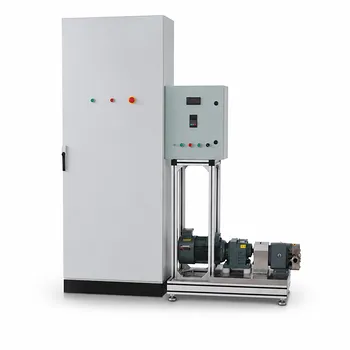
- Quantitative Dosing and Liquid Flow Control Educational Unit Operations Pilot Plant
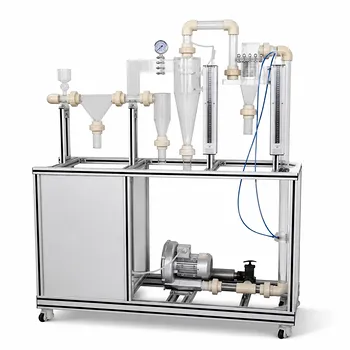
- Gas-Solid Heterogeneous Separation Demonstration Educational Unit Operations Pilot Plant
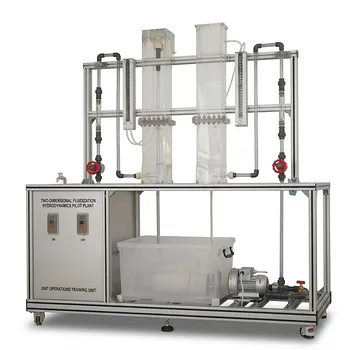
- Two-Dimensional Fluidization Hydrodynamics Educational Pilot Plant for Unit Operations Training
- Solid Waste Pyrolysis and Refining Educational Pilot Plant for Unit Operations
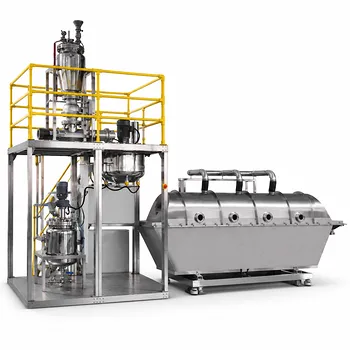
- Polymerization Granulation and Pellet Processing Educational Unit Operations Pilot Plant
People Also Ask
- How do educational unit operations pilot plants bridge theory and design? Bridge the Engineering Gap
- How do educational unit operations pilot plants address safety and waste management when scaling up?
- Why is the attenuation path length (lA) critical when positioning pressure sensors in a fluid flow unit operations pilot plant?
- How do conservation equations guide fluid flow pilot plants? Key Scale-Up Principles
- What are the key differences in process analytics requirements from R&D to production?