Leaving a trace impurity field blank on a process flow sheet is not a neutral act—it is an assumption of zero that silently propagates into every downstream engineering decision. In chemical engineering pilot plants, where the goal is to de-risk scale-up, undocumented trace components can lead to premature catalyst deactivation, unexpected corrosion, and catastrophic safety failures. Simply writing "trace" or a measured ppm value, rather than leaving a blank, forces the design team to acknowledge the unknown and build resilience into the process from day one.
The most expensive mistake in a pilot plant is not measuring the wrong thing—it’s assuming that an unmeasured species doesn’t exist. Documenting trace impurities, even when exact quantification is difficult, transforms a hidden risk into a managed variable that protects catalyst life, material integrity, and plant safety.
The Hidden Cost of a Blank Field on a Flow Sheet
A process flow sheet is a living contract between chemistry and engineering. When a stream composition leaves a component as "blank" or N/A, the default interpretation in mass balances and simulations is zero concentration. This creates a dangerous blind spot that only becomes visible when equipment fails.
The False Assumption of Zero Contamination
In dynamic pilot plants, real feedstocks always carry minute quantities of side products, degradation compounds, or upstream carryover. A blank cell tells the next engineer that this stream is pure.
That purity assumption spreads to heat exchanger fouling factors, reactor kinetics, and relief system sizing. The result is an optimized design that only works on paper.
Why Intentional Documentation Changes Behavior
Writing "trace" on a flow sheet, even without a precise number, is a deliberate act. It signals that the component is present but below the quantification limit of the current analytical method.
That single word triggers design reviews, sampling plans, and material compatibility checks that would otherwise be skipped. It is the minimum viable documentation that prevents maximum damage.
How Trace Impurities Attack the Heart of Your Process
The primary reference highlights two direct mechanisms: catalyst poisoning and corrosion acceleration. Understanding each reveals why pilot plant monitoring is not optional but foundational.
Catalyst Poisoning and the Illusion of Long Life
Many industrial catalysts—especially those based on noble metals or zeolites—are exquisitely sensitive to sulfur, chlorine, or heavy metals at the parts-per-billion level. A fully optimized kinetic model in a pilot reactor becomes worthless if an unlisted trace impurity adsorbs irreversibly onto active sites.
The pilot plant then reports catalyst deactivation rates that are orders of magnitude faster than expected, leading to incorrect cycle time predictions and catastrophic economics in the commercial plant. Documenting suspected trace poisons allows you to correlate deactivation with feed source, not reactor design flaws.
How Traces Dictate Your Piping and Vessel Materials
Corrosion mechanisms like chloride stress corrosion cracking or hydrogen embrittlement are driven by species present at ppm levels that never appear as major components. If a flow sheet leaves the chloride field blank, the material selection team may pick a standard 304 stainless steel instead of a resistant duplex or nickel alloy.
A pilot plant that suffers an unexplained pinhole leak has already lost its most valuable output: trust in the scale-up data. Explicitly noting trace halides, acids, or oxygen forces the team to select materials that will survive in the real production environment.
The Domino Effect on Safety System Design
Unrecognized trace impurities can generate hydrogen from corrosion, form explosive byproducts, or create toxic decomposition gases in downstream separation units. Safety relief valves, vent headers, and flare systems are sized based on the documented composition.
A blank cell hides the seed of a runaway reaction. The worst time to discover a trace impurity is during a hazard and operability (HAZOP) study after a near-miss, when the pilot plant is already built.
Understanding the Trade-offs of Rigorous Monitoring
While documenting trace impurities is critical, it is not free. A balanced approach acknowledges the practical limits of pilot plant analytics and resources.
The Cost of Chasing Every Phantom Peak
Analytical instruments in pilot plants often have detection limits that can be pushed downward with time and money. But exhaustive trace-level analysis of every stream can paralyze a program.
The goal is not to quantify everything to sub-ppm levels. It is to use chemical intuition, feed characterizations, and thermodynamic modeling to identify the most likely troublemakers—sulfur in a syngas stream, chlorides in a water wash—and focus monitoring there.
The Risk of Over-Engineering Based on Lab Artifacts
Occasionally, a trace impurity detected at the pilot scale is an artifact of the experimental setup itself—a leachable from gaskets, a corrosion product from a sampling line.
Documenting and investigating these traces is vital, but acting on them without confirmation can lead to unnecessarily exotic materials or expensive purification steps. The key is to treat "trace" as a hypothesis to be confirmed, not a final specification.
When a Blank Is Actually Appropriate
If a purified solvent is purchased with a vendor certificate of analysis showing non-detectable levels of a specific poison, it may be acceptable to leave that field blank with a footnote referencing the CoA.
The principle stands: the absence of data must always be justified and traceable, never an oversight.
Making the Right Choice for Your Pilot Plant Documentation
Implementing a trace-aware documentation culture doesn’t require a complete overhaul. It starts with a few deliberate changes to your process flow sheet discipline.
- If your primary focus is catalyst lifetime prediction: Never allow a blank for known poisons like sulfur, halides, or metals. Even a "trace" marking with a conservative upper bound will make your deactivation model far more defensible.
- If your primary focus is safe material selection: Create a checklist of corrosive trace species (e.g., chloride, hydrogen sulfide, organic acids) and mandate that every stream in contact with metallic equipment has an explicit entry for each, even if it’s "not detected."
- If your primary focus is scale-up economics: Use the trace impurity documentation to challenge your upstream purification steps. A ppm of water in a solvent might be tolerable in glass but catastrophic in a steel plant—explicitly documenting it reveals the true cost of your supply chain.
- If your primary focus is meeting a pilot plant milestone quickly: Implement a "no blank cell" rule in flow sheets during the P&ID review. A simple "TBD" (to be determined) with a due date forces the conversation without stalling progress.
The discipline of writing "trace" instead of leaving a blank is a small act that separates a research experiment from an engineering pilot plant ready to scale up.
Summary Table:
| Key Risk Area | Impact of "Blank" Fields (Assumption of Zero) | Value of Documenting Traces (Managed Variable) |
|---|---|---|
| Catalyst Lifetime | Premature deactivation, incorrect cycle-time models | Predictable poisoning correlation and protected active sites |
| Material Selection | Incorrect alloy selection (e.g., standard 304 SS), leading to leaks | Selection of proper corrosion-resistant materials (e.g., duplex) |
| Plant Safety | Unchecked toxic gas formation or runaway reactions | Sized relief valves and complete HAZOP readiness |
| Scale-up Economics | Unrealistic process purity assumptions, costly redesigns | Accurate supply chain and purification cost models |
Secure Your Process Scale-Up with LABPARK
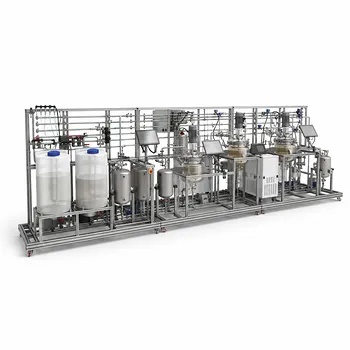
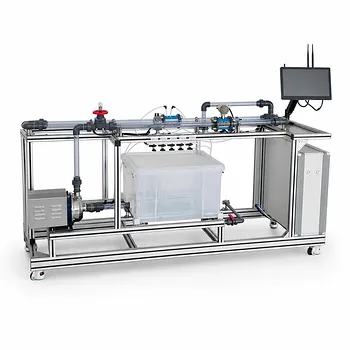
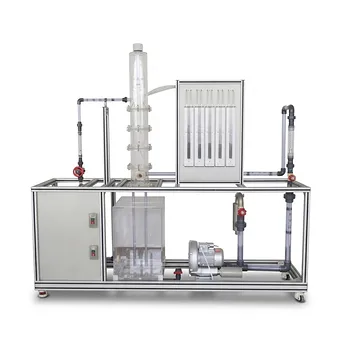
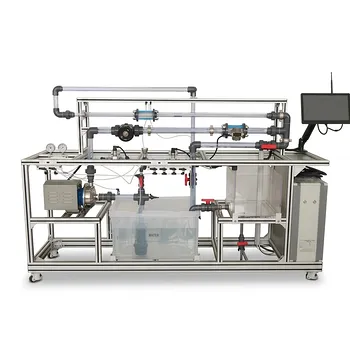
Designing pilot plants that accurately de-risk commercial processes requires reliable equipment and precise monitoring capabilities. LABPARK provides premium Educational and Vocational Unit Operations Pilot Plants in chemical engineering, bioprocess & biotech, and environmental & water treatment.
Whether you are a university training the next generation of engineers, a research institute validating novel processes, or an enterprise scaling up to commercial production, our pilot plants are built to help you capture critical data—including trace impurity dynamics.
Contact our technical experts today to discover how LABPARK can optimize your research and training workflows.
Related Products
- Electrolyte Distillation Purification and Formulation Educational Pilot Plant
- Multifunctional Membrane Separation Educational Pilot Plant with Ultrafiltration, Nanofiltration, Reverse Osmosis
- Continuous Batch Extractive Distillation Educational Pilot Plant
- Ion Exchange Water Purification Educational Pilot Plant for Engineering Unit Operations
- General Purpose Cosmetics Production Unit Operations Training Pilot Plant
People Also Ask
- Why does simple distillation yield higher efficiency than flash distillation? Key thermodynamic differences.
- How to Integrate Spectroscopy in Distillation Pilot Plants for Advanced Process Control
- How to Verify Distillation Boundary Lines & Composition Regions with Pilot Plants
- How Batch vs Continuous Configuration Affects Distillation Pilot Plant Versatility & Footprint
- How does double temperature difference control improve distillation pilot plants? Stabilize purity.