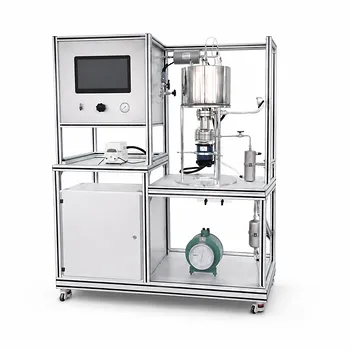
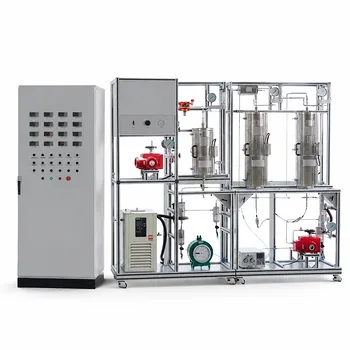
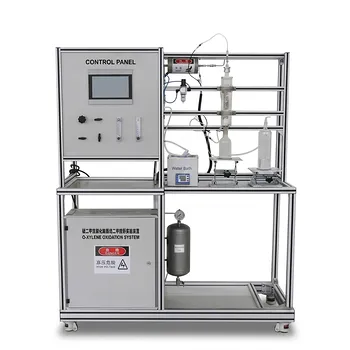
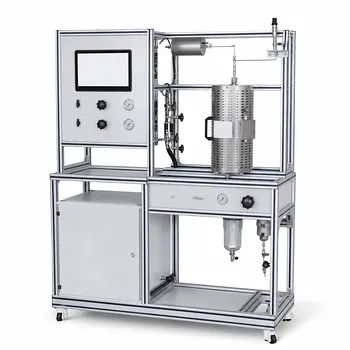
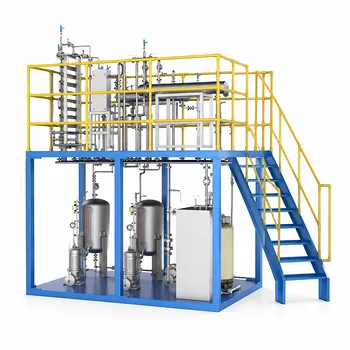
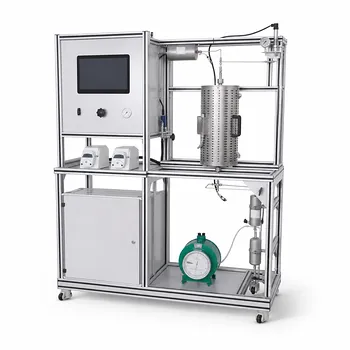
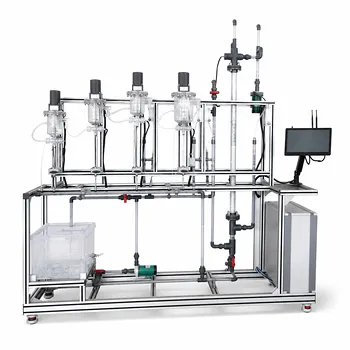
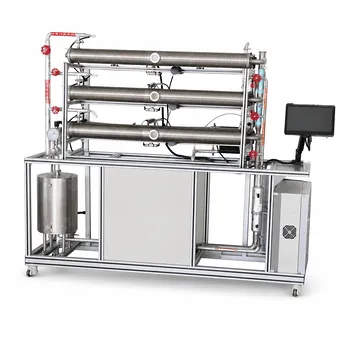
Heat management is not an afterthought—it is the central design challenge in Fischer-Tropsch (FT) reactor pilot plants. The synthesis reaction is highly exothermic, releasing approximately 145 kJ of heat per mole of -CH₂- formed. If this heat is not removed quickly and evenly, it can trigger thermal runaway, permanently deactivate the catalyst, and shift product selectivity toward unwanted light hydrocarbons. Different reactor configurations address this thermal load in fundamentally distinct ways: multitubular fixed bed reactors use narrow tubes and boiling water, slurry-phase reactors suspend catalyst in a liquid wax medium with internal cooling coils, and fluidized bed reactors rely on intense mixing and integrated heat exchange to maintain near-isothermal conditions.
All FT reactor designs succeed or fail based on their ability to tame a reaction that is inherently prone to self-heating. The central engineering question is not whether to remove heat, but how to do it without sacrificing catalyst life, product quality, or safe operability in a compact pilot-plant setting.
Why the Heat Problem Dominates FT Reactor Design
The Exothermic Nature Demands Active Temperature Control
Every mole of hydrocarbon chain built in FT synthesis liberates about 145 kJ. In a pilot plant, even a small catalyst bed can experience a rapid temperature rise if that energy is not continuously extracted.
Uncontrolled hot spots cause sintering of the active metal particles, permanently destroying catalyst surface area. Sudden temperature excursions also promote methane and light-gas production instead of the desired liquid long-chain hydrocarbons.
Temperature Spikes Derail Reaction Selectivity and Safety
FT selectivity is exceptionally temperature-sensitive. According to chemical kinetics, the rate constant k follows a logarithmic relationship with temperature, meaning small fluctuations produce disproportionately large changes in reaction rate.
A runaway reaction not only ruins a pilot experiment but also poses a genuine safety hazard. In educational settings, demonstrating that temperature can be tightly controlled teaches how industrial plants prevent explosions and catalyst waste.
Pilot Plants Must Mirror Industrial Heat Management at Reduced Scale
The same thermal physics that plague a commercial FT facility are concentrated in a small pilot reactor. Engineers scaling down must maximize heat transfer surface area relative to catalyst volume to replicate the cooling performance that larger plants achieve through intricate boiler systems.
Without meticulous thermal design, the pilot plant generates data that cannot be scaled up reliably—defeating its core purpose.
How Each Reactor Configuration Handles the Heat Load
Multitubular Fixed Bed: Precision Cooling Through Small Diameters
The Shell-and-Tube Principle
These reactors pack catalyst into narrow tubes (around 0.05 m diameter) surrounded by circulating boiler feed water. The small tube diameter increases the ratio of heat-exchanging wall area to the reacting bed volume, making it physically difficult for a hot spot to grow.
Boiling Water and Gas Recycle as Safety Nets
The coolant boils at a controlled pressure, removing latent heat while maintaining a constant shell-side temperature. Simultaneously, a high linear gas velocity sweeps the tube, carrying away some heat directly, while unconverted syngas is recycled to further flatten the radial temperature profile.
Educational Insight
Pilot-scale multitubular units let students monitor multi-point thermocouples along the tube axis and link steam generation rate to reaction exotherm. That hands-on observation of isothermal control builds confidence in scaling kinetics.
Slurry-Phase: Liquid Wax as a Thermal Stabilizer
Catalyst Suspended in a Heat Sink
In a slurry reactor, catalyst particles are dispersed in a liquid wax product. The high heat capacity of the liquid phase acts as a giant buffer, absorbing energy without allowing local temperatures to spike.
Internal Cooling Coils Extract Heat Where It's Generated
Cooling coils submerged directly in the slurry remove the heat of reaction at its source. This liquid-solid heat transfer coefficient is far greater than in gas-solid systems, so the reactor can operate with a more uniform temperature, preserving catalyst activity.
Practical Simplicity for Pilot Studies
Students can directly measure slurry temperature, monitor cooling water flow rates, and see how a liquid medium dampens thermal excursions. The setup reinforces the concept that the reaction can be kept at a target temperature with less spatial variation than a fixed bed.
Fluidized Bed: Mixing-Driven Uniformity
Intense Particle Motion Erases Hot Spots
Fluidized bed designs suspend catalyst particles in an upward-flowing gas stream. The vigorous chaotic motion ensures rapid heat distribution; any localized temperature rise is instantly shared with the entire bed, preventing runaway zones.
Internal and External Heat Removal
Internal cooling coils fed with boiler feed water absorb a large fraction of the exotherm. The remainder leaves with the hot product gases and recycled streams. In circulating configurations, the external loop further strips heat before returning cooled gas to the bed.
Training in High-Temperature Operation
Because fluidized systems can operate at elevated temperatures, they let students examine how kinetics and heat transfer interact at the upper end of the FT spectrum, all while witnessing the self-stabilizing effect of particle mixing.
Understanding the Trade-offs Between Reactor Types
Multitubular Fixed Bed: High Pressure Drop and Maintenance Difficulty
The narrow tubes create a significant pressure drop and can be challenging to load and unload catalyst. Moreover, hot spots can still appear near the tube wall if the coolant flow is uneven, requiring careful boiler feed water circulation design.
Slurry-Phase: Product Separation and Catalyst Attrition
The same liquid wax that provides thermal stability must be separated from the catalyst, adding downstream complexity. Catalyst particles also slowly grind against each other, generating fines that can clog filters and require replenishment.
Fluidized Bed: Erosion and Complex Scale-Up
High-velocity gas can erode internal surfaces and catalyst particles. Maintaining a stable fluidization regime in a pilot plant is sensitive to gas flow fluctuations, and scaling up the mixing behavior is not straightforward.
When a Monolith Loop Reactor Might Be Considered
Some pilot plants explore structured monolith reactors with external liquid recycle. These separate the reaction from cooling by pumping the liquid through external heat exchangers, offering another way to cap the temperature rise, but at the cost of needing high recirculation rates and pumps that add system complexity.
Making the Right Choice for Your Pilot Plant Goal
Choosing a configuration depends on what you need the pilot plant to demonstrate or research. Here’s how to match the reactor type to your core objective:
- If your primary focus is demonstrating classic industrial FT operation and steam generation: A multitubular fixed bed reactor with shell-side boiling water provides the most direct analogue to large-scale plants, letting you practice heat transfer oil or steam control.
- If your primary focus is achieving the most uniform temperature profile with minimal hot spots: A slurry-phase reactor’s liquid wax medium and internal coils give unmatched thermal damping, making catalyst lifecycle studies cleaner and more reproducible.
- If your primary focus is exploring high-temperature kinetics or hydrodynamics: A fluidized bed reactor’s mixing eliminates gradients and allows safe operation at temperatures that would be risky in a fixed bed, making it ideal for research on selectivity shifts and particle agglomeration.
- If your primary focus is understanding how external recirculation can decouple reaction and heat exchange: A monolith loop or packed column with external heat exchanger teaches the principle of using liquid or gas recycle to manage exotherms, preparing students for non-traditional reactor designs.
The best pilot plant design is the one that transforms a dangerous exotherm into a teachable, measurable, and scalable engineering variable—so you leave the lab not just with data, but with the instinct to keep a reactor cool when it most wants to run hot.
Summary Table:
| Reactor Type | Heat Removal Mechanism | Thermal Profile | Main Advantage | Major Challenge |
|---|---|---|---|---|
| Multitubular Fixed Bed | Narrow tubes & boiling water | Axial temperature gradients | Direct industrial analogue | High pressure drop |
| Slurry-Phase | Liquid wax & internal cooling coils | Highly isothermal | Superior thermal stability | Catalyst separation & attrition |
| Fluidized Bed | Gas fluidization & internal coils | Uniform near-isothermal | Rapid heat distribution | Erosion & complex scale-up |
Bring Industrial-Scale Chemical Engineering to Your Lab
Teaching or researching highly exothermic processes like Fischer-Tropsch synthesis requires precision, safety, and scalable technology. LABPARK provides state-of-the-art Educational and Vocational Unit Operations Pilot Plants in chemical engineering, bioprocess & biotech, and environmental & water treatment.
We help universities, research institutes, and enterprises bridge the gap between laboratory theory and industrial reality with safe, fully instrumented, and robust training systems.
Ready to elevate your research or vocational training? Contact LABPARK today to discuss your custom pilot plant requirements!
Related Products
- Fixed-Bed Chemical Reaction and Gas Dust Tar Removal Unit Operations Pilot Plant
- Multi-Reactor Educational Pilot Plant for Reaction Engineering Unit Operations
- Methane Cracking Educational Unit Operations Pilot Plant
- Tubular Reactor Flow Characteristics Determination Educational Unit Operations Pilot Plant
- Fixed Bed Gas Solid Catalytic Reaction Educational Pilot Plant
People Also Ask
- When to transition from PID to adaptive control in pilot plants? Key process indicators.
- How do deviations in estimating latent heat impact pilot plant thermal systems? Avoid hardware mis-sizing.
- Why Compare Predicted and Experimental Excess Enthalpy? Key to Accurate Pilot Plant Scale-up
- Why Use PTFE & Hastelloy in Chemical Pilot Plants? Prevent Corrosion & Ensure Safety
- How to study gasification in pilot plants? Compare exit gas composition & efficiency