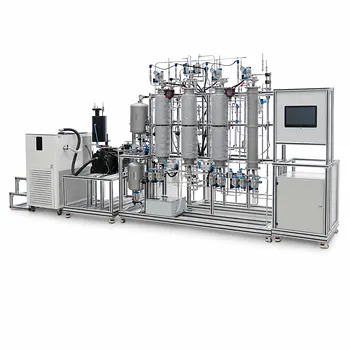
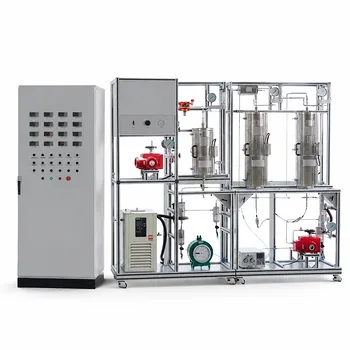
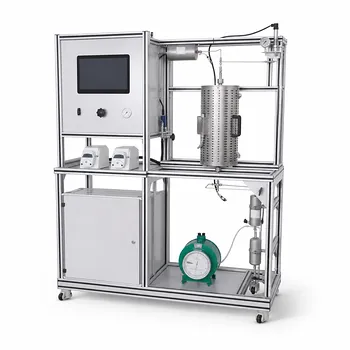
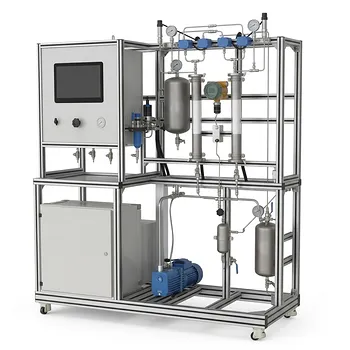
A fundamental shift in how we see energy. Exergy analysis transforms the unit operations pilot plant from a simple heat-balancing exercise into a powerful platform for understanding the true thermodynamic potential of a process. When studying low-pressure methanol and syngas synthesis, it reveals that simply accounting for energy quantity is not enough; the quality of energy and where it is destroyed is the key to unlocking radical efficiency improvements.
Traditional energy analysis can mask catastrophic inefficiencies by suggesting a process is well-balanced. Exergy analysis cuts through this, showing that high-temperature combustion in a standard reformer furnace creates a massive, yet invisible, thermodynamic loss. By empirically observing a process that integrates this heat—like a gas-heated reformer—students visually and numerically grasp the principle that reduces these losses by nearly 30%.
The Critical Limitation of Standard Energy Balances
A standard energy balance is a foundational skill, but it operates with a dangerous blind spot. It treats all joules as equal, regardless of their source or temperature.
Why the First Law Isn't Enough
The first law of thermodynamics tells you that energy is conserved. In a pilot plant, this confirms that the heat into a reactor equals the heat out plus the reaction's enthalpy change.
This analysis can make a wildly inefficient process appear stable and functional. It completely fails to distinguish between the high-quality chemical energy in methane and the low-quality thermal energy in a cooling water stream.
The Invisible Waste in a Reformer Furnace
The classic steam methane reformer (SMR) furnace perfectly illustrates this blindness. An energy balance shows a respectable, high-efficiency number because the heat from the burners is transferred effectively to the reforming tubes.
Exergy analysis reveals the hidden catastrophe. The act of combusting a high-quality fuel to produce a flame at over 1800°C, only to transfer that heat to a reaction occurring at 800-900°C, creates an enormous and irreversible loss. This temperature difference represents a complete destruction of the energy's potential to do work, which a simple heat balance ignores.
How the Pilot Plant Makes Thermodynamic Theory Tangible
The unit operations pilot plant is uniquely suited to bridge the gap from abstract theory to practical insight. It allows students to move beyond textbook problems and collect empirical evidence of these losses.
Collecting Empirical Data for Exergy Calculation
Pilot plants equipped with a gas-heated reformer (GHR) and an autothermal reformer (ATR) create a perfect experimental setup. Students can directly measure the temperature, pressure, and concentration profiles across each unit.
This data is then used not just for a mass and energy balance, but for a full exergy calculation. The computation, while more complex, solidifies their understanding of the physical property changes that diminish energy's utility.
Visualizing the 30% Reduction in Irreversibility
The core, powerful insight comes from comparing two configurations. First, students calculate the exergy destruction in their combined GHR+ATR setup, where the hot process gas from the ATR provides the heat for reforming in the GHR.
Then, they model a standard fired-furnace configuration using the same pilot plant data. The result is a direct, empirical observation that the integrated design eliminates the high-temperature-driving-force loss, slashing overall exergy losses by nearly 30%. This is a concrete number that cements the concept of process intensification.
The Deep Learning Outcome: Designing for Sustainability
This exercise shapes a student's entire design philosophy. It moves them from a focus on simple hardware efficiency to a systemic understanding of resource stewardship.
Translating a Loss into a Design Principle
The lesson transcends the specific methanol plant. Students learn that every process step that involves a large temperature, pressure, or concentration gradient is a site of exergy destruction.
This fosters a design instinct where matching energy sources and sinks becomes second nature. They begin asking critical questions: "Can the exothermic heat from this reactor drive an endothermic separation directly, rather than being degraded into low-pressure steam?"
Building the Intuition for a Low-Carbon Future
Chemical engineers are essential for the energy transition, and exergy analysis is their primary tool for diagnosis. It provides the universal metric to compare the efficiency of wildly different systems, from green hydrogen production to synthetic methanol from captured CO2.
By working with the pilot plant, students internalize that a process with high carbon efficiency and one with high exergy efficiency are often the same. Minimizing waste is the most direct path to a sustainable and profitable plant, making exergy the ultimate guide for future process design.
Understanding the Nuances and Pitfalls
The value of exergy analysis is immense, but it's not a silver bullet. Its application in a pilot plant setting requires a critical understanding of its boundaries and limitations.
It Defines a Thermodynamic Target, Not an Economic One
Exergy analysis identifies the physical ideal minimum energy requirement for a process. This is a brilliant target, but it doesn't dictate the economic optimum.
As supplementary learning in the pilot plant often includes, economic sensitivity analysis is the necessary next step. A design that minimizes every last joule of exergy loss might require an uninvestable amount of exotic equipment. The pilot plant teaches the critical skill of using exergy to understand what's possible, then using an economic model to decide what's sensible.
The Teachable Moment of a Complex Calculation
Exergy calculations are more rigorous and require precise physical property data. A minor error in measuring a temperature or pressure in the pilot plant propagates into a large error in the calculated exergy value.
This is a powerful, and sometimes frustrating, teachable moment. It instills a discipline for meticulous data collection and teaches students to critically evaluate their results, always connecting the calculated number back to its physical cause in the unit operation.
Making the Right Choice for Your Learning Objective
The decision to emphasize exergy analysis in a pilot plant course should be tied directly to your core educational goals for the students.
- If your primary focus is mastering the fundamentals of material and energy balances: Use exergy analysis judiciously as a capstone concept on a specific reactor, like the reforming unit, to show the next level of thermodynamic thinking without overwhelming the core basics.
- If your primary focus is to cultivate holistic, sustainability-minded process designers: Make exergy analysis a central, recurring theme. Grade students on their ability to identify the primary exergy "killers" in their pilot plant configuration and to propose integrated, intensification solutions.
- If your primary focus is preparing students for the real-world complexity of industrial decision-making: Integrate the exergy analysis with an economic sensitivity study. Have them find the highest exergy efficiency and then analyze the incremental cost required to achieve it, teaching them to navigate the trade-off between thermodynamic perfection and economic viability.
Exergy analysis in the pilot plant is more than a calculation; it is the cultivation of an engineering conscience that instinctively seeks to do more with less.
Summary Table:
| Feature | Traditional Energy Balance (1st Law) | Exergy Analysis (2nd Law) |
|---|---|---|
| Core Focus | Energy conservation (quantity of energy) | Energy quality and thermodynamic potential |
| Key Metric | Energy input equals energy output | Work potential and location of energy destruction |
| SMR Reformer Insight | Shows high efficiency based on heat transfer | Reveals massive losses from high-temperature combustion |
| Educational Value | Confirms basic mass and heat balances | Drives process intensification and sustainability principles |
Empower the Next Generation of Chemical Engineers
Transform abstract thermodynamic theories into hands-on practical insights. LABPARK provides premium Educational and Vocational Unit Operations Pilot Plants in chemical engineering, bioprocess & biotech, and environmental & water treatment designed for universities, research institutes, and enterprises. Our systems enable students and researchers to master crucial analyses like exergy calculation and process optimization.
Ready to upgrade your laboratory training capabilities? Contact us today to explore our pilot plant solutions!
Related Products
- Methanol Synthesis and Catalyst Performance Evaluation Educational Unit Operations Pilot Plant
- Carbon Dioxide Hydrogen Methanol Synthesis Educational Unit Operations Pilot Plant
- Carbon Dioxide Hydrogenation Methanol Synthesis Educational Unit Operations Pilot Plant
- Ethyl Acetate Synthesis Unit Operations Pilot Plant for Practical Training
- Steam Methane Reforming Hydrogen Production and Purification Educational Pilot Plant
People Also Ask
- How to Estimate Tc & Pc of Unknown Hydrocarbons in Pilot Plant Experiments | Guide
- Why is it preferred to subcool and pump vapor rather than compress it? Pilot Plant Design Secrets
- How does pilot plant R&D strategy differ for bulk vs. specialty chemicals? Strategic scale-up guide.
- How does polyphosphate hydrolysis affect scale and corrosion in pilot plants? Essential Monitoring Guide
- How do hydraulic gradients and energy gradients differ in a piping system? Key Differences