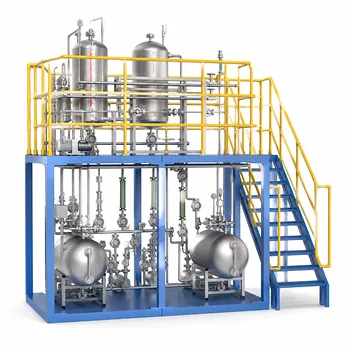
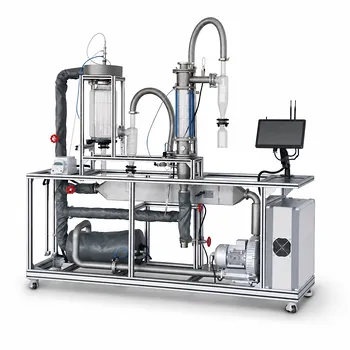
Without sufficient sensitivity and resolution, your pilot plant data can hide more than it reveals. In unit operations pilot plants, sensitivity and resolution are key because they determine whether an instrument can faithfully capture the rapid, subtle changes that define process behavior. Sensitivity dictates how briskly a sensor reacts to variations in temperature, pressure, or flow, while resolution defines the smallest increment it can reliably display. For researchers and students, these properties are the difference between seeing a clear dynamic response and missing the very phenomena they need to study, analyze, and scale up.
The true value of a pilot plant lies in its ability to reveal process truths before committing to full scale. Instrument sensitivity and resolution are not just specifications—they are the gatekeepers of data quality, directly shaping how well you can observe transients, quantify delicate shifts, and build the accurate models that drive confident scale‑up decisions.
The Fundamental Role of Sensitivity and Resolution in Pilot Plant Instrumentation
Defining Sensitivity: The Instrument’s Responsiveness
Sensitivity measures how strongly an instrument’s output reacts to a change in the process variable.
A highly sensitive pressure transmitter will register even a minor fluctuation immediately, giving operators an early view of unstable conditions.
In pilot‑scale experiments, that responsiveness is indispensable for capturing transient events that unfold in seconds.
Defining Resolution: The Smallest Meaningful Change
Resolution is the smallest increment of change the instrument can detect and display.
For a digital meter, it often comes down to the value represented by the last digit on the screen.
A bioreactor temperature controller with 0.01 °C resolution can reveal a slow drift that a 0.1 °C display would completely mask.
Why Pilot Plants Demand More Than Industrial Instruments
Industrial instruments are often optimised for steady‑state control, not for exposing fine detail.
A pilot plant, however, is a discovery tool—its purpose is to uncover how the process behaves, especially during startups, shutdowns, and upsets.
That only works when the instruments can “see” enough detail to let students and researchers link cause to effect.
The Direct Impact on Process Understanding and Data Quality
Capturing Transient Behaviors and Dynamic Responses
Pilot plant experiments frequently involve step changes in flow or composition, where the process does not settle instantly.
High sensitivity ensures that the dampened oscillation, overshoot, or sluggish response is recorded, not flattened.
Without that visibility, a student might wrongly conclude the system is stable, missing key reaction kinetics or mixing phenomena.
Uncovering Subtle Process Changes
Slow, small-scale changes are often the most telling in unit operations.
A gradual pressure drop across a filtration membrane can signal fouling onset long before a catastrophic blockage.
A slow temperature shift in a distillation column may indicate tray flooding or feed composition drift.
Only instruments with fine resolution and stable sensitivity can turn those whispers into actionable data.
Building Confidence in Experimental Data
When researchers trust that their instruments can see the true signal, they can separate process noise from meaningful variation.
This confidence allows them to calculate mass and energy balances with greater precision and to validate theoretical models.
Ultimately, it reduces the risk of drawing false conclusions from an expensive pilot campaign.
Bridging Pilot Plant Data to Industrial Scale‑Up Decisions
Feeding Accurate Data into Economic Sensitivity Models
Scale‑up decisions rely on economic models that gauge how variables like catalyst lifetime or utility consumption affect profitability.
These models are only as good as the pilot plant data plugged into them.
If a low‑resolution flow meter masks a 2% yield improvement, an economic sensitivity analysis might misjudge the true impact of that variable, leading a team to underinvest in a critical optimisation.
Avoiding Costly Misjudgments from Blunt Data
When pilot data are coarse, the uncertainty bands in the scale‑up model widen.
A seemingly insignificant measurement error can cascade: a 0.5% under‑estimation of heat transfer coefficient can multiply into oversized exchangers and millions in extra capital cost.
Investing in instruments with the right sensitivity and resolution is an insurance policy against these hidden, compounded risks.
Understanding the Trade‑offs
Higher Sensitivity Can Mean Higher Noise Susceptibility
A hyper‑responsive sensor may pick up electrical noise, vibration, or flow turbulence as readily as the real process signal.
This can create a false sense of dynamic activity and make it harder to extract the true trend.
Proper signal filtering and installation practices must accompany sensitive instruments to keep the data clean.
The Cost and Complexity of High‑Resolution Instruments
Instruments that deliver 0.001‑unit resolution often come with a substantial price tag and require tighter calibration routines.
In an educational setting, that extra resolution may not always translate into better learning outcomes if the process itself is inherently noisy.
The challenge is to match the instrument’s capability to the physical limits of the pilot plant.
Over‑Specification: When Enough Is Enough
Not every measurement needs extreme resolution. A bulk storage tank level gauge does not call for the same precision as a reactor feed flow meter.
Over‑specifying can strain budgets and complicate maintenance without improving the experiment’s value.
A thoughtful selection process focuses sensitive, high‑resolution instruments on the variables that truly control the process or that feed key economic calculations.
Making the Right Choice for Your Unit Operations Pilot Plant
Start by mapping your experimental goals to the required data granularity. Then consider these practical guidelines:
- If your primary focus is teaching fundamental process dynamics: Choose instruments with high sensitivity and a visual output that clearly responds to step changes, so students can see transient behaviour instantly.
- If your primary focus is rigorous research that feeds scale‑up models: Ensure critical instruments (reactor temperature, feed flow, key pressure drops) have both high sensitivity and fine resolution, because subtle effects often hold the key to economic sensitivity analyses.
- If budget constraints are tight: Prioritise sensitivity and resolution on the “keystone” measurements that drive the process, and use simpler instruments for secondary variables, combining them with careful calibration and signal averaging to extract maximum value.
- If you expect varying process conditions: Verify that the instruments maintain their rated sensitivity and resolution across the entire operating range, not just at a single calibration point.
When you select instruments that truly match the demands of your pilot plant, you stop merely monitoring and start truly understanding your process—turning data into decisions with clarity and confidence.
Summary Table:
| Parameter | Definition | Role in Pilot Plants | Key Benefit |
|---|---|---|---|
| Sensitivity | How strongly output reacts to process changes | Captures rapid transient events & instabilities | Early detection of process shifts |
| Resolution | Smallest increment detected & displayed | Reveals slow drifts (e.g., fouling, temp shifts) | High-fidelity data for scaling models |
Optimize Your Process Insights with LABPARK
Building reliable scale-up models starts with high-fidelity data. LABPARK provides state-of-the-art Educational and Vocational Unit Operations Pilot Plants in chemical engineering, bioprocess & biotech, and environmental & water treatment. Designed specifically for universities, research institutes, and enterprises, our systems feature carefully matched, high-precision instrumentation to ensure optimal sensitivity and resolution.
Ready to elevate your research and training capabilities? Contact us today to discuss your custom pilot plant requirements!
Related Products
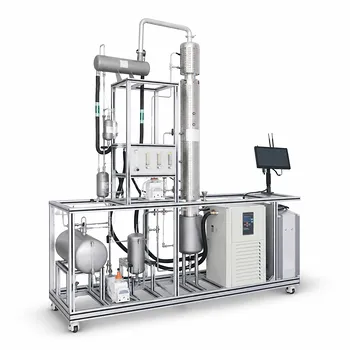
- Dual-Mode Rectification Pilot Plant for Practical Training Unit Operations
- Rising and Falling Film Evaporation Educational Unit Operations Pilot Plant
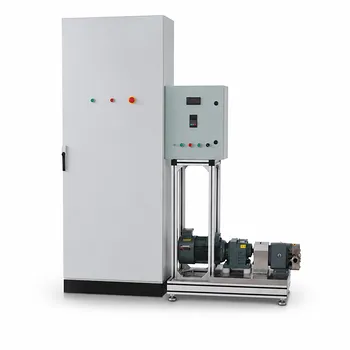
- Quantitative Dosing and Liquid Flow Control Educational Unit Operations Pilot Plant
- Educational Unit Operations Pilot Plant for Intraparticle Diffusion Effective Factor Measurement
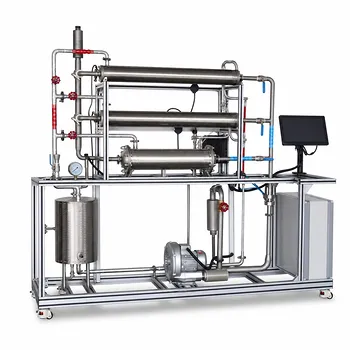
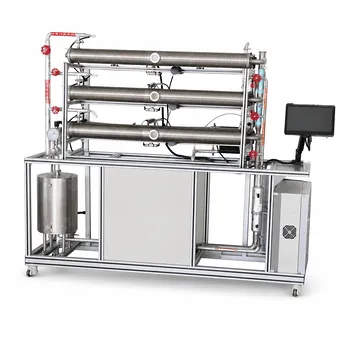
- Comprehensive Heat Transfer Coefficient Determination Educational Unit Operations Pilot Plant
People Also Ask
- How does polyphosphate hydrolysis affect scale and corrosion in pilot plants? Essential Monitoring Guide
- How do predictive thermodynamic models integrate into pilot plants? Bridging Theory and Practice
- Which cross-validation strategy should be selected for pilot plant time-series & batch data? Avoid Data Leakage
- How can process control schemes be configured to teach basic and advanced control?
- Why Use Center Points in Process Analyzer Calibration? Key Benefits Explained