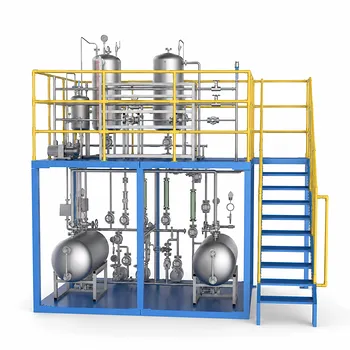
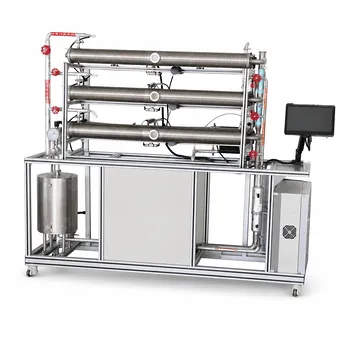
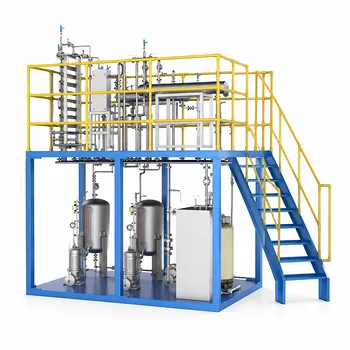
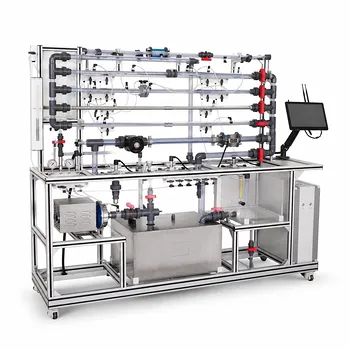
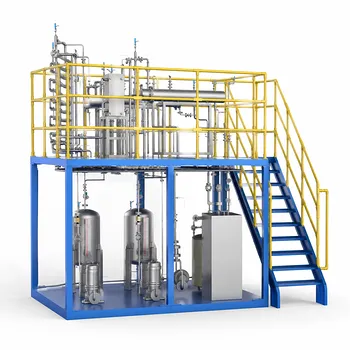
Predictive thermodynamic models transform from theoretical abstractions into hands-on calibration instruments inside the pilot plant curriculum. Students directly confront simulation outputs—for phase equilibria, thermal conductivity, and reaction equilibria—against real-time sensor streams from distillation columns, reactors, and heat exchangers. This deliberate collision of theory and measurement teaches the critical art of diagnosing deviations, refining model parameters, and building the intuition needed for reliable industrial scale-up.
The curriculum integrates these models by turning pilot plants into validation engines. Learners predict mixture properties using activity coefficient equations or statistical perturbation theories, then immediately compare their calculations with live temperature, pressure, and composition data. That iterative feedback loop reveals why models fail and how to fix them—an irreplaceable skill for any process engineer.
The Core Integration: From Simulation to Real-Time Validation
Real-Time Data Meets Theoretical Predictions
During pilot plant operations, standard sensors capture temperature, pressure, and flow rates at multiple points. Students take those measured values and feed them into excess Gibbs energy equations—like Wilson or van Laar—to calculate equilibrium phase compositions. They then compare these theoretical outputs against actual stream samples drawn from the column. For transport properties, thermodynamic perturbation theory predicts thermal conductivity in polar or quadrupolar mixtures; the resulting numbers are stacked against heat duty and temperature profile data from the pilot-scale exchanger. This direct, side-by-side comparison turns the classroom concept of “model deviation” into a tangible, visual discrepancy that demands explanation.
An Iterative Loop of Model Refinement
Pilot plants serve as controlled environments to generate high-quality vapor–liquid equilibrium (VLE) data. When predictive models like NRTL or UNIQUAC rely on estimated binary interaction parameters, the measured concentrations and temperatures expose the errors immediately. The curriculum then guides students to regress those parameters from their experimental data, effectively calibrating the model. This closes the loop: a student sees a flawed prediction, adjusts the model’s interaction parameters until it aligns with reality, and internalizes why experimental feedback is non-negotiable in process design.
Why This Integration Matters for Future Engineers
Exposing the Limits of Published Models
Thermodynamic correlations—even within their stated applicable ranges—can behave erratically, particularly for nonideal mixtures or near critical points. The pilot plant curriculum makes this painfully clear. When a UNIFAC prediction for an azeotropic distillation setup shows a 15% error in overhead composition, the student doesn’t just read about inaccuracy; they measure it. This firsthand encounter with model fragility builds a healthy skepticism that prevents dangerous overreliance on simulation software in later industrial work.
Bridging Molecular Theory and Industrial Scale
Maxwell relations become operational tools, not just mathematical curiosities. Students compute entropy changes and internal energy balances from simple pressure and temperature data, connecting abstract state functions to the physical performance of a compressor or reactor. Similarly, first-principles tools like COSMO-RS combined with quantum chemical calculations (DFT, MP2) can predict reaction free energy and solvent solvation effects before any experiment begins. The pilot plant then provides the ultimate reality check, comparing predicted equilibrium constants and heat generation with what the sensor array actually registers, linking molecular-level physics directly to process control decisions.
Preparing for Safe, Optimized Operations
By integrating predictive reaction thermodynamics into reactor pilot runs, the curriculum teaches thermal safety from the ground up. Students estimate heat of reaction and equilibrium composition ahead of a hydrogenation experiment; the pilot plant tests those predictions under controlled conditions. This builds the instinct to anticipate runaway potential or to select an optimal solvent system based on predicted yield and purity impacts. The result is a graduate who sees thermodynamic models not as passive textbooks assignments but as active guards against process risk.
Key Thermodynamic Frameworks in Action
Activity Coefficient Models for Phase Equilibria
Wilson, van Laar, NRTL, UNIQUAC, and UNIFAC all find a home in the pilot plant curriculum. For a fractional distillation run with a highly nonideal alcohol–water mixture, students might use NRTL to predict tray-by-tray compositions, while also applying Wilson for comparison. The experimental concentration profiles then validate or reject those choices, showing precisely where a model captures hydrogen-bonding effects and where it collapses. This teaches model selection based on mixture chemistry, not just textbook preference.
Predictive Transport Property Models
The primary reference highlights thermodynamic perturbation theory for calculating thermal conductivity in polar or quadrupolar fluid mixtures. In a pilot-scale heat exchanger, students compute these conductivities from theory and use them in an overall energy balance to predict outlet temperatures. Discrepancies between calculated and measured heat transfer rates open a conversation about the missing physics—aggregation, molecular shape, or impurities—that simple perturbation schemes cannot capture, driving home the complexity of transport phenomena.
Computational Quantum Chemistry Integration
When reactions enter the curriculum, COSMO-RS predictions based on DFT or MP2 calculations allow students to forecast free energy of reaction, equilibrium constants, and solvent effects without any prior experimental data. Running a transamination in a pilot reactor with a pre-selected solvent, they compare the predicted conversion and heat release against real-time measurements. This demonstrates both the power of first-principles tools (getting you close without lab data) and their current limits (the need for pilot-scale tuning for fine details).
Understanding the Trade-offs and Common Pitfalls
The Peril of Scarce Interaction Parameters
Most secondary activity coefficient models rely on binary parameters that are often unavailable for uncommon mixtures. Using default or estimated values inserts substantial uncertainty into a design. The curriculum highlights this by having students run a distillation with parameters they guessed from group contribution methods, then comparing the miserable prediction against pilot-plant reality. The lesson: no amount of clever modeling can substitute for well-measured data.
Erratic Behavior Inside the Approved Range
Thermodynamic correlations can still produce physically impossible results even within their published validity windows. In a pilot absorption column with a supercritical component, a widely accepted model might predict negative molar volumes or sudden flashes. The curriculum uses these moments to teach critical validation—checking multiple model formulations, verifying Gibbs energy landscapes, and never trusting a single simulation output without a sanity check.
Balancing Speed and Accuracy
Regressing binary parameters from pilot plant runs is time-consuming and resource-intensive. Educators deliberately pose the trade-off: when is it worth running a full VLE experiment to fine-tune a model versus using a quick, conservative over-design factor? By integrating such decisions into the curriculum, students learn to weigh development speed against lifecycle cost, a judgment they will face repeatedly in industry.
Making the Right Choice for Your Learning Goal
- If your primary focus is understanding model fundamentals: Use pilot plant VLE data to test the theoretical underpinnings of Wilson or van Laar, seeing how activity coefficients deviate from ideality in real mixtures. This builds deep intuition about solution non-ideality.
- If your primary focus is industrial verification: Concentrate on regressing binary interaction parameters from distillation or absorption runs. You’ll learn to transform a generic NRTL model into a plant-specific, high-accuracy design tool.
- If your primary focus is process safety and optimization: Integrate reaction thermodynamics predictions (COSMO-RS, DFT) with pilot reactor data to anticipate thermal risks and solvent effects before they become hazards on the real plant floor.
- If your primary focus is bridging molecular theory to macro operations: Use Maxwell relations to compute entropy and energy changes from ordinary sensor readings, connecting the abstract world of state functions to the physical world of compressor work and column duty.
This deliberate confrontation between theoretical prediction and physical reality transforms thermodynamic equations into trusted, battle-tested instruments, empowering you to design and troubleshoot with the confidence of an engineer who has seen both the power and the limits of the model.
Summary Table:
| Thermodynamic Framework | Pilot Plant Application | Educational Value |
|---|---|---|
| Activity Coefficients (NRTL, UNIQUAC) | Distillation VLE validation | Parameter regression & calibration |
| Transport Properties (Perturbation Theory) | Heat exchanger temperature profiles | Analyzing transport discrepancies |
| Computational Chemistry (COSMO-RS) | Reactor solvent & conversion tracking | Pre-experimental thermodynamic safety |
Elevate Process Education with LABPARK
Bridging complex thermodynamic theory and practical engineering requires hands-on validation. LABPARK provides state-of-the-art Educational and Vocational Unit Operations Pilot Plants in chemical engineering, bioprocess & biotech, and environmental & water treatment.
Designed specifically for universities, research institutes, and enterprises, our pilot systems empower students and researchers to validate predictive models, calibrate parameters, and master real-world scale-up challenges.
Ready to transform your curriculum? Contact us today to explore our custom pilot plant solutions!
Related Products
- General Purpose Cosmetics Production Unit Operations Training Pilot Plant
- Multi-Reactor Educational Pilot Plant for Reaction Engineering Unit Operations
- Multi-Functional Drying Educational Unit Operations Pilot Plant
- Multimodal Absorption and Desorption Pilot Plant for Unit Operations Training
- Dual-Mode Rectification Pilot Plant for Practical Training Unit Operations
People Also Ask
- How do deviations in estimating latent heat impact pilot plant thermal systems? Avoid hardware mis-sizing.
- Why is the chemical plant startup schedule crucial? De-risk scale-up with pilot plants.
- When to transition from PID to adaptive control in pilot plants? Key process indicators.
- Why Compare Predicted and Experimental Excess Enthalpy? Key to Accurate Pilot Plant Scale-up
- Why Use PTFE & Hastelloy in Chemical Pilot Plants? Prevent Corrosion & Ensure Safety