The hydrolysis of polyphosphates is a slow chemical reversion that simultaneously weakens corrosion protection and creates a dangerous scaling threat. As these inhibitors break down into orthophosphates in your cooling water or boiler pilot plant, you gain a nutrient for calcium phosphate scale while losing the very polymer chains that keep heat exchangers clean and metal surfaces passive. Monitoring this shift through colorimetric analysis of orthophosphate versus total phosphate is the only way to maintain the delicate balance between effective treatment and catastrophic fouling.
Polyphosphates are designed to degrade—heat, acidity, and time all accelerate their conversion. The central challenge is not stopping the reversion, but managing its consequences. Without precise monitoring, the transition from a protective inhibitor to a scaling agent can silently undermine your pilot plant’s reliability and the validity of your research data.
The Dual Life of Polyphosphates in Water Treatment
Polyphosphates enter your system as long-chain molecular workhorses. Understanding both their intended role and their inevitable decay is critical to interpreting what happens in your pilot plant.
The Protective Mechanism Against Corrosion and Scale
Polyphosphates inhibit corrosion by forming a microscopic, self-healing film on metal surfaces. This polyphosphate-iron or polyphosphate-calcium complex acts as a barrier, preventing dissolved oxygen from attacking the underlying metal.
Beyond corrosion control, these polymers also modify the crystal structure of scale-forming minerals. By keeping hardness ions in a distorted, non-adherent state, they prevent hard, insulating deposits from forming on heat transfer surfaces. This dual function makes them exceptionally popular in both cooling and boiler water programs.
The Inevitable Hydrolysis Reversion Reaction
All polyphosphates are thermodynamically unstable in water. Over time, they absorb water and cleave their phosphorus-oxygen-phosphorus bonds, breaking down into simple orthophosphate (PO₄³⁻) units. This spontaneous reaction is called hydrolysis, or reversion.
The rate of reversion is not constant. Heat, a defining characteristic of both boiler and cooling systems, dramatically accelerates the process. Similarly, low or high pH conditions catalyze the reaction, meaning that a pH excursion in your pilot plant can rapidly increase the concentration of free orthophosphate.
The Consequences of Hydrolysis in Pilot Plants
The slow appearance of orthophosphate in your system is not just a chemical curiosity; it directly attacks the two problems you are trying to solve.
How Corrosion Control Fades
As the polyphosphate chains break down, the protective film on metal surfaces begins to dissolve. Orthophosphate can provide some corrosion inhibition, but it is generally a much weaker and less reliable filming agent than the parent polyphosphate. The result is a gradual loss of corrosion protection, often undetected until coupon readings drift upward, leaving researchers to question the efficacy of their original dosing strategy.
The Hidden Danger of Calcium Phosphate Scaling
The most immediate threat of hydrolysis is the precipitation of calcium phosphate. Orthophosphate reacts readily with the calcium hardness naturally present in water to form an insoluble salt. Unlike the soft, moldable sludge created by some other scales, calcium phosphate is a tenacious, glass-hard deposit that bonds aggressively to hot surfaces. This leads to reduced heat transfer efficiency and increased under-deposit corrosion, potentially ruining a long-running pilot plant experiment.
Monitoring the Reversion: Your Pilot Plant's Early Warning System
Controlling the problem requires a precise, repeatable analytical method. In the pilot plant environment, simplicity and accuracy are paramount.
The Molybdenum Blue Method Explained
The standard technique for tracking hydrolysis is the molybdate-reactive orthophosphate test, also known as the molybdenum blue method. In an acidic environment, orthophosphate reacts with ammonium molybdate to form a yellow phosphomolybdate complex. This is then reduced to an intensely blue compound, the absorbance of which is measured on a spectrophotometer at a wavelength of 650–700 nm.
The test is specific to orthophosphate; the larger polyphosphate chains do not react. By measuring a sample before and after a digestion step (which converts all polyphosphate to orthophosphate), you can determine both orthophosphate concentration and total phosphate concentration. The percent reversion is calculated as (Ortho-PO₄ / Total-PO₄) × 100.
Interpreting the Numbers for Proactive Control
A rising orthophosphate level or an increasing percent reversion tells you that the active inhibitor is decaying faster than it can be replenished. This trend allows you to proactively adjust your chemical feed—either by increasing the polyphosphate dose or by increasing blowdown to remove orthophosphate. Without this monitoring, you are flying blind, reacting to scale deposits only after they have already formed and contaminated your experimental data.
Understanding the Trade-offs
No treatment strategy is perfect. Managing polyphosphate hydrolysis means accepting a series of compromises that must be clearly weighed in the context of your specific pilot plant objectives.
The Unavoidable Balance Between Inhibition and Scaling
Polyphosphates offer superior corrosion protection precisely because of their long-chain structure. However, that same structure is what makes them unstable. The moment you seek the performance advantage, you inherit the hydrolysis risk. Many operators are tempted to massively overdose to maintain a residual, but this only fuels the eventual formation of more calcium phosphate scale down the line. The trade-off is a steady-state balance—a constant, controlled bleed-and-feed that limits both reversion and the accumulation of scale-forming ions.
Common Pitfalls in Pilot Plant Monitoring
Pilot plants often run intermittently or at variable loads, which confuses the simple picture of steady-state hydrolysis. A system that sits stagnant and hot on standby can experience a burst of reversion, then slug that concentrated orthophosphate load into the system upon restart. Additionally, failing to filter turbid samples before a colorimetric test can lead to falsely high total phosphate readings. A non-digested sample that contains suspended calcium phosphate particles will still register as "orthophosphate" when acidified in the test reagent, masking the true dissolved concentration and leading to incorrect control decisions.
Making the Right Choice for Your Pilot Plant Goal
Your monitoring and control protocol must align with the specific purpose of your experiment.
- If your primary focus is achieving maximum corrosion protection in a short-duration study: Accept a higher reversion rate and plan for frequent, pre-calculated batch dosing. Monitor orthophosphate to verify the endpoint, but understand that scaling is a lesser concern for short runs.
- If your primary focus is demonstrating long-term scale control and thermal efficiency: Prioritize blowdown to keep orthophosphate and total phosphate levels strictly within a narrow range. Use a high cycle of concentration program, and closely track percent reversion as a leading indicator of trouble before calcium phosphate saturation is reached.
- If your research focus is on the inhibitor chemistry itself: Monitor orthophosphate every 1–2 hours to plot a precise hydrolysis rate curve under your specific temperature and pH conditions. This data, not the manufacturer's generic half-life, will be the true foundation for modeling your system's behavior.
The power of a pilot plant is its ability to teach you what will happen in the real world. By understanding and tracking the inevitable reversion of polyphosphates, you turn a hidden failure mechanism into one of the most transparent and controllable variables in your entire water treatment study.
Summary Table:
| Feature | Polyphosphate (Parent Compound) | Orthophosphate (Reversion Product) |
|---|---|---|
| Primary Role | Superior corrosion & scale inhibition | Weak corrosion inhibitor |
| Scale Risk | Low (distorts crystal structures) | High (precipitates as calcium phosphate) |
| Stability | Thermodynamically unstable (hydrolyzes) | Final stable degradation product |
| Detection Method | Total phosphate (requires acid digestion) | Direct colorimetric test (Molybdenum Blue at 650–700 nm) |
Optimize Your Water Treatment Research with LABPARK
Are you looking to study scale control, corrosion dynamics, or chemical reversion in a controlled, realistic environment?
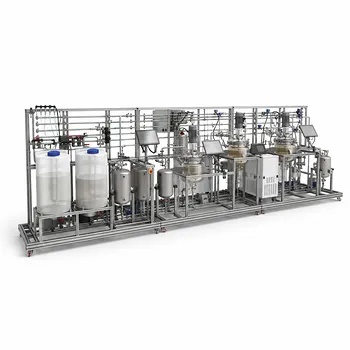
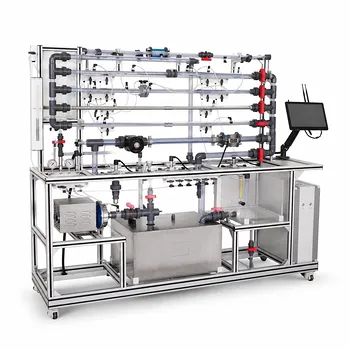
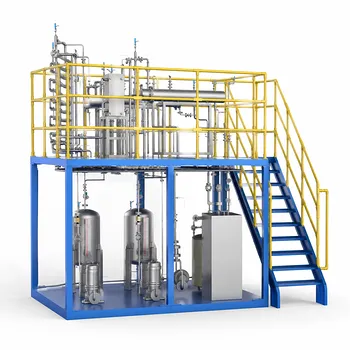
LABPARK provides industry-leading Educational and Vocational Unit Operations Pilot Plants across chemical engineering, bioprocess & biotech, and environmental & water treatment. Specifically designed for universities, research institutes, and enterprises, our pilot plants deliver the precise control and reliable data tracking needed to validate your research and chemical dosing strategies.
Contact LABPARK today to discuss your pilot plant requirements and request a custom quote!
Related Products
- General Purpose Cosmetics Production Unit Operations Training Pilot Plant
- Multi-Reactor Educational Pilot Plant for Reaction Engineering Unit Operations
- Multi-Functional Drying Educational Unit Operations Pilot Plant
- Multimodal Absorption and Desorption Pilot Plant for Unit Operations Training
- Dual-Mode Rectification Pilot Plant for Practical Training Unit Operations
People Also Ask
- Why is the chemical plant startup schedule crucial? De-risk scale-up with pilot plants.
- How do deviations in estimating latent heat impact pilot plant thermal systems? Avoid hardware mis-sizing.
- When to transition from PID to adaptive control in pilot plants? Key process indicators.
- Why Compare Predicted and Experimental Excess Enthalpy? Key to Accurate Pilot Plant Scale-up
- Why Use PTFE & Hastelloy in Chemical Pilot Plants? Prevent Corrosion & Ensure Safety