You can’t just precipitate and filter—you must stay within a strict mass limit. The 8-hydroxyquinoline (oxine) method for magnesium estimation fails in two predictable ways if you ignore its boundaries. First, the final precipitate must not exceed 150 mg; exceeding this threshold embeds excess reagent in the cake and inflates your gravimetric reading. Second, the solution must stand for at least two hours after precipitation, because filtering prematurely leaves a large fraction of the magnesium still in solution. These aren’t optional guidelines—they define the window of reliable analysis for students running water treatment pilot plants.
The surface constraint is a 150 mg weight ceiling, but the deeper lesson is about contamination and completeness. The method delivers accurate magnesium numbers only when you respect both the mass limit and the two-hour digestion time—violating either one produces systematically wrong data that can mislead scale-formation studies.
Why the 150 mg Precipitate Limit Is Non-Negotiable
If you pull too much sample and generate a bulky precipitate, you don’t just get a larger cake—you get a contaminated cake.
The Excess Reagent Trap
A magnesium hydroxyquinolate precipitate heavier than 150 mg has a high surface area and mass that physically traps unreacted oxine reagent. During filtration and drying, this trapped reagent stays behind and adds weight that does not belong to magnesium. The result is a falsely high gravimetric value.
Direct Impact on Scale Analysis
In a water treatment pilot plant, overestimating magnesium by even a few percent can make a scale inhibitor look less effective than it really is. The 150 mg limit is therefore not about convenience—it is about preserving the stoichiometric cleanliness of the weighing form.
The Two-Hour Stand: A Hard Kinetic Limit
Magnesium hydroxyquinolate does not crash out of solution instantly. Shortcut this waiting period and you lose data.
Completeness of Precipitation
The reaction between magnesium ions and 8-hydroxyquinoline reaches equilibrium slowly. When students filter after only one hour, a significant fraction of magnesium remains unprecipitated, passing through the sintered-glass crucible and giving a low result.
Link to Pilot Plant Reliability
Inconsistent standing times turn a precise gravimetric method into a random number generator. For operators correlating magnesium deposition rates with ion-exchange performance, the two-hour minimum is what makes the numbers comparable from run to run.
The Hidden Variable: Drying Temperature
Although the weight limit and standing time are the dominant constraints, the drying step introduces its own boundary condition that students often miss.
Choosing Your Weighing Form
Drying the filtered precipitate at 105°C gives the dihydrate (Mg(C9H6NO)2·2H2O). Drying at 130–140°C drives off that water and gives the anhydrous salt. If you mix drying protocols across samples, you inadvertently change the gravimetric factor and wreck your mass balance.
A Teaching Discipline
For students learning the method, fixing one drying temperature—and explicitly recording it—is the simplest way to eliminate a systematic error that masquerades as a process upset.
Common Pitfalls and Their Impact on Data
These aren’t theoretical risks; they show up as reproducible blunders in student-run water quality labs.
- Heavy precipitate (>150 mg): Produces artificially high magnesium readings because of co-precipitated or adsorbed excess oxine.
- Short standing time (<2 hours): Underestimates magnesium concentration, making scale deposition look milder than it is.
- Inconsistent drying: Changes the molecular formula of the weighed solid, introducing a constant bias that invalidates side-by-side comparisons.
- Skipping the temperature ramp: The supplementary procedure specifies heating to 70–80°C and neutralizing with ammonium hydroxide before adding oxine. Cold additions slow precipitation kinetics and magnify the error from short standing times.
Making the Method Work in a Student Pilot Plant
Apply these constraints as decision rules that match your training objective.
After you’ve selected the correct sample aliquot and controlled the digestion time, use this framework to guide the lab.
- If your primary focus is teaching fundamental gravimetric accuracy: Keep the precipitate between 50–150 mg exactly, enforce exactly two hours of standing, and standardize on 105°C drying so students see the dihydrate form every time.
- If your primary focus is assessing scale-inhibitor performance: Run split samples that strictly obey the mass limit and time minimum, because even a 10% error in magnesium numbers can flip the conclusion about a chemical treatment’s efficacy.
- If your primary focus is troubleshooting student data scatter: Audit the elapsed standing time and the recorded drying temperature before questioning the equipment—most erratic results trace back to violation of these two protocol boundaries.
The oxine method for magnesium is a remarkably precise tool when you work inside its defined box: cap the precipitate at 150 mg, give it a full two hours to form, and dry it consistently.
Summary Table:
| Key Parameter | Target Specification | Impact of Deviation |
|---|---|---|
| Precipitate Weight | ≤ 150 mg | >150 mg traps excess reagent, causing falsely high readings |
| Standing Time | ≥ 2 hours | <2 hours leads to incomplete precipitation and low readings |
| Drying Temperature | 105°C (dihydrate) or 130-140°C (anhydrous) | Mixed protocols cause inconsistent chemical formulas and data scatter |
| Precipitation Temp | Heat to 70–80°C before adding oxine | Cold addition slows kinetics and magnifies standing time errors |
Equip Your Water Treatment Lab for Success
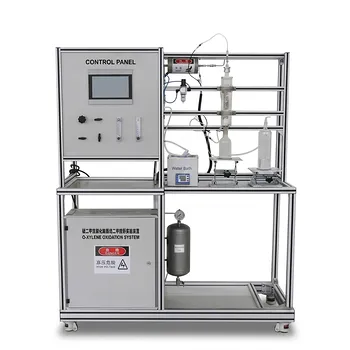
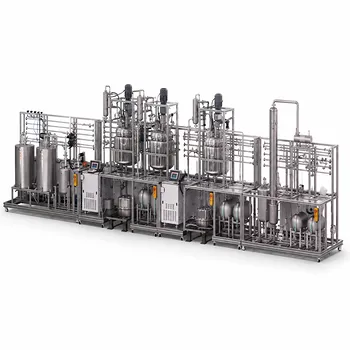
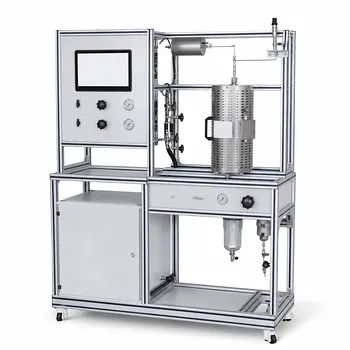
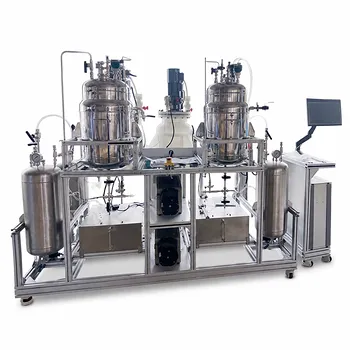
Ensure your students master critical analytical techniques with reliable, hands-on training equipment. LABPARK provides premium Educational and Vocational Unit Operations Pilot Plants in chemical engineering, bioprocess & biotech, and environmental & water treatment. Designed specifically for universities, research institutes, and enterprises, our systems offer the precision needed to connect theoretical chemistry with real-world process control.
Ready to upgrade your laboratory capabilities? Contact us today to discover our custom pilot plant solutions!
Related Products
- O-Xylene Oxidation to Phthalic Anhydride Educational Unit Operations Pilot Plant
- Methanol Synthesis and Catalyst Performance Evaluation Educational Unit Operations Pilot Plant
- Aspirin API Synthesis Unit Operations Training Pilot Plant
- Multi-Functional Special Distillation Educational Pilot Plant
- Electrolyte Distillation Purification and Formulation Educational Pilot Plant
People Also Ask
- Why determine reaction order & activation energy in pilot plants? Key to safe scale-up.
- What materials fit high-temp oxidation pilot plants? Key Hastelloy & Titanium Requirements
- Under what conditions can axial diffusion be neglected? Reactor Simulation Guide
- What limitations exist in high-temp pilot reactor design? Key Material & Safety Rules
- What pressure parameters ensure pilot plant safety? Analyze reactor profiles & gas evolution.