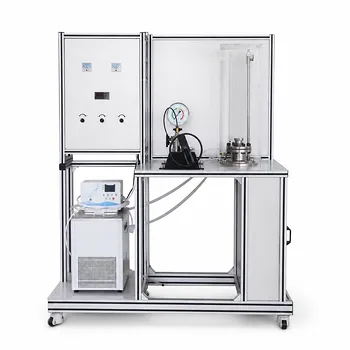
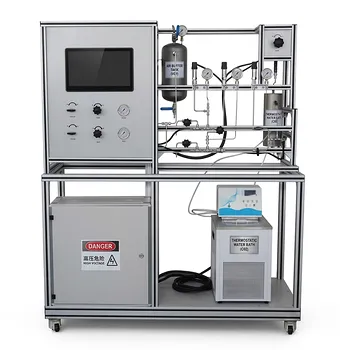
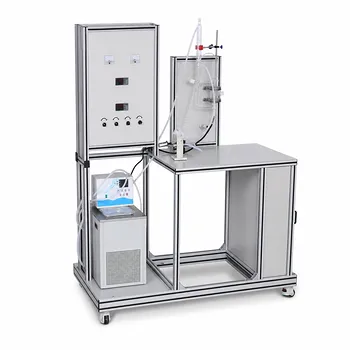
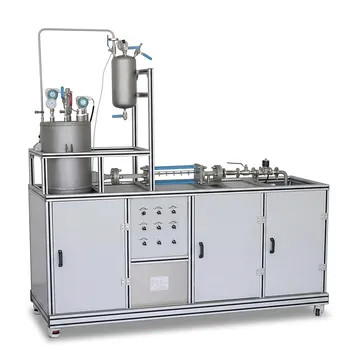
The right instrument for gas evolution measurement can mean the difference between a breakthrough and a misleading result. In chemical engineering laboratories, three primary instruments are used: thermal mass flow meters, wet drum type flow meters, and gas burettes. Each comes with inherent limitations that dictate their suitability—ranging from sensitivity to unknown gas compositions and mechanical wear to restricted flow ranges and manual operation.
Choosing the right gas evolution tool is a balancing act between flow range, gas composition, accuracy needs, and automation. While thermal mass flow meters offer seamless data integration but struggle with mixed gases, wet drum meters provide direct volumetric readings with mechanical downsides, and gas burettes remain the benchmark for low-flow precision—requiring meticulous manual technique.
Understanding the Three Core Instruments
Thermal Mass Flow Meters: Speed and Integration, but Not for Unknown Mixtures
A thermal mass flow meter measures the mass flow rate by detecting how a gas stream dissipates heat. They cover an extremely wide flow range and easily connect to evaluation software for real-time data logging. This makes them ideal for high-throughput or automated setups.
The critical limitation is composition dependence. The instrument relies on a known, constant specific heat capacity of the gas. If the gas stream’s composition is unknown, changes during a reaction, or is a mixture of multiple gases, the mass flow reading becomes unreliable. You cannot simply convert mass to volumetric flow without precise composition data.
Wet Drum Meters: Direct Volumetric Measurement with Mechanical Constraints
Wet drum meters measure volumetric flow by mechanically dividing the gas stream into known-volume chambers within a rotating drum partially filled with a sealing liquid. They handle corrosive gases well when built from inert materials like Teflon, making them a robust choice for aggressive chemistries.
The drawbacks are mechanical and range-related. They have a modest dynamic range, and accuracy falls off sharply at very low flows. Practically, the usable low-end accuracy is often quoted as 0–20 mL/min, meaning they struggle to resolve small flow rates below this threshold. Mechanical wear from moving parts also introduces drift and maintenance needs over time.
Gas Burettes: Unmatched Low-Flow Accuracy, but Strictly Manual
A gas burette uses displacement of a liquid in a calibrated tube to measure gas volume directly. With no moving parts, it is inherently corrosion-resistant and provides exceptional accuracy for low gas flow rates—typically up to about 50 mL/min. It is the classic reference instrument for slow reactions producing small gas quantities.
Its principal limitation is manual operation and data capture. Integration with evaluation software is difficult, necessitating human observation and recording. This not only limits throughput but also introduces potential human error, especially if proper leveling and thermal equilibrium are not maintained.
Beyond the Instrument: Practical Pitfalls That Skew Your Data
Even the most appropriate instrument can give erroneous results if experimental technique is poor. The following factors, often highlighted in educational laboratory design, are critical for gas burettes but apply in spirit to all methods.
Pressure Equalization: Always Balance the Liquid Levels
When using a gas burette with a leveling tube, the internal pressure must equal atmospheric pressure. Ensure the liquid levels in the burette and leveling tube are exactly equal before reading the volume. Failure to do so introduces a pressure differential that distorts the measured volume, a common beginner’s mistake.
Thermal Equilibration: Wait for the Gas to Cool
Gas temperature affects volume dramatically. After gas generation, you must allow the gas to fully equilibrate with room temperature before taking a reading. Rushing this step results in volume readings that are too high, artificially inflating reaction rate calculations.
Saturated Vapor Pressure: Account for the Sealing Liquid
The gas inside the burette is saturated with vapor from the sealing liquid (often water). The total pressure is the sum of the dry gas pressure and the liquid’s vapor pressure at that temperature. You must subtract the vapor pressure contribution to isolate the true gas volume evolved. Overlooking this correction is a subtle but persistent source of systematic error.
Safety Cannot Be an Afterthought
In laboratory setups, gas evolution can involve flammable (e.g., hydrogen), toxic, or corrosive gases. Allocation of space and operational procedure matter. Perform experiments in a fume hood to prevent ambient air contamination or accumulation of hazardous gases. For reduction reactions creating explosion risks, never cut off an inert gas flow while the system is hot—this can suck air into the reactor and cause an explosive mixture.
Understanding the Trade-offs
Selecting a gas evolution instrument means weighing performance characteristics against practical constraints.
- Flow range and low-end accuracy: Gas burettes dominate the slow 0–50 mL/min regime with high precision; wet drum meters falter below 20 mL/min; thermal mass flow meters excel across wide ranges if the gas is well-defined.
- Gas composition sensitivity: Wet drum meters and burettes measure volume directly, making them indifferent to gas type as long as the liquid is inert. Thermal mass flow meters require known specific heat capacities and fail with unknown mixtures.
- Automation and data quality: Thermal mass flow meters integrate seamlessly with digital systems. Burettes rely on manual reading, introducing operator-dependent variability. Wet drum meters can be fitted with pulse outputs but still lag in integration ease.
- Corrosion and mechanical longevity: Burettes have no moving parts and are easiest to construct from glass or Teflon. Wet drum meters have moving seals that wear, especially with corrosive gases, despite inert construction. Thermal mass flow meters are typically stainless steel or specialty alloys, limiting their chemical compatibility.
Making the Right Choice for Your Goal
Your decision should be driven by the dominant requirement of your experimental system.
- If your primary focus is high-throughput screening with a pure, known gas: A thermal mass flow meter offers unmatched speed and data integration. Ensure you have confirmed the gas composition and specific heat capacity beforehand.
- If your primary focus is measuring corrosive or mixed-gas streams over a moderate range: A wet drum meter built from inert materials provides direct volumetric data without composition corrections, provided you stay above the minimum flow threshold.
- If your primary focus is ultralow flow rates and maximum accuracy with simple equipment: A gas burette is the proven choice—just commit to rigorous manual technique, including leveling, temperature control, and vapor pressure correction.
The instrument alone does not guarantee quality data; disciplined experimental practice—pressure equalization, thermal equilibrium, and safety protocols—turns a good instrument into a reliable measurement system.
Summary Table:
| Instrument Option | Primary Benefit | Key Limitation | Best For |
|---|---|---|---|
| Thermal Mass Flow Meter | Wide flow range & seamless automation | Dependent on known gas composition | High-throughput with known, pure gases |
| Wet Drum Meter | Direct volume, handles corrosive gas | Poor low-flow accuracy (<20 mL/min) | Mixed/corrosive gases at moderate flows |
| Gas Burette | High low-flow accuracy, low cost | Strictly manual operation & reading | Ultra-low flows requiring high precision |
Equip Your Lab with Industry-Leading Educational Technology
Choosing the right instruments is just the first step in building a high-performing laboratory. LABPARK provides premium Educational and Vocational Unit Operations Pilot Plants in chemical engineering, bioprocess & biotech, and environmental & water treatment. Tailored for universities, research institutes, and enterprises, our pilot plants bridge the gap between theory and practical engineering application.
Ready to upgrade your laboratory training systems? Contact LABPARK today to discuss your custom pilot plant requirements!
Related Products
- Educational Unit Operations Pilot Plant for Intraparticle Diffusion Effective Factor Measurement
- Carbon Dioxide PVT Curve Determination Educational Unit Operations Pilot Plant
- Two Phase Flow Pattern Velocity Resistance Measurement Educational Pilot Plant
- Throttling Effect Determination Educational Unit Operations Pilot Plant
- Dual-Mode Gas Absorption and Desorption Unit Operations Training Pilot Plant
People Also Ask
- How do unit operation requirements differ between traditional chemical processes and bioprocesses? Build Better Pilot Plant Curricula
- How do educational unit operations pilot plants bridge theory and design? Bridge the Engineering Gap
- How do educational unit operations pilot plants address safety and waste management when scaling up?
- How do educational unit operations pilot plants bridge theory and industrial process development? Hands-On Learning
- How do educational pilot plants teach scale-up? Bridge the gap to commercial manufacturing.