The core trade-off is resolution and model stability versus ruggedness and cost.
When integrating near-infrared (NIR) process analyzers into unit operations pilot plants, conventional FT-NIR instruments deliver superior spectroscopic performance—higher resolution (1–32 cm⁻¹), outstanding repeatability, and excellent long-term spectral reproducibility. These qualities are essential for maintaining the integrity of predictive calibration models over time. In contrast, emerging MEMS-based technologies (Grating MEMS, MEMS FTS) significantly sacrifice resolution and raw spectral reproducibility. What you gain in return is a dramatically smaller footprint, lower cost, and far greater environmental robustness, especially against vibration and the demands of hazardous-area certification.
FT-NIR remains the gold standard for chemometric model transferability and precision, but it is environmentally fragile and demands careful packaging. MEMS-based analyzers flip that equation: they provide a robust, compact, and affordable sensor that can go where an FT-NIR cannot—at the price of lower resolution and a heavier reliance on mathematical correction to tame spectral variability. Your choice depends on whether long-term model integrity or rugged, distributed deployment matters more in your pilot-plant setting.
The Spectroscopic Performance Gap
Resolution and Spectral Detail
FT-NIR delivers high-resolution spectra (1–32 cm⁻¹) that resolve fine structural features of C-H, O-H, and N-H bonds.
This granularity is critical when separating overlapping peaks in complex mixtures or when building calibration models that must survive across multiple batches and conditions.
MEMS-based analyzers typically operate at much lower resolution.
This coarser sampling of the spectral profile blurs subtle chemical differences, which can reduce the specificity of a measurement in multicomponent streams.
Repeatability and Long‑Term Reproducibility
Excellent spectral reproducibility is the bedrock of robust chemometric models.
FT-NIR’s precision in measuring the same sample days, weeks, or months later means a calibration model developed in one campaign remains valid far longer, minimizing re‑calibration effort.
MEMS instruments often exhibit poorer shot‑to‑shot and long‑term reproducibility.
Small shifts in the optical path or detector response over time directly translate into spectral drift—a major headache when you are trying to maintain a predictive model across a semester‑long student research project or a multi‑campaign industrial pilot.
The Cost of Correction: Mathematical Treatments
MEMS‑based spectra frequently require advanced pre‑processing to be useable.
Techniques such as standard normal variate (SNV), multiplicative scatter correction (MSC), or even machine‑learning drift compensations are applied to hide the hardware variability. While effective, this adds computational complexity and can mask real process changes if not carefully validated.
FT‑NIR reduces the reliance on heroic mathematics.
Its raw stability means simpler, more transparent models that are easier to teach, audit, and transfer from the pilot plant to full‑scale production.
The Battle for Environmental Robustness
Vibration and Mechanical Stability
FT‑NIR relies on a moving mirror interferometer—a fundamentally vibration‑sensitive design.
In a pilot plant where pumps, compressors, and agitators generate continuous mechanical noise, an unprotected FT‑NIR will suffer severe signal degradation unless mounted on vibration‑damping supports or housed in an isolated enclosure.
MEMS‑based analyzers are intrinsically vibration‑robust.
A grating‑MEMS chip has no macroscopic moving parts; a MEMS FTS uses micro‑machined mirrors on a monolithic substrate. These devices can be bolted directly to a distillation column or a reactor skid and function reliably, dramatically simplifying integration.
Packaging for Hazardous Areas
Certifying an FT‑NIR for ATEX, IECEx, or Class I Div 1 environments is an expensive, complex packaging challenge.
The delicate optical train and any exposed electronics must be enclosed in heavy, purged, or explosion‑proof housings, increasing size, cost, and maintenance overhead.
MEMS sensors are a natural fit for hazardous‑area deployment.
Their tiny form factor and low power consumption allow for inherently safe, compact packages that are far easier and cheaper to certify. For a pilot plant handling flammable solvents, this can be the decision‑maker.
Temperature and Humidity Sensitivity
Both technologies drift with environmental swings, but the impact differs.
FT‑NIR’s interferometer alignment and beamsplitter properties are temperature‑sensitive; even mild fluctuations can cause baseline wander. MEMS devices, while less mechanically sensitive, can exhibit temperature‑dependent dark current or wavelength shifts. However, the monolithic nature of a MEMS chip often permits tighter, built‑in temperature stabilization at a lower system cost.
Understanding the Trade‑offs
When Good‑Enough Is Perfect
Not every pilot‑plant measurement needs 2 cm⁻¹ resolution or decade‑long model stability.
If you are monitoring a bulk solvent swap or a well‑separated major component, a MEMS device’s lower performance is entirely fit‑for‑purpose. The value of a small, cheap sensor that survives a student‑operated plant without constant babying often outweighs the spectroscopic shortcomings.
The Calibration Cascade Effect
Poor reproducibility does not stay confined to a single instrument—it cascades.
In a teaching or research setting where calibration models are built once and then shared across multiple pilot units, a MEMS analyzer’s drift forces either frequent model updates or per‑instrument local models. FT‑NIR’s reproducibility allows a “built once, used everywhere” philosophy that saves immense amounts of time.
The Steep Learning Curve—on Both Sides
FT‑NIR demands mechanical integration skills.
Researchers must learn to design vibration isolation, thermal control, and appropriate sampling interfaces. MEMS demands chemometric sophistication.
Users must master the art of spectral pre‑processing and drift diagnostics. Choose your learning objective.
Instrument Qualification: The Non‑Negotiable Baseline
Regardless of the technology you choose, proper instrument qualification is essential in a pilot‑plant environment.
The verification protocol—checking wavelength accuracy with standards, verifying wavelength repeatability (e.g., polystyrene), testing response repeatability with doped resins, evaluating photometric linearity with a series of reflectance standards, and confirming low photometric noise—applies to both FT‑NIR and MEMS units.
The difference is in frequency and urgency.
An FT‑NIR may hold its qualification for weeks. A MEMS device, given its lower inherent reproducibility, generally demands that you perform wavelength and response repeatability checks more frequently. A daily qualification routine with a simple built‑in standard can prevent a semester’s worthless data.
Making the Right Choice for Your Pilot Plant
Your decision hinges on what you are optimizing: model fidelity for scale‑up learning, or rugged simplicity for hands‑on PAT education.
- If your primary focus is building transferable calibration models for scale‑up: Invest in an FT‑NIR and the environmental controls (vibration isolation, temperature‑stable housing) it demands. The long‑term spectral reproducibility will save you from constant model rework and teach students the gold‑standard approach to industrial PAT.
- If your primary focus is deploying multiple sensors in vibration‑heavy, hazardous, or space‑constrained skids: Choose a MEMS‑based analyzer and invest the savings in more sampling points. The environmental robustness and easy hazardous‑area certification will keep the plant running, and the added chemometric challenge can become a powerful training lesson in data pre‑processing.
- If your primary focus is trace‑level analysis or highly overlapping bands: Be aware that neither FT‑NIR nor MEMS‑NIR may be sufficient; you may need to complement with a technique like fluorescence sensing for the required sensitivity and dynamic range.
The strongest pilot‑plant program often leverages both philosophies—using FT‑NIR as a plant‑wide reference standard in a controlled location, while distributing MEMS sensors as rugged, real‑time indicators that keep the process safe and on‑spec between reference measurements.
Summary Table:
| Feature | Conventional FT-NIR | Emerging MEMS-based NIR |
|---|---|---|
| Resolution | High (1–32 cm⁻¹) | Lower (coarser sampling) |
| Model Stability | Excellent; long-term reproducibility | Poorer; prone to spectral drift |
| Vibration Resistance | Low; sensitive moving parts | High; robust, no macro moving parts |
| Hazardous Area Fit | Complex/expensive packaging | Easy; compact & low power |
| Calibration Effort | Low; "built once, used everywhere" | High; requires advanced pre-processing |
Optimize Your Process Control with LABPARK
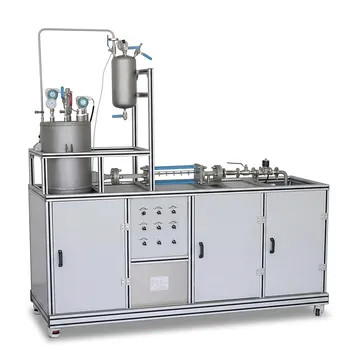
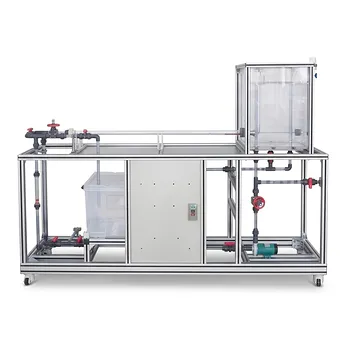
Choosing the right PAT sensors is critical for successful process scale-up and education. LABPARK provides premium Educational and Vocational Unit Operations Pilot Plants in chemical engineering, bioprocess & biotech, and environmental & water treatment. Designed for universities, research institutes, and enterprises, our pilot plants support the seamless integration of advanced analyzers to meet your research and training needs.
Contact our technical experts today to design a pilot plant solution tailored to your application!
Related Products
- Multi Functional Catalytic Reaction and Reactor Evaluation Educational Unit Operations Pilot Plant
- Continuous Batch Extractive Distillation Educational Pilot Plant
- Multifunctional Membrane Separation Educational Pilot Plant with Ultrafiltration, Nanofiltration, Reverse Osmosis
- Centrifugal Pump Performance and Orifice Flowmeter Calibration Educational Pilot Plant
- Multi-Functional Special Distillation Educational Pilot Plant
People Also Ask
- How does feed gas flow rate affect catalytic RFR yields? Optimize Pilot Plant Performance
- What reaction engineering principles are shown in a catalytic reactor pilot plant? SO2 Oxidation Guide
- Why is FTIR integration in catalytic pilot plants important? Real-Time Student Insights
- How to analyze active metal distribution & identify catalyst poisoning in pilot plants? Expert Diagnostic Guide
- How to study catalyst poisoning & regeneration? Master catalytic reaction life cycles.