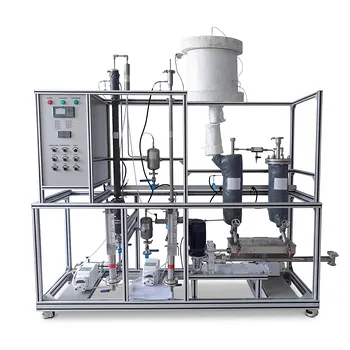
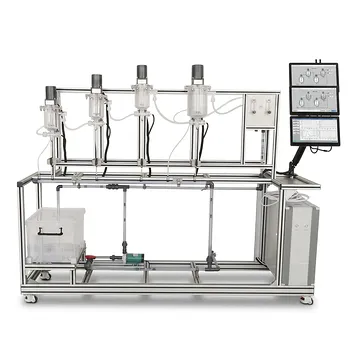
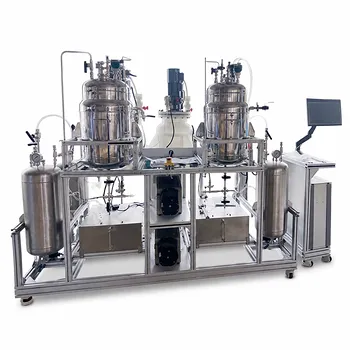
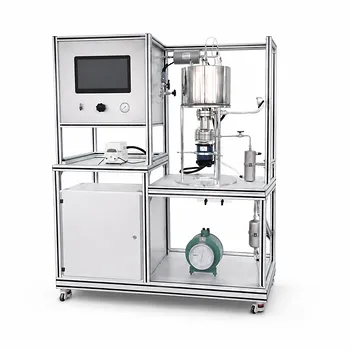
Hydrogen at high temperature and pressure is a relentless destroyer of ordinary steel. The choice of reactor metallurgy is critical because high-temperature hydrogenation creates a perfect storm of material degradation: hydrogen atoms penetrate the metal lattice, causing embrittlement, while the elevated heat simultaneously saps the steel’s mechanical strength. If you use a standard carbon steel, the reactor vessel can lose its structural integrity, crack, or rupture catastrophically—long before any corrosion is visibly apparent. Only specific alloy steels designed to resist hydrogen attack can ensure safe, reliable operation in a pilot plant.
Pilot-plant hydrogenation demands a metallurgical upgrade: carbon steel’s hydrogen resistance collapses as temperature rises (from 260 MPa at 0°C to just 3.0 MPa at 500°C), while tensile strength concurrently plummets. The safe path is a chromium-molybdenum alloy like 1%Cr-0.5Mo steel, which maintains integrity against both hydrogen corrosion and thermal softening, preventing catastrophic failure and ensuring meaningful experimental data.
How High-Temperature Hydrogen Attacks the Reactor Wall
The Two-Pronged Threat: Embrittlement and Decarburization
Hydrogen’s small atomic size allows it to dissolve into the steel’s crystal lattice and diffuse rapidly at elevated temperatures.
Above roughly 200°C, atomic hydrogen reacts with carbon in the steel to form methane, a process called high-temperature hydrogen attack (HTHA).
These methane molecules are too large to diffuse out, so they build up at grain boundaries, creating internal voids and microfissures that severely weaken the metal.
Simultaneously, hydrogen embrittlement reduces the steel’s ductility, making it brittle and prone to sudden cracking under stress.
A vessel that appears intact can fail with no warning if the wrong material was selected—a risk no pilot-plant operator can afford.
The Alarming Speed of Hydrogen Pressure Tolerance Loss
The primary reference data paints a stark picture: carbon steel’s allowable hydrogen partial pressure evaporates with temperature.
At 0°C, it can handle 260 MPa; at 500°C, that figure plummets to just 3.0 MPa.
Most hydrogenation reactions sit squarely in the danger zone, where a carbon-steel shell would be little more than a time bomb.
Thermal Degradation of Mechanical Properties
Tensile Strength Fades Faster Than You Think
Even without hydrogen, high temperatures rob steel of its load-bearing capacity.
Low-carbon steel’s tensile strength drops from 450 N mm⁻² at 25°C to only 210 N mm⁻² at 500°C—less than half.
A reactor wall thickness calculated for room-temperature strength would be dangerously undersized at operating heat, compromising both pressure containment and fatigue life.
Creep: The Slow, Invisible Deformation
Under sustained load at high temperature, metals undergo creep, a time-dependent plastic strain that can eventually lead to rupture.
For components exposed to peak heat and stress—like the reactor furnace tubes in a pilot plant—common steels survive only minutes before unacceptable distortion.
The solution is to move to creep-resistant alloys such as Inconel 600 or Incoloy 800 in those critical zones.
Regulatory Limits Force Your Hand
Standard pressure vessel codes (ASME BPV) strictly forbid carbon steel plates when design temperatures exceed 482°C (900°F).
Above this threshold, only killed steel, low-alloy steels, or stainless steels are acceptable.
For hydrogenation pilot plants running hot and heavy, this regulation alone mandates an alloy upgrade—it’s not optional.
Why Alloy Selection Matters for Pilot-Plant Performance
Chromium-Molybdenum Steels: The Proven Backbone
The primary reference points directly to 1%Cr-0.5Mo as the go-to material.
Chromium forms stable carbides that lock up carbon, denying hydrogen the reactant it needs for methane formation.
Molybdenum boosts high-temperature strength and creep resistance, giving the vessel a much wider safe operating window without exotic cost.
Nickel and Titanium Additions for Extreme Service
When conditions are even harsher (higher pressure, higher hydrogen concentration, or corrosive co‑reactants), nickel and titanium enter the picture.
These elements further stabilize the alloy’s microstructure and enhance resistance to both HTHA and general corrosion, albeit at a higher price.
In a pilot plant, where you’re often testing novel catalysts or extreme conditions, upgrading the alloy is a cheap insurance policy compared to a runaway reaction or a lab‑shattering failure.
Beyond Bulk Corrosion: Protecting Data Integrity
A compromised reactor wall doesn’t just threaten safety; it contaminates the experiment.
Trace iron or carbon from wall degradation can poison catalysts, scramble kinetics, and make scale‑up data worthless.
Choosing the right metallurgy keeps the process where it belongs—inside the controlled volume, not bleeding through the walls.
Understanding the Trade-offs in Material Decisions
Cost vs. Lifetime: The Pilot-Plant Calculus
High‑alloy steels and nickel‑base alloys are significantly more expensive than carbon steel, both in raw material and fabrication.
However, pilot plants typically operate for thousands of hours across multiple research campaigns; a vessel that must be replaced after every few runs wastes time and money.
The up‑front premium for a hydrogen‑resistant alloy pays back quickly in a research setting where downtime kills budgets.
Fabrication Complexity and Weld Integrity
Advanced alloys often require precise heat treatment before and after welding to maintain their hydrogen‑resistant microstructure.
A poor weld can create a local “hot spot” where carbon steel properties persist, becoming the failure initiation site.
That’s why hydrostatic pressure testing is non‑negotiable before commissioning—it verifies that every seam is as resilient as the base metal.
Thermal Conductivity and Heat Management
Materials like 316 stainless steel offer excellent durability but also have higher thermal conductivity than some alternatives, affecting jacket heating/cooling response.
For experiments where tight temperature control is paramount (e.g., studying kinetics, preventing thermal runaway), the reactor’s thermal inertia must be matched to the PID control system.
Metallurgy thus indirectly influences your ability to maintain the stable temperature profiles that chemical kinetics demand—remember, the rate constant k is exquisitely temperature‑sensitive.
Making the Right Choice for Your Pilot Plant
The ideal reactor material balances hydrogen resistance, high-temperature strength, cost, and compatibility with your specific reaction chemistry. Your priority will steer the selection.
- If your primary focus is maximum safety and regulatory compliance: Select a Cr‑Mo steel (such as 1%Cr‑0.5Mo) as the base material, and verify compliance with ASME BPV limits. It provides proven HTHA resistance at an accessible cost point for most pilot operations.
- If your primary focus is extreme-temperature or high-pressure hydrogenation beyond 500°C: Upgrade to a nickel‑based alloy like Inconel 600 for the highest‑risk zones, ensuring creep resistance and long‑term integrity when standard Cr‑Mo grades start to fall off.
- If your primary focus is academic training and versatility: Choose a stainless steel (e.g., 316) with demonstrable hydrogen compatibility and robust temperature control systems, enabling students to safely study kinetics, thermodynamics, and material science in one platform.
- If your primary focus is protecting catalyst performance and data quality: Prioritize alloys with minimal iron leaching and high chemical inertness, pairing the right metallurgy with rigorous hydrostatic testing to eliminate contamination pathways.
The right metal turns a pilot reactor from a potential hazard into a trusted, repeatable research instrument—so let the operating envelope dictate the alloy, not the procurement catalog.
Summary Table:
| Material | Temp/Pressure Resistance | Primary Risk / Benefit | Typical Application |
|---|---|---|---|
| Carbon Steel | Poor (limit drops to 3.0 MPa at 500°C) | High risk of HTHA, embrittlement, and 50% tensile strength loss | Low-temperature, low-risk chemical processes |
| 1%Cr-0.5Mo Steel | Good (resists HTHA up to 482°C+) | Chromium prevents HTHA; Molybdenum boosts high-temp strength | Standard high-pressure hydrogenation pilot reactors |
| Nickel Alloys (Inconel 600) | Excellent (above 500°C) | Outstanding creep resistance and structural stability | Extreme temperature/pressure & harsh corrosive environments |
| Stainless Steel (316) | Good | High corrosion resistance; prevents catalyst contamination | Versatile academic training plants & kinetic studies |
Design Your Next Safe and High-Performing Pilot Plant with LABPARK
At LABPARK, we specialize in providing state-of-the-art Educational and Vocational Unit Operations Pilot Plants in chemical engineering, bioprocess & biotech, and environmental & water treatment. We help universities, research institutes, and enterprises bridge the gap between laboratory research and industrial-scale production.
Selecting the right reactor metallurgy is a critical step in ensuring safety and data reliability. Our engineering experts work closely with you to design systems that feature proper alloy selections (from Cr-Mo steels to Inconel), strict compliance with pressure vessel codes, and precise thermal control to safeguard your team and your research data.
Ready to elevate your research and training capabilities? Contact our technical team today to custom-engineer your pilot plant solution!
Related Products
- Carbon Dioxide Hydrogen Methanol Synthesis Educational Unit Operations Pilot Plant
- 100L Continuous Loop Hydrogenation Educational Unit Operations Pilot Plant
- Methanol Synthesis and Catalyst Performance Evaluation Educational Unit Operations Pilot Plant
- Crude Benzene Hydrogenation Educational Unit Operations Pilot Plant
- Carbon Dioxide Hydrogenation Methanol Synthesis Educational Unit Operations Pilot Plant
People Also Ask
- How do temp & pressure affect methanol synthesis pilot plants? Optimize equilibrium and catalyst performance.
- Why is a purge system necessary when operating a gas recirculation loop in a methanol synthesis pilot plant? (Guide)
- Why do modern methanol pilot plants operate at lower pressures? Catalyst & Feed Requirements Explained
- What are the operational requirements for catalyst activation? Safe Methanol Pilot Plant Operation
- Why is the chemical plant startup schedule crucial? De-risk scale-up with pilot plants.