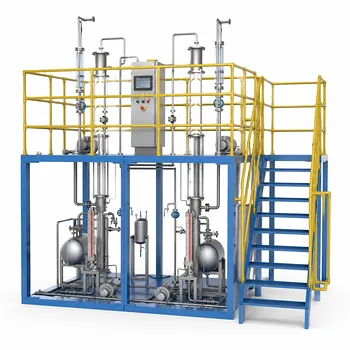
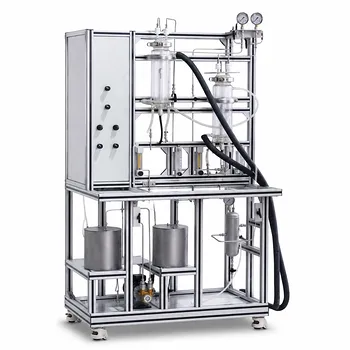
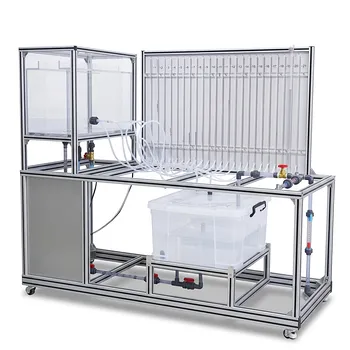
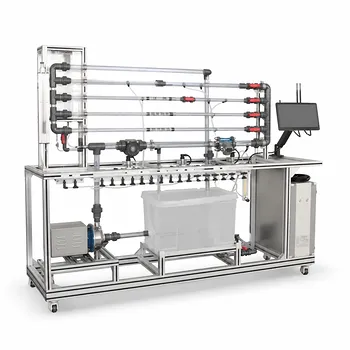
The fundamental operational distinction between cake and deep-bed filtration is the location of particle capture.
In cake filtration, solids build up visibly on the surface of a filter medium, rapidly forming a coherent layer—the cake—that quickly takes over as the primary filtering element. Deep-bed filtration, by contrast, hides its work: suspended particles are arrested inside the tortuous, interconnecting pores of a relatively thick granular medium (such as sand or gravel). This one difference in capture location drives every practical choice you make when demonstrating the unit operation in an educational lab, from the slurry you prepare to the pressure curves your students record.
For educational chemical engineering labs, cake filtration demonstrates how a built-up layer of solids becomes the dominant filter—ideal for concentrated, industrial-type slurries. Deep-bed filtration clarifies dilute, low-solids feeds by trapping particles throughout a thick porous bed. The operational choice in the lab, just as in industry, is dictated primarily by the feed’s solid concentration and the clarity demanded.
The Core Distinction: Where the Solids Stop
The place where particles are retained determines the entire dynamic of the separation, the equipment design, and the lesson your students take away.
Cake Filtration: Building a Filter on the Fly
A slurry with a meaningful solids load is introduced to a relatively open support—often a woven cloth or mesh.
At the very start, a few particles pass through, giving a slightly turbid filtrate. Within seconds, particles bridge across the support’s openings and begin depositing on top of it.
That accumulated layer—the filter cake—soon becomes the actual filtering medium. It grows thicker with time, and its structure and compressibility control the filtration rate and the clarity of the outgoing liquid.
In a teaching lab, you can literally scrape off a tiny section of cake and show students that the underlying mesh is only a scaffold.
Deep-Bed Filtration: Trapping Particles Within
Here the filter medium is not a thin septum but a deep, granular bed—typically sand, anthracite, or multi-media layers.
The feed contains such a low concentration of fine solids that they won’t form a surface mat. Instead, as the fluid follows a winding path through the pores, particles collide with grain surfaces and stick through interception, sedimentation, and adsorption mechanisms.
The solids become distributed throughout the depth of the bed, not concentrated at one surface. No visible cake forms; the pressure drop rises gradually as the bed’s internal pore space fills up.
Operational Implications for the Teaching Lab
The “how” of the distinction becomes concrete when you design a demonstration. These two modes teach students fundamentally different engineering behaviors.
Feed Concentration is the Deciding Factor
In a typical unit operations lab, the slurry you prepare determines which filtration mode you’ll see.
Cake filtration makes sense when the solid volume fraction is above roughly 1%—a real slurry you might scoop out of a crystallizer or reactor.
Deep-bed filtration only works properly with very dilute feeds, often below 0.1% solids by volume. This is the domain of final polishing, like treating drinking water after sedimentation.
If you try a 5% slurry in a deep sand bed, you’ll quickly blind the top layers and turn it into a messy, unintentional cake filtration.
Demonstrating Cake Growth and Pressure Drop
A classic lab setup feeds a suspensión of calcium carbonate or diatomaceous earth into a small filter press or vacuum nutsche.
Students log filtrate volume versus time, observe how the initial cloudiness vanishes once a thin cake is established, and relate the rising pressure drop directly to cake thickness—a powerful visual of Darcy’s law with an increasing resistance.
Cleaning the system reinforces a key industrial point: the cake must be removed physically (by scraping) or reversed by backflushing, and the production cycle repeats.
Visualizing Deep-Bed Capture
A 1‑meter transparent column packed with carefully graded sand is fed water with a low concentration of fine china clay or a harmless dye‑labeled suspension.
Students watch the clarity improve down the column, but no surface layer appears. They can trace a “clarification front” that migrates deeper over time, eventually reaching breakthrough when particles appear in the effluent.
This becomes a lesson in mass transfer zones and the design necessity of backwashing, where the bed is expanded to release trapped solids—a completely different regeneration strategy than scraping a cake.
Understanding the Trade-offs
No filtration method is universally superior. Highlighting the limitations in the lab builds the critical thinking a future engineer needs.
Cake Filtration’s Limitations
Cake buildup is self‑defeating if the solids are compressible or slimy; they can blind the medium quickly and cause a precipitous flow decline.
The process also creates a secondary solid waste stream—the cake itself—that must be handled, dried, or disposed of.
For feeds with extremely low solids, cake filtration is wildly inefficient because you spend most of the time building a cake only microns thick, only to stop and remove it.
Deep-Bed Challenges
A deep bed cannot handle slugs of higher concentration; it will clog within the first few centimeters.
Channeling is a real risk if the bed is not evenly packed or if flow rates cause preferential paths. Once channels form, unclarified fluid bypasses the entire bed.
Moreover, complete removal of captured solids during backwashing is never 100% efficient. Residual deposits can harden over time, leading to “mudball” formation and gradual, irreversible loss of capacity.
Making the Right Choice for Your Lab Demonstration
Selecting the mode is not about which is “better” but which teaches the principle you need students to internalize. Match the filtration type to your educational objective.
- If your demonstration emphasizes industrial product recovery (e.g., a slurry of precipitated chemical solids): Use cake filtration. Students can directly measure cake resistance, investigate compressibility, and model the non‑linear behavior of a growing cake under constant pressure.
- If your goal is to teach water treatment and environmental process principles: Deep-bed filtration with a sand column and low‑turbidity feed lets students run breakthrough curves, calculate bed utilization, and design backwashing cycles—core skills in municipal and industrial water purification.
- If you have limited lab time and want a visually striking, immediately intuitive experiment: Cake filtration’s rapid buildup offers a dramatic, real-time view of a filter born from the feed itself, connecting directly to the classic filtration equation.
By purposefully matching the filter type to the feed’s solid concentration, you transform a simple solid‑liquid separation into a robust, industry‑anchored lesson that students will instinctively reference in their professional careers.
Summary Table:
| Feature | Cake Filtration | Deep-Bed Filtration |
|---|---|---|
| Capture Location | Surface of the filter medium | Throughout the granular bed |
| Feed Concentration | High (>1% solids by volume) | Dilute (<0.1% solids by volume) |
| Regeneration | Cake scraping or backflushing | Media backwashing |
| Primary Application | Product recovery & concentration | Water purification & polishing |
Equip Your Lab with Industry-Grade Filtration Systems
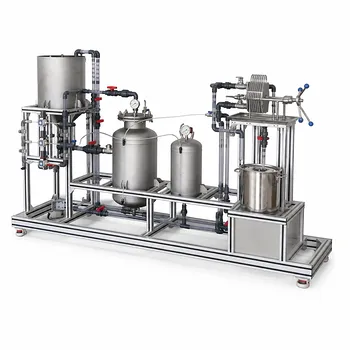
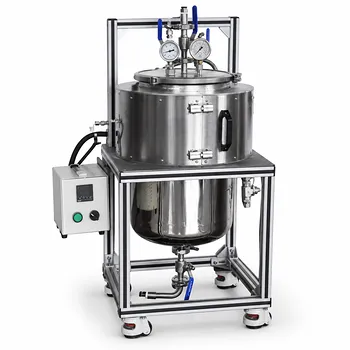
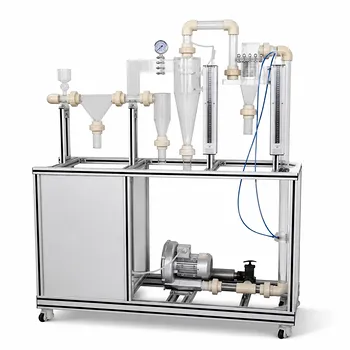
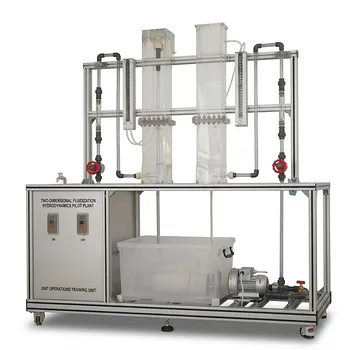
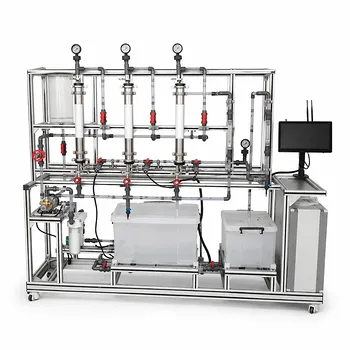
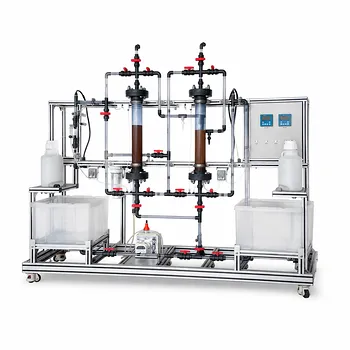
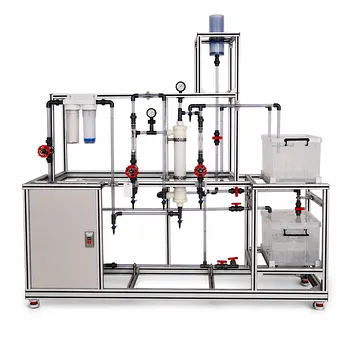
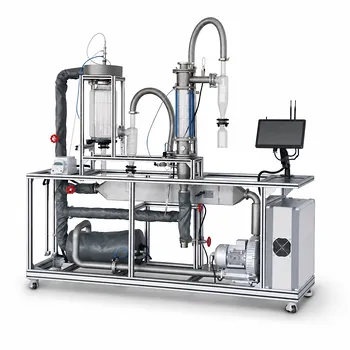
Bring textbook principles to life with LABPARK. We provide advanced Educational and Vocational Unit Operations Pilot Plants in chemical engineering, bioprocess & biotech, and environmental & water treatment designed for universities, research institutes, and enterprises.
Whether teaching the mechanics of cake build-up or deep-bed breakthrough curves, our pilot plants deliver the reliability and precision your curriculum demands.
Contact LABPARK today to request a catalog or custom quote for your lab!
Related Products
- Constant Pressure Filtration Educational Unit Operations Pilot Plant
- Hot Filtration Educational Unit Operations Pilot Plant Laboratory System
- Gas-Solid Heterogeneous Separation Demonstration Educational Unit Operations Pilot Plant
- Multi-Functional Membrane Separation Educational Pilot Plant for Unit Operations Lab
- Multi-Modal Distillation Unit Operations Training Pilot Plant
People Also Ask
- How do educational unit operations pilot plants bridge theory and design? Bridge the Engineering Gap
- How do educational unit operations pilot plants address safety and waste management when scaling up?
- Why splitting a filtration batch doesn't always reduce cycle time? Pilot Plant Insights
- Why Demo Constant-Rate to Constant-Pressure Filtration on a Pilot Plant? Key Practical Insights
- How can researchers identify and resolve filter medium blinding? Optimize Your Pilot Plant Runs