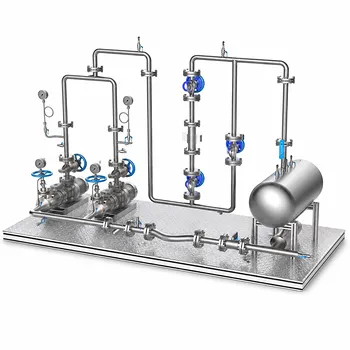
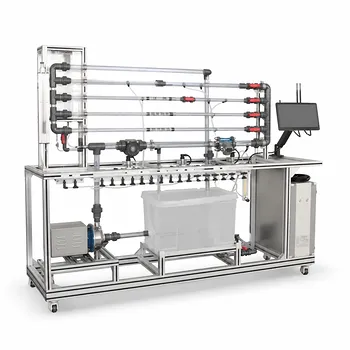
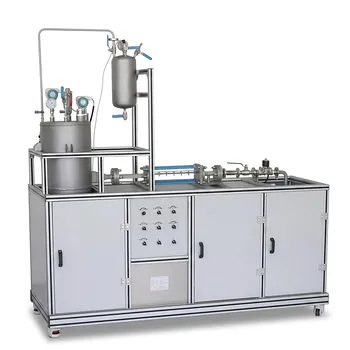
Determining the right Safety Integrity Level (SIL) for an educational pilot plant is not about picking a number from a chart—it’s about matching the system’s risk reduction to the specific hazards your students and process face. The SIL is determined through a structured risk assessment that evaluates the frequency and severity of potential incidents. Each SIL level (1, 2, 3, and rarely 4) corresponds to a quantifiable probability of failure on demand (PFDavg) and a risk reduction factor. In the vast majority of university and vocational chemical engineering pilot plants, a SIL 2 target hits the optimal balance—it provides robust protection against significant damage and personal injury without imposing the excessive complexity or cost of higher levels.
For educational chemical engineering pilot plants, the target Safety Integrity Level must be derived from a systematic hazard analysis, but SIL 2 is almost always the practical sweet spot. It offers reliable risk reduction for moderate hazards while allowing redundant architectures (like 1oo2D or 2oo3) to maintain process availability and avoid disruptive false trips during training.
The Foundation: How SIL is Determined (Not Guessed)
SIL is not a label you “choose” arbitrarily—it is a performance requirement driven by the gap between the existing risk and the tolerable risk.
Risk Reduction, Not Just a Concept
Each safety instrumented function (SIF) must achieve a specific SIL according to IEC 61511. The required level is derived from the Risk Reduction Factor (RRF) – the ratio of the inherent hazard frequency to the tolerable frequency.
- If a hazard occurs once per year and must be reduced to once every 100 years, you need an RRF of 100, which points toward SIL 2.
- The Probability of Failure on Demand (PFDavg) translates that target into hardware and software performance: SIL 1 (10⁻² to 10⁻¹), SIL 2 (10⁻³ to 10⁻²), and SIL 3 (10⁻⁴ to 10⁻³).
For pilot-scale equipment, quantitative data can be scarce, so semi‑quantitative methods (like risk graphs or Layer of Protection Analysis) are often more practical than a full QRA.
A Structured Hazard Identification Process
Before you can assign a SIL, you must thoroughly understand the hazards. In educational pilot plants, a five‑step approach ensures that no serious risk is overlooked:
- Chemical inventory & MSDS review – Document all substances, their reactivity, and toxicological properties.
- Process hazard analysis – Identify possible equipment failures, leaks, or unexpected reactions (e.g., runaway exotherms in a reactor).
- Storage and containment inspection – Check compatibility and segregation of chemicals.
- Ignition source and explosion assessment – Pinpoint potential sparks, hot surfaces, or flammable atmospheres.
- Emergency preparedness & human factors – Evaluate operator training, fatigue, evacuation routes, and environmental impact.
This structured scan forms the bedrock of your risk estimate and guides the consequence classification.
Mapping Consequences to SIL Targets
Once the hazards are identified, align their worst‑case outcomes with the SIL levels:
- SIL 1 – Minor equipment damage, no immediate pollution or injury, negligible financial loss.
- SIL 2 – Significant damage to the plant, moderate risk of localized environmental pollution or personal injury, noticeable economic impact.
- SIL 3 – Severe equipment destruction, major environmental release, serious injuries, or fatalities.
- SIL 4 – Reserved for catastrophic, community‑wide consequences; virtually never applicable to educational pilot plants.
For most undergraduate training setups, hazards peak at SIL 2—the threshold where a failure could injure a student or cause expensive damage, but not cause a large‑scale disaster.
Understanding the Characteristics of Each SIL Level
The differences between SIL levels are not just about a label—they dictate the design rigor, the architecture, and the verification effort.
SIL 1: Minor Consequences, Baseline Protection
SIL 1 provides the lowest tier of risk reduction (RRF 10–100). In an educational plant, a SIL 1 function might be a simple over‑temperature cut‑out on a low‑risk heating bath.
Characteristics: Basic sensors and a non‑redundant logic solver can suffice. Functional testing and documentation are less onerous.
When to use it: Only when an incident would cause trifling damage, no injury, and no environmental harm.
SIL 2: Significant Damage, The Educational Standard
SIL 2 is the workhorse for training pilot plants. With an RRF of 100–1,000 and a PFDavg of 10⁻³ to 10⁻², it shoulders the risk of runaway reactions, vapor overpressure, or chemical releases that could cause injury.
Typical SIFs under SIL 2: Automatic emergency shut‑off valves, heating cut‑offs tied to pressure transmitters, or high‑level switches on hazardous liquids.
Why it fits the education setting: It enforces industrial‑grade safety without the extreme cost and complexity of SIL 3. It also gives students a realistic look at functional safety.
SIL 3 and 4: Major Hazards, Rarely Seen in Education
SIL 3 (RRF 1,000–10,000) demands extensive redundancy, diverse sensors, and rigorous analysis. It is triggered only by scenarios that could cause severe injuries or fatalities.
In an educational context, a SIL 3 SIF might be justified if you are working with acutely toxic gases or highly explosive mixtures at meaningful scale—but this is the exception, not the norm. SIL 4 is essentially off the table for pilot plants.
Beyond the SIL Number: Practical Design for a Teaching Environment
Achieving the right SIL is just the start. In a learning laboratory, system availability and educational value matter almost as much as safety.
The Availability Challenge: Avoiding False Shutdowns
Nothing disrupts a teaching session like an unplanned plant trip. Redundant voting architectures in the logic solver can eliminate single points of failure that cause nuisance trips, without degrading safety:
- 1oo2D (1 out of 2 with Diagnostics): One channel detects a fault, the faulty CPU is isolated, and the healthy one keeps the plant running. High safety and high availability.
- 2oo3 (2 out of 3): The SIS triggers a shutdown only when two out of three CPUs demand it. A single fault is tolerated silently; the system stays online while still failing safe if two channels agree on a hazard.
For an educational SIS rated SIL 2, a 1oo2D or 2oo3 logic solver can reduce false trips dramatically, keeping the experiential learning on track while preserving the required safety integrity.
Applying IEC 61511 Principles to Pilot Scale
Under IEC 61511, each SIF has its own target SIL, and the overall safety logic solver must be capable of the highest SIL among them. In a pilot plant, you might have several SIFs—some at SIL 1 (low‑risk heaters) and one or two at SIL 2 (reactor overpressure). The SIS CPU should be certified for SIL 2 or higher, with the architecture tailored per function.
Human Factors and Training: The Missing Piece
Even the most reliable SIS cannot compensate for an untrained operator. For educational plants:
- Every student must undergo rigorous safety training and sign a commitment.
- Emergency facilities (master shut‑off valves, eyewash stations, fire extinguishers) must be clearly marked and regularly inspected.
- PPE—lab coats, goggles, and task‑appropriate gloves—is non‑negotiable.
- Operations generating hazardous gases must be done exclusively in fume hoods.
Embedding these practices alongside a properly sized SIS ensures that the engineering controls work in harmony with human behavior.
Understanding the Trade-offs
An honest appraisal of what you gain and what you sacrifice with each SIL level builds trust and leads to a better‑informed decision.
Cost vs. Risk Reduction
Moving from SIL 1 to SIL 2 roughly doubles the hardware and engineering cost, while SIL 3 can be four to ten times more expensive than SIL 2. For an educational budget, over‑specifying steals resources from other learning tools. Under‑specifying, however, invites liability and real harm. In most teaching plants, SIL 2 is the cost‑effective ceiling.
False Trips vs. True Safety
A 2oo3 voting architecture offers excellent availability because a single failure won’t trip the plant, but it slightly masks a diagnostic alarm; the failed channel must be repaired eventually. 1oo2D gives immediate fault detection and a safe channel while running on one leg, yet it may be slightly more prone to nuisance trips if diagnostics are not perfectly designed. For a teaching environment where a false shutdown is annoying but not catastrophic, either architecture works—choose based on your maintenance philosophy and downtime tolerance.
Simplifying the Determination Process
Full quantitative risk analysis (QRA) demands failure rate data that seldom exists for small‑scale educational setups. Instead, use calibrated risk graphs from IEC 61511‑3 or a structured Layer of Protection Analysis (LOPA). These semi‑quantitative tools make SIL determination transparent, repeatable, and defendable without exotic data.
Making the Right Choice for Your Goal
Your final SIL selection hinges on the hazards you actually face and the learning objectives you want to support. Use these goal‑based guides:
- If your primary focus is protecting students from serious injury and you’re working with reactive chemicals or high pressure: Target SIL 2 for those hazardous SIFs, implement a redundant logic solver (1oo2D), and confirm through a hazard analysis that no hidden SIL 3 risk lurks in the plant.
- If your primary focus is demonstrating industrial best practices with minimal process interruptions: Use a 2oo3 voting architecture on a SIL 2 safety PLC, and treat the redundancy as a teaching point—let students observe how the system tolerates a single fault while staying online.
- If your primary focus is cost‑effectiveness for a simple, low‑hazard demonstration plant: A SIL 1 SIS may be acceptable if the consequences are limited to minor equipment damage and zero risk of injury. Document the risk assessment meticulously to justify the choice.
By anchoring your SIS design in a thorough, plant‑specific risk assessment and the practical rhythms of an educational lab, you create a safety system that not only protects lives but also enriches the learning experience.
Summary Table:
| SIL Level | Risk Reduction Factor (RRF) | PFDavg | Typical Pilot Plant Application |
|---|---|---|---|
| SIL 1 | 10 to 100 | $10^{-2}$ to $10^{-1}$ | Low-risk heater over-temperature cut-out |
| SIL 2 | 100 to 1,000 | $10^{-3}$ to $10^{-2}$ | Runaway reactor shutdown, vapor overpressure |
| SIL 3 | 1,000 to 10,000 | $10^{-4}$ to $10^{-3}$ | Highly toxic gas control (rare in education) |
| SIL 4 | > 10,000 | < $10^{-4}$ | Catastrophic hazards (not applicable to education) |
Build a Safer, Industry-Ready Lab with LABPARK
Designing educational systems requires balancing real-world industrial safety standards with classroom availability. LABPARK provides state-of-the-art Educational and Vocational Unit Operations Pilot Plants in chemical engineering, bioprocess & biotech, and environmental & water treatment designed specifically for universities, research institutes, and enterprises.
We build compliant safety systems into your pilot plants, giving your students hands-on functional safety experience without compromising on classroom uptime.
Contact LABPARK today to discuss how we can tailor a safe, reliable, and educational pilot plant solution for your institution.
Related Products
- Bernoulli Equation Demonstration Unit Operations Pilot Plant
- Quantitative Dosing and Liquid Flow Control Educational Unit Operations Pilot Plant
- Hot Filtration Educational Unit Operations Pilot Plant Laboratory System
- Multifunctional Membrane Separation Educational Pilot Plant with Ultrafiltration, Nanofiltration, Reverse Osmosis
- Centrifugal Pump Performance Determination Educational Unit Operations Pilot Plant
People Also Ask
- How does nozzle geometry affect energy efficiency and jet performance in fluid mechanics laboratory demonstration units?
- How is the Bernoulli equation applied in fluid mechanics training plants? Visualize energy conservation rules.
- How to demonstrate rapid vs slow valve closure? Clear water hammer transient experiments for engineering labs.
- How does friction factor differ in laminar vs turbulent flow? Lab Experiment Guide
- How do pilot plants teach U-tube manometers? Master Differential Pressure Calculations