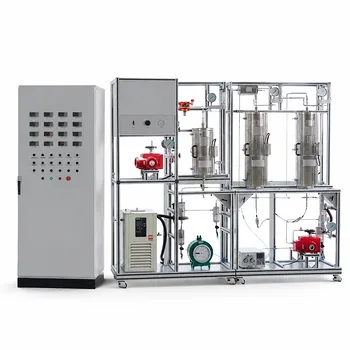
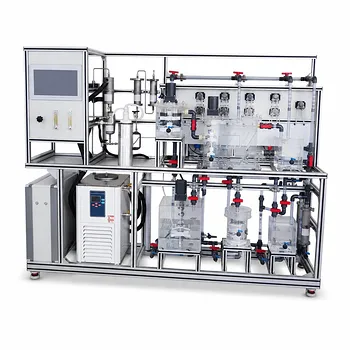
The definitive answer to which separation stages and product fractions students must analyze in a coal liquefaction pilot plant centers on a sequential fractionation protocol.
First, a solvent extraction cascade uses benzene (or toluene) to split the raw liquefaction product into solubility classes. Second, the benzene-soluble oil is subjected to fractional distillation to produce two boiling-point cuts: light oil (boiling below 200 °C) and middle oil (200–325 °C). Within these macroscopic fractions, students must characterize detailed chemical sub‑fractions—acidic oils like phenols and cresols, basic oils such as pyridines and anilines, and neutral oils rich in aromatics in the light oil, while the middle oil demands analysis of multi‑ring aromatics, naphthenes, and higher‑boiling alkanes.
The analytical heart of the exercise is not simply listing fractions; it is grasping that the solvent‑extraction step separates by chemical functionality/polarity, and the distillation step separates by volatility. Together, these two orthogonal separation methods give students a complete view of the product slate and allow them to connect pilot‑plant operation directly to fundamental thermodynamics and mass transfer.
The Solvent Extraction Stage: Isolating Solubility Classes
Coal liquefaction produces a complex, viscous mixture. A single distillation cannot handle the heaviest, most polar material. The pilot plant must therefore begin with a sequential solvent extraction to fractionate by solubility.
Benzene‑Soluble vs. Benzene‑Insoluble
The first extraction uses benzene (or an equivalent aromatic solvent).
The benzene‑soluble portion is the mobile oil fraction that can be further distilled.
The benzene‑insoluble residue contains the heaviest, most condensed aromatic structures and mineral matter.
This cut is collected as a distinct solid fraction for subsequent analysis of char conversion and coke‑like material.
Pyridine‑ or Quinoline‑Soluble Substances
To classify the benzene‑insoluble residue, a second extraction with a stronger solvent such as pyridine or quinoline is employed.
The pyridine‑soluble but benzene‑insoluble portion corresponds to pre‑asphaltenes; the pyridine‑insoluble residue represents carboids and unreacted coal.
Students should measure the mass distribution across these solubility classes to evaluate the severity of hydrogenation and the extent of coal conversion.
The Distillation Stage: Fractionating the Benzene‑Soluble Oil
Once the heavy insolubles are removed, the benzene‑soluble liquid can be safely processed in a distillation pilot plant. This stage is where students directly apply column design and tray‑efficiency principles.
Cut Points and the Two Primary Fractions
The fractionator is operated to produce two key boiling‑point cuts:
- Light Oil (boiling point < 200 °C): analogous to a naphtha/light distillate.
- Middle Oil (200–325 °C): analogous to a diesel or gas oil fraction. With the correct side‑draw points and receivers, students sample the overhead, side‑stream, and bottoms to measure true boiling point curves and compare them with the design specifications.
Connecting Pilot‑Plant Data to Theoretical Stages
During steady‑state operation at a fixed reflux ratio, students record tray temperatures and product compositions.
Using shortcut Fenske‑Underwood equations, they calculate the minimum theoretical stages and the actual required stages for the separation.
By comparing these theoretical values against the physical number of trays in the pilot plant, they determine overall tray efficiency—a direct quantification of real‑world hydrodynamics and mass transfer limitations. (For example, a column needing 9.6 theoretical stages while having 10 actual trays yields an efficiency of 96%, immediately sparking a discussion on entrainment and weeping.)
Product Fractions and Their Chemical Fingerprints
The real educational value lies in analyzing the chemical “fingerprint” of each cut, not just its bulk properties.
Light Oil: Acidic, Basic, and Neutral Oils
Students perform extraction and titration on the light oil to quantify three functional groups:
- Acidic oils: phenols and cresols, which originate from the oxygen‑containing structures in the coal. These are valuable as chemical feedstocks but can cause corrosion and must be removed from fuel streams.
- Basic oils: pyridines, anilines, and other nitrogen‑heterocyclic compounds. Their concentration is a direct indicator of denitrogenation requirements.
- Neutral oils: single‑ring aromatics, olefins, and paraffins that make up the bulk of the light oil’s energy content and octane/ cetane potential.
Middle Oil: Multi‑Ring Aromatics and Naphthenes
The middle oil is richer in polycyclic aromatic hydrocarbons (PAHs), naphthenes, and long‑chain alkanes.
Students determine the hydrogen‑to‑carbon ratio and aromaticity (e.g., by NMR or empirical correlations). A high aromatic content signals the need for further hydroprocessing, while a higher naphthene/paraffin balance indicates successful hydrogen transfer during liquefaction.
Understanding the Trade‑offs and Practical Limitations
Objectively assessing the separation sequence reveals several challenges students must learn to navigate.
Solvent Extraction Challenges
The benzene‑insoluble but pyridine‑soluble fraction is often sticky and difficult to filter.
Complete removal of solvent from the solid residue requires careful drying, and pyridine’s toxicity demands rigorous engineering controls.
The mass balances in these extractions are sensitive to incomplete settling, so students must evaluate the extraction stage efficiency by comparing the theoretical stage count from a ternary diagram to the physical mixer‑settler stages available.
Distillation Column Operability with Coal Liquids
Coal‑derived oils contain solids carry‑over and reactive compounds that can foul trays and block sample lines.
A high reflux ratio may be required to achieve a clean split, but this increases energy consumption and reduces throughput.
Students must be taught to recognize the signs of premature flooding or weeping and to adjust the preheater temperature to avoid thermal cracking of sensitive components.
Selecting the Right Analytical Depth
Not every fraction needs a full chemical analysis.
If the educational goal is to demonstrate distillation principles alone, a simple refractive index or density cut may suffice.
If the goal is to connect upgrading chemistry to product value, then the full speciation into acidic, basic, and neutral oils is essential. The pilot‑plant configuration—specifically, the availability of side‑stream receivers and in‑line analyzers—must match the learning objective.
Making the Right Choice for Your Educational Objective
The exact configuration of the coal liquefaction pilot plant should be driven by what you want students to learn:
- If your primary focus is demonstrating unit operations fundamentals: Equip the plant with a robust distillation column, multiple thermocouples, and sample ports at several tray heights. Run the benzene‑soluble oil only, measure tray efficiency, and show how reflux ratio affects light/middle oil split.
- If your primary focus is the chemistry of coal conversion: Include a full solvent extraction train (benzene, then pyridine) with mass balance audits. Analyze the light oil for acid/base components and the middle oil for aromatic types to link feedstock properties to product quality.
- If your primary focus is process integration and troubleshooting: Operate both stages sequentially. Have students diagnose column fouling, pump cavitation from viscous preheater feeds, and the impact of poor solvent mixing on extraction yield—transforming the plant into a real industrial problem‑solving environment.
By aligning the pilot‑plant configuration with these learning objectives, students leave with not just a list of fractions, but a working understanding of why each separation stage exists and how it serves the larger goal of converting solid coal into transportable, upgradable liquids.
Summary Table:
| Separation Stage | Separation Method | Key Fractions Isolated | Primary Analysis & Metrics |
|---|---|---|---|
| Solvent Extraction | Solubility/Polarity (Benzene & Pyridine) | Solubility classes (asphaltenes, pre-asphaltenes, carboids) | Mass balance, severity of hydrogenation, coal conversion rate |
| Fractional Distillation | Volatility (Boiling point cuts) | Light oil (<200°C) & Middle oil (200–325°C) | Column tray efficiency, distillation curves, Fenske calculations |
Elevate Your Engineering Programs with LABPARK Pilot Plants
Are you looking to provide students and researchers with hands-on, industry-ready experience? LABPARK designs and supplies high-quality, reliable Educational and Vocational Unit Operations Pilot Plants tailored for universities, research institutes, and enterprises.
Our systems span key engineering disciplines:
- Chemical Engineering: Advanced setups for coal liquefaction, distillation, extraction, and thermodynamics.
- Bioprocess & Biotech: Scale-up systems, bioreactors, and downstream processing equipment.
- Environmental & Water Treatment: Comprehensive pilot plants for wastewater treatment and purification technologies.
Equip your lab with robust, safely engineered tools that turn theoretical thermodynamics into real-world practice. Contact LABPARK today to discuss your laboratory configuration needs!
Related Products
- Carbon Dioxide Hydrogenation Methanol Synthesis Educational Unit Operations Pilot Plant
- Carbon Material Thermal Pretreatment Multiphase Separation Educational Pilot Plant
- Bench Scale Carbon Dioxide Capture Educational Unit Operations Pilot Plant
- Multi-Modal Distillation Unit Operations Training Pilot Plant
- Solid Waste Pyrolysis and Refining Educational Pilot Plant for Unit Operations
People Also Ask
- How do temperature variations affect CO2 transport models in pilot plants? Model vs Reality
- Why is a purge system necessary when operating a gas recirculation loop in a methanol synthesis pilot plant? (Guide)
- How do temp & pressure affect methanol synthesis pilot plants? Optimize equilibrium and catalyst performance.
- How do CVD parameters affect stoichiometry and phase purity? Optimize thin film deposition.
- Why do modern methanol pilot plants operate at lower pressures? Catalyst & Feed Requirements Explained