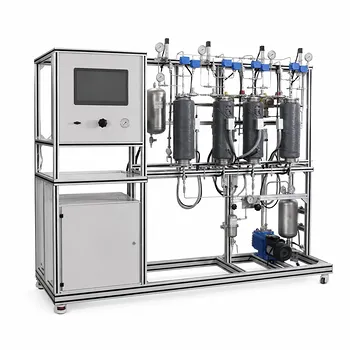
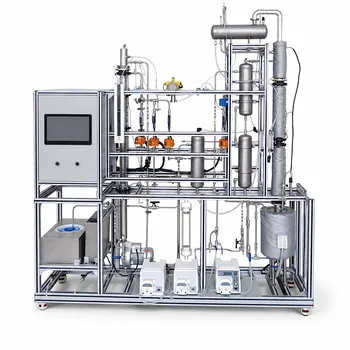
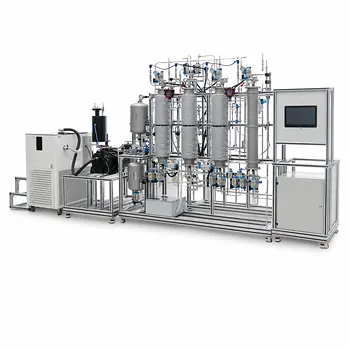
The core unit operations for studying NOx and exhaust gas emissions in environmental pilot plants are gas-phase catalytic reactors for selective catalytic reduction (SCR), gas-liquid absorption columns (scrubbers), and packed-bed adsorption units. These systems let you precisely manipulate gas flow, temperature, and pollutant concentration to evaluate catalyst performance, mass transfer efficiency, and breakthrough behavior under controlled conditions. Advanced pilot plants may also incorporate biofilters and low-temperature thermal separators, forming a complete toolkit for characterizing—and ultimately scaling—industrial emission control technologies.
Pilot plants become your crucible for turning emission data into a scalable control strategy. While catalytic SCR dominates NOx abatement, the smart pilot design integrates complementary unit operations—absorption, adsorption, biofiltration, and thermal separation—to mirror the real complexity of exhaust streams and reveal the kinetic, thermodynamic, and mass transfer limits you will face at full scale.
Catalytic Gas-Phase Reactors: The Front Line for NOx
Why SCR Reactors Are the Benchmark for Nitrogen Oxides
Environmental pilot plants use Selective Catalytic Reduction (SCR) reactors as the primary unit operation for NOx control. These gas-phase catalytic reactors introduce a reductant—typically ammonia—over a catalyst bed, converting nitrogen oxides into harmless nitrogen and water.
The pilot reactor allows you to decouple thermodynamic feasibility from kinetic reality. While many NOx reduction reactions are spontaneous at room temperature, they demand high temperatures and catalysts to reach practical reaction rates, and the pilot plant is where you map that temperature-activity curve for each catalyst formulation.
Testing Catalyst Substrates and Operating Conditions
The pilot unit gives you direct control over gas flow rate, inlet NOx concentration, and temperature profile. You can swap monolithic, pelleted, or washcoated catalyst substrates and measure conversion efficiency under transient and steady-state conditions.
Researchers use these reactors to generate kinetic models of pollutant abatement. By varying space velocity and monitoring ammonia slip, you establish the limits of conversion—critical information for designing industrial-scale SCR systems without over-sizing or under-dosing reagent.
Gas-Liquid Absorption: Scrubbing Soluble Pollutants at Scale
How Pilot Scrubbers Model Industrial Gas Washing
For large-volume waste gas streams containing soluble contaminants, pilot plants deploy gas-liquid absorption columns (scrubbers). These columns contact the gas with a liquid solvent—water, alkaline solutions, or organic solvents—to physically or chemically wash out pollutants like sulfur dioxide, acid gases, or trace nitrogen species.
The pilot scrubber lets you study mass transfer efficiency as a function of packing type, liquid-to-gas ratio, and residence time. By measuring concentration profiles along the column, you can validate design correlations and predict full-scale performance with confidence.
Parameter Sensitivity and Solvent Regeneration
You can vary solvent composition, pH, and temperature to optimize pollutant removal while monitoring pressure drop across the column—a key driver of operating cost. Many pilot setups also integrate a solvent regeneration loop, using thermal or stripping methods to evaluate the energy penalty of solvent recycling, a critical factor in identifying economically viable absorption processes.
Adsorption: Precision Capture of Trace Contaminants
Why Packed-Bed Adsorbers Excel at Low-Concentration Gases
When you’re dealing with low-concentration or trace toxic gases that aren’t economical to scrub, pilot plants turn to packed-bed adsorption units. These columns contain solid adsorbents—activated carbon, zeolites, or metal-organic frameworks—that selectively capture pollutants via physisorption or chemisorption.
The pilot adsorber is your tool for generating breakthrough curves: the time-resolved concentration of pollutant at the bed outlet. This single curve encodes the dynamic adsorption capacity, mass transfer zone length, and bed utilization efficiency—non-negotiable parameters for designing industrial adsorption systems.
Adsorbent Regeneration and Cycling
Pilot adsorption units can also simulate thermal or vacuum desorption cycles. By swinging temperature or pressure, you study the regeneration efficiency and the adsorbent’s long-term stability. This cycle-to-cycle analysis reveals whether an adsorption process can be economically viable or whether competitive co-adsorption of moisture or other gases will cripple performance in the real exhaust stream.
Biological and Thermal Systems for Niche Exhaust Streams
Biofilters for Biodegradable Vapors
For gas streams laden with biodegradable volatile organic compounds or odorous substances, pilot plants incorporate biofilters. These units pass the exhaust through a packed bed of organic or inert media hosting a microbial biofilm. The pilot biofilter allows you to measure removal efficiency versus loading rate, pressure drop evolution, and the time needed for the microbial community to acclimate.
Low-Temperature Thermal Separation
Low-temperature thermal separation systems—such as condensation traps or cryogenic units—find a role when recovering valuable components from dilute gas streams. In a pilot context, these units help you evaluate whether condensation can cost-effectively pre-concentrate pollutants before a final treatment step, or even recover a saleable product, turning an emission into a revenue stream.
How Pilot Plants Uncover the Thermodynamic-Kinetic Gap
Moving Beyond Feasibility to Practical Operation
A critical function of the pilot plant is to bridge the gap between thermodynamic spontaneity and kinetic reality. Reactions like NO reduction by CO are thermodynamically favored at low temperatures, but only the pilot reactor—with its ability to scan temperature, residence time, and catalyst composition—shows you how much activation energy you must supply to approach equilibrium conversion.
By studying multiple catalyst beds and gas flow rates, you learn to optimize contact time and temperature to minimize the emission without wasting energy. The pilot plant transforms emission control from a theoretical exercise into a robust, scalable operating window.
Unit Operations Working in Tandem
Real exhaust streams are mixtures. The pilot plant lets you link unit operations in a treatment train: an SCR reactor for NOx, followed by a scrubber for acid gases, and finally an adsorption column to polish trace toxics. Running these together reveals interactions—like changes in gas temperature or humidity—that single-unit tests miss, and helps you sequence the train for maximum technical and economic performance.
Understanding the Trade-offs in Emission Control Pilot Plants
Selectivity vs. Conversion in Catalytic Systems
SCR catalysts can promote side reactions, such as oxidation of SO₂ to SO₃ or formation of N₂O, a potent greenhouse gas. Your pilot study must weigh high NOx conversion against the risk of generating secondary pollutants, and this selectivity-vs-activity balance changes with temperature and catalyst formulation.
Pressure Drop and Energy Penalty
Every added unit operation—deeper catalyst beds, finer packing in scrubbers, longer adsorption columns—increases pressure drop. In a pilot plant, you can quantify this incremental energy cost. The insight is often sobering: the electricity needed to push gas through an overly aggressive treatment train can outweigh the environmental benefit, forcing you to rethink bed geometry or solvent viscosity.
Dynamic Response and Operational Complexity
Pilot plants reveal transient behavior that steady-state models ignore. Adsorption beds show breakthrough curves that shift with humidity and temperature; biofilters take days to recover from a shock load. These dynamics matter when the full-scale plant must handle startup, shutdown, and load-following of the upstream process. Your pilot data exposes the operational complexity and informs control strategies before an expensive full-scale investment is committed.
Making the Right Choice for Your Emission Study
The unit operation you prioritize in a pilot plant depends on the pollutant profile, concentration, and your ultimate scale-up goal. Choose your weapon of investigation based on the problem, not the hardware.
- If your primary focus is controlling NOx in oxygen-rich exhaust: Start with an SCR catalytic reactor. Map the temperature, space velocity, and ammonia dosing window to avoid slip, and always screen for N₂O byproduct formation.
- If your primary focus is removing water-soluble acid gases or alkaline vapors: Deploy a gas-liquid absorption column. Vary the solvent chemistry and liquid-to-gas ratio to maximize mass transfer while measuring pressure drop and solvent degradation.
- If your primary focus is polishing trace-level toxic or odorous compounds: Build a packed-bed adsorption unit. Generate full breakthrough curves under realistic humidity and co-contaminant conditions, and test the regeneration cycle you intend to use industrially.
- If your primary focus is treating biodegradable volatile organics or odorous streams: Integrate a biofilter into your pilot plant. Measure long-term removal efficiency and pressure drop trends to confirm the biological community can handle real-world variability.
- If your primary focus is understanding complete treatment train interactions: Run catalytic, absorption, and adsorption units in series. This integrated setup reveals the hidden synergies and pain points—like temperature quenching or solvent aerosol carryover—that define plant reliability.
Master these pilot-scale unit operations, and you move beyond theoretical compliance. You gain the operational intuition to design emission control systems that are not just effective, but resilient, energy-conscious, and economically grounded.
Summary Table:
| Unit Operation | Primary Target | Key Testing Parameters |
|---|---|---|
| Catalytic SCR Reactor | NOx emissions | Temperature-activity curve, space velocity, ammonia slip |
| Gas-Liquid Scrubber | Soluble acid/alkaline gases | Mass transfer efficiency, liquid-to-gas ratio, pressure drop |
| Packed-Bed Adsorber | Trace toxic gases, VOCs | Breakthrough curves, dynamic capacity, regeneration cycles |
| Biofilter | Biodegradable VOCs, odors | Loading rate, biofilm acclimation, pressure drop |
Scale Up Your Emission Control Research with LABPARK
Bridge the gap between laboratory theory and industrial reality. LABPARK provides state-of-the-art Educational and Vocational Unit Operations Pilot Plants in chemical engineering, bioprocess & biotech, and environmental & water treatment.
Whether you are a university, research institute, or enterprise, our pilot systems are designed to help you optimize processes, analyze dynamic reactions, and train the next generation of engineers.
Contact LABPARK today to discuss your pilot plant requirements and get a tailored solution for your facility!
Related Products
- Thermal Desorption Exhaust Gas and Tail Water Treatment Educational Pilot Plant
- Fixed-Bed Chemical Reaction and Gas Dust Tar Removal Unit Operations Pilot Plant
- Bench Scale Carbon Dioxide Capture Educational Unit Operations Pilot Plant
- Methane Cracking Educational Unit Operations Pilot Plant
- Carbon Dioxide Absorption and Desorption Educational Pilot Plant for Carbon Capture Studies
People Also Ask
- How is the number of transfer units (N_OL) calculated and verified? Master Desorption Mass Transfer
- What are inline fluorescence sensor risks, and how can they be managed? Key Strategies
- Lime-Soda vs. Cation Exchange Softening: How Do Effluent Characteristics Compare in Pilot Plants?
- How is P, M, and B alkalinity applied in pilot plants? Prevent Boiler Scaling & Corrosion
- How do anodic & cathodic inhibitors protect heat exchangers? Optimize Your Water Treatment Pilot Plant