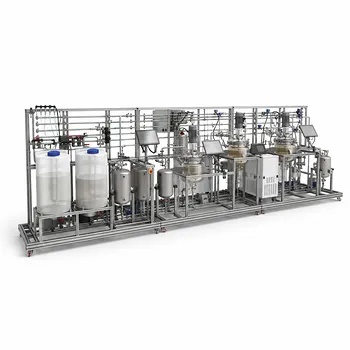
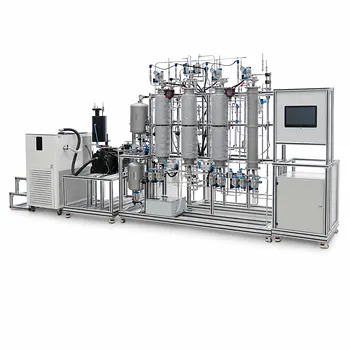
The definitive answer: For raw syngas cleaning and particulate removal in pilot plants, the required sequence of unit operations is: 1) cyclones and gravity settlers for bulk dry particulate removal, 2) fabric filters or electrostatic precipitators to capture fine particles, 3) wet scrubbers to eliminate residual dust and dissolve trace chemical impurities, and 4) acid gas removal (AGR) units to strip out sulfur compounds and CO₂.
The core challenge of raw syngas cleaning is that a single device cannot handle the wide spectrum of contaminants – from large gritty particles to invisible acid gases – efficiently. A sequential, multi-stage approach is non‑negotiable. This mirrors industrial reality while giving students and researchers a platform to study the interplay of mechanical separation, mass transfer, and chemical absorption at a manageable scale.
Why a Sequential Process Is Essential for Raw Syngas
Raw syngas exits a gasifier carrying a complex mixture of solid fines, sticky tars, volatile electrolytes (like NH₃ and HCl), and acid gases (H₂S, CO₂). Trying to remove all of these in one step would foul equipment, waste solvents, and yield poor data. The sequence is designed to protect downstream units and enable precise study of each separation mechanism.
Stage 1: Bulk Dry Collection with Cyclones and Gravity Settlers
The first line of defense targets the largest and most abrasive particles. Gravity settlers let particles drop out under their own weight in a low‑velocity zone. Cyclones use centrifugal force to spin heavier particles to the wall, where they fall into a collection hopper.
These dry, passive devices handle high dust loads without consuming media or liquids. They prevent blinding in the finer filters that follow and reduce the volume of wet sludge generated later. In a pilot plant, they demonstrate how particle size distribution, gas velocity, and geometry affect cut‑point and efficiency.
Stage 2: Fine Particulate Capture with Fabric Filters or Electrostatic Precipitators
After bulk removal, the gas still carries micron‑sized dust that can foul downstream absorbers and skew environmental measurements. Fabric filters (baghouses) physically trap particles on a porous fabric, while electrostatic precipitators (ESPs) charge particles and collect them on grounded plates.
Fabric filters offer high collection efficiency, even for sub‑micron particles, but they add significant pressure drop and require periodic cleaning pulses. ESPs operate with lower pressure drop and can handle sticky dust better, but they are sensitive to gas resistivity and humidity. At pilot scale, students can directly compare both technologies under changing loads and learn to optimize pulse‑cleaning cycles or voltage settings.
Stage 3: Wet Scrubbing to Remove Residual Dust and Soluble Impurities
Even after fine filtration, trace amounts of dust and a suite of water‑soluble contaminants remain. Wet scrubbers contact the gas with a scrubbing liquid (usually water or a mild alkaline solution) to capture the last particulates and dissolve acidic or basic trace gases like HCl, NH₃, and HCN.
In a pilot‑scale scrubber, cooling occurs simultaneously as the liquid sprays cool the gas from several hundred degrees down to near‑ambient. This quench creates a three‑phase system: gas, liquid water, and (if tars are present) a hydrocarbon phase. Students witness how volatile weak electrolytes partition between phases, react, and influence the scrubbing efficiency. The scrubber also protects the acid gas removal unit from residual solids that could plug column internals.
Stage 4: Acid Gas Removal (AGR) via Chemical or Physical Absorption
Once the gas is free of particulates, the focus shifts to molecular contaminants – primarily H₂S and CO₂. AGR units in pilot plants typically use packed or tray columns where the syngas flows counter‑currently to a solvent. Chemical solvents (e.g., amines) react with acid gases; physical solvents (e.g., Selexol) dissolve them under pressure.
This stage lets researchers study mass transfer coefficients, solvent loading, regeneration energy, and the selectivity between H₂S and CO₂. Because earlier stages have removed solids and soluble electrolytes, the AGR column can operate without foaming, fouling, or side reactions that would compromise data.
Understanding the Trade-offs in Pilot‑Scale Syngas Cleaning
Designing a teaching or research pilot plant forces you to confront real‑world compromises. No single configuration is ideal for every learning objective.
- Pressure drop vs. collection efficiency: Adding a fabric filter dramatically improves particulate removal but increases the blower power required. This trade‑off teaches energy integration concepts.
- Wet vs. dry operation: Wet scrubbers generate a contaminated liquid stream that itself requires treatment, complicating the overall flow diagram. A dry sorbent injection may sometimes replace the scrubber for acid gases, but it won’t capture ammonia as effectively.
- Solvent selection in AGR: Chemical solvents offer high purity at low pressure but demand substantial heat for regeneration. Physical solvents favor high‑pressure feeds. In a pilot plant, switching between them demonstrates the thermodynamic and kinetic differences.
- Scale‑up fidelity: Using miniature cyclones or fabric bags can lead to wall effects and poor representativeness. Students must learn to interpret data with this limitation in mind.
- Safety and toxicity: Even at pilot scale, syngas contains CO and H₂S, so the entire sequence must be sealed, vented, and monitored. The cleaning train’s layout directly impacts safety system design.
Making the Right Choice for Your Pilot Plant Goal
The sequence of unit operations should be tailored to the specific educational or research outcomes you need. Here’s how to guide your configuration:
- If your primary focus is particulate removal demonstration: Build a full dry‑side train (cyclone + fabric filter + ESP option) with variable dust feed and online particle counting. The wet scrubber can be a simplified column, and AGR might be simulated with a single‑component test gas.
- If your primary focus is multi‑phase mass transfer and wet scrubbing: Invest in a well‑instrumented scrubber capable of handling real syngas with soluble contaminants. Keep the upstream dry devices robust but simple to ensure a steady inlet condition.
- If your primary focus is end‑to‑end syngas conditioning for fuel synthesis: Integrate the full four‑stage sequence and add slipstreams for catalyst protection studies. The AGR unit must be fully regenerable, and you’ll need to handle liquid effluents.
- If your primary focus is environmental emission control compliance: Emphasize the scrubber‑AGR combination with continuous emissions monitoring. Use the fabric filter/ESP choice to teach best available technology selection for different local regulations.
Every step in the sequence exists to solve a specific problem that would otherwise damage the next unit – understanding this domino effect is the heart of a successful pilot‑scale study.
Summary Table:
| Stage | Unit Operation | Target Contaminants | Separation Mechanism |
|---|---|---|---|
| 1. Bulk Dry Collection | Cyclones & Gravity Settlers | Large, abrasive particulates | Gravity settling and centrifugal force |
| 2. Fine Particulate Capture | Fabric Filters or ESPs | Micron-sized dust and solid fines | Physical barrier or electrostatic charge |
| 3. Wet Scrubbing | Wet Scrubbers (Quench) | Residual dust & water-soluble gases (HCl, NH₃) | Liquid absorption and cooling |
| 4. Acid Gas Removal (AGR) | Packed/Tray Absorption Columns | H₂S and CO₂ | Chemical or physical solvent absorption |
Equip Your Lab with Advanced Pilot Plant Solutions
Maximize your research and teaching capabilities with LABPARK. We provide industry-grade Educational and Vocational Unit Operations Pilot Plants in chemical engineering, bioprocess & biotech, and environmental & water treatment tailored for universities, research institutes, and enterprises.
Whether you need to demonstrate complex gas cleaning sequences or study multi-phase mass transfer, our highly instrumented systems deliver the scalability and safety your projects demand.
Contact LABPARK today to discuss your custom pilot plant configuration!
Related Products
- Fixed-Bed Chemical Reaction and Gas Dust Tar Removal Unit Operations Pilot Plant
- Natural Product Extraction Unit Operations Training Pilot Plant
- Multi-Functional Drying Educational Unit Operations Pilot Plant
- Solid Waste Pyrolysis and Refining Educational Pilot Plant for Unit Operations
- Green Anhydrous Ethanol Purification Extractive Distillation Unit Operations Training Pilot Plant
People Also Ask
- When to transition from PID to adaptive control in pilot plants? Key process indicators.
- How do deviations in estimating latent heat impact pilot plant thermal systems? Avoid hardware mis-sizing.
- Why Compare Predicted and Experimental Excess Enthalpy? Key to Accurate Pilot Plant Scale-up
- Why Use PTFE & Hastelloy in Chemical Pilot Plants? Prevent Corrosion & Ensure Safety
- How to study gasification in pilot plants? Compare exit gas composition & efficiency