The sealing issues you must monitor in gas separation training units center on chemical incompatibility, dimensional instability, and mechanical stress at the tubesheet-membrane junction. A primary threat is the resin system used to form the tubesheet—epoxy, silicone, or urethane—reacting with the membrane polymer to cause solvency or plasticization, which can crack the thin selective skin and create gas leaks. Beyond chemistry, you must carefully track curing shrinkage, material swelling during gas exposure, and temperature-induced stress, as these physical changes can break the rigid seal between the membrane element and the pressure vessel. Consistent compression on O-rings and gaskets is equally critical to avoid bypass contamination.
The core challenge is preserving a gas‑tight boundary at the tubesheet under shifting chemical and physical conditions. A failure here compromises both safety and the reproducibility of data that makes a training unit educationally valuable.
Why Sealing Integrity is Non‑Negotiable
Gas‑separation training units handle flammable, toxic, or asphyxiating gases. A single leak at the tubesheet can expose operators to serious hazards.
Beyond safety, these units are designed to demonstrate real‑world industrial behavior. Even microscopic bypass will contaminate the permeate stream, producing inaccurate separation ratios. That directly undermines the learning objective.
Seal integrity is therefore the linchpin of both safety and data quality. You must treat it as a primary monitoring parameter.
The Separation Interface That Matters Most
The tubesheet is where the feed and permeate streams are physically separated. It is a rigid barrier, typically cast from a curable resin, that fixes the membrane element in place.
Any flaw at this interface—crack, debond, or chemical softening—creates a direct leak path between the high‑pressure feed and low‑pressure permeate sides. Monitoring this interface is the single most effective way to protect the unit’s function.
The Tubesheet–Membrane Interface: A Chemical Battleground
The most insidious problems start at the molecular level. Resin compatibility with the membrane polymer is not a luxury; it is a baseline requirement.
Solvency and Plasticization of the Membrane Skin
Some sealant components can act as solvents or plasticizers for the thin, dense skin of the membrane. When that happens, the polymer swells and loses its rigid structure.
The result is micro‑cracking. Even a hairline fracture that is invisible to the eye provides a path for gas to bypass the selective layer, making the whole separation loop unreliable. Regular pressure‑decay tests can catch this early.
Curing Reactions That Undermine the Seal
Resins like epoxy, silicone, and urethane cure through exothermic reactions and can shrink significantly. If the shrinkage pulls the resin away from the membrane fiber or the vessel wall, a gap forms.
This gap is a ready‑made leak. Operators should track the resin system’s published shrinkage coefficient and, where possible, use formulations designed for low‑shrink gap filling.
Mechanical and Environmental Stress Factors
Chemical compatibility is only one piece of the puzzle. Physical stresses add layers of risk that must be monitored continuously.
Swelling During Gas Exposure
When exposed to high‑pressure gases like carbon dioxide or hydrocarbon vapors, many polymers and even some cured resins swell. If the resin swells at a different rate than the membrane or the pressure vessel, the differential strain concentrates at the bond line.
This can slowly wedge the seal apart, especially under pressure cycling. Swelling is particularly dangerous because it is insidious—performance may degrade over days or weeks, not minutes.
Temperature‑Induced Stress
Training units often run across a range of temperatures to simulate different process conditions. Materials with mismatched thermal expansion coefficients will fight each other.
The tubesheet resin, metal housing, and membrane polymer all expand and contract at different rates. That thermal cycling can fatigue the seal and eventually cause a cohesive failure within the resin or an adhesive failure at the interface.
The Unsung Heroes: O‑rings and Gaskets
Beyond the tubesheet, sealed joints in the module housing rely on O‑rings and gaskets. Consistent compression loading on these elements is vital. Thermal cycling and vibration can relax the load over time, opening a slow leak.
A quick visual inspection and occasional re‑torquing (where the design allows) will prevent these secondary leak paths from contaminating your data.
The Role of Membrane Material Selection
The membrane material itself can amplify or mitigate sealing risks. While training units may test advanced formulas, the choice of membrane has a direct impact on seal stability.
Why “Designer Polymers” Magnify Risk
Modified fluorinated polyimides and other advanced polymers show spectacular selectivity in short lab tests. However, under continuous operation they often suffer from plasticization—swelling that permanently alters the polymer’s free volume and selectivity.
When the membrane itself softens and changes shape, it transfers unpredictable strain to the tubesheet seal. Physical aging (a gradual loss of micro‑voids) further shifts the mechanical baseline. This makes it extremely difficult to maintain a reliable seal over the run time needed for training.
The Case for Industry‑Standard Materials
The stability you need in a training unit comes from using proven polymers: cellulose acetate, polysulfone, and commercial polyimides. These materials resist plasticization under typical gas sweetening or hydrogen recovery conditions far better than experimental alternatives.
A stable membrane translates directly to a stable tubesheet seal. By minimizing polymer swelling and aging, you remove a major variable that drives seal failures. This ensures the unit yields reproducible, educationally meaningful data.
Understanding the Trade‑offs
No single resin system or membrane choice eliminates all monitoring burdens. There are always trade‑offs.
Resin Selection: Speed vs. Stability
- Epoxies offer high strength and chemical resistance but shrink more during cure and can be brittle.
- Silicones remain flexible over a wide temperature range and absorb differential expansion well, but they may swell in hydrocarbon‑rich streams.
- Urethanes cure quickly and bond well to many surfaces, yet they can be sensitive to moisture and amine‑containing gases that cause degradation.
Selecting a resin means balancing these properties against the specific gas mixture and temperature profile of your training protocol. You must then monitor the corresponding failure mode: cracking, swelling, or hydrolysis.
Membrane Performance vs. Mechanical Stability
Advanced membranes promise better separation but introduce sealing risk through plasticization and aging. Standard materials deliver stability but may have lower ideal selectivity. In a training unit, where reproducibility and safety are paramount, the conservative choice is usually the correct one. The seal you can maintain over a full teaching cycle is the seal that teaches the right lesson.
Making the Right Choice for Your Training Unit
Your monitoring strategy must align with your operational goals. Apply these targeted practices.
- If your primary focus is operator safety: Prioritize a resin system with proven low‑outgassing and minimal swelling in your gas stream, and implement weekly pressure‑decay tests and O‑ring inspections.
- If your primary focus is generating reproducible training data: Use an industry‑standard membrane like cellulose acetate or polysulfone, document all curing shrinkage data for your tubesheet resin, and run at a steady temperature to minimize thermal stress.
- If your primary focus is demonstrating advanced concepts with high‑performance polymers: Accept the added monitoring burden. Install in‑line gas analyzers on the permeate to catch early bypass, and plan for frequent mid‑campaign seal integrity verification.
Your tubesheet seal is the quiet guardian of the entire gas‑separation lesson—respect its chemistry, its physics, and its limits, and it will reliably reveal the principles your trainees need to master.
Summary Table:
| Resin Type | Key Advantages | Primary Monitoring Risks |
|---|---|---|
| Epoxy | High strength, chemical resistance | Curing shrinkage, brittleness |
| Silicone | High flexibility, wide temperature range | Swelling in hydrocarbon-rich streams |
| Urethane | Fast cure, strong adhesion | Moisture sensitivity, amine degradation |
Optimize Your Engineering Labs with LABPARK
Ensure teaching safety and data precision in your lab. LABPARK provides state-of-the-art Educational and Vocational Unit Operations Pilot Plants in chemical engineering, bioprocess & biotech, and environmental & water treatment designed for universities, research institutes, and enterprises.
Contact LABPARK today to consult with our experts and find the ideal, worry-free pilot plant for your curriculum!
Related Products
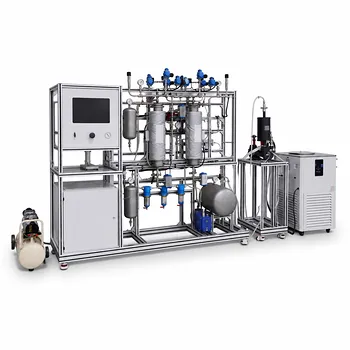
- Bench Scale Dual Column Gas Separation and Capture Educational Pilot Plant
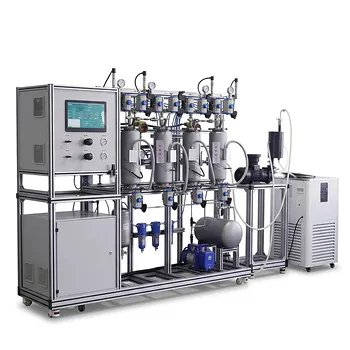
- Gas-Solid Heterogeneous Separation Demonstration Educational Unit Operations Pilot Plant
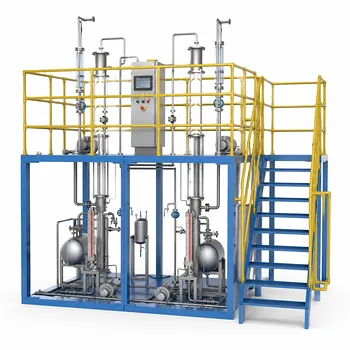
- Multi-Component Gas Pressure Swing Adsorption Pilot Plant for Unit Operations Education
- Dual-Mode Gas Absorption and Desorption Unit Operations Training Pilot Plant
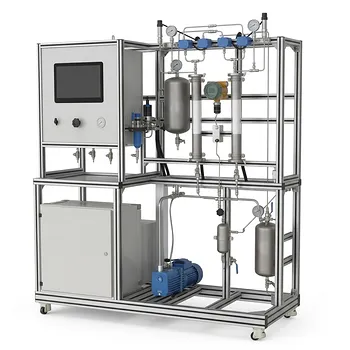
- Pressure Swing Adsorption Educational Unit Operations Pilot Plant
People Also Ask
- What are the key thermodynamic considerations for gas mixture modeling? Expert Guide
- Which membrane materials are commonly used in gas separation pilot plants, and how is membrane fouling typically managed?
- Why Are Binary Interaction Parameters Critical for Gas Separation Pilot Plants? Avoid Costly Failures
- Why is Graham's Law critical for gas separation in pilot plants? Master Unit Operations Design
- How does the separation mechanism of gas permeation differ from liquid membrane processes? Pilot Plant Guide