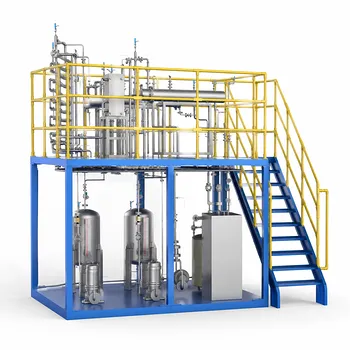
Safety is never a barrier to learning—it’s the foundation that enables it. In a university pilot plant, the required safety protocols and preparation steps form a clear, non-negotiable sequence: complete formal safety training, pass a safety examination, sign a commitment form, familiarize yourself with every emergency system, submit a thorough pre-lab report, and don the correct personal protective equipment. These measures are not bureaucratic hurdles; they translate industrial process safety principles directly into the educational environment.
The essential preparation for pilot plant operation is a layered defense: education, verification, environmental awareness, planning, and protection. This systematic approach keeps students safe while instilling the professional mindset expected in any chemical or bioprocess facility.
The Four Pillars of Pre-Operational Preparedness
1. Formal Safety Training and Commitment
All students must undergo rigorous safety education before entering the lab. This training covers chemical hazards, thermal risks, biological exposure potential, and the specific dangers of the equipment they will use.
Training is not passive. Every student must pass a safety examination that verifies their grasp of the protocols. They then sign a safety commitment form, physically acknowledging their responsibility. This step transforms abstract rules into personal accountability and mirrors the sign-off procedures used on industrial sites.
2. Emergency Systems Mastery
Location and operation knowledge is critical. Students must be able to locate and operate master shut-off valves for water, electricity, and gas within seconds.
They must also identify the nearest fire safety gear, eyewash stations, emergency showers, and first-aid kits. Walking the lab floor to build muscle memory for these stations is a non-negotiable part of preparation. In a real event, hesitation is not an option.
3. The Pre-Lab Report: Thinking Before Doing
Operating a pilot plant without a written plan is prohibited. Students complete a pre-lab report that reviews the experiment’s principles, procedural steps, and specific precautions.
This report is where hazard identification becomes a skill. A thorough plan goes beyond simply repeating the manual; it requires you to inventory all chemicals, analyze the process for potential leaks or unexpected reactions, inspect the planned equipment for corrosion, and verify the compatibility of storage containers. Doing this work upfront shifts safety from a reactive rule-follower’s checklist to an active engineering mindset.
4. Personal Protective Equipment: The Last Line of Defense
No one enters the operating area without the correct PPE. The baseline requirements are safety goggles that seal against splashes, a long-sleeved cotton lab coat, and closed-toe leather shoes.
Glove selection is task-specific. Chemical-resistant gloves (nitrile, butyl rubber, or neoprene) must match the substances in play. Heat-resistant or cut-resistant gloves are added for thermal or sharp-surface operations. Under high-risk conditions advised by supervisors, additional face shields or gas masks become mandatory. PPE is not a uniform; it is a calculated layer chosen to stop the specific hazard that remains after all preceding safety measures have been applied.
The Deeper Framework: From Checklists to a Safety Culture
Hazard Identification as a Skill, Not a Task
A true safety culture requires students to see the lab as a system. A systematic approach demands a current chemical inventory and review of material safety data sheets (MSDS) to understand toxicological properties.
This extends to inspecting machinery for signs of failure, evaluating storage areas for chemical incompatibility, and identifying potential ignition sources or toxic release points. When these steps are embedded in the pre-lab report, students learn to identify danger before it appears—a habit that defines competent engineers.
The Multi-Layered Safety Concept
Educational pilot plants are built on the same protective layers used in industry. At the base, inherent safety in design minimizes hazards through proper material selection and pressure-rated components.
Above that sit basic process control systems that regulate temperature, pressure, and flow. If deviations occur, critical alarms alert the operator to intervene. Should a dangerous threshold be breached, automatic safety interlocks shut the system down. Finally, pressure relief valves and burst discs prevent catastrophic rupture. Understanding this layered defense teaches students that safety isn’t one gadget—it’s a philosophy designed into the hardware.
Infrastructure and Material Readiness
Even before starting, the lab environment must be verified. Utility parameters—voltage, cooling water flow, steam pressure, and ventilation—must match the pilot plant’s design basis to prevent operation failures.
Material choices matter deeply. Stainless steel (304 or 316) is critical for corrosive fluids, while transparent glass sections on columns allow visual observation of hydrodynamics without compromising chemical resistance. Knowing why these materials are chosen is part of the preparation that keeps both the experiment and the student safe.
Understanding the Trade-Offs
Any safety protocol involves compromise. Checklist-driven compliance can breed complacency if students start ticking boxes without engaging their judgment. Balancing thorough documentation with the need to develop situational intuition is a constant challenge.
PPE discomfort in a humid lab environment may tempt students to loosen goggles or roll up sleeves. Resistance must be met with clear reasoning, not just punishment, so students internalize the “why.” Additionally, the time and cost dedicated to expert-led training and equipment certification can reduce available pilot plant hours. Institutions must weigh resource investment against the depth of learning and cannot treat safety as a one-time tick. Residual risk remains, and the ultimate goal is to equip students to manage it intelligently, not to pretend it doesn't exist.
Making Safety Second Nature in Your Lab
Tailor these protocols to match your educational mission and the hazard level of your experiments.
- If your primary focus is building a compliance-first culture: Ensure every student passes a graded safety exam and signs a commitment before entry. Enforce a strict “no PPE, no entry” rule with zero exceptions.
- If your primary focus is developing real-world engineering judgment: Integrate systematic hazard identification steps into every pre-lab report. Require students to justify their glove and material choices based on chemical compatibility.
- If your primary focus is scaling to more hazardous experiments (high pressure, toxic gases): Validate that the pilot plant’s inherent safety design—material selection, relief systems, interlocks—matches the heightened risk, and conduct a thorough utility and ventilation assessment before the first run.
- If your primary focus is minimizing downtime and maintenance issues: Pre-verify chemical compatibility with all wetted parts and make post-lab utility line safety checks a mandatory step in the shutdown procedure.
When safety protocols become instinct, the lab transforms from a place of potential danger into a trusted engine for experiential learning.
Summary Table:
| Preparation Pillar | Key Focus | Student Actions |
|---|---|---|
| 1. Safety Training | Education & Verification | Pass safety exams and sign commitment forms. |
| 2. Emergency Systems | Location & Operation | Identify shut-offs, eyewash stations, and fire gear. |
| 3. Pre-Lab Report | Planning & Hazard ID | Review procedures, MSDS, and inspect equipment. |
| 4. Appropriate PPE | Physical Protection | Wear goggles, lab coats, and task-specific gloves. |
Build a Safer Educational Lab with LABPARK
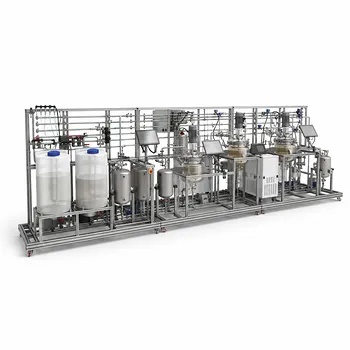
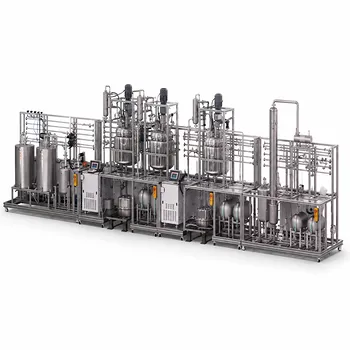
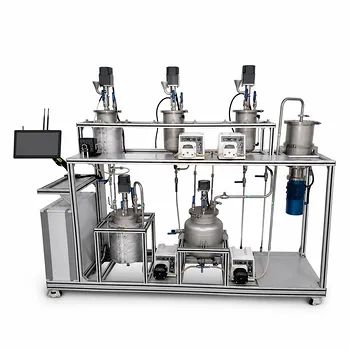
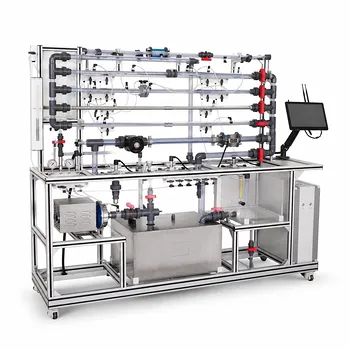
Ensure the highest safety standards in your engineering department. LABPARK provides state-of-the-art Educational and Vocational Unit Operations Pilot Plants in chemical engineering, bioprocess & biotech, and environmental & water treatment. Designed with inherent safety features—including automatic interlocks, relief valves, and robust material selection—our systems protect students at universities, research institutes, and training enterprises while delivering real-world process experience.
Ready to elevate your lab's safety and learning outcomes? Contact LABPARK today to explore our pilot plant solutions!
Related Products
- Natural Product Extraction Unit Operations Training Pilot Plant
- Fixed-Bed Chemical Reaction and Gas Dust Tar Removal Unit Operations Pilot Plant
- Ethyl Acetate Synthesis Unit Operations Pilot Plant for Practical Training
- Methanol Synthesis and Catalyst Performance Evaluation Educational Unit Operations Pilot Plant
- Electrolytic Hydrogen Production Educational Unit Operations Pilot Plant
People Also Ask
- How to Demo Solubility Sensitivity in SFE Pilot Plants? Practical Thermodynamics
- How do pilot plants differentiate physical vs chemical extraction? Enhance Chemical Engineering Training
- How are HTU and NTU applied to determine extraction column height? Guide to Pilot Plant Scaling
- How do fluid transport principles apply to pilot plant configuration? Optimize your unit operations.
- How can Hotelling's T² & Q statistics detect pilot plant abnormalities? Optimize Safety