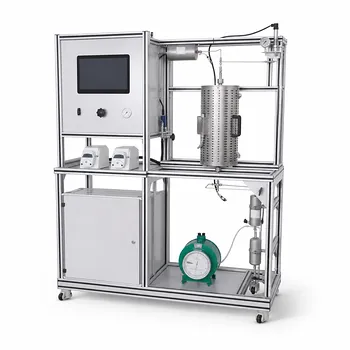
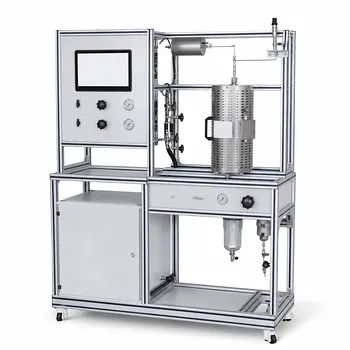
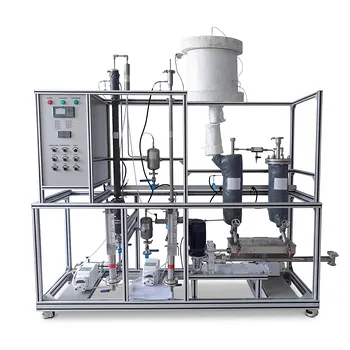
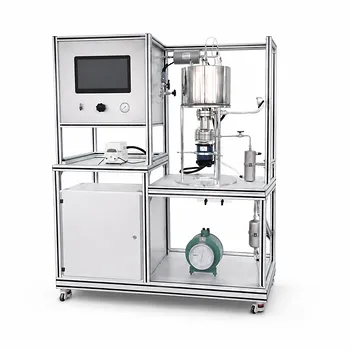
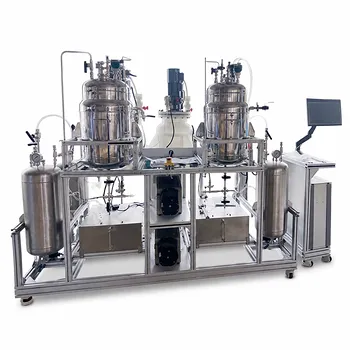
With hydrogen’s staggering flammability range and its ability to degrade metals, an educational high-pressure catalytic hydrogenation pilot plant demands an uncompromising marriage of specialized materials and layered safety systems. The core of the answer is that standard carbon steel reactors are entirely unsuitable due to high-temperature hydrogen attack, and must be replaced by Chromium-Molybdenum (Cr-Mo) alloy steels. In parallel, the plant must embed automatic nitrogen purging, certified pressure relief, hydrogen detection with explosion-proof electrics, and intelligent interlocks to protect students while making industrial chemistry tangible.
The fundamental challenge is containing an explosive, embrittling gas at elevated temperatures and pressures. Safety pivots on using Cr-Mo steels to prevent catastrophic material failure and on engineering a closed-loop safety architecture that never relies on a single barrier. Every design choice must answer the question: what happens if two things fail at once?
The Unique Hazards of High-Pressure Catalytic Hydrogenation
High-pressure hydrogen environments combine two relentless threats: the chemical reactivity of hydrogen with metals and the ever-present risk of explosion. Understanding these is the first step in designing a plant that is safe without being over-engineered.
Hydrogen’s Explosive Nature and Embrittlement Risk
Hydrogen gas has an extraordinarily wide explosion limit—from 4.10% to 74.2% in air. This means almost any leak can form a combustible mixture, not just in pockets but throughout a laboratory space. In an educational setting, where students are learning operational procedures, the likelihood of a minor release is higher, making management of gas concentration non-negotiable.
Even if no ignition occurs, hydrogen silently attacks the metal itself. Hydrogen embrittlement causes atomic hydrogen to diffuse into steel, reducing ductility and leading to sudden, brittle fracture under stress. A reactor wall that appears intact can fail without warning, a risk no teaching laboratory can accept.
High-Temperature Material Degradation
High-pressure hydrogenation reactions are exothermic and often run above 200°C. At these temperatures, metals lose significant mechanical strength. For instance, the tensile strength of low-carbon steel drops from 450 N/mm² at ambient temperature to just 210 N/mm² at 500°C. Designers must derate allowable stresses to calculate the proper wall thickness.
Worse, sustained load at high temperature causes creep deformation—a slow, permanent stretching that can rupture a vessel over time. That’s why vessel codes like ASME BPV restrict standard carbon steel entirely when design temperatures exceed 482°C (900°F). Even below that threshold, the combination of creep, high pressure, and hydrogen demands a much more robust metallurgy.
Material Selection: Why Alloy Steels Are Non-Negotiable
The reaction between hydrogen and the carbon in steel makes the material choice binary: you either use the right alloy or you risk a structural collapse.
The Failure of Carbon Steel
Standard carbon steel gets its strength from iron carbides. When hot, high-pressure hydrogen permeates the steel, it strips out carbon to form methane gas. This process, decarbonization, creates internal voids, intergranular cracking, and a massive loss of structural integrity. A reactor that was safe at startup can degrade within hours under hydrogen service, making carbon steel completely unacceptable for educational pilot plants where consistent safety margins are mandatory.
Chromium-Molybdenum (Cr-Mo) Steels as the Safeguard
To resist hydrogen attack, the reactor pressure boundary must be fabricated from alloy steels stabilized with chromium (Cr) and molybdenum (Mo). The chromium forms a protective, stable carbide layer that resists decarburization, while molybdenum raises the high-temperature strength and enhances creep resistance. Commonly specified grades include 1.25Cr-0.5Mo and 2.25Cr-1Mo steels. These materials are the industrial standard for hydroprocessing units and are equally essential in a scaled-down educational platform; any compromise here would introduce a latent, unacceptable failure mode.
Additional Material Considerations for Wetted Parts
Beyond the main reactor body, all piping, gaskets, and seals in contact with hydrogen, catalyst slurries, and reaction solvents must be chemically compatible. While Cr-Mo steel handles hydrogen, other components may require higher-grade stainless steels (304 or 316) if mineral acids or corrosive products are involved. For three-phase slurry systems using fine catalyst particles, internal surfaces must resist erosion. In all cases, material selection must account for the humid, often acidic, lab environment to prevent external corrosion that could obscure internal damage.
Integrated Safety Systems for Educational Settings
Material integrity is the passive defense. The active defense is a multilayered safety system that detects, isolates, and neutralizes hazards before a student is ever at risk.
Gas Handling and Purging
Before any reaction starts, the entire system must be purged of air with an inert gas—typically nitrogen—to eliminate explosive oxygen-hydrogen mixtures. Automatic nitrogen purging systems should be hardwired into the startup sequence, making it impossible to introduce hydrogen until oxygen levels are below a defined threshold. Post-reaction, the same system safely evacuates residual hydrogen.
Leak Detection and Emergency Shutdown
Hydrogen leakage detectors must be positioned at every potential release point—flanges, valve stems, and the reactor headspace. These sensors should trigger an immediate auditory and visual alarm, and automatically close solenoid valves on the hydrogen supply line. Complementing this, all electrical equipment in the vicinity must be explosion-proof, meaning enclosures and wiring are designed to contain any internal spark and prevent ignition of ambient gas.
Overpressure Protection
Overpressure can arise from a runaway exotherm, blocked lines, or simply operator error. The primary defense is a certified pressure relief valve sized to handle the full rated flow of the system. A secondary defense, such as a burst disc, provides redundancy if the relief valve fouls or fails. No educational pilot plant should ever rely on a single mechanical overpressure device.
Physical Safeguards and Interlocks
Even with all the above, an educational setting benefits from physical separation. Blast shields around the reactor zone protect students in the unlikely event of a vessel rupture. Integrated PLC control systems can enforce a cascade of interlocks: if agitator stops, cooling fails, or temperature exceeds a limit, the system can shut off hydrogen feed, ramp down heating, and initiate an emergency nitrogen purge automatically. This removes the burden of split-second decision-making from a novice operator.
Understanding the Trade-offs in an Educational Context
Building a student-safe hydrogenation pilot plant involves genuine tensions between safety, realism, and budget.
Using Cr-Mo steels and explosion-proof hardware adds significant upfront cost compared to a simple stainless steel vessel. However, the alternative—using carbon steel with a thin lining or relying on lower operating pressures—either introduces a time-dependent failure risk or strips away the very high-pressure effects you aim to teach. Some pilot plants scale down the pressure from industrial extremes (e.g., 200 bar) to a safer 25–50 bar range while maintaining the same thermodynamic principles; this reduces stored energy and allows the use of more transparent components, like armored sight glasses, for observing catalyst fluidization or gas-liquid dispersion. The compromise is a less industrial experience but a vastly increased safety margin for hands-on learning.
Another trade-off is complexity versus maintenance. Automated purging and interlock systems are essential but demand rigorous calibration schedules. If a school lacks the resources for this, the safety system can become a false reassurance. Therefore, the simplest reliable design—often favored in vocational settings—uses manual backup verifications alongside automation, ensuring students learn both modern control and foundational safety diligence.
Making the Right Choice for Your Goal
Your specific educational objectives will shape which aspects of this safety framework you prioritize.
- If your primary focus is maximizing student safety with limited infrastructure: Opt for a well-characterized, vendor-supplied system with a pre-certified Cr-Mo reactor, integral nitrogen purge, and double overpressure protection. Scale down pressure to the minimum that still demonstrates kinetic and mass-transfer principles clearly.
- If your primary focus is demonstrating true industrial high-pressure operation: Invest in a fully instrumented plant with a 2.25Cr-1Mo reactor, online gas analysis, and PLC-driven emergency shutdown. Ensure the safety concept is documented in a HAZOP study that students themselves can review as part of their learning.
- If your primary focus is flexibility for multiple reaction types (nitrile hydrogenation, fat hardening, etc.): Choose a modular design with a stirred slurry reactor that includes catalyst filtration capability. The material selection must then also account for the corrosiveness of the specific substrates, possibly requiring wetted parts in 316L stainless or even PTFE linings for acidic routes.
A well-designed educational hydrogenation pilot plant does not merely contain the reaction; it turns the very features that make hydrogen dangerous into an immersive lesson in industrial safety culture.
Summary Table:
| Hazard / Risk | Material Requirement | Active Safety System |
|---|---|---|
| Hydrogen Embrittlement & Decarbonization | Chromium-Molybdenum (Cr-Mo) alloy steels (e.g., 2.25Cr-1Mo) | N/A (Passive defense) |
| Explosive Gas Leaks (4.10%–74.2% H2) | Compatible wetted parts (316L SS, PTFE seals) | Auto N2 purge, H2 sensors, explosion-proof electrics |
| Overpressure & Runaway Exotherms | Correct wall-thickness (ASME-compliant design) | Certified relief valves, burst discs, PLC shut-off interlocks |
Bring Industrial-Grade Safety to Your Engineering Lab
Don't compromise on safety when teaching high-pressure chemical processes. LABPARK provides state-of-the-art Educational and Vocational Unit Operations Pilot Plants in chemical engineering, bioprocess & biotech, and environmental & water treatment for universities, research institutes, and enterprises.
Our systems feature robust metallurgy (like Cr-Mo steels), multi-layered safety interlocks, and explosion-proof designs to protect your students while providing hands-on, realistic experience.
Contact our engineering team today to customize a safe, reliable pilot plant for your institution!
Related Products
- Carbon Dioxide Hydrogen Methanol Synthesis Educational Unit Operations Pilot Plant
- Methanol Synthesis and Catalyst Performance Evaluation Educational Unit Operations Pilot Plant
- Crude Benzene Hydrogenation Educational Unit Operations Pilot Plant
- 100L Continuous Loop Hydrogenation Educational Unit Operations Pilot Plant
- Methane Cracking Educational Unit Operations Pilot Plant
People Also Ask
- How do temp & pressure affect methanol synthesis pilot plants? Optimize equilibrium and catalyst performance.
- Why is a purge system necessary when operating a gas recirculation loop in a methanol synthesis pilot plant? (Guide)
- Why do modern methanol pilot plants operate at lower pressures? Catalyst & Feed Requirements Explained
- What are the operational requirements for catalyst activation? Safe Methanol Pilot Plant Operation
- Why is the chemical plant startup schedule crucial? De-risk scale-up with pilot plants.