Controlling these two factors is the difference between a perfectly purified product and a failed batch. To operate Hydrophobic Interaction Chromatography (HIC) successfully in a bioprocess pilot plant, you must rigorously control salt concentration (both the type and the gradient) and column temperature. These parameters directly govern the strength of hydrophobic interactions: high salt concentrations drive protein binding to the resin, while a precisely decreasing salt gradient triggers selective elution. Because hydrophobic interactions are endothermic, even a 1–2 °C temperature drift can alter retention times and wreck your separation. Additionally, a robust regeneration protocol using chaotropic agents is non-negotiable for maintaining column life and process repeatability.
HIC is a delicate balance driven by salt and temperature. The deep need in a pilot plant is not just to bind and elute a protein, but to do so with reproducibility, scalability, and long-term media stability. Mastery of the salt gradient and temperature control, along with vigilant attention to pH, flow rate, and column cleaning, transforms HIC from a trial‑and‑error exercise into a reliable unit operation.
The Core Driving Force: Salt and the Hofmeister Series
The Mechanism of Salt-Promoted Binding
In HIC, high salt concentrations promote protein binding by increasing the surface tension of water, which strengthens the hydrophobic effect. The primary reference identifies ammonium sulfate as a key salt, sitting high on the Hofmeister series. These “kosmotropic” salts stabilize the structured water cage around hydrophobic patches on the protein surface, making it energetically favorable for the protein to shed water and adsorb onto the hydrophobic resin ligands.
Selecting and Controlling Salt Concentration
The pilot plant must control both the type of salt and its initial concentration with high precision. You will typically use a starting buffer with 1–2 M ammonium sulfate. Small deviations in molarity can shift the binding equilibrium, leading to low recovery or, conversely, irreversible precipitation. In‑line conductivity meters and precise buffer preparation systems are essential.
The Elution Gradient
Elution is achieved by decreasing the salt concentration. The primary reference makes clear that the gradient profile—whether step, linear, or a combination—determines resolution. A poorly formed gradient, caused by faulty pump calibration or mixing, results in peak tailing or overlapping impurities. Pilot‑scale systems must feature gradient validation routines to ensure the actual conductivity delivered to the column matches the programmed profile.
The Critical Role of Temperature Control
Why Temperature Is a First‑Order Parameter
Hydrophobic interactions strengthen as temperature rises. This means a protein that elutes sharply at 25 °C may smear across multiple fractions at 28 °C. The primary reference explicitly states that pilot plants must maintain stable temperature control. Temperature directly shifts retention times, selectivity, and even recovery yield. Ignoring this is a common cause of failed scale‑up.
Pilot Plant Implementation
To mitigate thermal variability, the chromatography system must include jacketed columns or integrated column ovens with temperature sensors at the inlet and outlet. Even a room’s diurnal temperature swing can introduce run‑to‑run inconsistency. For robust operation, set a control band no wider than ±0.5 °C and log temperature data alongside UV traces to troubleshoot anomalies later.
Additional Parameters for Robust Performance
pH and Protein Structural Integrity
Although HIC is less pH‑sensitive than ion‑exchange chromatography, the pH still must be controlled. The supplementary references underscore that extreme pH conditions denature proteins, exposing internal hydrophobic patches and causing unpredictable binding. For a pilot plant, maintain a pH that preserves the protein’s native conformation—typically within a narrow range near physiological conditions—using a buffered salt solution. Never assume that pH is irrelevant just because the separation relies on hydrophobicity.
Flow Rate and Residence Time
Flow rate is not explicitly detailed in the primary reference, but it is a universal chromatography parameter. In HIC, a flow rate that is too high reduces the time for hydrophobic interaction, degrading resolution. Too low, and productivity suffers. Pilot‑scale operations must balance these factors, typically targeting a residence time of 2–5 minutes. Because HIC media are often soft, excessive flow can also compress the bed, increasing backpressure and causing channeling.
Column Regeneration and Reusability
The primary reference mandates the use of regeneration agents like 6 mol/L urea or guanidine hydrochloride. Proteins and lipids that fail to elute during the salt gradient will accumulate, permanently altering column capacity. A standardized cleaning protocol—injecting a regenerant after every few cycles until the UV baseline returns to zero—prevents carry‑over and extends resin lifetime. This directly impacts process economics in a pilot facility.
Understanding the Trade‑offs in HIC Operation
Every controlled parameter presents a trade‑off. High salt concentrations maximize binding capacity but can cause protein precipitation if the salt concentration surpasses the point of “salting out.” Aggressive temperature control increases reproducibility but adds equipment cost and complexity. A wide operating temperature window might be acceptable for robust industrial proteins, but for labile biomolecules, tight control is mandatory.
A fast flow rate boosts throughput but at the expense of peak resolution and increased pressure drop. Over‑frequent regeneration with harsh chaotropes can strip functional ligands from the resin, reducing bed life. Additionally, relying solely on the primary reference’s two parameters (salt and temperature) without monitoring pH and degassing your buffers can lead to bubble formation that distorts flow patterns. The pilot plant operator must balance these factors against the specific purification goal—whether that is maximum purity, maximum recovery, or minimum cycle time.
Making the Right Choice for Your Pilot Goal
Your control strategy for HIC must align with the ultimate objective of the pilot run. Use the following as a decision framework:
- If your primary focus is maximizing product purity: Tighten temperature control to ±0.2 °C and use shallow, precisely formed linear salt gradients. Validate gradient accuracy with conductivity measurements at the column inlet, not just at the pump outlet.
- If your primary focus is maximum recovery of active protein: Keep the pH and buffer composition strictly controlled to maintain native protein structure. Avoid the highest salt concentrations that risk salting out, and verify that the column temperature does not thermally denature your target molecule.
- If your primary focus is process scalability and media longevity: Implement a rigorous, documented regeneration protocol using the urea or guanidine hydrochloride concentrations specified in the primary reference. Monitor clean-in-place effectiveness by tracking column backpressure and cycle‑to‑cycle retention time reproducibility.
- If your primary focus is operator training and process understanding: Use in‑line sensors (conductivity, temperature, UV) to log all critical parameters. Deliberately demonstrate how temperature and salt gradient deviations cause peak shifts, teaching the cause‑and‑effect relationship that drives robust industrial purification.
Mastering HIC in a pilot plant means viewing salt, temperature, pH, flow rate, and regeneration not as a checklist, but as an interconnected system. Control these in harmony, and you transform a fragile protein separation into a predictable, scalable process.
Summary Table:
| Parameter | Role & Impact | Control Strategy / Target |
|---|---|---|
| Salt Concentration | Promotes binding via hydrophobic effect; drives elution. | Use 1–2 M ammonium sulfate; precise linear/step gradients. |
| Temperature | Shifts retention times & selectivity (endothermic). | Keep stable within ±0.5°C using jacketed columns/ovens. |
| pH | Maintains protein structural integrity & stability. | Keep within narrow native range; use buffered salt solutions. |
| Flow Rate | Affects residence time, resolution & column pressure. | Target 2–5 min residence time; avoid bed compression. |
| Regeneration | Prevents carry-over; extends resin life. | Wash with 6 mol/L urea or guanidine HCl after runs. |
Optimize Your Bioprocess Training and Research with LABPARK
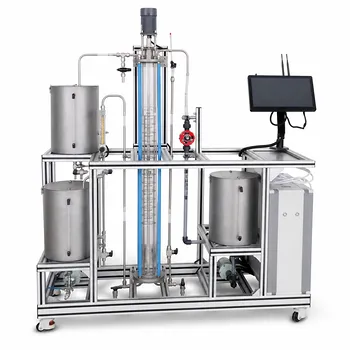
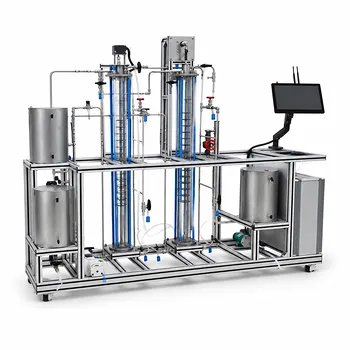
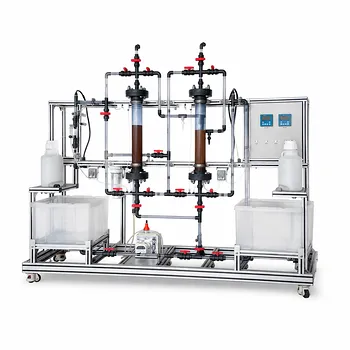
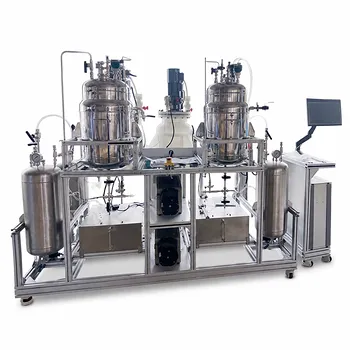
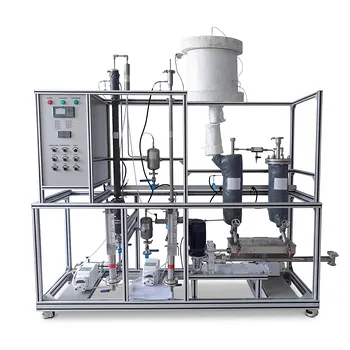
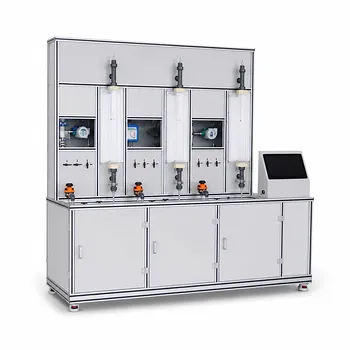
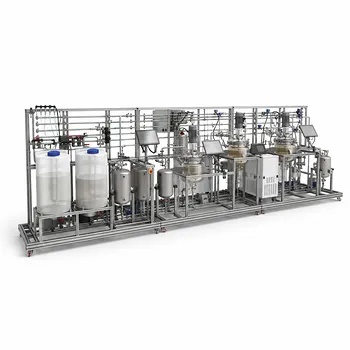
Achieving reproducible chromatography separations requires hands-on experience with industry-grade systems. LABPARK provides state-of-the-art Educational and Vocational Unit Operations Pilot Plants in bioprocess & biotech, chemical engineering, and environmental & water treatment. Designed specifically for universities, research institutes, and enterprises, our pilot plants empower students and researchers to master critical process controls like temperature, flow, and gradient elution in a safe, controlled environment.
Ready to elevate your training programs and research capabilities? Contact LABPARK today to find the perfect pilot plant solution for your facility!
Related Products
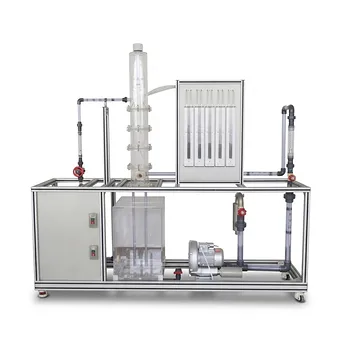
- Plate Column Hydrodynamics Tray Demonstration Educational Pilot Plant
- Liquid-Liquid Mass Transfer Coefficient Determination Educational Pilot Plant
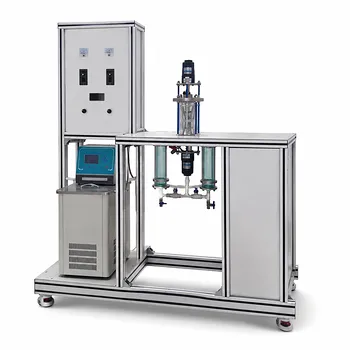
- 100L Continuous Loop Hydrogenation Educational Unit Operations Pilot Plant
- Multi Functional Membrane Crystallization Educational Unit Operations Pilot Plant
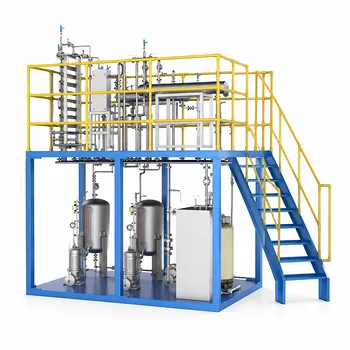
- Supercritical High-Gravity Flash Evaporation Educational Unit Operations Pilot Plant
People Also Ask
- How to update chemometric calibration models in pilot plants? Best practices for process engineers.
- How does nuclear yield inefficiency translate to chemical engineering education? Optimize kinetics with pilot plants.
- How can educational pilot plants be used to teach process safety and risk assessment in chemical engineering curricula?
- Why Correct Sig Figs & Rounding Matter in Educational Pilot Plants: Ensure Data Accuracy
- Why Calculate Sieve Tray Pressure Drop? Optimize Distillation Pilot Plant Performance