Accuracy and precision are the bedrock of meaningful engineering conclusions. In an educational pilot plant, every temperature, pressure, and flow reading comes from an instrument with limited precision. The correct treatment of significant figures ensures that your calculated results never falsely imply a level of certainty your instruments cannot provide, keeping the data’s uncertainty transparent at every step. Rounding rules—especially the even-digit rule for a trailing 5—prevent small, cascading biases from accumulating over dozens of calculations, preserving the integrity of your analysis. Without this discipline, students risk overstating performance, misdiagnosing process behavior, and forming habits that could lead to costly or unsafe decisions in professional practice.
Correct significant figure and rounding practices do more than follow a math rule—they preserve the chain of measurement uncertainty, guard against overconfidence, and build the professional mindset that every reported number in chemical engineering must be backed by the limits of the instrument that produced it.
The Role of Measured Precision in Pilot Plant Data
Why Every Instrument Tells Only Part of the Truth
A thermocouple might read 75.2°C, but its precision means the true value lies somewhere between 75.15°C and 75.25°C. The last digit in any recorded measurement is always an estimate. Reporting a value like 75.200°C from that instrument would invent two extra digits of false precision, misleading anyone who uses that number later.
How False Precision Creeps into Calculations
When you multiply or divide measured values, the result must not carry more significant figures than the least precise input. If you calculate a mass flow rate using a volume reading with three significant figures and a density with only two, the answer must be rounded to two significant figures. Ignoring this rule makes the output appear more accurate than the weakest link in the measurement chain, which can cause you to trust a faulty sensor or misinterpret a process trend.
The Addition and Subtraction Trap
For sums and differences, the precision aligns with the least precise decimal position. Adding 12.3 kg to 0.456 kg yields 12.8 kg, not 12.756 kg. In pilot plant mass balances, this ensures that small imprecisions from multiple streams do not masquerade as a meaningful closure error.
The Hidden Pitfall of Rounding Bias
The Even-Digit Rule for 5
When the digit you are dropping is exactly 5 (and followed by no non-zero digits), standard rounding would always round up, creating a slight upward drift over many operations. The unbiased approach—adjusting the preceding digit to an even number when it ends in 5—cancels out this drift. For example, 2.05 rounds to 2.0, while 2.15 rounds to 2.2. This practice is essential in educational labs where students often perform repetitive calculations on limited data sets.
The Impact on Engineering Judgement
Pilot plant data often feeds into kinetic models, heat exchanger sizing, or distillation column efficiency calculations. A systematic rounding bias of even 0.1% can shift a mass balance enough to suggest a leak that does not exist or to hide a genuine process inefficiency. Correct rounding turns raw data into a trustworthy mirror of physical reality rather than a distorted reflection.
Common Pitfalls to Avoid
Treating All Digits as Sacred
A mistake many students make is copying every digit from a calculator display or spreadsheet. The calculator knows nothing about measurement uncertainty; it mindlessly produces 10-digit outputs. The analyst’s job is to trim that number down to the significant figure limit of the original measurements.
Confusing Precision with Accuracy
A flow meter may give readings with four significant figures (high precision) yet be 5% off from the true flow (low accuracy). Significant figures only convey precision, not accuracy. Over‑relying on high‑precision numbers from a poorly calibrated instrument gives a false sense of security, leading to incorrect conclusions about heat duties, yields, or conversion rates.
The Edge Case of Multi‑Step Calculations
Rounding after each step can propagate small errors. A better practice is to carry one extra guard digit through intermediate steps and round only the final result. This keeps the reported value firmly bound by the original measurement precision while minimizing cumulative truncation errors.
Making the Right Choice for Your Goal
Your approach to significant figures and rounding must align with the purpose of your pilot plant work.
- If your primary focus is teaching core engineering practice: Enforce strict significant figure rules from the very first measurement log. This builds a reflex so that reporting meaningless digits never becomes a habit.
- If your primary focus is modeling or scale‑up: Carry guard digits during calculations but always report final model parameters with the precision that matches your least certain sensor. This preserves numerical stability without compromising authenticity.
- If your primary focus is troubleshooting a process anomaly: Do not allow extra digits to distract you. Round values to match instrument limits first, then assess whether a deviation is real or just an artifact of precision.
- If your primary focus is publishing lab results: Remember that any figure you present implies a claim of certainty. Apply the even‑digit rule for 5 to ensure that your reported averages and fitted constants are free from systematic rounding bias.
Treating significant figures and rounding rules as a fundamental part of data analysis is not pedantry—it is the only reliable way to turn noisy instrument readings into engineering insight you can build upon.
Summary Table:
| Data Analysis Concept | Key Rule / Practice | Engineering Impact |
|---|---|---|
| Measured Precision | Limit results to the least precise input | Prevents false certainty and sensor misinterpretation |
| Rounding (Even-Digit Rule) | Round to the nearest even number for trailing 5s | Eliminates systematic bias in mass/energy balances |
| Multi-Step Calculations | Carry guard digits through intermediate steps | Minimizes cumulative truncation errors |
Elevate Your Lab's Teaching and Research Precision
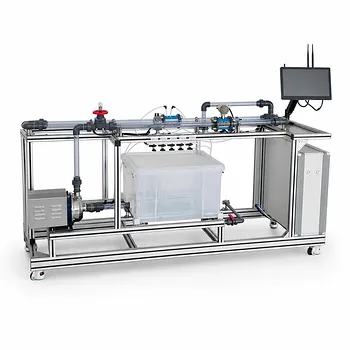
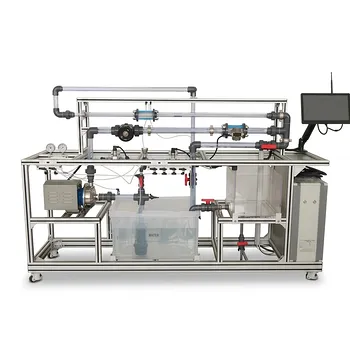
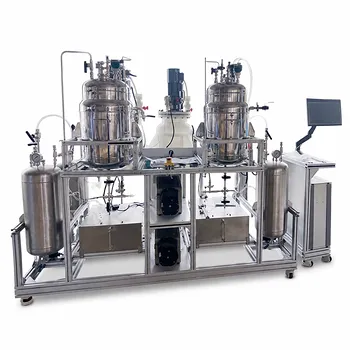
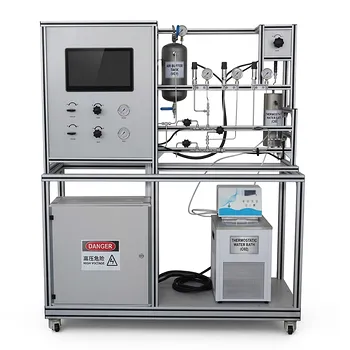
Accurate data analysis starts with reliable equipment. LABPARK provides premium Educational and Vocational Unit Operations Pilot Plants in chemical engineering, bioprocess & biotech, and environmental & water treatment. Designed specifically for universities, research institutes, and enterprises, our systems feature highly precise, calibrated instrumentation to help students and researchers master real-world engineering concepts with confidence.
Ready to upgrade your laboratory capabilities? Contact LABPARK today to discover how our tailored pilot plant solutions can enhance your educational and research outcomes.
Related Products
- Multi-Reactor Educational Pilot Plant for Reaction Engineering Unit Operations
- Multi-Functional Special Distillation Educational Pilot Plant
- Multi-Functional Membrane Separation Educational Pilot Plant for Unit Operations Lab
- Micro-Scale Gas-Solid Catalytic Reaction Educational Pilot Plant
- High-Gravity Emulsification and Mass Transfer Educational Pilot Plant
People Also Ask
- How do educational unit operations pilot plants address safety and waste management when scaling up?
- How do educational unit operations pilot plants bridge theory and design? Bridge the Engineering Gap
- Why Compare Predicted and Experimental Excess Enthalpy? Key to Accurate Pilot Plant Scale-up
- How to study gasification in pilot plants? Compare exit gas composition & efficiency
- Why Use PTFE & Hastelloy in Chemical Pilot Plants? Prevent Corrosion & Ensure Safety