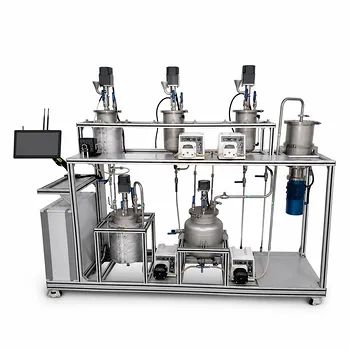
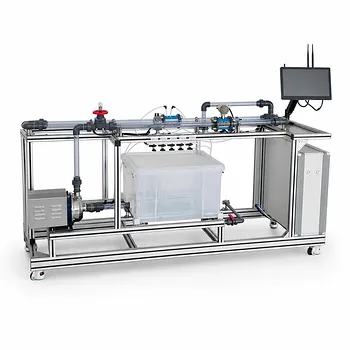
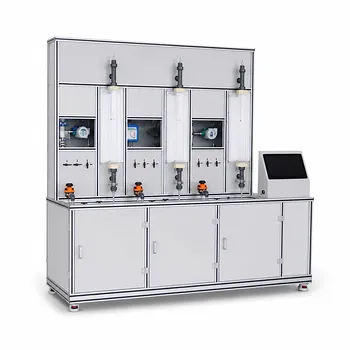
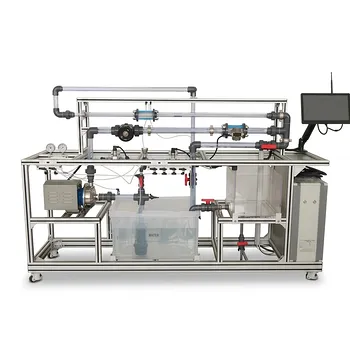
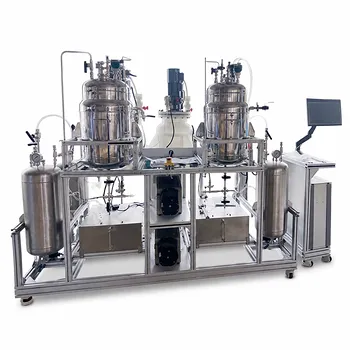
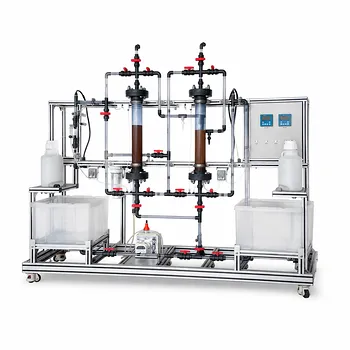
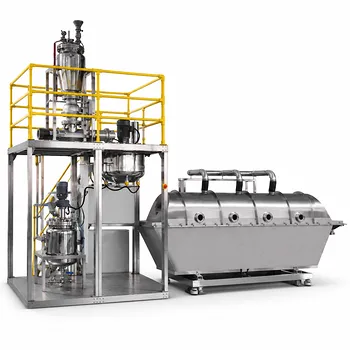
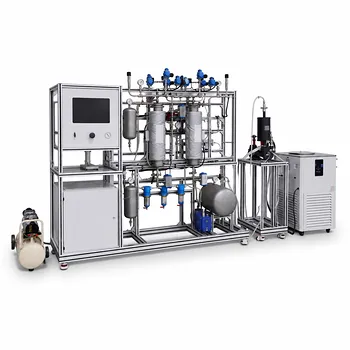
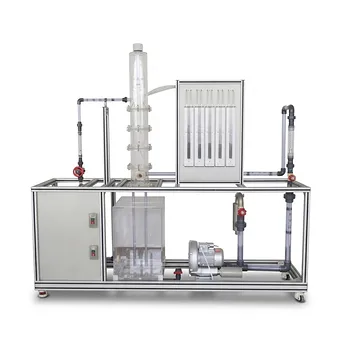
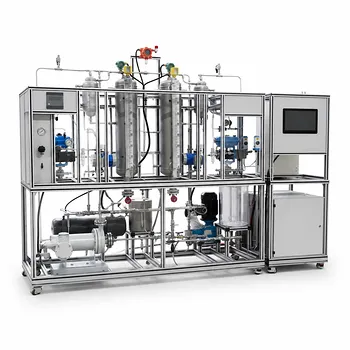
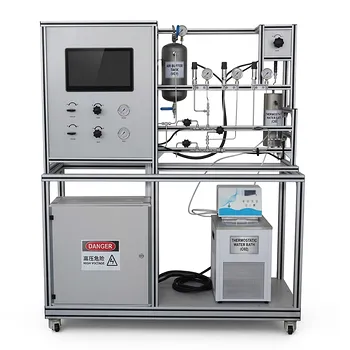
The bridge between theory and safe operation is built with hands-on experience.
Educational pilot plants teach process safety and risk assessment by allowing students to apply inherently safer design principles on physical, scaled-down systems. Students minimize hazards by working with reduced equipment volumes and lower inventories, substitute hazardous materials, and design real safety interlocks. They then conduct quantitative risk assessments—such as calculating Fire & Explosion Index values—and learn to control processes outside flammability limits, all in a controlled environment that mirrors industrial reality.
Core insight: Pilot plants transform abstract safety concepts into tangible skills. By physically interacting with enclosed reactors, emergency relief systems, and real-time sensors, students gain the diagnostic mindset needed to anticipate, assess, and eliminate hazards before they manifest at full scale.
The Learning Gap: Why Benchtop Labs Aren’t Enough
Benchtop glassware hides the domino effects that define industrial accidents. In a fume hood, students can manually control a few grams of a reagent, never witnessing how a runaway exotherm might overwhelm a plant-wide cooling system. This creates a dangerous gap between textbook knowledge and operational competence.
The Missing Realism of Industrial Scale
A 50-litre pilot reactor behaves fundamentally differently than a 500-ml flask. Heat transfer slows as volume increases, mixing turns non-ideal, and small procedural errors cascade into emergencies. Pilot plants force students to confront these scale-dependent phenomena head-on.
The Safety Disconnect Between Glassware and Reality
In a lab, an overpressure event might pop a stopper. At scale, it bursts a vessel. Without exposure to automated interlocks, pressure relief headers, and gas scrubbing systems, graduates enter industry unprepared for the consequence side of risk.
Hands-On Inherently Safer Design
The primary reference emphasizes educational pilot plants as platforms for inherently safer design (ISD). This approach focuses on eliminating hazards rather than bolting on controls, and pilot-scale equipment makes these principles physically demonstrable.
Minimizing Hazardous Inventories
Students operate systems with reduced equipment volumes and lower inventories of hazardous substances. By testing how a reaction runs safely with half the solvent charge, they internalize that smaller is genuinely safer. This direct experience reshapes their default design instinct toward minimal holdup.
Substituting Safer Solvents and Reagents
A pilot plant allows side-by-side comparisons. Students can run a process first with a high-hazard solvent, then with a safer alternative, observing that yield and purity remain acceptable. They learn to prove, rather than assume, that a substitution works—a critical skill for modern process development.
Building Safety Interlocks with Purpose
Designing a safety interlock on a diagram is abstract. On a pilot plant, students wire a high-temperature trip to a quench valve and watch it arrest a simulated runaway. They experience the timing, logic, and failure modes that no simulation can fully replicate.
Conducting Quantitative Risk Assessments on a Pilot Scale
Supplementary references highlight that pilot plants become living case studies for semi-quantitative risk assessment methods. Students learn to calculate a Fire & Explosion Index (F&EI) using real operating data, not hypothetical numbers.
Performing Fire & Explosion Index (F&EI) Surveys
Students partition the pilot distillation column or reactor into individual processing units. They determine the Material Factor (MF) for the acetone or toluene in use, then evaluate General Process Hazards (F1) and Special Process Hazards (F2) based on operational pressure, temperature, and inventory. The final F&EI value classifies the unit’s hazard from light to severe, and students must propose mitigation to reduce that number.
Design Beyond the Flammability Envelope
Pilot plants with gas concentration sensors and nitrogen inerting systems teach the reality of the Lower Flammability Limit (LFL) and Upper Flammability Limit (UFL). Students conduct startups and shutdowns that deliberately stay outside the flammable range. They learn to eliminate the coincidence of fuel, oxidizer, and ignition source—not in theory, but by manipulating real flow controllers while watching live oxygen readings.
Managing Exothermic Reactions and Heat Transfer
Heat transfer dynamics are invisible until you see a reactor temperature spike despite full cooling. Students measure the time lag between jacket temperature and batch temperature, then configure a feed-rate interlock to prevent thermal runaway. They grasp why heat removal capacity is a safety-critical design parameter.
Enclosed Systems for High-Hazard Teaching Moments
When reactions involve toxic gas release or strong oxidants, pilot plants offer a sealed, instrumented environment that benchtop hoods cannot match. This enclosure makes it safe to teach the most dangerous lessons.
Safe Handling of Toxic Gas Release and Hazardous Reagents
Instead of manually swirling a flask of oxalic acid, students observe automatic dosing pumps deliver reagents into a closed reactor. Integrated gas scrubbers neutralize off-gas, and real-time pH and temperature sensors trigger alarms if absorption falls out of spec. They learn to trust—and verify—engineered controls.
Integrating Emergency Relief and Automatic Controls
Students design and test emergency relief systems, sizing rupture discs or relief valves based on credible worst-case scenarios. They see how automated safety interlocks sequence shutdowns (stop stirring, close feed, dump reactor) when a high-pressure condition is detected, teaching layered protection design.
Understanding the Limitations: Trade-offs in Educational Pilot Plants
No training tool is perfect. While pilot plants dramatically improve safety education, they carry inherent limitations that instructors must explicitly address to avoid fostering a false sense of mastery.
The Fidelity Gap to True Industrial Hazards
A pilot plant’s consequences are contained. A runaway may trigger a quench and an alarm, but it won’t cause a plant-wide loss of containment, domino effect, or community impact. Students can miss the terrifying speed and scale of a real industrial disaster if this gap isn’t constantly highlighted through case study comparisons.
The Risk of Complacency in a Controlled Environment
Because pilot units are intended for education, they often include redundant safety systems that production plants may lack during maintenance windows. Students can become accustomed to an over-protected environment and fail to recognize that real-world risk depends on human reliability and management systems, not just hardware.
Making the Right Choice for Your Course Goals
The way you integrate pilot plants into your curriculum should directly serve your primary learning objective. Match the exercise to the outcome.
- If your primary focus is teaching inherently safer design principles: Use pilot plants for inventory reduction exercises and solvent substitution studies; require students to justify each hazard elimination decision with operational data.
- If your primary focus is quantitative risk assessment: Turn the pilot unit into an F&EI case study; have students calculate hazard factors from nameplate data and process conditions, then defend their risk rating.
- If your primary focus is high-hazard reaction training: Select enclosed, instrumented pilot reactors with gas scrubbing and emergency relief; design scenarios around toxic gas evolution or strong exotherms, with emphasis on control system logic.
- If your primary focus is preparing students for process intensification (PI) adoption: Equip pilot plants with microreactors or compact heat exchangers; let students manage the inherently smaller residence times and prove that safety can be enhanced, not compromised, at reduced volumes.
Pilot plants, used deliberately, don’t just teach safety—they shape the instinctive risk-awareness that separates a competent engineer from a dangerously overconfident one.
Summary Table:
| Teaching Objective | Practical Application in Pilot Plant | Key Safety Concept Learned |
|---|---|---|
| Inherently Safer Design | Minimizing hazardous inventories & solvent substitution | Hazard elimination at the source |
| Quantitative Risk Assessment | Calculating F&EI values using real operational data | Identifying general & special process hazards |
| Flammability Control | Operating outside LFL/UFL with nitrogen inerting | Managing fuel-oxidizer-ignition envelopes |
| Thermal Runaway | Configuring feed-rate interlocks based on heat transfer | Sizing cooling capacity & emergency relief |
Bring Industrial Safety Training to Your Institution
Equip your students and researchers with the hands-on safety skills they need for the real world. LABPARK provides state-of-the-art Educational and Vocational Unit Operations Pilot Plants in chemical engineering, bioprocess & biotech, and environmental & water treatment for universities, research institutes, and enterprises.
Ready to elevate your engineering curriculum with safe, real-world process systems? Contact us today to explore our pilot plant solutions!
Related Products
- Multi-Reactor Educational Pilot Plant for Reaction Engineering Unit Operations
- Multi-Functional Special Distillation Educational Pilot Plant
- Multi-Functional Membrane Separation Educational Pilot Plant for Unit Operations Lab
- Micro-Scale Gas-Solid Catalytic Reaction Educational Pilot Plant
- High-Gravity Emulsification and Mass Transfer Educational Pilot Plant
People Also Ask
- How do educational unit operations pilot plants address safety and waste management when scaling up?
- How do educational unit operations pilot plants bridge theory and design? Bridge the Engineering Gap
- Why Compare Predicted and Experimental Excess Enthalpy? Key to Accurate Pilot Plant Scale-up
- How to study gasification in pilot plants? Compare exit gas composition & efficiency
- Why Use PTFE & Hastelloy in Chemical Pilot Plants? Prevent Corrosion & Ensure Safety