The process parameters you can directly manipulate on a pilot plant to study droplet size and coating morphology center on the atomization energy and the drying environment. Specifically, you adjust atomizing gas flow rate (or pressure) to control droplet size, and drying gas temperature, drying gas flow rate, and liquid spray rate to govern solvent evaporation and droplet–surface interaction. Together, these four levers define the process envelope for spray coating operations.
While droplet size is primarily set by the atomization gas, the final coating morphology—its porosity, strength, and defect profile—emerges from the interplay between droplet size, spray rate, and the speed of drying. The deepest understanding comes from manipulating these variables simultaneously and observing the non-linear trade-offs.
The Key Process Parameters and What They Directly Control
Atomization Energy: The Primary Driver of Droplet Size
The atomizing gas flow rate (often controlled via upstream pressure) is the single most influential parameter for droplet diameter.
A higher gas flow rate imparts more kinetic energy, shearing the liquid into finer droplets. Conversely, lowering the rate produces a coarser spray. On a pilot-plant scale, students can map the full distribution using laser diffraction while adjusting only this variable.
Nozzle geometry acts as a secondary droplet-size lever. The inner diameter of the liquid nozzle and the gas cap dimensions can be physically changed to shift the Sauter mean diameter (SMD) without altering flow rates—critical for scale‑up calculations.
Drying Gas Temperature: The Rate of Shell Formation
Drying gas temperature directly sets the evaporation rate of the solvent from the droplet surface.
Higher temperatures accelerate drying, causing the droplet skin to form faster. This influences the final coating density. On a pilot unit, ramping temperature up or down while keeping all else constant reveals the entire spectrum from porous to dense films.
Drying Gas Flow Rate: Heat and Mass Transfer Efficiency
The volumetric flow rate of the drying gas controls convective heat and mass transfer.
A higher flow rate strips moisture away more quickly, intensifying the drying effect. In continuous coaters, the flow direction relative to the spray—co‑current for thermal efficiency or counter‑current for more gradual drying—further nuances the morphology outcome.
Liquid Spray Rate: The Wetting Load
Liquid spray rate dictates the amount of coating material delivered per unit time.
Too high a rate overwhelms the drying capacity, leading to overwetting and agglomeration. Too low a rate starves the process, causing incomplete coating. Students observe how this parameter interacts with pan speed and drying conditions to define the safe operating window.
Pan Speed and Residence Time (Tablet Coating Context)
In a continuous or batch tablet coater, pan speed (RPM) and tablet feed rate become crucial manipulators of coating morphology.
Higher pan speeds exert strong leverage in reducing defects by enhancing tablet mixing and preventing localized overwetting. The residence time, set by feed rate and pan inclination, determines how many passes a tablet makes through the spray zone—directly affecting film thickness uniformity.
Understanding the Impact on Coating Morphology
How Faster Drying Creates Porous, Weaker Coatings
When drying gas temperature and flow rate are elevated, droplets dry prematurely.
The solvent evaporates before the droplet can fully spread and coalesce on the surface. This results in a porous, permeable coating with low mechanical strength. In a pilot plant, students can quantify this by testing the coating’s tensile strength and surface area at different drying intensities.
How Slower Drying Leads to Agglomeration and Defects
Insufficient drying leaves residual solvent in the coating layer.
The surface remains tacky, causing particles or tablets to stick together, or the coating to erode under gentle friction. Droplets that are too large exacerbate this: they carry excess solvent, overwetting the substrate and creating defects like picking or sticking. The pilot plant becomes a sandbox for finding the balance between drying capacity and liquid load.
The Droplet Size Sweet Spot
Droplet size must be tuned to the drying distance and residence time.
Droplets that are too small dry completely mid‑flight, arriving as a dry powder that fails to adhere—wasting material and lowering coating efficiency. Droplets that are too large hit the surface with so much solvent that they dissolve or deform the core. The optimal size ensures the droplet reaches the substrate just as it becomes tacky, promoting adhesion without overwetting.
Understanding the Trade-offs and Common Pitfalls
The Temperature–Viscosity Paradox in Liquid Systems
While heating reduces liquid viscosity and aids atomization, it can create separation problems in emulsion‑based coatings.
Higher temperatures may reduce the density difference between phases, slowing droplet coalescence and compromising film integrity. On a pilot plant with a jacketed feed tank, students observe that a midpoint temperature often yields the best coating quality, not the maximum.
Atomization vs. Overspray Loss
Pushing the atomizing gas flow rate too high reduces droplet size but dramatically increases overspray.
Fine droplets are easily entrained in the exhaust air before reaching the substrate, depressing coating efficiency. This trade-off is measurable by comparing the mass of coating applied to the mass of spray solution consumed.
Interaction Effects That Can’t Be Ignored
Isolating single variables often misses the real picture. In tablet coaters, the interaction between spray rate and pan speed and between pan speed and suspension concentration significantly influence defect rates.
A pilot plant designed with regression modeling in mind lets students uncover these interaction terms and define a true process design space rather than a simple one‑factor‑at‑a‑time window.
Making the Right Choice for Your Study or Process Optimization
The parameters you prioritize depend entirely on what you aim to understand or control.
- If your primary focus is droplet size distribution: Manipulate atomizing gas flow rate and swap nozzle geometries (liquid inner diameter, gas cap) while keeping liquid and drying flows constant.
- If your primary focus is coating porosity and mechanical strength: Vary drying gas temperature and flow rate to map the transition from dense, strong films to weak, porous ones.
- If your primary focus is minimizing tablet coating defects: Vary pan speed, spray rate, and suspension concentration, paying close attention to their interaction effects through a designed experiment.
- If your primary focus is scale‑up fidelity: Adjust atomizing gas flow rate according to gas‑to‑liquid mass flux ratio models to maintain constant SMD, while keeping the droplet‑drying trajectory equivalent.
This systematic, variable‑by‑variable mapping transforms a pilot plant from a demonstration tool into a true research instrument, giving students and engineers the intuition to design robust coating processes.
Summary Table:
| Parameter | Primary Control | Coating Impact |
|---|---|---|
| Atomizing Gas Flow | Droplet size (SMD) | Higher flow creates finer droplets; excess leads to overspray. |
| Drying Gas Temp/Flow | Evaporation & shell formation | Faster drying causes porous coatings; slower drying causes sticking. |
| Liquid Spray Rate | Wetting load & mass delivery | High rates lead to overwetting; low rates cause incomplete coating. |
| Pan Speed (RPM) | Substrate mixing & residence time | Higher speed prevents defects and ensures uniform film thickness. |
Advance Your Chemical Engineering Research & Training with LABPARK
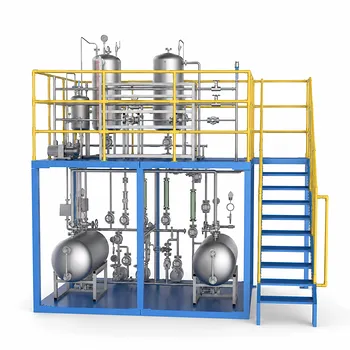
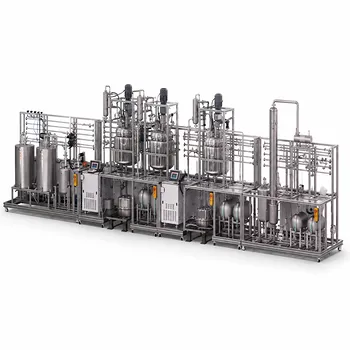
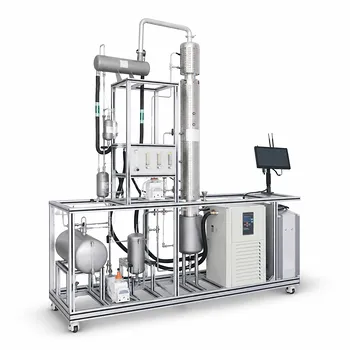
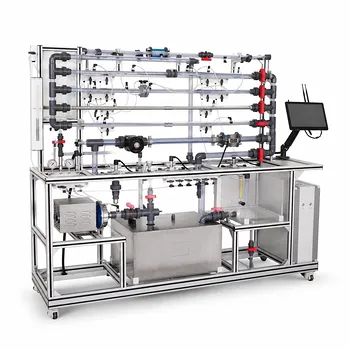
To effectively study complex spray coating mechanics, you need reliable, industry-grade equipment. LABPARK provides state-of-the-art Educational and Vocational Unit Operations Pilot Plants in chemical engineering, bioprocess & biotech, and environmental & water treatment.
Whether you are a university upgrading your teaching labs, a research institute mapping process envelopes, or an enterprise optimizing scale-up, our pilot plants deliver the precision control you need.
Contact our technical experts today to find the perfect pilot plant solution for your facility!
Related Products
- Carbon Dioxide Hydrogen Methanol Synthesis Educational Unit Operations Pilot Plant
- Multi-Reactor Educational Pilot Plant for Reaction Engineering Unit Operations
- Ethyl Acetate Synthesis Unit Operations Pilot Plant for Practical Training
- Multi Pump Fluid Transport Process Piping Unit Operations Training Pilot Plant
- Multi-Modal Distillation Unit Operations Training Pilot Plant
People Also Ask
- How do temp & pressure affect methanol synthesis pilot plants? Optimize equilibrium and catalyst performance.
- Why is a purge system necessary when operating a gas recirculation loop in a methanol synthesis pilot plant? (Guide)
- Why do modern methanol pilot plants operate at lower pressures? Catalyst & Feed Requirements Explained
- What are the operational requirements for catalyst activation? Safe Methanol Pilot Plant Operation
- Why is the chemical plant startup schedule crucial? De-risk scale-up with pilot plants.