The key to unlocking accurate sulfate quantification— even in samples where sulfate is barely present—is manipulating the chemistry before the main reaction. For turbidimetric methods, that means acidifying and evaporating the sample to concentrate sulfate below 10 ppm, then using a stabilizing reagent to control crystal growth. For gravimetric work, a small dose of saturated picric acid in an acidified medium coarsens the barium sulfate precipitate, making filtration a practical step rather than a painful ordeal.
Sulfate analysis at the edge of detection demands more than a standard protocol. Turbidimetry gains its sensitivity through preconcentration and a carefully timed suspension stabilization, while gravimetry trades purity for processability by coarsening the precipitate with picric acid. The right preparation doesn’t just measure sulfate—it makes measurement possible.
The Core Challenge: Why Standard Methods Fail for Low Sulfate
The Detection Limit Barrier in Turbidimetry
When sulfate falls below 10 ppm, the barium sulfate particles formed are too few and too small to scatter enough light reliably. Without intervention, turbidimetric readings dissolve into noise, delivering inconsistent and useless numbers.
Simply adding more barium chloride accelerates precipitation, but it also creates a chaotic burst of nucleation. The result is a non-uniform suspension where primary particles agglomerate unpredictably, destroying the linear relationship between turbidity and concentration.
The Filtration Nightmare in Gravimetry
Gravimetric sulfate determination demands a precipitate that can be captured, washed, and weighed without loss. Fine barium sulfate—left to its own devices—produces a slimy, slow-filtering mess that clogs pores and bleeds right through filter paper.
The true obstacle is the crystal habit. Rapid precipitation forms countless microscopic needles that pack into a gelatinous filter cake. Analytical accuracy vanishes when you can’t quantitatively transfer and dry the solid.
The Sample Preparation Arsenal: Techniques That Transform the Assay
Preconcentration for Turbidimetric Detection
Acidification and Evaporation: Pushing the Signal Above the Noise Floor
Before any turbidimetric reading, samples with ultra-low sulfate must be acidified—typically with a few drops of hydrochloric acid—and gently evaporated to reduce the volume. This simple step multiplies the sulfate concentration by a factor of five, ten, or more, bringing it into a range where barium sulfate particles can scatter light effectively.
The acidification serves a dual purpose: it prevents carbonate interference by decomposing bicarbonate and carbonates to CO₂, and it suppresses the precipitation of barium phosphate or other insoluble salts that would cloud the background. After evaporation, the residue is taken up in a smaller, known volume, yielding a concentrated solution ready for the stabilizing reagent.
Crafting a Stable Turbidimetric Suspension
The Stabilizing Reagent: Diethylene Glycol and Calcium Chloride
To turn a chaotic precipitation into a reproducible measurement, you mix the concentrated sample with a stabilizing solution of diethylene glycol and calcium chloride before adding barium chloride crystals. Diethylene glycol increases viscosity and coats nascent particles, slowing their growth and preventing rapid settling.
Calcium ions interact with sulfate at the solid–solution interface, modifying the surface charge and reducing the tendency of particles to form large, fast-sedimenting aggregates. The result is a finely divided, homogeneous suspension that stays uniform long enough for precise light-scattering readings.
Controlled Crystal Addition: The Final Step
Instead of pouring in a barium chloride solution, you add barium chloride crystals directly to the stabilized sample while swirling. This controlled dissolution generates supersaturation gradually, spacing out nucleation events and producing the narrow particle size distribution that turbidimetry demands.
Coarsening the Gravimetric Precipitate
Picric Acid: The Forgotten Coarsening Agent
In gravimetric analysis, a few drops of saturated aqueous picric acid added to the acidified hot sulfate solution radically alters the precipitate’s morphology. The picrate ions adsorb onto growing barium sulfate crystals, preferentially blocking certain faces and encouraging the growth of thicker, more equant crystals.
These larger, blockier particles settle rapidly, filter easily through a fine-porosity filter paper, and rinse clean without peptizing. The coarser texture minimizes filter-paper penetration and reduces drying time—two factors that directly improve accuracy and precision. Note that picric acid is explosive when dry, so it must be handled as a solution.
Understanding the Trade-offs
Sensitivity vs. Contamination Risk
Concentrating a sample by evaporation amplifies not only sulfate but also any other non-volatile impurities. Trace metals or organic matter that were negligible at the original volume can now interfere with turbidity or coprecipitate on filter fibers. Blank runs and ultra-clean glassware become non-negotiable.
Stabilizer Optimization: Too Much of a Good Thing
The diethylene glycol–calcium chloride mixture works within a narrow window. Excessive diethylene glycol can over-stabilize, keeping particles so small that scattering intensity drops. Too much calcium chloride can co-precipitate calcium sulfate artifacts, introducing a positive bias. The ratio must be scrupulously standardized.
Gravimetric Purity vs. Practical Filtrate Quality
Picric acid coarsens the precipitate at the cost of potential coprecipitation. Picrate ions may be incorporated into the crystal lattice, adding a small positive bias to the final mass. If ultimate accuracy is required, a re-precipitation step or ignition to constant weight becomes essential to burn off the organic contaminant.
Making the Right Choice for Your Laboratory Goal
Deciding which preparation technique to adopt—or how to combine them—depends on your primary objective. Match the strategy to the problem.
- If your primary focus is quantifying sulfate below 10 ppm: Acidify, evaporate to a known smaller volume, then use the stabilizing reagent and controlled barium chloride crystal addition for turbidimetric measurement. This chain of steps maximizes sensitivity while keeping the suspension measurable.
- If your primary focus is a gravimetric determination with silky-smooth filtration: Prepare the sample in hot, acidified solution and spike it with saturated picric acid before adding the barium chloride precipitant. The coarser crystals will save you from clogged filters and lost precipitate.
- If your primary focus is high-throughput quality control with moderate sulfate levels: Preconcentration may be unnecessary, but the stabilizing reagent alone can still boost turbidimetric reproducibility by standardizing particle size and settling time.
- If your primary focus is ultimate accuracy in a low-sulfate sample for certification: Combine evaporation with a gravimetric finish, but plan a two-cycle precipitation—dissolve the first picric-acid-doped precipitate, re-precipitate without picric acid, and ignite to constant weight to eliminate organic coprecipitation bias.
Every sulfate analysis, from ultratrace scanning to routine gravimetric checks, improves when you stop treating precipitation as a passive step and start engineering it with deliberate sample preparation.
Summary Table:
| Technique | Target Method | Key Reagent / Step | Primary Benefit |
|---|---|---|---|
| Preconcentration | Turbidimetry | Acidification (HCl) & Evaporation | Multiplies concentration; removes carbonate interference |
| Stabilization | Turbidimetry | Diethylene glycol & Calcium chloride | Inhibits particle aggregation; ensures uniform suspension |
| Coarsening | Gravimetry | Saturated Picric Acid | Enlarges crystal size; prevents filter paper clogging |
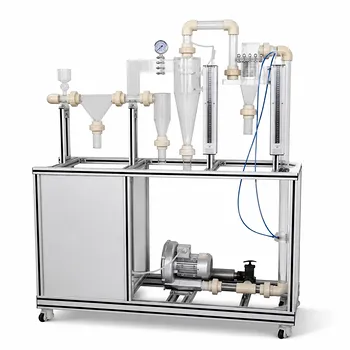
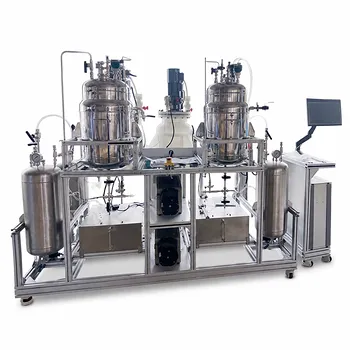
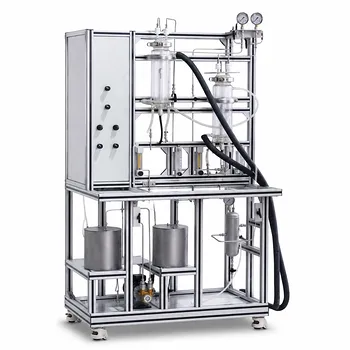
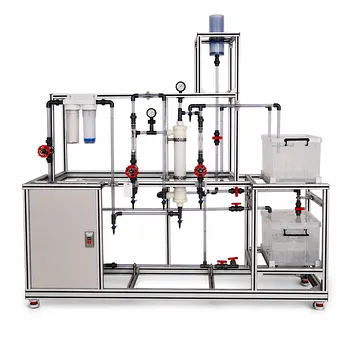
Looking to elevate your laboratory’s research, chemical analysis, and hands-on training capabilities? LABPARK provides industry-leading Educational and Vocational Unit Operations Pilot Plants in chemical engineering, bioprocess & biotech, and environmental & water treatment. Tailored for universities, research institutes, and enterprises, our systems bridge the gap between classroom theory and industrial application.
Contact LABPARK today to explore how our pilot plants can enhance your training and research outcomes!
Related Products
- Potassium Salt Thermal Dissolution and Crystallization Separation Educational Unit Operations Pilot Plant
- Electrolyte Distillation Purification and Formulation Educational Pilot Plant
- Ion Exchange Water Purification Educational Pilot Plant for Engineering Unit Operations
- Multifunctional Membrane Separation Educational Pilot Plant with Ultrafiltration, Nanofiltration, Reverse Osmosis
- Multi-Functional Membrane Separation Educational Pilot Plant for Unit Operations Lab
People Also Ask
- What are the benefits of integrating online PAT tools like ATR-FTIR into crystallization unit operations pilot plants?
- How do crystallization pilot plants improve student learning? Shift from manual observation to process control.
- Why is precise temperature control critical in crystallization pilot plants? Key to Scale-Up Success
- Control Crystallization Pilot Plant Secondary Nucleation: 4 Key Adjustments
- What key factors should be considered when configuring a crystallization unit operations pilot plant?