Selecting adsorbents for pilot-plant training demands a methodical evaluation of physical properties to ensure experiments are both realistic and repeatable.
The three indispensable properties are specific surface area (and the porosity that underpins it), mechanical strength with attrition resistance, and pore size distribution tuned to the target adsorbate. These directly govern capacity, column operability, and selectivity—the cornerstones of any meaningful unit‑operations investigation.
The goal is not just maximum adsorption capacity, but a stable, interpretable system that withstands repeated student runs. That means balancing high surface area and tight pore matching with the mechanical robustness needed to avoid fines, channeling, and unpredictable pressure drops in a training environment.
The Foundational Trio: Properties That Define Adsorber Performance
Specific Surface Area and Porosity
Adsorption is a surface phenomenon, so the total area available per gram of solid is the single most important capacity driver. In silica gels and activated carbons, this routinely reaches 300–1200 m²/g, created by an internal network of micropores and mesopores.
Porosity determines how much of that surface is actually accessible. A high surface area with poor pore connectivity will exhibit slow uptake, while a well‑connected pore structure supports fast mass transfer—essential for dynamic column experiments.
Mechanical Strength and Attrition Resistance
Even the most selective adsorbent becomes a problem if it crumbles. Particle breakdown generates fines that clog distributor plates, increase pressure drop, and force premature bed replacement.
In a teaching lab, columns are often repacked and subjected to flow disturbances. Crush strength (the force needed to fracture a single pellet) and attrition resistance (resistance to surface wear) must therefore be chosen to survive realistic handling, not just ideal steady‑state conditions.
Pore Size Distribution
Selectivity arises when the pore “sieves” molecules by size. Silica gels offer broad mesoporosity (typically 2.2–15.0 nm), suiting them for larger organic molecules. Molecular sieves (zeolites) provide ultranarrow windows—3 Å, 4 Å, 5 Å—that exclude molecules above a precise kinetic diameter.
Using the wrong distribution defeats the experiment. A 3 Å molecular sieve will dry ethanol by admitting water (≈2.8 Å) while blocking ethanol (≈4.3 Å), but a 4 Å sieve would co‑adsorb the solvent and ruin the mass balance.
Beyond the Basics: Additional Properties for Robust Training Systems
Particle Size and Size Uniformity
Particle diameter directly determines pressure drop across a packed bed, following the Ergun equation. Finer particles give faster kinetics but can choke flow; coarser particles reduce ΔP at the expense of intra‑particle diffusion delays.
Uniformity is just as critical. A broad size distribution encourages segregation and channeling, making breakthrough curves irreproducible and confusing the pedagogical message. Sieved or closely-sized fractions are strongly preferred.
Bulk Density
Bulk density translates laboratory recipes into column filling mass. It incorporates inter‑particle voidage and intra‑particle porosity. Without it, students cannot calculate the adsorbent inventory needed for a target bed height or estimate the bed’s void volume for residence‑time calculations.
It also affects heat transfer during thermal regeneration. A light, fluffy carbon stores less sensible heat in the bed, prolonging cool‑down cycles, while a dense molecular‑sieve bed can retain heat more efficiently.
Moisture Content and Activation State
Adsorbent activity is rarely constant as‑received. Silica gel’s activity is a direct function of water content: below 1 % water it is maximally active; at 10–12 % it is a general‑purpose grade; above 17 % it becomes too weak for most adsorption tasks.
Even activated carbon can pick up atmospheric moisture, partially blocking micropores. For reproducible experiments, the material must either be activated in‑situ (e.g., heating to 100–110 °C for silica gel) or stored under controlled conditions until use.
Thermal and Chemical Stability
Many training protocols include a regeneration cycle, where the bed is heated or flushed. The adsorbent must tolerate these temperatures without collapsing its pore structure. Amorphous silica gels hold up well to moderate heat; some molecular sieves can withstand 600 °C; activated carbons may oxidize in air above 300 °C.
Chemical inertness matters, too. The adsorbent should not catalyze side reactions (e.g., carbon‑catalysed oxidation) or leach contaminants into the process stream, which could skew composition analyses and erode trust in the data.
Understanding the Trade‑offs
High surface area often comes at the expense of mechanical integrity. Activated carbons with extreme micropore volumes can be friable, producing dust that clouds liquid samples and clogs downstream filters.
Fine particles boost kinetics but starve the column of permeability. For a given adsorbent chemistry, there is a sweet‑spot particle size where the pressure drop is manageable and the effective mass transfer rate still yields clean breakthrough fronts.
Tight pore‑size selectivity limits the operational window. A 3 Å sieve is superb for drying a narrow stream, but it will not adsorb molecules just slightly larger, such as propane. In a teaching environment, this demands careful pairing of adsorbate and adsorbent, and it may require multiple materials to demonstrate different separation mechanisms.
Moisture‑sensitive adsorbents demand careful handling. Exposing high‑activity silica gel to lab air for even a few minutes can partially deactivate it, introducing variability that obscures the principles the experiment is meant to illustrate.
Making the Right Choice for Your Educational Goal
The ideal adsorbent depends on what you want the students to learn and the logistical realities of the lab.
- If your primary focus is demonstrating adsorption equilibrium and kinetics: Prioritize high surface area combined with a narrow, well‑characterized particle size cut. This gives the most textbook‑like isotherms and breakthrough curves.
- If your primary focus is simulating industrial adsorber operation: Choose an adsorbent with high crush strength and attrition resistance, even if its pore size distribution is not ideally narrow. Reproducible pressure‑drop and bed‑longevity data are the real learning outcomes.
- If your primary focus is illustrating shape‑selective separation: Select a molecular sieve with a pore aperture precisely between the target and excluded molecules, and verify its activation state before every run to ensure the sieving effect is not masked by deactivation.
Every adsorbent property you evaluate ultimately serves a single purpose: making the invisible physics of surface interactions visible, repeatable, and intellectually clear for those standing at the pilot‑plant console.
Summary Table:
| Adsorbent Property | Key Impact on Unit Ops | Critical Consideration |
|---|---|---|
| Specific Surface Area | Determines total adsorption capacity and uptake speed | Balance high surface area with good pore connectivity. |
| Mechanical Strength | Prevents particle breakdown, fines, and column clogging | Crucial for repeated packing and high-flow student runs. |
| Pore Size Distribution | Dictates molecular selectivity and separation efficiency | Match pore diameter precisely to target molecule size. |
| Particle Size & Uniformity | Influences bed pressure drop and prevents channeling | Closely-sized fractions are preferred for reproducible curves. |
| Bulk Density | Used for column loading calculations and voidage estimation | Key for determining required adsorbent mass and heat transfer. |
Build a Better Unit Operations Lab with LABPARK
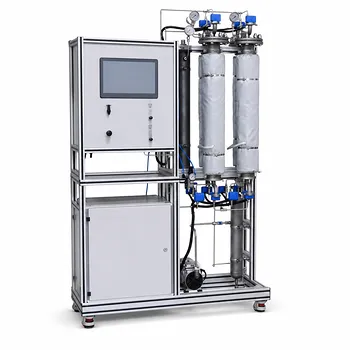
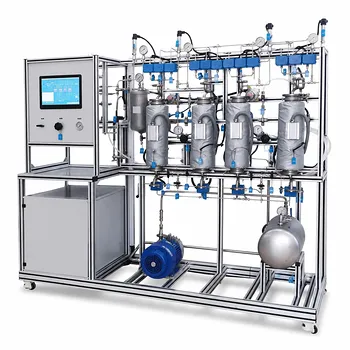
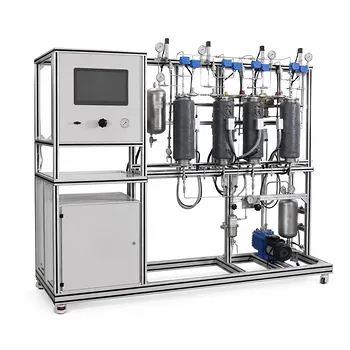
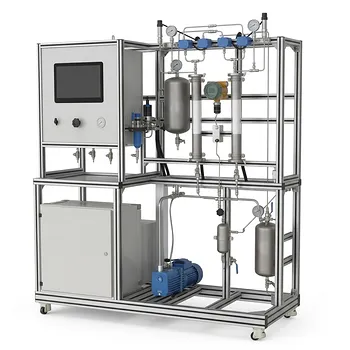
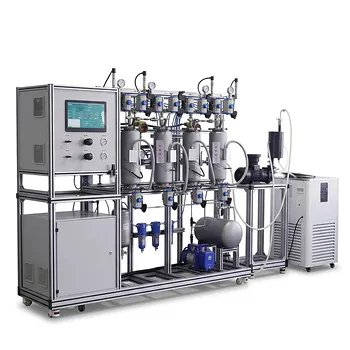
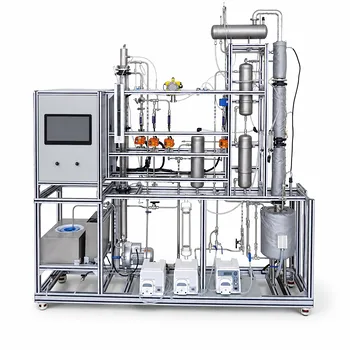
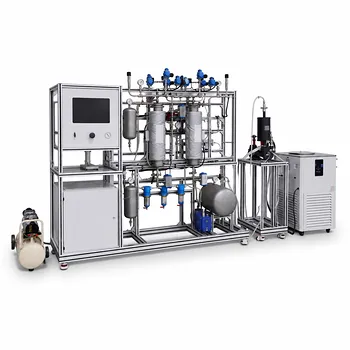
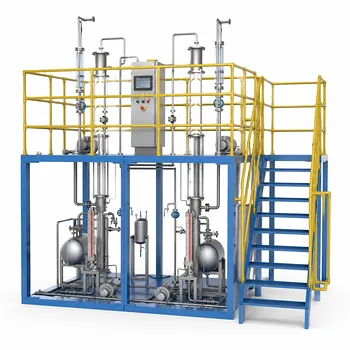
Designing repeatable and realistic experiments requires the right equipment and materials. LABPARK provides premium Educational and Vocational Unit Operations Pilot Plants in chemical engineering, bioprocess & biotech, and environmental & water treatment.
Whether you are upgrading a university lab, a research institute, or an industrial training facility, our systems are built to deliver clear, textbook-like results.
Contact LABPARK today to discuss your pilot plant needs!
Related Products
- Low Concentration Carbon Dioxide Capture Pressure Swing Adsorption Educational Pilot Plant
- Carbon Dioxide Capture and Utilization Educational Pilot Plant for Unit Operations
- Bench Scale Carbon Dioxide Capture Educational Unit Operations Pilot Plant
- Pressure Swing Adsorption Educational Unit Operations Pilot Plant
- Multi-Component Gas Pressure Swing Adsorption Pilot Plant for Unit Operations Education
People Also Ask
- How does operating pressure influence the transition between absorption and desorption in a CO2 pilot plant?
- What unit operations are critical for CCUS training pilot plants? Build hands-on engineering expertise.
- How can pilot plants show tail gas vs flue gas CO2 capture differences? Key educational insights.
- What are the differences between post- and pre-combustion carbon capture training pilot plants?
- How do temperature variations affect CO2 transport models in pilot plants? Model vs Reality