If you're planning to integrate a glass rotameter into a pilot plant, you need to accept three non-negotiable physical constraints: the meter must be installed perfectly vertically, it can only operate within low-pressure and moderate-temperature ranges, and its glass construction makes it inherently fragile. These aren't minor installation details — they are hard boundaries set by the measurement principle and material itself. Ignoring any of them doesn't just degrade accuracy, it creates a real safety hazard in a student training environment.
The core takeaway: Glass rotameters are excellent visual teaching tools for low-risk, ambient-condition fluid loops, but only when mounted with exact verticality, shielded from impact, and operated well within conservative pressure and temperature limits. Every design decision around them must flow from these three physical truths.
Why Vertical Alignment is Non-Negotiable
The operating principle of a rotameter is a delicate force balance between gravity, buoyancy, and drag acting on the float strictly along the vertical axis. Any tilt breaks that symmetry and introduces wall friction, making readings unreliable and scraping the tube internally.
The Physics of the Float
The float rises because the fluid drag force pushes it upward until the annular gap around it balances the net gravitational force. This force equilibrium assumes the float's axis is perfectly aligned with the local gravitational vector. If the tube is canted, a component of the float weight presses against the sidewall, creating friction that resists free movement.
Consequences of Even a Slight Angle
A deviation as small as 2-3 degrees from vertical can cause the float to stick, chatter, or indicate a flow rate significantly different from the true value. In educational settings where students compare rotameter readings against other flow metering principles, these errors can undermine learning and lead to false conclusions about system behavior.
Practical Installation Solutions
The installation must provide a rigid, vibration-free vertical run of straight pipe before and after the meter. Use a bubble level or digital inclinometer during mounting, and ensure the piping supports are robust — thermal expansion or accidental bumps by students can easily shift the alignment over time.
Why Glass Sets Hard Pressure and Temperature Ceilings
The transparent tube is the rotameter's great advantage for training: students can see the float position and visually connect flow rate to physical motion. But glass introduces strict operating envelopes you cannot exceed, no matter how well you design the rest of the pilot plant.
Material Limits of Borosilicate Glass
Most laboratory-grade rotameters use borosilicate glass for its chemical resistance and low thermal expansion. However, it remains a brittle material with limited mechanical strength. The tube must withstand internal pressure without bursting, and thermal stress from hot fluids without cracking. In practice, this means low gauge pressures (typically well below 10 bar) and moderate temperatures that avoid sudden thermal shocks.
What “Low-Pressure, Moderate-Temperature” Means for a Pilot Plant
The exact limits vary by manufacturer, but in a student training environment you should design loops that operate at pressures just enough to circulate fluid — often near atmospheric pressure in open-loop systems. For temperature, avoid applications above 80-100°C unless the specific model is rated for higher, and never introduce cold fluid into a hot tube or vice versa. The supplementary utility considerations underscore this need: you must ensure the plant's cooling water and process heat sources are compatible with these glass constraints before finalizing the P&ID.
When Glass Becomes the Design Bottleneck
If your training loop involves steam, high-head pumps, or pressurized chemical reactions, a glass rotameter is likely the weakest link. The pilot plant’s overall pressure rating must be de-rated to match the glass component unless you install overpressure protection like relief valves directly upstream. This is a critical trade-off — the teaching value of visibility must be weighed against the operational envelope it imposes on the entire system.
Fragility: The Unseen Safety and Maintenance Factor
Unlike metal-tube rotameters or other industrial flow meters, glass is susceptible to physical damage from impact, vibration, or even thermal cycling. In a hands-on teaching laboratory, this vulnerability demands specific design and procedural controls.
Physical Protection in a Student Environment
The primary reference correctly emphasizes protective shielding. A clear polycarbonate shroud around the glass tube is the minimum requirement. This shield must be strong enough to contain fragments if the tube fails under pressure and must be removable only with deliberate effort to prevent casual contact. Additionally, the entire meter should be located away from walkways, valve handles, and any area where tools or elbows could strike it.
Mechanical Stress Beyond Intentional Impact
Fragility isn't just about a wrench hitting the tube. Piping strain transmitted from misaligned flanges or heavy unsupported pipe sections can torsion the glass and cause hairline cracks that later propagate under pressure. The installation must use flexible connections or carefully aligned hard piping to ensure the glass body is stress-free. This connects back to verticality: a poorly supported meter that sags under pipe weight will fail prematurely.
Designing Training Protocols Around the Glass Risk
Lab procedures should mandate a visual inspection of the rotameter tube before every startup, and students must be trained to never use the meter as a handhold or step. In pilot plants where multiple groups operate the equipment daily, this simple fragility turns into a reliability issue — a broken tube means downtime and lost training sessions. Thus, spare tubes and clear SOPs for safe replacement become part of the installation planning, not just an afterthought.
Understanding the Trade-offs in Pilot Plant Training
Choosing a glass rotameter is never a purely technical decision; it's a pedagogical and operational compromise that must be acknowledged openly.
Education Value vs. Operational Robustness
The transparent tube gives immediate, intuitive feedback — perfect for demonstrating flow measurement principles. But that visibility comes at the cost of sensitivity to installation errors, limited process range, and a breakable component. For a short-duration undergraduate experiment, this might be acceptable. For a long-running research pilot plant, the repeated handling and potential for mishaps could justify switching to a metal-tube rotameter or an electronic flow meter, even though the learning impact diminishes.
Calibration Drift Caused by Poor Installation
A common pitfall is treating a glass rotameter as a "plug-and-play" device. If it's not vertical, if there's vibration, or if the fluid temperature fluctuates, the readings will drift without any obvious external sign. In training systems where students perform experiments to verify theories like Bernoulli's equation, this hidden error can confuse results and undermine the educational goal. The primary installation effort — perfect verticality and stress-free mounting — directly determines both safety and data quality.
The Hidden Cost of "Cheap" Simplicity
Glass rotameters are often selected because they are inexpensive and simple. But the true cost includes the protective shield, the extra pipe supports needed for precise alignment, the potential for downtime due to breakage, and the need to design the entire fluid loop around its low-pressure limit. When these factors are not accounted for in the initial pilot plant layout, the rotameter becomes a bottleneck that restricts future experiments, such as those requiring elevated pressures.
Making the Right Choice for Your Training System
The installation requirements aren't obstacles to overcome — they're design criteria that determine whether a glass rotameter belongs in your pilot plant at all. Use these goal-specific guidelines to align the meter with your true priorities.
- If your primary focus is maximum student visibility and teaching fundamentals: Accept the strict constraints. Design the loop with near-atmospheric pressure, ambient-temperature fluids, and a dedicated protected vertical leg. Implement a robust shielding and inspection protocol.
- If your primary focus is long-term reliability and minimal maintenance: Consider a metal-tube rotameter or a non-contact flow meter. Reserve glass rotameters only for standalone demonstration stations where they won't be integrated into complex, high-utilization loops.
- If your primary focus is a multi-purpose pilot plant with varying process conditions: Do not install a glass rotameter in the main process lines. Instead, create a bypass demonstration loop that can be isolated from the main system, giving you flexibility without compromising safety.
- If your primary focus is tight budget and simple construction: You can use a glass rotameter, but only if you commit to perfect vertical installation and a thorough safety shield. Never compromise on these two points, even if it means spending more on mounting hardware than on the meter itself.
By treating verticality, pressure/temperature limits, and fragility not as nuisances but as the fundamental design envelope of the component, you turn a fragile teaching instrument into a reliable, safe, and educationally powerful part of the pilot plant.
Summary Table:
| Key Constraint | Installation Requirement | Risk of Non-Compliance |
|---|---|---|
| Vertical Alignment | Perfect vertical mounting (0° tilt); rigid support | Float friction, sticking, and inaccurate readings |
| Operating Envelope | Low pressure (<10 bar) and moderate temperature (<80-100°C) | Tube bursting or thermal shock cracking |
| Physical Fragility | Protective polycarbonate shielding and stress-free piping | Mechanical breakage, safety hazards, and pilot plant downtime |
Build Safe and High-Performing Pilot Plants with LABPARK
Designing a training system requires balancing educational visibility with strict safety and operational limits. LABPARK designs and manufactures premium Educational and Vocational Unit Operations Pilot Plants in chemical engineering, bioprocess & biotech, and environmental & water treatment.
We help universities, research institutes, and enterprises implement robust systems with correctly integrated instrumentation—ensuring safety, accuracy, and longevity.
Looking to upgrade your engineering labs? Contact LABPARK today to get custom pilot plant configurations tailored to your educational goals!
Related Products
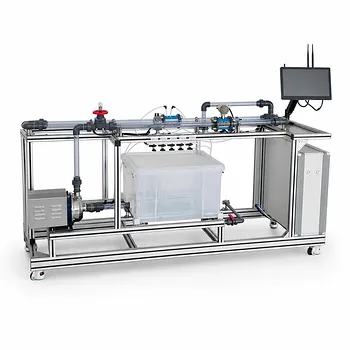
- Orifice and Venturi Flowmeter Calibration Educational Pilot Plant for Fluid Mechanics Laboratory
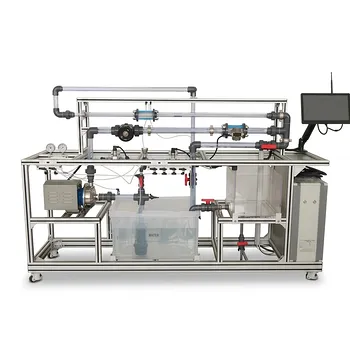
- Centrifugal Pump Performance and Orifice Flowmeter Calibration Educational Pilot Plant
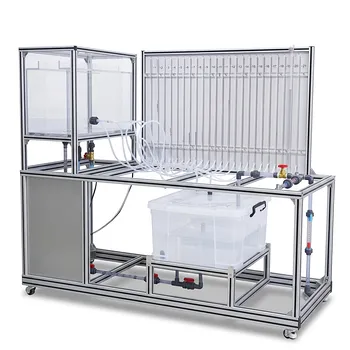
- Tubular Reactor Flow Characteristics Determination Educational Unit Operations Pilot Plant
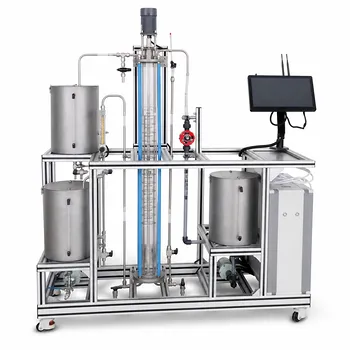
- Multi-Functional Special Distillation Educational Pilot Plant
- Educational Rotary Disc Liquid-Liquid Extraction Pilot Plant
People Also Ask
- What is the difference between static and stagnation pressure? Master Pilot Plant Flow Measurement
- How do pilot plants demonstrate siphon pressure variations? Visualizing Bernoulli's Energy Balance
- How do fluid mechanics training pilot plants facilitate the visualization and calculation of laminar and turbulent flows?
- How to update chemometric calibration models in pilot plants? Best practices for process engineers.
- Why are the laws of similitude critical in fluid flow pilot plants? Scale Up Safely