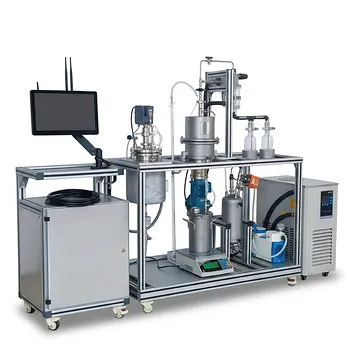
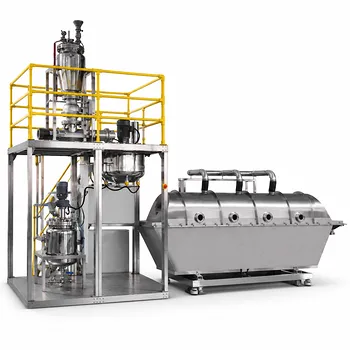
Understanding crystal physics is not just academic—it is the key to controlling product quality. When designing educational experiments for a crystallization unit operations pilot plant, educators must place two physical characteristics, anisotropy and homogeneity, at the center of the curriculum. Anisotropy causes growth rates to differ along distinct crystal axes, directly defining the final crystal habit and morphology. Homogeneity ensures that chemical composition and physical properties remain uniform throughout the entire macro‑structure, which is what separates a pure crystalline product from a contaminated one. Students must learn to manipulate cooling rates, agitation, and supersaturation to observe how these fundamental properties determine everything from particle shape to filterability.
The success of an educational crystallization pilot plant experiment lies in making the invisible visible: exposure to how growth‑rate asymmetry shapes every particle, and how processing conditions preserve or destroy uniform composition, turns abstract theory into actionable engineering intuition.
The Two Pillars of Crystal Physical Characteristics
Anisotropy: The Directional Nature of Growth
Crystals rarely grow as perfect spheres. Anisotropy means that the rate at which molecules attach to the lattice varies from one crystal face to another. This differential growth determines the crystal habit—whether the final product appears as needles, plates, cubes, or more complex, multi‑faceted morphologies. In a pilot plant, students can see how a slight change in supersaturation or hydrodynamic regime can favour one set of faces over another, dramatically altering the crystal shape and, consequently, the downstream handling properties.
Homogeneity: The Uniformity of Composition and Structure
Chemical homogeneity goes beyond simple purity; it requires that the entire macro‑structure of each crystal—from its core to its outermost layer—possess the same stoichiometry and physical integrity. A loss of homogeneity typically manifests as liquid inclusions, where pockets of impure mother liquor become trapped inside the crystal lattice. These inclusions compromise product purity and can ruin the mechanical stability of the final solid. The pilot plant is the perfect environment to show students how process upsets rapidly degrade homogeneity.
From Physical Properties to Process Variables
Manipulating Supersaturation to Expose Anisotropic Growth
Supersaturation is the thermodynamic driving force for crystallization, but it does not act uniformly across all faces. By deliberately ramping up the cooling rate or injecting an antisolvent, students can create high, often transient, supersaturation spikes that favour rapid growth on the crystal’s fastest‑growing faces. The result is a pronounced change in aspect ratio—perfect for teaching how phase diagrams translate into three‑dimensional particle geometry.
Controlling Cooling and Agitation to Secure Homogeneity
Homogeneity is lost when bulk crystallization outruns the ability of the system to reject impurities. In the pilot plant, two control handles become essential. A moderate cooling rate keeps supersaturation in a regime where controlled growth dominates over uncontrolled nucleation, preventing the dendritic growth that traps mother liquor. Equally critical is agitation intensity. Gentle stirring prevents crystal settling and ensures uniform heat and mass transfer; excessive shear, however, can fracture crystals and create new, defect‑rich surfaces that incorporate impurities.
Designing the Educational Experiment
Choosing the Right Crystallizer to Teach the Lesson
The crystallizer itself is a teaching tool. A simple tank crystallizer makes the effects of bulk mixing and temperature gradients immediately visible, forcing students to confront problems of non‑uniform supersaturation. In contrast, a draft‑tube baffle (DTB) crystallizer, which circulates both liquid and growing crystals under well‑controlled hydrodynamic conditions, demonstrates how uniform supersaturation around each crystal favours a more isometric, homogeneous habit. For advanced modules, including an Oslo‑type fluidized‑bed crystallizer shows how selective crystal retention produces the most uniform size and shape distributions, directly linking fluid dynamics to anisotropic growth outcomes.
Monitoring the Key Process Indicators
To connect physical characteristics to measurable outputs, students must track the coefficient of variation (CV) of the particle size distribution. A narrow CV, calculated as (CV = (L_{84%} - L_{16%}) / (2 L_{50%}) \times 100%), reflects a homogeneous growth environment where all crystals experienced similar conditions. Coupling this with on‑line imaging allows students to correlate a change in habit (anisotropy) with a specific shift in a process variable, such as a reduction in slurry circulation flow rate.
Understanding the Trade‑offs
Purity vs. Yield: The Homogeneity Dilemma
A high yield often requires forcing the crystallization to completion, which frequently pushes the system into regions of high supersaturation where uncontrolled nucleation occurs. This produces small, poorly formed crystals or agglomerates that entrain impure mother liquor and destroy homogeneity. An educational experiment that pushes yield to the extreme will starkly illustrate why industrial processes often employ a subsequent re‑crystallization or a controlled washing step using a cold solvent that displaces mother liquor without dissolving the product.
Morphology vs. Filtration: The Anisotropy Conundrum
Students quickly discover that the crystal habit providing the fastest growth (often needles) is the worst for downstream filtration and drying. Needle‑like crystals pack poorly, create a compressible filter cake, and can blind filters. The pilot plant is invaluable for demonstrating this trade‑off: by systematically varying the cooling profile, students can grow more equant crystals that filter cleanly, even if that means accepting a slower growth cycle. This reinforces that the “best” morphology is always a compromise between growth kinetics and solid‑handling efficiency.
Making the Right Choice for Your Educational Goal
The physical characteristics of crystals are best taught when the experiment is aligned with the learning objective.
- If your primary focus is crystal habit and morphology: Design a batch cooling crystallization in a tank crystallizer, and have students systematically vary the cooling rate. The resulting spectrum of shapes—from needles to compact prisms—makes anisotropy tangible.
- If your primary focus is product purity and homogeneity: Operate a slurry‑circulation crystallizer at a deliberately low supersaturation level, and then introduce a transient process upset. Students can then measure the resulting liquid inclusions and CV to quantify the loss of homogeneity.
- If your primary focus is scale‑up and process design: Use a DTB or Oslo‑type crystallizer to demonstrate how steady‑state operation, fluidization, and classified crystal withdrawal produce a uniform product. Contrast this with a simple tank crystallizer to show why industrial geometry matters for both anisotropy and homogeneity control.
Mastery over anisotropy and homogeneity does more than improve a single crystal—it is the foundation on which reproducible, high‑quality process design is built.
Summary Table:
| Characteristic | Definition | Key Impact | Primary Process Control |
|---|---|---|---|
| Anisotropy | Directional variation in crystal growth rates | Crystal habit, morphology, and filterability | Supersaturation levels & cooling rates |
| Homogeneity | Uniformity of chemical composition and structure | Purity, mechanical stability, lack of inclusions | Agitation intensity & moderate cooling |
Bring Industrial Crystallization Theory to Life
Are you looking to equip your students or research teams with hands-on engineering intuition? LABPARK provides state-of-the-art Educational and Vocational Unit Operations Pilot Plants in chemical engineering, bioprocess & biotech, and environmental & water treatment.
Our advanced pilot plants help universities, research institutes, and enterprises bridge the gap between theoretical crystal physics and real-world process control.
Contact LABPARK today to discover how our tailor-made pilot plant solutions can elevate your training and research capabilities!
Related Products
- Multi Functional Membrane Crystallization Educational Unit Operations Pilot Plant
- Potassium Salt Thermal Dissolution and Crystallization Separation Educational Unit Operations Pilot Plant
- Multi-Modal Distillation Unit Operations Training Pilot Plant
- Multi-Reactor Educational Pilot Plant for Reaction Engineering Unit Operations
- Dual-Mode Rectification Pilot Plant for Practical Training Unit Operations
People Also Ask
- Control Crystallization Pilot Plant Secondary Nucleation: 4 Key Adjustments
- Why is precise temperature control critical in crystallization pilot plants? Key to Scale-Up Success
- What key factors should be considered when configuring a crystallization unit operations pilot plant?
- What are the benefits of integrating online PAT tools like ATR-FTIR into crystallization unit operations pilot plants?
- How to use crystallization pilot plant agitation speed to identify diffusion vs reaction growth?