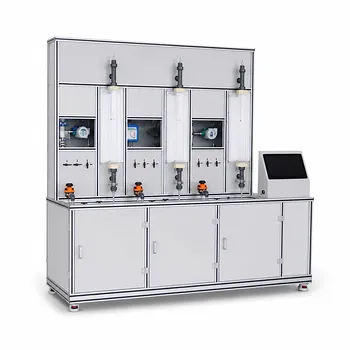
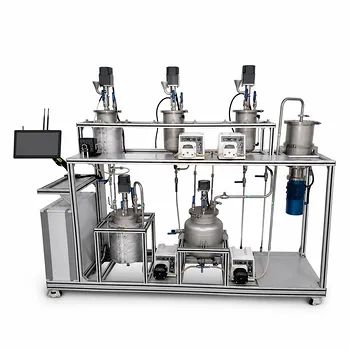
The most critical parameters to focus on are the fluid boundary layer thickness and the Nusselt number—both of which come alive when students directly manipulate fluid flow rates, measure temperature differences, and calculate the convective heat transfer coefficient.
In a pilot plant, the core learning objective is to make the invisible tangible. By systematically varying fluid velocity and fluid properties, students witness how momentum and thermal energy interact, directly linking theory to the real-world performance of heat exchangers.
To effectively teach convective heat transfer, instructors should center the entire experiment on the boundary layer. Every key measurement—flow rate, bulk fluid temperatures, wall temperature, and fluid properties—ultimately serves to uncover the dominant role this thin layer plays in limiting heat transfer. The pilot plant becomes a tool to prove that shifting from laminar to turbulent flow or shortening the “entrance length” slashes thermal resistance by orders of magnitude.
Why the Boundary Layer Is the Star of the Show
The boundary layer is where all the convective action happens. Nearly all the thermal resistance of a fluid sits in this slow-moving layer adjacent to the wall.
The Connection Between Velocity and Thickness
Higher fluid velocity creates a thinner boundary layer.
When the flow transitions from laminar to turbulent, the near-wall layer collapses, allowing much faster energy transport from the bulk fluid to the wall.
In the pilot plant, a student can double the flow rate and instantly see a jump in the convective heat transfer coefficient (h)—this direct cause-and-effect seals the conceptual link.
The Entrance Effect as a Teaching Accelerator
Near the tube inlet, the boundary layer is still developing and is exceptionally thin. This gives a locally high h value that decreases as the flow becomes fully developed downstream.
A well-instrumented pilot plant, with multiple wall temperature sensors along the tube, allows students to plot this sharp decline and understand why heat exchanger designers often use short, multi-pass configurations.
The Non-Negotiable Measurable Parameters
The pilot plant must provide data that lets students isolate convective behavior. Focus teaching around these five physical quantities.
1. Fluid Flow Rate (and Therefore Velocity)
Flow rate is the prime variable the student controls. It determines the Reynolds number (Re), which dictates flow regime—laminar, transitional, or turbulent.
Every lab session should include a deliberate sweep of flow rates to map how Re reshapes the heat transfer landscape.
2. Bulk Fluid Inlet and Outlet Temperatures
These bulk temperatures are the most basic energy balance inputs. They let students calculate the total heat duty via ( Q = \dot{m} c_p \Delta T ).
Without them, no coefficient can be derived. With them, the energy conservation principle becomes a hands-on calculation, not an abstract formula.
3. Wall Surface Temperatures
This is where “seeing inside” happens. Wall temperature sensors distinguish between the hot-side and cold-side convective resistances and the conductive drop through the tube wall.
Students need these to separately compute the individual convective coefficients, ( h_i ) and ( h_o ), and to avoid wrongly lumping all resistance into the fluid.
4. Fluid Thermophysical Properties
Density, viscosity, thermal conductivity, and specific heat are not constants—they depend heavily on temperature.
A proper pilot plant run requires students to evaluate Prandtl number (Pr) at the film temperature or bulk temperature, linking momentum diffusivity to thermal diffusivity. This is the gateway to using correlations like Dittus-Boelter or Gnielinski.
5. Derived Convective Heat Transfer Coefficient and Nusselt Number
The ultimate output is ( h ) and Nu. Instructors must emphasize that Nu is a ratio: ( Nu = \frac{\text{convective heat transfer}}{\text{conductive heat transfer across a stationary fluid layer}} ).
Plotting Nu against Re on a log-log graph turns a pilot plant into a hypothesis-testing machine. Does the slope match established correlations? Why or why not? That question marks the shift from recipe-following to genuine engineering judgment.
Unveiling the Full Heat Transfer Pathway
A fluid heat transfer pilot plant is not just about convection—it is a perfect tool to demonstrate how convection interacts with conduction and fouling in a real system.
Isolating the Three Steps of Heat Exchange
Every recuperative heat exchanger follows a chain: convective transfer from hot fluid to wall, conduction through the wall, and convective transfer from wall to cold fluid.
By measuring fluid temperatures and wall temperatures on both sides, students can decouple these three resistances and verify the overall heat transfer coefficient equation: ( \frac{1}{U} = \frac{1}{h_h} + \frac{wall thickness}{k_{wall}} + \frac{1}{h_c} ).
Exposing the Reality of Fouling
Over time, deposits on the heat transfer surfaces add an extra resistance—fouling factor.
If the pilot plant is run repeatedly with the same fluid, students can track a consistent drop in the overall heat transfer coefficient ( U ) even when flow conditions stay identical. This is the most honest lesson in industrial heat exchanger maintenance.
Common Pitfalls and Misconceptions to Address
Even with excellent equipment, learning can go off the rails if these points aren’t confronted head-on.
Mistaking a High Flow Rate for Guaranteed High Performance
Turbulence increases ( h ), but also demands exponentially more pumping power.
The deep insight is the trade-off between thermal gains and operational costs. Guide students to calculate the pressure drop alongside the heat transfer coefficient—only then do they appreciate why industrial flows sit in the transition zone, not deep into turbulence.
Ignoring the Temperature Dependence of Properties
Using a single set of fluid properties from a handbook at one temperature will corrupt the correlation.
The pilot plant is the ideal place to force students to iterate: guess a wall temperature, evaluate properties, calculate ( h ), then recompute the wall temperature until convergence. This teaches respect for non-linear reality.
Overlooking Radiation Effects
At low fluid velocities or high temperature differences, natural convection or radiation may dominate.
A good teacher will have students calculate a radiation heat transfer coefficient and compare its magnitude, teaching them when the “convective only” assumption breaks down.
Treating the Nusselt Number as Just Another Result
Nu is not an abstract output; it’s a dimensionless bridge.
If students cannot explain that Nu ~ 1 means heat transfer is purely conduction across a fluid layer while Nu >> 1 shows the violent enhancement of convection, they’ve missed the central story. Use a visual analogy: Nu is the multiplier on how much the flow “stirs” the thermal energy past the wall.
Structuring the Learning Experience for Maximum Impact
Based on your teaching goals, you can pivot the same pilot plant in different directions.
If your primary focus is grounding students in fundamental heat transfer physics: Dedicate the entire session to varying flow rate and measuring wall temperatures. Drive home the Nu-Re relationship, the boundary layer thinning, and the entrance effect. All calculations are done manually to build muscle memory.
If your primary focus is teaching heat exchanger design and rating: Expand the exercise to include a second fluid stream, calculating log-mean temperature difference (LMTD) and overall U. Require students to predict outlet temperatures using the NTU-Effectiveness method and then verify predictions with the pilot plant. The pilot plant becomes a design validation tool.
If your primary focus is highlighting operational and reliability issues: Run the plant with fluids that mimic dirty service over multiple cycles. Have students compute the fouling factor trend and discuss the economic penalty of lost heat transfer. This directly bridges academic study to plant-floor realities.
The fluid heat transfer pilot plant becomes a transformative teaching instrument only when students move beyond measuring numbers and start manipulating the single variable that governs everything: the boundary layer. Give them the freedom to break things—in a controlled way—and they’ll leave with an intuitive, lifelong grasp of how heat really moves.
Summary Table:
| Parameter | Role in Heat Transfer | Key Student Action |
|---|---|---|
| Fluid Flow Rate | Determines Reynolds number (Re) and flow regime | Sweep flow rates to map regime transitions |
| Bulk Temperatures | Input for total heat duty calculation | Perform basic energy balance calculations |
| Wall Temperatures | Isolates convective from conductive resistance | Compute individual convective coefficients ($h$) |
| Fluid Properties | Links momentum to thermal diffusivity via Prandtl ($Pr$) | Evaluate properties at film temperatures |
| Nusselt Number ($Nu$) | Ratio of convective to conductive heat transfer | Plot $Nu$ vs. $Re$ to validate correlations |
Empower Your Students with LABPARK Pilot Plants
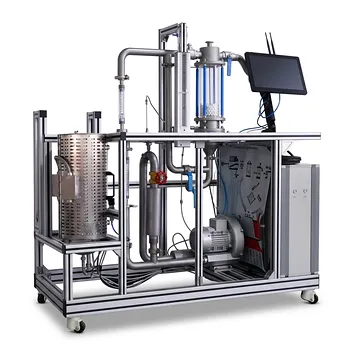
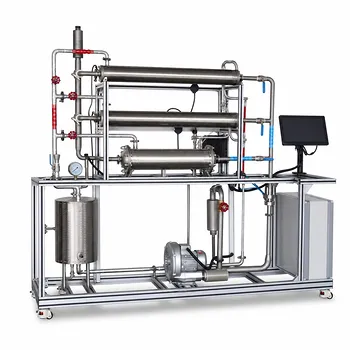
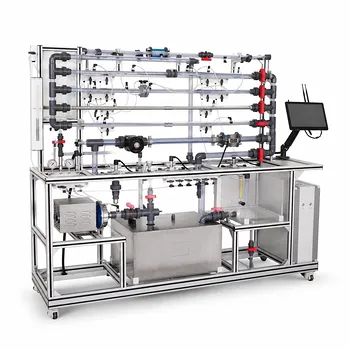
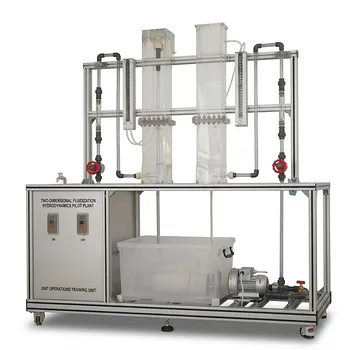
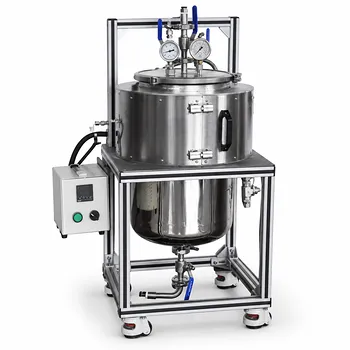
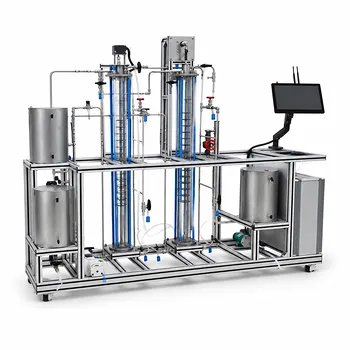
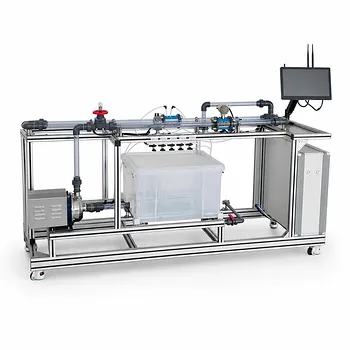
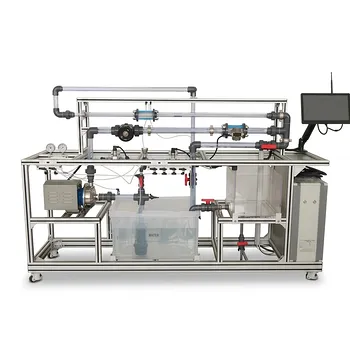
Ready to make complex thermodynamics tangible? LABPARK provides premium Educational and Vocational Unit Operations Pilot Plants in chemical engineering, bioprocess & biotech, and environmental & water treatment for universities, research institutes, and enterprises.
Our advanced educational systems enable students and researchers to precisely manipulate flow regimes, control boundary layers, and calculate convective heat transfer coefficients in real-time. Contact LABPARK today to find the perfect pilot plant solution for your laboratory!
Related Products
- Three-Tube Heat Transfer Educational Pilot Plant for Unit Operations Training
- Shell and Tube Heat Exchanger Heat Transfer Coefficient Determination Educational Pilot Plant
- Dual Mode Heat Transfer Pilot Plant for Unit Operations Training
- Liquid-Liquid Mass Transfer Coefficient Determination Educational Pilot Plant
- Comprehensive Multi-Modal Heat Transfer Unit Operations Pilot Plant for Engineering Training
People Also Ask
- When is ε-NTU preferred over LMTD in pilot plants? Predict heat exchanger performance without iteration.
- How to Verify Air-Side Heat Transfer Coefficient with a Pilot Plant? Practical Lab Guide
- How does thermal conductivity affect pilot plant performance? Optimize heat transfer & accuracy
- Why is emissivity critical in heat transfer pilot plants? Bridge the Gap Between Theory & Industrial Design
- How does cascade control achieve superior disturbance rejection in heat transfer pilot plants?